

The Depamu Hydrazine Dosing System: A Comprehensive Analysis of a Critical Chemical Injection Package
In the complex ecosystem of modern thermal power generation, water quality management stands as a cornerstone of operational safety, efficiency, and equipment longevity. Among the various chemical treatment systems employed to maintain optimal water-steam conditions, the hydrazine dosing system—specifically the Chemical Injection Package manufactured by Depamu—represents a critical technology for dissolved oxygen removal and corrosion prevention. This article provides a comprehensive examination of the Depamu Hydrazine Dosing System, exploring its fundamental purpose, operational principles, key components, control mechanisms, and significance in industrial applications.
The Fundamental Purpose: Oxygen Scavenging in Power Plants
The primary function of the Depamu Hydrazine Dosing System is to address one of the most persistent threats to boiler integrity: dissolved oxygen corrosion. In thermal power plants, the water-steam cycle operates under extreme conditions of temperature and pressure, creating an environment where even trace amounts of dissolved oxygen can initiate devastating corrosion processes. As research has demonstrated, dissolved oxygen in boiler feedwater causes severe pitting corrosion in steel piping, boilers, and equipment, with damage occurring even at parts-per-billion concentration levels.
Hydrazine (N₂H₄) serves as a powerful oxygen scavenger through a well-established chemical reaction. When injected into the feedwater system, hydrazine reacts with dissolved oxygen to form nitrogen and water, effectively eliminating the corrosive agent without introducing harmful byproducts. This chemical approach represents a secondary, intensified deoxidization process that complements the mechanical deaeration performed by deaerators in the power plant system.
The importance of precise hydrazine dosing cannot be overstated. If the injection volume is insufficient, inadequate oxygen removal leads to continued corrosion risk, threatening boiler integrity and plant safety. Conversely, excessive hydrazine dosing results in unnecessary chemical waste, increases operational costs, and creates environmental concerns due to the toxicity of hydrazine compounds. This delicate balance underscores the need for sophisticated, automated dosing systems capable of maintaining optimal hydrazine concentrations under varying operational conditions.
System Configuration and Key Components
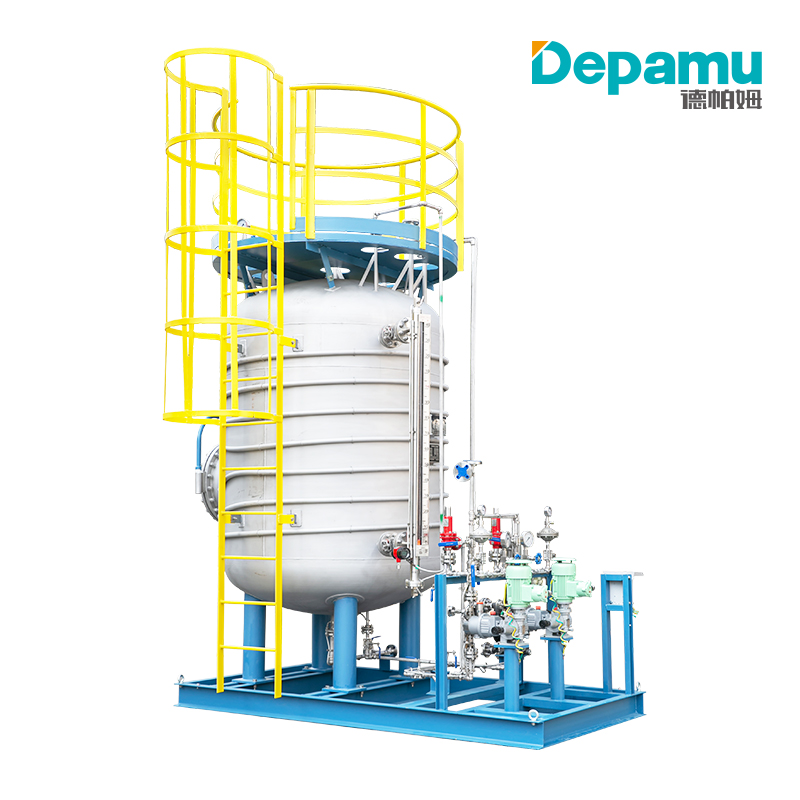
The Depamu Hydrazine Dosing System is engineered as a comprehensive, skid-mounted chemical injection package that integrates all necessary components for reliable, precise chemical delivery. Based on the manufacturer's specifications, the system comprises several essential elements working in concert to ensure effective operation.
Solution Storage and Preparation
At the heart of the system lies the solution tank, typically constructed from 304 or 316 stainless steel to provide corrosion resistance against the aggressive chemical environment. These tanks are available in volumes ranging from 0.5 to 2.5 cubic meters for boiler water applications, with larger configurations available for other industrial uses. The tank is equipped with level gauges for monitoring solution inventory and ensuring continuous feed availability.
For safety considerations, concentrated hydrazine—typically supplied as a 35% aqueous solution—requires careful handling and dilution before injection. According to industry design standards, mixing tanks are designed to hold a minimum of 48 hours' requirement of a 1% hydrazine solution, with vapor-tight covers and outdoor venting to prevent accumulation of toxic and potentially explosive vapors.
Metering and Delivery Systems
The precision delivery of hydrazine is achieved through Metering Pumps, which are the critical actuation components of the system. Depamu's design incorporates diaphragm-type metering pumps that provide accurate, repeatable chemical dosing regardless of system pressure fluctuations. These pumps are typically configured in redundant arrangements, with specifications such as two 100% capacity pumps providing operational reliability and allowing for maintenance without system shutdown.
The discharge side of each pump is equipped with pressure gauges and pressure relief valves to ensure safe operation under all conditions. Flow verification devices confirm that the intended chemical volume is actually being delivered to the injection point, providing essential feedback for system monitoring and control.
Ancillary Components
A comprehensive injection package includes numerous ancillary components that enhance system performance and safety. These include pulsation dampeners that smooth the flow from Reciprocating Pumps, safety valves that protect against overpressure conditions, strainers that prevent debris from damaging sensitive pump components, and various valves and piping that route chemicals from storage to injection points.
The entire assembly is typically mounted on a structural steel skid, creating a compact, pre-engineered unit that simplifies field installation and commissioning. This modular approach reduces site construction requirements and ensures consistent quality control during manufacturing.
Control Philosophy and Automation
The Depamu Hydrazine Dosing System distinguishes itself through sophisticated control capabilities that enable precise, responsive chemical dosing. The system offers multiple control modes, from basic manual operation to fully automatic control integrated with plant Distributed Control Systems (DCS).
Automatic Control Architecture
In automatic mode, the system utilizes programmable logic controllers (PLC) or DCS integration to process signals from various plant sensors and adjust dosing rates accordingly. The control algorithm receives input from flow meters, dissolved oxygen analyzers, turbidity meters, and residual hydrazine analyzers to determine the optimal injection rate. This multi-parameter approach ensures that dosing responds to actual process conditions rather than relying solely on predetermined feed-forward calculations.
The metering pump speed is regulated through variable frequency drives (VFDs) that accept standard 4-20mA control signals, providing a flow adjustment range of 0-100% of rated capacity. This wide turndown ratio allows the system to maintain precise control across the full range of plant operating conditions, from startup through full load operation and partial load scenarios.
Remote Monitoring and Integration
Modern industrial operations demand comprehensive monitoring and remote control capabilities. The Depamu system transmits pump status, fault signals, and operational parameters to the plant DCS or host computer, enabling operators to monitor system performance from central control rooms. Remote start/stop capabilities further enhance operational flexibility, allowing for rapid response to changing plant conditions without requiring physical presence at the chemical injection skid.
Control Parameters and Quality Standards
The effectiveness of hydrazine injection is evaluated through monitoring of key water quality parameters. Industry standards typically require maintaining feedwater pH between 9.2 and 9.6, dissolved oxygen levels below 10 parts per billion (ppb), and residual hydrazine concentrations between 10 and 50 ppb. These tight control ranges demonstrate the precision required of the dosing system and the sophistication of the automation employed to achieve these targets.
Applications and Industry Significance
While the primary application of the Depamu Hydrazine Dosing System is in thermal power plants, the technology finds use across a range of industrial sectors where corrosion control is critical. These include high-pressure and low-pressure boiler systems in various industries, closed cooling water circuits, and process water treatment applications.
The system also plays an important role in the petroleum and natural gas industry, where similar oxygen scavenger injection packages are employed in gathering and transportation systems, as well as oily sewage treatment facilities. In these applications, hydrazine dosing helps prevent corrosion in pipelines and processing equipment, extending asset life and reducing maintenance costs.
The broader category of chemical injection packages offered by Depamu includes systems for ammonia injection (pH control), phosphate injection (scale control), and various other treatment chemicals for boiler water, circulating water, and wastewater treatment applications. This comprehensive portfolio allows plant operators to address multiple water chemistry challenges with standardized, proven equipment designs.
Conclusion
The Depamu Hydrazine Dosing System represents a sophisticated integration of chemical engineering principles, mechanical design, and automation technology to address a critical operational challenge in thermal power generation. By providing precise, responsive hydrazine injection for dissolved oxygen removal, the system helps protect expensive power generation assets from corrosion damage, ensuring safe, reliable, and efficient plant operation.
The system's modular skid-mounted design, with its comprehensive component integration, simplifies installation and commissioning while ensuring consistent quality. The sophisticated automation capabilities enable precise control under varying operational conditions, maintaining hydrazine concentrations within the narrow range required for effective oxygen scavenging without wasteful over-dosing.
As power plants continue to evolve toward higher efficiency and more demanding operating conditions, the importance of advanced chemical injection systems like the Depamu Hydrazine Dosing Package will only increase. These systems not only protect critical assets but also contribute to environmental sustainability by ensuring chemicals are used efficiently and precisely, minimizing waste and environmental impact