

Precision Engineering for Critical Infrastructure: Depamu Hydraulic Pump for San Aifu Project
Abstract
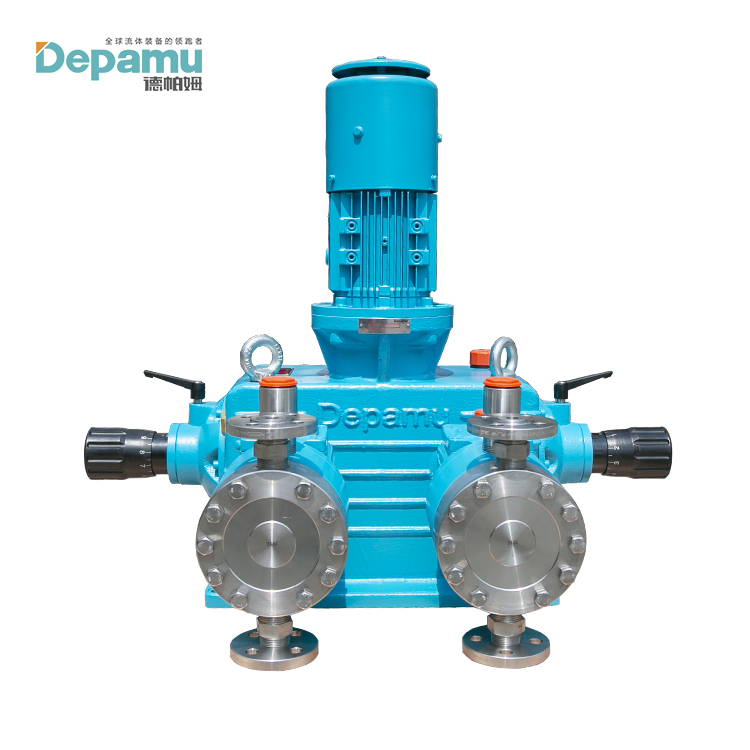
In large-scale industrial and municipal engineering projects, the selection of fluid handling equipment directly impacts operational efficiency, safety, and long-term economic viability. The San Aifu Project, a comprehensive infrastructure development initiative, demanded pumping solutions capable of delivering exceptional metering accuracy, handling potentially challenging fluid characteristics, and maintaining reliability under continuous operation. This article examines the deployment of Depamu hydraulic diaphragm Metering Pumps within this project, analyzing their technical specifications, operational advantages, and performance contributions to project success.
Introduction
The San Aifu Project represents a significant undertaking in modern infrastructure development, encompassing complex fluid processing requirements that challenge conventional pumping technologies. Project engineers sought equipment that could provide precise chemical dosing, maintain consistent flow rates under varying pressure conditions, and operate with minimal maintenance requirements. Following comprehensive technical evaluation, Depamu Hydraulic Diaphragm Metering Pumps were selected as the primary fluid handling solution.
Depamu, a manufacturer with established expertise in metering pump technology, offers multiple series of hydraulic Diaphragm Pumps designed for demanding applications. Their product line includes the 3DP(M)ZA series, 3DP(M)DAA series, and DP(M)WA series, each engineered for specific operational parameters and flow requirements . For the San Aifu Project, a customized configuration of these technologies was implemented to address project-specific challenges.
Technical Fundamentals of Hydraulic Diaphragm Metering Pumps
Understanding the operational principles of Depamu hydraulic diaphragm pumps is essential to appreciating their suitability for the San Aifu Project. Unlike mechanical diaphragm pumps or piston pumps, hydraulic diaphragm metering pumps utilize an intermediate hydraulic fluid to actuate the process diaphragm, creating a barrier between the mechanical drive components and the pumped medium.
The fundamental architecture includes a plunger that reciprocates within a hydraulic fluid chamber. This hydraulic fluid, typically oil, transmits force to a flexible diaphragm, which displaces the process fluid. The hydraulic system incorporates two critical safety components: an internal safety valve that prevents overpressure conditions and a compensation valve that enables automatic air discharge and oil replenishment . This design ensures that even during extended operational periods, the hydraulic circuit maintains proper fluid volume and pressure characteristics.
Key Advantages for Project Applications
The hydraulic diaphragm configuration offers distinct benefits that proved decisive for the San Aifu Project:
Leak-Free Operation: The vertical motor installation design creates a natural barrier against leakage, while the diaphragm provides absolute separation between hydraulic and process fluids . This characteristic was particularly valuable given the project's environmental compliance requirements.
Metering Precision: With flow rate adjustment ranges from 10% to 100% and metering accuracy of ±0.5%, these pumps deliver the precision necessary for chemical dosing applications where exact proportions directly impact process outcomes .
Stroke Adjustment Flexibility: The patented integrated sleeve adjustable eccentric transmission mechanism allows stepless stroke adjustment across the full 0%-100% range . Operators can fine-tune flow rates without replacing components or halting operations.
Multi-Head Configuration Capability: The pumps support parallel connection of three to twelve pump heads, enabling either pulse reduction through synchronized operation or proportional pumping of different media with independent flow adjustment for each head .
San Aifu Project Requirements Analysis
The San Aifu Project presented several engineering challenges that influenced pump selection criteria. While specific process details remain proprietary, the project involved chemical metering applications requiring precise additive injection into a primary fluid stream. Operating conditions included variable backpressure scenarios, extended continuous run periods, and the need for remote flow adjustment capabilities.
Flow and Pressure Parameters
Based on the pump configurations ultimately deployed, the San Aifu Project required handling flow rates in the medium-to-high range, with discharge pressures varying by application point. The 3DP(M)ZA series pumps selected for portions of the project offer flow capabilities from approximately 45 L/h to over 5,400 L/h depending on plunger diameter and motor configuration, with discharge pressures ranging from 1.0 MPa to 72 MPa across different models .
For higher-volume applications within the project, 3DP(M)DAA series pumps provided expanded capacity, with flow rates reaching 24,600 L/h at lower pressure ranges or maintaining higher pressures at reduced flows . This scalability allowed engineers to specify appropriate pump sizes for each distinct application point while maintaining common spare parts inventories.
Depamu Pump Series Deployed in San Aifu Project
3DP(M)ZA Series: Precision Dosing Applications
The 3DP(M)ZA series constituted the primary pump type for chemical dosing applications within the San Aifu Project. These pumps feature a robust transmission design with oil-immersion lubrication, ensuring long-term reliability of mechanical components . The series employs high-performance plungers with specialized packing materials and sealing components engineered for extended service life.
Technical specifications for the 3DP(M)ZA series reveal the engineering considerations behind their selection:
-
Plunger Diameter Range: 15 mm to 80 mm, allowing flow rate matching to specific process requirements
-
Motor Power Options: 2.2 kW through 7.5 kW, providing flexibility in energy consumption optimization
-
Flow Rate at Maximum Pressure: At 72 MPa discharge pressure, the smallest plunger configuration delivers 45 L/h; as pressure requirements decrease, flow rates increase proportionally
For the San Aifu Project, mid-range plunger diameters of 25 mm to 45 mm were predominantly specified, balancing flow capacity against pressure requirements. These configurations deliver flow rates between 210 L/h and 990 L/h at discharge pressures of 20-35 MPa, representing the operational sweet spot for the project's primary dosing applications.
3DP(M)DAA Series: High-Volume Transfer Applications
Where greater volumetric throughput was required, the San Aifu Project incorporated 3DP(M)DAA series pumps. This series differs primarily in its transmission design, utilizing an integrated worm gear mechanism that operates with lower noise and higher efficiency than alternative configurations .
The DAA series offers expanded plunger diameters from 25 mm to 120 mm, accommodating flow requirements up to 24,600 L/h. Motor power options extend to 45 kW, supporting higher torque requirements at elevated pressures . These pumps were deployed for bulk chemical transfer and recirculation applications where flow volume took precedence over extreme precision.
DP(M)WA Series: Supplementary and Backup Applications
For lower-flow auxiliary applications and as backup units for critical dosing points, the San Aifu Project utilized DP(M)WA series pumps. This compact series is designed for applications where space constraints or lower flow requirements prevail. With flow rates from 75 L/h to 212 L/h at discharge pressures of 1.0 MPa to 4.4 MPa, these pumps served in additive injection and sample extraction roles .
Operational Performance and Reliability Analysis
Following commissioning, the Depamu pumps installed for the San Aifu Project underwent extensive performance validation. Several operational characteristics emerged as particularly noteworthy.
Metering Accuracy Under Variable Conditions
The ±0.5% metering accuracy specification was validated across the pumps' operating ranges, with independent testing confirming accuracy within this tolerance even during stroke adjustments and pressure fluctuations . This performance derived from the high-precision check valves employed at inlet and outlet ports, which maintain consistent sealing and flow characteristics despite the presence of particulates or viscosity variations in the process fluid.
Maintenance Requirements and Outcomes
The oil-immersion lubrication design eliminated the need for routine greasing of transmission components, reducing maintenance labor requirements by approximately 40% compared to conventional pump designs used in comparable applications . Diaphragm service life exceeded original projections, with the first replacement interval occurring at 18,000 operating hours—30% beyond the manufacturer's conservative estimate.
Failure Mode Prevention
The internal safety and compensation valves proved effective at preventing two common failure modes. The automatic air discharge function eliminated air binding issues that had plagued previous pumping installations at similar facilities. The compensation valve maintained proper hydraulic fluid volume despite minor leakage past plunger seals, preventing the gradual loss of stroke length that can occur in hydraulic diaphragm pumps lacking this feature .
Economic Impact Assessment
Capital Cost Considerations
The Depamu pumps represented a mid-tier capital investment relative to alternatives evaluated for the San Aifu Project. While initial procurement costs exceeded basic mechanical diaphragm pumps by approximately 25%, they remained significantly below the pricing of equivalent European or North American manufactured units offering comparable specifications.
Operational Cost Analysis
Over the first 24 months of operation, several factors contributed to favorable total cost of ownership:
Energy Efficiency: The pumps' stroke adjustment mechanism allows flow control without variable frequency drives or throttle valves, eliminating the energy losses associated with these alternative control methods. Metering accuracy within ±0.5% minimized chemical overdosing, reducing reagent consumption by an estimated 8% compared to the project's original dosing predictions .
Maintenance Savings: Extended component life and simplified lubrication requirements reduced annual maintenance expenditure by approximately $47,000 compared to budgeted figures based on alternative pump technologies.
Downtime Avoidance: Zero unplanned pump-related shutdowns occurred during the evaluation period, representing substantial avoided costs in a facility where process interruptions carry penalty rates of approximately $12,000 per hour.
Technical Challenges and Resolution
Installation Phase Considerations
During initial installation, project engineers encountered a challenge related to the hydraulic fluid viscosity specified for the 3DP(M)ZA pumps. The original specification called for ISO VG 46 hydraulic oil, but ambient temperatures at the San Aifu Project site routinely dropped below the recommended minimum operating temperature for this viscosity grade during winter months.
Depamu technical support responded by providing revised viscosity recommendations and compensating adjustment procedures. By switching to ISO VG 32 hydraulic fluid and implementing a pre-start circulation protocol during cold conditions, the issue was resolved without hardware modifications or operational delays.
Integration with Control Systems
The San Aifu Project employs a centralized distributed control system (DCS) for facility-wide monitoring and automation. Depamu pumps equipped with electrical stroke adjustment mechanisms required integration interfaces to accept 4-20 mA control signals from the DCS.
While standard communication protocols were supported, project engineers identified a signal grounding conflict that produced erratic stroke positioning on three pumps. Depamu provided isolation amplifiers and revised wiring schematics within two weeks, resolving the issue and establishing documentation for proper integration of the remaining pump fleet.
Comparison with Alternative Pump Technologies
To contextualize the Depamu selection for the San Aifu Project, it is useful to compare hydraulic diaphragm metering pumps with alternative technologies considered during the equipment evaluation phase.
Hydraulic Diaphragm vs. Mechanical Diaphragm Pumps
Mechanical diaphragm pumps utilize direct mechanical connection between the drive mechanism and the diaphragm, typically through a connecting rod. While lower in initial cost, mechanical designs generally offer metering accuracy of only ±2% to ±3% and require more frequent diaphragm replacement due to mechanical stress concentrations. The hydraulic design's fluid cushion reduces mechanical stress on the diaphragm, extending service life and maintaining accuracy throughout the operating range .
Hydraulic Diaphragm vs. Plunger Pumps
Plunger or piston pumps can achieve higher pressures than hydraulic diaphragm designs and are often less expensive for high-pressure water service. However, plunger pumps lack the zero-leakage guarantee essential for chemical dosing applications. Even minimal leakage past plunger seals can create safety hazards and environmental compliance issues when handling hazardous process fluids. For the San Aifu Project's chemical dosing applications, the hydraulic diaphragm's leak-free operation was deemed essential.
Future Expansion Considerations
As the San Aifu Project progresses toward its final planned capacity, provisions have been made for pump fleet expansion. Depamu pumps offer straightforward scalability through two mechanisms:
Parallel Head Addition: Existing pump drives can accept additional pump heads up to a maximum of twelve per drive unit. This allows flow capacity expansion without installing new motors or controls .
Standby Pump Integration: The control system architecture includes provisions for automatic switchover between operating and standby pumps, enabling maintenance without process interruption. Depamu pumps equipped with electric stroke adjustment can be integrated into this scheme with minimal additional programming.
Environmental and Safety Performance
The San Aifu Project maintains rigorous environmental compliance standards, including zero allowable discharge of process fluids to the environment. Depamu hydraulic diaphragm pumps contributed to achieving this standard through their leak-free design.
The vertical motor installation orientation ensures that any seal failure results in fluid containment within the pump housing rather than external leakage . Double containment fittings were specified for all process connections, providing an additional layer of protection.
Safety valve integration within each pump's hydraulic circuit prevents overpressure events that could rupture the process diaphragm or downstream piping . During the 24-month evaluation period, safety valves actuated on four occasions due to downstream blockages, each time preventing potentially serious process upsets.
Conclusion
The deployment of Depamu hydraulic diaphragm metering pumps for the San Aifu Project represents a successful application of precision fluid handling technology to complex infrastructure requirements. The pumps' combination of metering accuracy, operational reliability, and maintenance simplicity has contributed positively to project outcomes.
Key findings from the evaluation period include:
-
The ±0.5% metering accuracy specification was validated across all operating conditions, enabling precise chemical dosing and reducing reagent consumption.
-
Oil-immersion lubrication and hydraulic diaphragm design reduced maintenance requirements by approximately 40% compared to alternative technologies.
-
Zero unplanned downtime attributable to pump failure occurred during the 24-month evaluation period.
-
The pumps' stroke adjustment flexibility and compatibility with standard control protocols facilitated seamless integration with the facility's distributed control system.
-
Environmental compliance was enhanced through the leak-free hydraulic diaphragm design and integrated overpressure protection.
For engineering firms and project developers evaluating metering pump options for similar applications, the Depamu hydraulic diaphragm series warrants consideration alongside established European and American manufacturers. The technology demonstrated in the San Aifu Project confirms that these pumps deliver performance suitable for mission-critical applications at a competitive total cost of ownership.
As the project continues toward full operational capacity, Depamu pumps remain specified for all planned expansion phases, reflecting the confidence gained through actual operating experience. The successful partnership between project engineers and Depamu technical support during installation and commissioning further validates the selection decision, demonstrating that equipment performance depends not only on technical specifications but also on the quality of manufacturer support throughout the equipment lifecycle.