

The Chemical Dosing Pumps Application: Precision at the Heart of Modern Industry
Chemical dosing pumps are the unsung heroes of industrial and municipal infrastructure. These precision instruments deliver controlled volumes of liquid chemicals into process streams with an accuracy that often reaches ±1%, making them indispensable wherever chemical concentration must be maintained within narrow tolerances. Unlike standard transfer pumps, which are designed for volume, dosing pumps are engineered for exactness—each stroke moves a defined displacement, so the delivered flow is governed by geometry and speed rather than by system pressure. This fundamental characteristic has made chemical dosing pumps critical across water treatment, oil and gas production, power generation, mining, pharmaceuticals, food processing, and a host of other industries. As global water demand intensifies and environmental regulations tighten, the role of these pumps has expanded from simple chemical injection to intelligent, data-driven process control.
Working Principles and Pump Technologies
The operating principle shared by all dosing pumps is positive displacement: a fixed volume of liquid is drawn into a chamber and then forced out through a discharge valve with each cycle. The flow rate can be adjusted by altering stroke length, stroke frequency, or drive speed, allowing accurate dosing over a wide turndown range. This makes the dosing pump fundamentally different from centrifugal pumps, whose output varies with system resistance.
Several pump technologies have emerged to meet diverse application demands. Diaphragm Depamu-pumps.com/Metering-pump.html target='_blank'>Metering Pumps are the most widely deployed. A reciprocating diaphragm acts as a flexible displacement element, alternately drawing liquid through an inlet check valve and expelling it through a discharge valve. Because the diaphragm seals the process fluid from the mechanical drive, these pumps handle corrosive and hazardous chemicals safely. Variants include mechanically actuated designs, solenoid-driven models for low-flow laboratory and water treatment duties, and hydraulically actuated Diaphragm Pumps that can reach pressures up to 35 MPa while maintaining ±1% accuracy—making them suitable for the harshest chemical-handling conditions.
Peristaltic dosing pumps represent a fundamentally different approach. Rotating rollers compress a flexible hose, trapping and advancing fluid through a continuous, valve-less flow path. Because the chemical contacts only the hose interior, peristaltic pumps are ideal for abrasive slurries, sensitive polymers, and fluids containing trapped gases—air bubbles simply pass through the tube without disrupting the dose. Maintenance reduces to a single wear component: the hose. However, peristaltic pumps generally operate at lower pressures than diaphragm models and may require more frequent tube replacement in continuous-duty applications.
Plunger and piston metering pumps use a reciprocating plunger in direct contact with the process fluid. They achieve exceptional accuracy—some models deliver ±0.5% precision at pressures up to 517 bar—and are preferred for high-pressure injection duties in oil and gas and chemical processing. Their limitations include pulsating output, sensitivity to viscosity changes, and the need for dynamic seals that require regular maintenance.
Solenoid-driven diaphragm pumps occupy the low-flow end of the spectrum. Powered by an electromagnetic solenoid, they are simple, affordable, and highly reliable for dosing accuracy even at extremely low flow rates and operating pressures. They are ubiquitous in municipal water treatment, swimming pool disinfection, and laboratory applications.
Water and Wastewater Treatment: The Dominant Application
Water treatment remains the largest and most diverse application for chemical dosing pumps. Across drinking water production, industrial process water conditioning, and wastewater effluent polishing, precise chemical injection determines whether treatment targets are met, regulations are satisfied, and operating costs are controlled.
In drinking water treatment, dosing pumps perform several critical functions. Coagulant dosing—using chemicals such as polyaluminium chloride or ferric salts—destabilises colloidal particles so they can be removed by sedimentation or filtration. pH adjustment pumps inject caustic soda, lime, or sodium carbonate to raise pH and thereby reduce lead and copper corrosion in ageing distribution infrastructure. Disinfection dosing introduces chlorine or chloramine at controlled rates to maintain a residual that protects water quality throughout the distribution network. In wastewater treatment, dosing pumps feed coagulants and flocculants to thicken sludge and improve dewatering efficiency, inject nutrients such as ferric or alum for phosphorus removal, and dose polymers to condition biosolids before centrifugation or belt pressing.
Membrane-based treatment systems, particularly reverse osmosis (RO) and desalination plants, depend heavily on dosing pumps for antiscalant injection. Without precise antiscalant dosing, mineral scale would rapidly foul RO membranes, reducing flux and increasing energy consumption. Antiscalant pumps must operate reliably at elevated pressures and maintain chemical balance through final purification stages. In boiler water treatment, dosing pumps inject oxygen scavengers, scale inhibitors, and pH adjusters to protect heat transfer surfaces and steam circuit components.
The economic stakes are substantial. The right dosing solution can help facilities reuse up to 80% of industrial wastewater, and with global manufacturing water demand projected to increase by 400% by 2050, precise chemical dosing has become a strategic resource-management tool as much as a treatment necessity.
Oil, Gas, and Petrochemical Applications
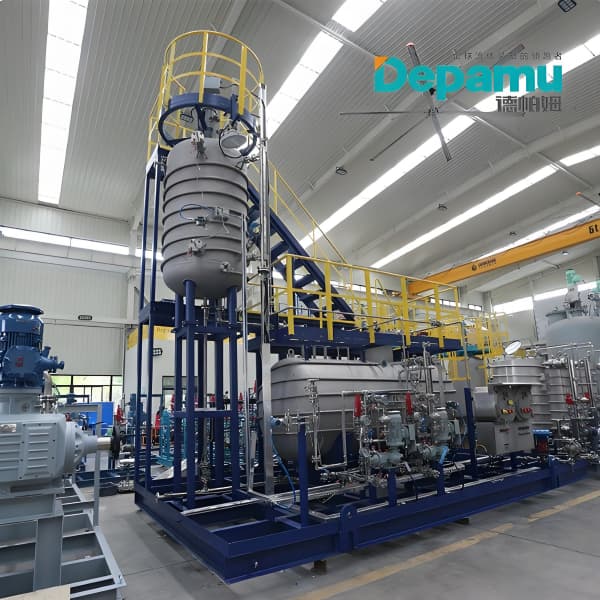
In the oil and gas industry, chemical dosing pumps perform vital functions at every stage from wellhead to refinery. Upstream operations rely on dosing pumps for methanol injection to prevent hydrate formation in gas gathering lines, corrosion inhibitor dosing to protect pipelines and well tubulars, and scale inhibitor injection to maintain flow assurance. These applications demand pumps capable of operating at high pressures—often exceeding 1,800 PSIG—and in remote, unattended environments where reliability is paramount. Skid-mounted chemical injection systems, engineered to API 675 or API 674 standards, package storage tanks, redundant metering pumps, calibration columns, and instrumentation into modular units that can be deployed rapidly in onshore and offshore fields.
Downstream and midstream applications include refinery water treatment, cooling tower chemical dosing, boiler feedwater conditioning, and gas odorisation systems. In petrochemical plants, metering pumps inject catalysts, inhibitors, and pH control agents into reactors and process streams where reaction conditions must be maintained within narrow specifications. The chemical compatibility requirements are severe: wetted materials must resist concentrated acids, caustic solutions, and hydrocarbon solvents, while maintaining seal integrity over extended service intervals.
Power Generation and Heavy Industry
Thermal and nuclear power plants use chemical dosing pumps to maintain water chemistry in boiler and cooling systems. Boiler water treatment involves dosing oxygen scavengers such as hydrazine or carbohydrazide, pH adjusters like ammonia or morpholine, and scale inhibitors to prevent deposits on heat transfer surfaces. In the steam circuit, precise chemical control prevents corrosion and deposition that would otherwise reduce thermal efficiency and increase outage frequency. Cooling tower treatment requires dosing pumps for corrosion inhibitors, scale inhibitors, and biocide programs to control biological growth and mineral scaling in recirculating water systems.
In mining and mineral processing, dosing pumps serve both beneficiation and environmental control functions. Flotation circuits depend on precise dosing of collectors, frothers, and depressants to achieve selective mineral separation. Heap leaching operations inject chemical solvents—often aggressive acids such as sulfuric or hydrochloric acid—under high pressure and at extreme temperatures to extract metals from ore. Environmental applications include cyanide destruction, acid mine drainage neutralisation, and tailings management. Peristaltic pumps have gained particular favour in mining because their valve-less design handles abrasive slurries and reagent solutions without clogging, and because the fluid-contacting hose can be replaced quickly during scheduled maintenance windows.
Pharmaceuticals, Food, and Agriculture
Precision takes on an entirely different meaning in pharmaceutical manufacturing, where dosing pumps must deliver micro-volumes of active pharmaceutical ingredients, buffers, and reagents with repeatability that satisfies stringent quality and regulatory standards. Modular dosing systems designed for continuous pharmaceutical production handle vaccines, APIs, acids, alkalis, catalysts, and ammonia, with flow rates ranging from microlitres per minute to moderate process volumes. Hermetic gear pumps and diaphragm metering pumps are common choices because they prevent cross-contamination and can be validated for clean-in-place and sterilise-in-place protocols.
In food and beverage processing, dosing pumps perform two distinct roles: product formulation and hygiene. Ingredient dosing pumps meter acids, bases, flavourings, and preservatives into product streams at rates that determine final product quality. Clean-in-place (CIP) systems rely on dosing pumps to inject concentrated detergents and sanitisers into wash water at controlled concentrations, ensuring effective cleaning without excessive chemical consumption or equipment damage. High-temperature peristaltic and diaphragm pumps are often specified because they can handle aggressive cleaning chemicals at elevated temperatures and maintain accuracy across varying flow demands.
Agricultural applications centre on fertigation—the injection of fertilisers into irrigation water—and livestock water treatment. Venturi injectors are common in small-scale drip irrigation because of their low cost and simplicity, but dosing pumps are preferred where precise nutrient concentrations are critical or where chemigation must be integrated with automated irrigation controllers. Poultry and livestock operations use dosing pumps to add disinfectants, acidifiers, and medications to drinking water lines, where accurate concentration control directly affects animal health and regulatory compliance.
Swimming Pools, HVAC, and Building Services
Commercial and residential swimming pools represent one of the most visible dosing pump applications. Disinfection pumps inject sodium hypochlorite or calcium hypochlorite to maintain free chlorine residuals, while pH correction pumps dose hydrochloric acid or carbon dioxide to keep water within the ideal range of 7.2 to 7.8. Modern pool dosing systems integrate solenoid or motor-driven diaphragm pumps with pH and ORP controllers, automatically adjusting chemical injection in response to real-time sensor readings.
In building services and HVAC systems, chemical dosing pumps protect heating and cooling circuits from corrosion and scale. Closed-loop heating systems receive corrosion inhibitor and pH buffer dosing; cooling towers receive biocide and scale inhibitor programs; and chilled water systems may require glycol dosing for freeze protection. Automated dosing units with sequential control algorithms enable 24-hour timed quantitative dosing and coordinated blowdown operations, reducing manual intervention and chemical waste.
Selection, Maintenance, and Emerging Trends
Selecting the correct dosing pump requires careful evaluation of four primary parameters: dose rate (typically expressed in litres per hour), injection pressure, chemical compatibility, and control requirements. Dose rate determines pump displacement and stroke speed; injection pressure determines whether a diaphragm, plunger, or peristaltic design is appropriate; chemical compatibility dictates wetted materials from pump head to check valves and seals; and control requirements determine whether manual stroke adjustment, analog 4–20 mA input, pulse proportional control, or full digital integration with a PLC or SCADA system is needed.
Maintenance practices vary by pump type. Diaphragm pumps require periodic diaphragm inspection and replacement, valve cleaning, and hydraulic fluid checks in hydraulically actuated models. Peristaltic pumps demand regular hose replacement—often the only wear component—and roller lubrication. Plunger pumps require packing or seal replacement and periodic inspection for wear. A common safety risk across all types is over-dosing due to pump malfunction or control system error, which can have serious consequences in disinfection and pH control applications. Modern dosing systems address this risk through redundant sensors, fail-safe control logic, and automated alarm and shutdown functions.
The most significant emerging trend is the integration of dosing pumps with digital monitoring and IoT connectivity. Grundfos SMART Digital pumps, for example, offer integrated Modbus RTU/TCP communication, fieldbus options including Profibus and Profinet, and remote setup and monitoring through mobile applications. Real-time monitoring of water quality parameters enables predictive alerts before dosing issues escalate, while automated dosing adjustments respond to changing process conditions without operator intervention. Data logging supports regulatory compliance and provides the analytical foundation for continuous optimisation of chemical consumption. As water scarcity intensifies and discharge regulations tighten, this shift from reactive to proactive dosing control is transforming chemical dosing from a maintenance function into a strategic operational capability.
Conclusion
Chemical dosing pumps occupy a position of quiet indispensability in modern industry. From the chlorine that disinfects drinking water to the corrosion inhibitor that protects a thousand-kilometre pipeline, from the antiscalant that extends RO membrane life to the nutrient solution that feeds a greenhouse crop, these precision instruments translate chemical intent into controlled reality. The range of technologies—diaphragm, peristaltic, plunger, solenoid—reflects the diversity of applications, each with its own demands for pressure, chemical compatibility, flow rate, and control sophistication. As industries confront tightening environmental standards and growing pressure to minimise chemical consumption, the dosing pump's role will only expand. The next generation of intelligent, connected dosing systems promises not merely accurate injection but adaptive, data-driven chemical management—precision that serves both operational efficiency and environmental responsibility.