

The Multi-Head Metering Piston Plunger Pump: A Comprehensive Overview
In the complex landscape of industrial fluid handling, precision is often paramount. Whether in chemical processing, semiconductor manufacturing, or oil and gas extraction, the ability to deliver an exact, repeatable volume of fluid against varying pressures is a critical requirement. The multi-head metering piston plunger pump is a sophisticated piece of equipment designed to meet this challenge. It combines the principles of positive displacement with the operational flexibility and redundancy offered by multiple pumping elements. This article provides a detailed examination of what this pump is, its core components, operational principles, key advantages, and its diverse applications across modern industry.
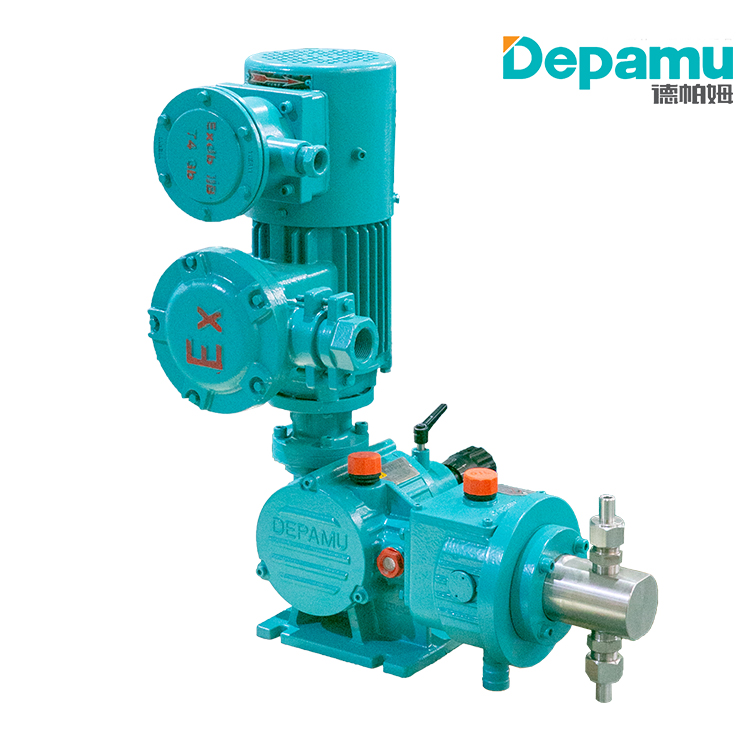
1. Defining the Core Components
To understand the multi-head metering piston plunger pump, it is essential to first break down its name into its constituent parts: the Depamu-pumps.com/Metering-pump.html target='_blank'>Metering Pump, the plunger/piston, and the multi-head configuration.
The Metering Pump
At its heart, this is a metering pump, also known as a dosing pump. A metering pump is a specific type of positive displacement pump designed to move a precise volume of fluid over a specified period, regardless of the system pressure. Unlike centrifugal pumps that create flow by adding energy to a fluid, positive displacement pumps physically trap a fixed amount of fluid and force it into the discharge pipe. The flow rate of a metering pump is adjusted by varying the length of the piston stroke or the speed of the pump. This allows for highly accurate and repeatable fluid delivery, a feature crucial in applications where the chemical composition of a final product depends on the exact ratio of its constituent ingredients.
The Plunger/Piston Principle
The pumping mechanism of this device relies on a reciprocating plunger or piston. This is a cylindrical component that moves back and forth within a sealed chamber (the cylinder). The forward stroke (or compression stroke) reduces the volume of the chamber, creating high pressure that forces the fluid out through the discharge valve. The backward stroke (or suction stroke) increases the chamber volume, creating a vacuum that draws new fluid in from the inlet. The direct displacement by the plunger makes the pump robust and capable of achieving very high discharge pressures, in some cases up to 500 bar (over 7,000 psi). The plunger is often made of high-quality materials like ceramic oxide to ensure a long service life and resistance to wear.
The Multi-Head Configuration
This is the defining feature of the pump in question. A multi-head pump incorporates two or more pumping heads, each consisting of its own plunger, cylinder, inlet, and discharge valves, all driven by a common actuation mechanism. For example, a pump can be configured with two heads or up to as many as twelve, depending on the application and manufacturer. This modular design allows for several powerful operational benefits.
2. Operational Principles and Key Advantages
The synergy between the metering pump's precision and the multi-head configuration offers distinct advantages that solve complex fluid handling challenges.
High Precision and Accuracy
The metering plunger pump is inherently a high-precision instrument. With advancements in drive technology, such as variable speed motors and advanced stroke adjustment mechanisms, these pumps can achieve a metering accuracy of ±0.5% across a 10% to 100% adjustment range. This high level of accuracy is largely independent of back pressure, making it a reliable choice for processes where consistency is non-negotiable.
Configuration for Pulsation Dampening
A single reciprocating pump produces a pulsating flow, which can be detrimental to some processes. When multiple heads are used to pump the same fluid, their strokes can be timed or phased out of sync. As one plunger completes its discharge stroke, another begins, creating a more continuous and smooth flow. This significantly reduces the pulsation in the discharge line, protecting downstream equipment and improving process stability. Manufacturers explicitly highlight this "reducing pulses" capability as a key benefit of the multi-head design.
Proportioning and Mixing Capabilities
Perhaps the most significant advantage of a multi-head pump is its ability to act as a proportioning pump. In this configuration, each head draws from a different fluid source and delivers its respective fluid into a common discharge manifold. This allows for the precise mixing of two or more liquids in a desired ratio. The ratio is easily set and adjusted by independently controlling the flow rate of each head, such as through stroke length adjustments. This eliminates the need for separate pumps and a complex mixing system, saving both space and cost.
Operational Efficiency and Redundancy
Using a single drive mechanism to operate multiple pumping heads is a space-saving and cost-effective solution, especially in crowded industrial environments like semiconductor fabrication facilities. Instead of having multiple pumps each with its own motor and controller, a single, complex actuation mechanism drives several heads. This reduces the overall footprint, lowers capital expenditure, and simplifies maintenance, as there are fewer actuating mechanisms to service. In some advanced designs, a common actuation mechanism can rapidly switch between heads to service different process fluids, reducing the need for cleaning and downtime between production runs.
3. Diverse Applications and Industry Use
The unique combination of high pressure, precision, and multi-fluid handling makes this pump a versatile tool across multiple sectors.
-
Chemical and Petrochemical Industries: For injecting precise amounts of catalysts, additives, and inhibitors into a main process stream. The robust nature of the plunger pump allows it to handle high pressures and a wide range of non-critical fluids like water and resins.
-
Semiconductor and Electronics Manufacturing: In this field, high-purity chemicals must be dispensed with absolute precision to avoid contamination. Multi-head pumps can dispense several different chemistries from a single unit on a processing line, saving valuable cleanroom space.
-
Oil and Gas: Used for injecting corrosion inhibitors, methanol, or other chemicals into wellheads or pipelines at high pressures. The multi-head design allows a single pump to service multiple wells or injection points from a central location.
-
Water Treatment: For the accurate dosing of coagulants, flocculants, and disinfectants into municipal or industrial water supplies.
-
Pharmaceutical and Food & Beverage: Where precise and hygienic dosing is critical for product consistency and safety. The ability to proportion different ingredients accurately is a major advantage.
Conclusion
The multi-head metering piston plunger pump represents a significant advancement in industrial fluid handling. By integrating the precision of a reciprocating Plunger Metering Pump with the operational flexibility of a multi-head configuration, it offers a solution that is simultaneously accurate, efficient, and versatile. Its ability to deliver high-pressure, pulsation-reduced flow, or to accurately proportion multiple fluids from a single drive unit, makes it an indispensable tool for complex and demanding processes. From the high-purity demands of semiconductor fabrication to the high-pressure reality of oil extraction, the multi-head metering piston plunger pump provides the control and reliability that modern industry depends on. Its enduring presence across such a wide spectrum of applications is a testament to its robust design and unmatched functional utility