


How to Choose the Depamu-pumps.com/Metering-pump.html target='_blank'>Metering Pump: A Comprehensive Selection Guide
Introduction
A metering pump—also known as a dosing pump or proportioning pump—is a positive displacement pump designed to deliver precise, controlled volumes of liquid over a specified time period. Unlike conventional pumps that simply move fluid from one point to another, metering pumps are engineered for accuracy, repeatability, and fine-tuned flow control. They are indispensable in industries ranging from petrochemical processing and pharmaceutical manufacturing to water treatment, food production, and nuclear power.
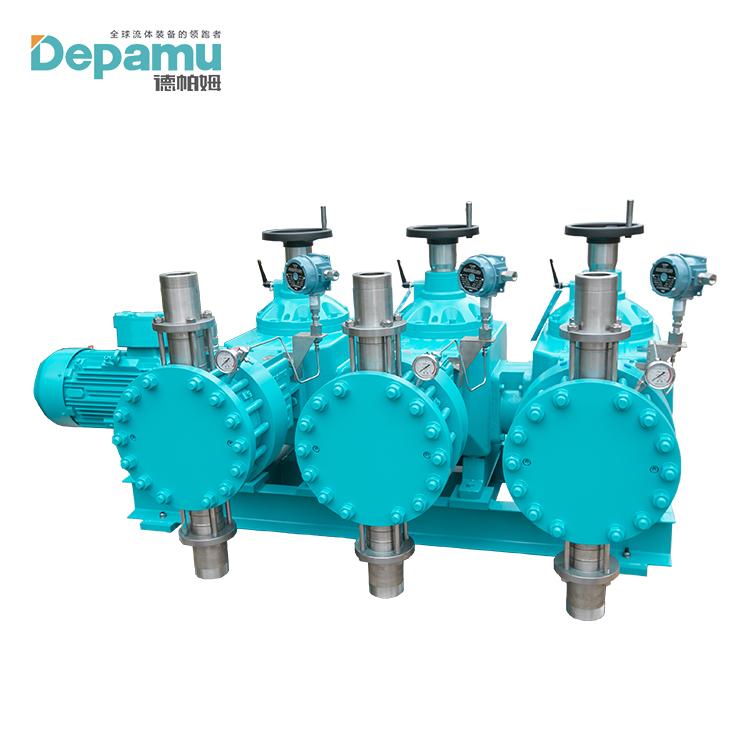
However, selecting the right metering pump is far from straightforward. With dozens of pump types, hundreds of material combinations, and countless application variables, engineers and procurement professionals often find the selection process daunting. A poorly chosen pump can lead to inaccurate dosing, premature equipment failure, safety hazards, and significant financial losses. This guide provides a systematic framework for selecting the optimal metering pump for your specific application.
Part I: Understanding the Core Selection Parameters
Before evaluating specific pump models, you must thoroughly define your application requirements. The selection process begins with four fundamental questions:
1. Flow Rate (Dose Rate)
The required flow rate—typically expressed in litres per hour (L/h) or gallons per hour (GPH)—is the most basic selection criterion. However, determining the correct flow rate involves more than simply matching the process requirement.
Key principles:
-
The selected pump's capacity should equal or slightly exceed the maximum process flow requirement.
-
The pump should be sized so that the maximum expected flow rate falls between 85% and 90% of the pump's rated capacity. This leaves room for future capacity needs and prevents the pump from operating at its absolute limit.
-
For optimal accuracy and repeatability, the operating flow should be within 30% to 100% of rated capacity for plunger and hydraulic Diaphragm Pumps, and 40% to 100% for mechanical diaphragm pumps.
-
From an economic perspective, it is recommended to select a pump where the actual required flow is 70% to 90% of the rated capacity.
Critical warning: Never oversize a metering pump. Operating a pump at very low percentages of its capacity (below 10%) will compromise accuracy and may cause operational issues. Conversely, running continuously at 100% capacity leaves no margin for adjustment and accelerates wear.
2. Pressure (Discharge Head)
The pump must generate sufficient pressure to overcome the system's back pressure, which includes the pressure at the injection point plus friction losses in the discharge piping.
Selection rules:
-
The rated pressure of the selected pump should be slightly higher than the actual maximum required pressure—typically 10% to 20% higher.
-
Do not select a pump with excessively high pressure capacity. Over-specification wastes energy and increases both capital investment and operating costs.
-
For systems with significant pressure fluctuations, consider pumps with higher pressure margins and appropriate pulsation dampeners.
3. Fluid Properties (Chemical Compatibility)
This is perhaps the most critical—and most frequently overlooked—selection parameter. The chemical being pumped determines the wetted materials (liquid end, diaphragm, valves, seals, and fittings).
Key fluid characteristics to evaluate:
-
Chemical composition and corrosiveness: The fluid may be acidic, alkaline, or chemically aggressive. Material selection must account for corrosion, erosion, and solvent action.
-
Viscosity: Standard metering pumps typically handle clear liquids with viscosities ranging from water-like to approximately 1,500 centipoise (cPs). Higher viscosities may require special pump heads or different pump technologies. General-purpose metering pumps typically handle viscosities up to 1,000 mm²/s.
-
Temperature: Standard metering pumps operate within -30°C to 100°C. Special designs—such as pumps with insulated jackets—can handle temperatures up to 500°C.
-
Solid content: For media containing solid particles, the particle size should generally be less than 0.1 mm. Larger particles may require modifications to the pump's flow path.
-
Specific gravity: This affects the power required and must be considered in motor selection.
-
Outgassing tendency: Fluids such as sodium hypochlorite that release gas may require automatic venting options in the pump's wetted end.
Material options: Common wetted materials include 316 stainless steel, C-20 stainless steel, PVC, Kynar® PVDF, PTFE, and various alloys. Pumps with all-PTFE or PFA wetted parts are recommended for highly aggressive liquids.
4. Accuracy and Control Requirements
Different applications demand different levels of dosing precision.
-
Accuracy: Metering pumps typically achieve ±1% accuracy. Mechanical diaphragm pumps may achieve approximately ±2%. For applications requiring exceptional precision—such as HPLC or pharmaceutical dosing—piston pumps offer the highest volumetric repeatability.
-
Turndown ratio: This defines the range over which the pump can accurately meter. Diaphragm metering pumps typically offer a 10:1 turndown ratio, and up to 100:1 with combined stroke and speed control.
-
Control methods: Pumps can be controlled manually, via stroke length adjustment, through stroke frequency variation (particularly for solenoid-driven pumps), or with electronic control systems accepting 4–20 mA or pulse signals.
Part II: Understanding Metering Pump Types
Metering pumps are classified primarily by their liquid-end (fluid-handling) configuration. Each type has distinct advantages and limitations.
1. Plunger (Piston) Metering Pumps
Plunger pumps use a reciprocating plunger to displace liquid through the pump.
Advantages:
-
Extremely high pressure capability—up to 350 MPa (50,000 psi)
-
Flow remains nearly constant even when discharge pressure varies
Limitations:
-
Packed plunger seal creates a leakage path—there is always some seepage
-
Seals and plungers are subject to wear and require periodic adjustment
Best for: High-pressure applications, non-hazardous fluids, and situations where initial cost is a primary concern.
2. Hydraulic Diaphragm Metering Pumps
These are the most widely used metering pumps in industrial applications. A hydraulically actuated diaphragm separates the process fluid from the plunger mechanism, with hydraulic oil transmitting the pumping force.
Advantages:
Limitations:
Safety note: For hazardous, toxic, or reactive media, double-diaphragm pumps are recommended. If one diaphragm fails, the second provides containment, and the failure can be detected through pressure monitoring or alarms.
Best for: Most industrial chemical dosing applications, particularly where leakage cannot be tolerated.
3. Mechanical Diaphragm Metering Pumps
In these pumps, the plunger directly connects to the diaphragm without a hydraulic oil system.
Advantages:
Limitations:
-
Maximum discharge pressure generally limited to 1.2 MPa (approximately 175 psi)
-
Diaphragm experiences high stress, leading to shorter diaphragm life
Best for: Low-pressure applications, water treatment, and general chemical dosing where high precision is not critical.
4. Solenoid (Electromagnetic) Metering Pumps
These pumps use electromagnetic force from a solenoid coil to drive the plunger, eliminating the need for a motor and gear mechanism.
Advantages:
-
Flow control via stroke frequency provides excellent linearity (50% frequency = 50% flow)
-
Fast response—flow can be adjusted from minimum to maximum within one second
Limitations:
Best for: Low-flow, low-pressure dosing applications, particularly in water treatment and laboratory settings.
5. Peristaltic (Hose) Pumps
Though less common in traditional metering pump discussions, peristaltic pumps deserve mention for certain applications.
Advantages:
Limitations:
-
Pressure capability is more limited (typically 6–10 bar in common designs)
-
Flow rates are generally lower than those of motor-driven diaphragm or plunger pumps
Best for: Abrasive fluids, shear-sensitive media, and applications requiring sterile or contamination-free pumping.