

Depamu Reciprocating Pumps for Water Treatment and Filtration Units
Abstract
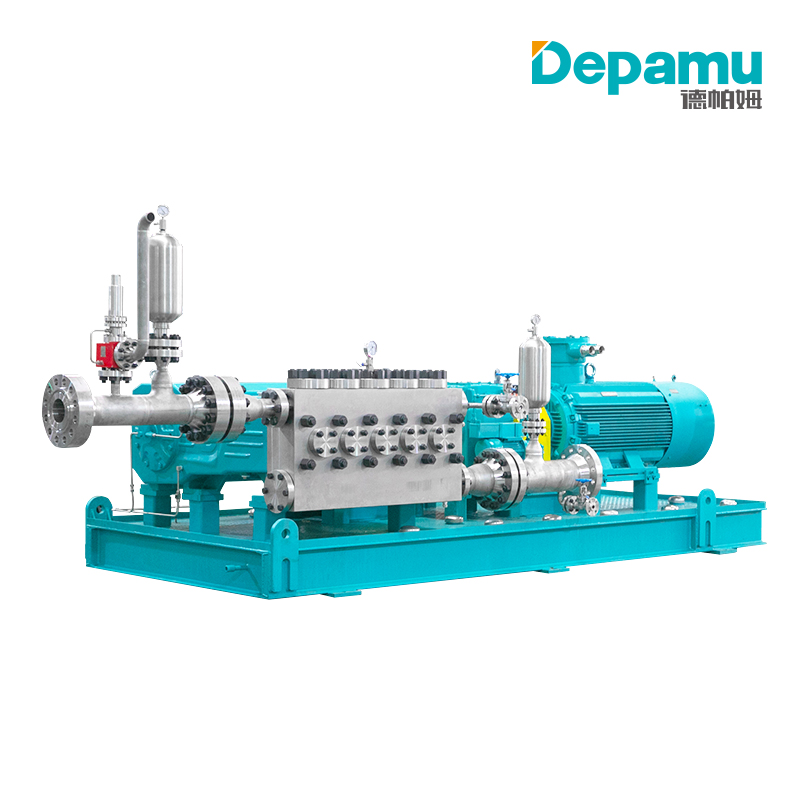
Water treatment and filtration processes demand precision, reliability, and adaptability. Reciprocating pumps have emerged as essential components in these systems, providing accurate chemical dosing, high-pressure capabilities, and consistent performance across a wide range of applications. DEPAMU (Hangzhou) Pumps Technology Co., Ltd. has established itself as a key manufacturer in this field, offering an extensive portfolio of reciprocating pump technologies designed specifically for water treatment applications. This article provides a comprehensive examination of DEPAMU reciprocating pumps, exploring their technical characteristics, application scope, integration into treatment systems, and the engineering principles that make them indispensable in modern water treatment infrastructure.
1. Introduction
The global demand for clean water continues to rise, driving innovation in water treatment technologies. Within this evolving landscape, the role of pumping equipment extends far beyond simple fluid transfer. Modern water treatment facilities require pumps capable of precise chemical metering, handling aggressive media, maintaining consistent flow under varying pressures, and operating reliably in demanding environments .
DEPAMU (Hangzhou) Pumps Technology Co., Ltd., headquartered in Hangzhou, China, has positioned itself at the forefront of this industry. The company specializes in the development and manufacture of Metering Pumps, Dosing Pumps, High-Pressure Reciprocating Pumps, and complete dosing systems . Drawing on advanced production technologies from the United States, Germany, and Japan, DEPAMU serves industries including petroleum, natural gas, chemical processing, metallurgy, nuclear power, pharmaceutical, and water treatment .
This article examines DEPAMU's reciprocating pump offerings for water treatment and filtration applications, exploring the technical specifications, operational principles, and the company's approach to addressing the complex challenges faced by water treatment professionals.
2. Reciprocating Pump Fundamentals and DEPAMU's Approach
2.1 Operating Principles
Reciprocating pumps operate on a fundamental principle: converting rotational motion from a motor into linear reciprocating motion that creates alternating suction and discharge strokes. This mechanism enables precise volumetric displacement, making reciprocating pumps ideal for metering and dosing applications where accuracy is paramount.
DEPAMU manufactures several reciprocating pump variants, including plunger-type metering pumps and Mechanical Diaphragm Metering Pumps. The DP Series mechanical diaphragm metering pump exemplifies the company's engineering approach, utilizing a motor-driven worm gear pair combined with an eccentric mechanism to convert rotary motion into the reciprocating movement of a slide rod. This slide rod drives a mechanical diaphragm to perform periodic deformation, enabling fluid suction and discharge .
2.2 Performance Capabilities
DEPAMU reciprocating pumps demonstrate impressive performance parameters suitable for demanding water treatment applications:
-
Maximum flow rate per head: Up to 2300 L/h
-
Maximum discharge pressure: Up to 1.2 MPa
-
Turndown ratio: 10:1
-
Steady-state accuracy: ±2%
The flow rate can be adjusted across the full 0-100% range, with adjustments possible in both static and dynamic states. This flexibility allows operators to fine-tune dosing rates in response to changing water quality conditions without interrupting operations .
3. Water Treatment Applications
3.1 Chemical Dosing and Injection
The most prominent application of DEPAMU reciprocating pumps in water treatment is chemical dosing. The company has developed specialized circulating water Injection Packages that integrate metering pumps with solution tanks, mixers, control systems, and associated piping. These packages serve multiple treatment functions:
Boiler Water Treatment: Ammonia, hydrazine, acetoxime, and phosphate injection systems maintain proper water chemistry in thermal power generation and industrial boiler systems. These applications require precise chemical metering to prevent scale formation and corrosion .
Circulating Water Treatment: Scale inhibitor (corrosion inhibitor) and germicide injection packages protect cooling water systems from biofouling, scaling, and corrosion. These systems typically utilize flow rates ranging from 50 to 1500 L/h at discharge pressures of 0.3 to 2.0 MPa .
Wastewater Treatment: Flocculant, dispersant, acid, and alkali injection packages support coagulation, flocculation, pH adjustment, and other treatment processes. DEPAMU systems accommodate flow rates from 100 to 1000 L/h at pressures up to 2.5 MPa .
3.2 Filtration System Integration
Reciprocating pumps play a critical role in membrane filtration systems, including reverse osmosis (RO), nanofiltration, ultrafiltration, and microfiltration. In these applications, pumps must deliver consistent high-pressure feed to membrane elements while managing concentrate (reject) streams effectively.
The technical literature on reciprocating pump applications for filtration systems highlights several key advantages:
Energy Recovery: Advanced reciprocating pump configurations can incorporate pressure recovery mechanisms that reduce the energy required for filtration. By utilizing concentrate stream pressure to assist the pumping stroke, overall energy consumption decreases significantly .
Pulsation Effects: The natural pulsation of reciprocating pumps can be advantageous in membrane systems. When properly controlled, pulse waves generated by reciprocating pumps improve permeate quality and throughput by disrupting concentration polarization at the membrane surface .
Compact Design: DEPAMU reciprocating pumps are available in compact modular configurations, with horizontal, vertical, stationary, and mobile mounting options. This flexibility accommodates space-constrained installations and mobile treatment systems .
4. Technical Advantages of DEPAMU Reciprocating Pumps
4.1 Precision Metering
DEPAMU reciprocating pumps are engineered for metering accuracy. The DP Series achieves steady-state accuracy of ±2%, with a turndown ratio of 10:1 . This precision enables operators to maintain tight control over chemical addition rates, optimizing treatment efficacy while minimizing chemical consumption.
4.2 Material Compatibility
Water treatment often involves handling corrosive chemicals, high-temperature fluids, or abrasive slurries. DEPAMU addresses this challenge through extensive material options for wetted parts:
-
Metals: Alloy steel, stainless steel (304, 316, 316L), duplex steel, titanium, Hastelloy
This material versatility ensures compatibility with a wide range of treatment chemicals, from aggressive acids and alkalis to sensitive polymer flocculants.
4.3 Reliability and Service Life
Industrial water treatment demands equipment capable of continuous operation with minimal maintenance. DEPAMU reciprocating pumps incorporate design features that enhance reliability:
-
Bath lubrication of drive parts ensures long service life
-
Self-cleaning check valve structures reduce maintenance requirements
-
Maintenance intervals of up to 8000 hours at pressures below 0.7 MPa
For applications requiring enhanced safety, DEPAMU offers Diaphragm Pumps with diaphragm-broken alarm functionality, including single, double, triple, and quadruple diaphragm configurations .
4.4 Control and Automation
Modern water treatment facilities increasingly rely on automated control systems. DEPAMU reciprocating pumps support multiple control options:
-
Manual stroke adjustment
-
Electric stroke adjustment
-
Variable frequency speed control
-
PLC or DCS integration
Under automatic control, the system can process signals for flow rate, pH value, electrical conductivity, and turbidity, automatically adjusting pump speed and stroke to maintain optimal treatment conditions . The variable frequency drive accepts standard 4-20mA signals for seamless integration with existing control infrastructure .
5. Design and Configuration Flexibility
DEPAMU recognizes that water treatment requirements vary widely across industries. The company's modular design approach provides extensive configuration options:
5.1 Pump Head Configurations
Customers can select from plunger-type or diaphragm-type pump heads, with single or multi-diaphragm configurations . The choice between plunger and diaphragm designs depends on application requirements:
-
Plunger pumps: Suitable for high-pressure applications, with excellent volumetric efficiency
-
Diaphragm pumps: Offer leak-free operation, ideal for handling toxic or volatile chemicals
5.2 Power and Drive Options
DEPAMU provides flexibility in power sources and drive mechanisms:
-
Motor, diesel engine, or solar energy power
-
Double helical gear, worm and gear, reducer, or belt pulley deceleration mechanisms
This adaptability enables deployment in grid-connected facilities, remote locations, and mobile treatment systems.
5.3 Complete Package Solutions
For turnkey installations, DEPAMU offers complete chemical dosing packages. These integrated systems include:
-
Solution tank (various materials and capacities)
-
Mixer
-
Metering pump
-
Level gauge
-
Safety valve, pressure gauge, pulsation damper
-
Piping and valve system
-
Control cabinet and circuit control components
Package configurations range from 1 tank with 2 pumps up to 3 tanks with 5 pumps, accommodating complex multi-chemical treatment regimens .
6. Industry-Specific Applications
DEPAMU reciprocating pumps serve water treatment needs across multiple industry segments:
6.1 Thermal Power Generation
Boiler water treatment requires stringent control of feedwater chemistry. DEPAMU injection packages deliver precise dosing of phosphate, hydrazine, ammonia, and other treatment chemicals to maintain boiler water quality and prevent tube failure .
6.2 Oil and Gas
Oilfield operations involve numerous water treatment applications, including produced water treatment, injection water conditioning, and pipeline cleaning. DEPAMU pumps handle demulsifier, corrosion inhibitor, deoxidant, and methanol injection for gathering and transportation systems .
6.3 Industrial Manufacturing
Chemical manufacturing, metallurgy, and other industrial processes require reliable water treatment systems. DEPAMU reciprocating pumps support applications including high-pressure water dephosphorization in metallurgy, process water treatment, and wastewater management .
7. Compliance and Quality Standards
DEPAMU emphasizes engineering quality and compliance with international standards. The company's reciprocating pumps are designed according to American Petroleum Institute standards (API 674, API 676), representing a commitment to quality at a worldwide leading level . This compliance is particularly important for oil and gas industry applications where reliability and safety are paramount.
8. Conclusion
DEPAMU reciprocating pumps represent a comprehensive solution for water treatment and filtration applications. Through a combination of precision engineering, material versatility, automation capability, and modular design, these pumps address the diverse requirements of modern water treatment facilities.
The integration of reciprocating pumps into chemical dosing packages provides operators with turnkey solutions that simplify installation, operation, and maintenance. The ability to achieve metering accuracy of ±2%, handle corrosive and abrasive media, and operate reliably under continuous duty makes DEPAMU pumps a valuable component in water treatment infrastructure.
As water quality regulations become more stringent and treatment processes more sophisticated, the demand for precision pumping equipment will continue to grow. DEPAMU's ongoing commitment to technological advancement, evidenced by multiple patents and adherence to international standards, positions the company to meet these evolving challenges .
Water treatment professionals seeking reliable reciprocating pump solutions would be well served to consider DEPAMU's extensive product line, which combines technical sophistication with practical, application-focused design.