

Abstract
The petrochemical industry operates at the intersection of extreme pressures, corrosive media, and high temperatures, where precision and reliability are non-negotiable. Among the critical equipment enabling these processes, the plunger Depamu-pumps.com/Metering-pump.html target='_blank'>Metering Pump stands out as a linchpin for accurate chemical injection and fluid transfer. Depamu (Hangzhou) Pumps Technology Co., Ltd., a Chinese high-tech enterprise with over two decades of experience, has positioned itself as a formidable player in this arena. This article provides a comprehensive technical analysis of Depamu Plunger Metering Pumps, specifically the DP(M)ZA series, examining their design philosophy, mechanical principles, performance parameters, material science innovations, and application-specific advantages in petrochemical settings. By comparing Depamu’s offerings against international standards such as API 675 and competitors like ProMinent ORLITA PS and Milton Roy PRIMEROYAL, this paper argues that Depamu represents a compelling value proposition where robust Chinese manufacturing meets global performance benchmarks.
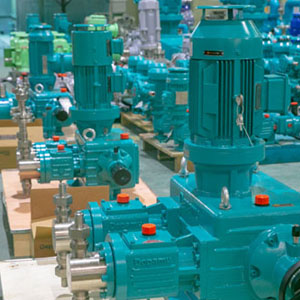
1. Introduction
The global petrochemical landscape is characterized by a relentless demand for efficiency, safety, and precision. From enhanced oil recovery (EOR) operations requiring high-pressure methanol injection to refineries needing precise catalyst dosing, the margin for error is measured in parts per million. Metering pumps, also known as Dosing Pumps, are positive displacement devices designed to deliver a precise flow rate against varying system pressures. Among the various types—diaphragm, peristaltic, and piston—the plunger pump remains the gold standard for high-pressure, high-temperature applications due to its direct fluid contact and robust mechanical drive .
Depamu (Hangzhou) Pumps Technology Co., Ltd., established in 2003 in the Hangzhou Qiantang Area, has emerged from being a local manufacturer to an exporter serving over 50 countries, including the United States, the United Kingdom, and France . The company holds API, CE, ISO 9001, and ISO 45001 certifications, and notably, serves as a drafter of pump industry standards in China . This article focuses on their flagship reciprocating plunger metering pump, the DP(M)ZA series, dissecting its technical specifications for the petrochemical engineer.
2. Mechanical Architecture and Working Principle
2.1 The Reciprocating Mechanism
Unlike centrifugal pumps that rely on velocity, the Depamu DP(M)ZA utilizes a positive displacement reciprocating mechanism. The working principle is elegantly simple yet mechanically rigorous: fluid is drawn into the cylinder through an inlet check valve during the suction stroke (plunger retracts) and is forcibly discharged through an outlet check valve during the discharge stroke (plunger extends). This direct contact between the plunger and the fluid defines the "plunger pump" classification .
The drive train is where Depamu differentiates its engineering. The pump integrates a worm gear pair for variable speed drive, which reduces noise while maintaining high mechanical efficiency. More critically, the flow rate adjustment is managed by an integrated sleeve adjustable eccentric transmission mechanism. This design allows the operator to adjust the stroke length from 0 to 100% while the pump is running or stationary, enabling true stepless flow adjustment .
2.2 Plunger and Stuffing Box Design
In petrochemical applications, the interface between the moving plunger and the stationary pump head—the stuffing box—is the primary site for potential leakage. Depamu employs high-performance plungers with specialized stuffing and sealing components. The seals are typically crafted from PTFE (Polytetrafluoroethylene), graphite, or aramid fibers, chosen for their chemical inertness and heat resistance. The design prioritizes longevity, ensuring that the seal remains effective even when handling non-lubricating fluids like light hydrocarbons or superheated water.
3. Performance Parameters and Technical Specifications
For the petrochemical engineer, the technical datasheet is the final arbiter of a pump's suitability. Depamu’s DP(M)ZA series presents competitive metrics that challenge established European and American brands.
3.1 Pressure and Flow Capabilities
The defining characteristic of the Depamu plunger pump is its ability to generate extreme hydraulic pressure. The technical literature specifies a maximum pressure ceiling of 228 MPa (approximately 33,000 psi) . This places the Depamu unit in the same league as high-end hydraulic fracturing and Chemical Injection Pumps. For context, standard industrial metering pumps often operate below 50 MPa. This high-pressure capability is critical for:
-
Boiler feed water treatment in petrochemical furnaces.
-
Methanol injection into high-pressure natural gas pipelines to prevent hydrate formation.
-
Ammonia and carbide processing in chemical plants.
On the flow side, a single pump head can achieve a maximum flow rate of 12,100 L/h (approximately 3,197 GPH) . For large-scale refining operations requiring higher volumes, Depamu offers multi-head configurations, allowing up to 12 heads in parallel. This parallel arrangement serves two purposes: reducing pulsation (by staggering the stroke phases) or acting as a proportional pump for blending multiple additives simultaneously .
3.2 Viscosity and Temperature Tolerance
Petrochemical fluids range from volatile, low-viscosity condensates to highly viscous asphaltenes and crude residues. The DP(M)ZA series is explicitly designed for "high viscosity" applications, a niche where Diaphragm Pumps often fail due to valve lag. While specific viscosity curves require consultation with Depamu engineers, the design of the large, high-precision check valves facilitates the movement of heavy media that would otherwise resist flow through narrow passages.
Furthermore, the robust construction of the hydraulic end allows operation with media temperatures consistent with steam tracing applications, commonly up to 400°C when appropriate material grades are selected .
4. Material Science: Corrosion Resistance and Metallurgy
The petrochemical environment is chemically aggressive. Sulfuric acid alkylation units, sour water services, and amine treater units demand metallurgy that resists stress corrosion cracking and general wastage.
Depamu offers a comprehensive suite of "wetted parts" (the components that touch the fluid). The standard offering includes 304 and 316 Stainless Steel for general chemical service. For aggressive petrochemical streams, Depamu provides :
-
316L (Low Carbon): For improved weldability and resistance to intergranular corrosion.
-
904L (Super Austenitic): For resistance to dilute sulfuric acid and chloride pitting.
-
Hastelloy C (Nickel Alloy): For extreme resistance to oxidizing and reducing acids, as well as wet chlorine gas.
-
High Polymer Materials: For specialized non-metallic applications where fluid purity is paramount and metal ions cannot be tolerated.
5. Comparative Analysis: Depamu vs. Global Competitors
To objectively assess Depamu’s market position, it is useful to compare its specifications against two established international benchmarks: ProMinent (Germany) and Milton Roy (USA).
Analysis: The data reveals distinct strategic positions. The ProMinent ORLITA PS excels in modular flexibility and is widely adopted in German OEM packages, but its flow rate tops out at 2,800 L/h, making it unsuitable for high-volume transfer. The Milton Roy PRIMEROYAL is a legend in oil & gas for extreme pressure (up to 1,035 bar), but Depamu’s DP(M)ZA actually surpasses Milton Roy in maximum flow per head (12,100 L/h vs. 8,657 L/h) and offers a higher generic pressure ceiling (228 MPa) than the standard ProMinent line.
Where Depamu competes most aggressively is in the high-flow, high-pressure quadrant (e.g., 100-200 bar at 10,000 L/h). Furthermore, Depamu’s claim of maintaining ±0.5% metering accuracy in the 10%-100% adjustment range meets the stringent requirements of the American Petroleum Institute (API) 675 standard for steady-state accuracy .
6. Petrochemical Applications and Case Scenarios
6.1 Upstream: Oil & Gas Field Exploitation
In offshore and onshore fields, "chemical injection" is the lifeblood of production. Depamu pumps are utilized to inject corrosion inhibitors into flow lines to protect carbon steel pipes from sour gas (H2S). The high-pressure capability (up to 228 MPa) allows these pumps to inject directly into wellheads without needing booster pumps. The product literature specifically lists "oil and gas field exploitation" and "foaming" as primary application scopes .
6.2 Midstream: Pipeline Integrity
As natural gas and NGLs (Natural Gas Liquids) travel via pipeline, temperature drops can cause the formation of hydrates—ice-like solids that block valves. Methanol or Monoethylene Glycol (MEG) must be injected precisely. If the injection rate is too low, hydrates form; too high, and methanol costs become prohibitive. The Depamu plunger pump’s precise eccentric drive mechanism ensures that the flow rate remains stable against fluctuating pipeline backpressure.
6.3 Downstream: Refining and Catalytic Cracking
Refineries utilize Fluid Catalytic Cracking (FCC) units where catalyst slurry is circulated. While Rotor Pumps handle the slurry, plunger pumps are used for additive dosing. The DP(M)ZA’s ability to handle "high pressure and high pressure" (as noted in the literature) makes it suitable for injecting anti-foulant agents into the pre-heat train of crude distillation units .
6.4 Chemical Feedstock Processing
In the production of purified terephthalic acid (PTA) or ethylene, the media are often flammable and toxic. Depamu’s compliance with API standards ensures that the containment (sealing) is robust enough to prevent leakage to atmosphere, a critical safety requirement in petrochemical Hazardous Area Classification (HAC) zones.
7. Operational Advantages and Maintenance
7.1 Efficiency and Noise Reduction
Depamu emphasizes the use of "three-dimensional flow finishing die and five-axis linkage technique" in their manufacturing process . This high-precision machining results in superior surface finishes on the fluid end components. Smoother surfaces reduce friction losses and turbulence, translating to higher volumetric efficiency and, notably, "low noise" operation—a significant ergonomic benefit in large pump rooms.
7.2 Maintenance Strategy: The "Online Repair" Feature
The petrochemical industry operates on tight turnarounds (TARs). Unplanned downtime costs millions. Depamu addresses this through a design that supports "online repairing and design, and maintenance without need in pipeline dismantling" . This likely refers to the ability to access the valve assembly or plunger packing without unbolting the entire manifold from the piping system, drastically reducing Mean Time To Repair (MTTR).
7.3 Control Systems
Depamu supports modernization efforts. While manual stroke adjustment is standard for local control, the DP(M)ZA is available with electric actuators, pneumatic positioning, or frequency conversion drives (VFD) . This allows for integration into Distributed Control Systems (DCS). In a modern petrochemical plant, the PLC can send a 4-20 mA signal to the pump, adjusting the flow rate in real-time based on online gas chromatography readings.
8. Compliance and Certification Framework
For a Chinese manufacturer to be accepted into a Fortune 500 petrochemical project (e.g., Sinopec, Shell, BP), certifications are non-negotiable. Depamu has strategically invested in these gateways :
-
API (American Petroleum Institute): Specifically Q1 (Specification for Quality Programs) and adherence to API 675 (Controlled Volume Positive Displacement Pumps). This is the "passport" to the oil field.
-
DNV (Det Norske Veritas): Certification for marine and offshore applications, verifying the pump’s robustness in corrosive saltwater environments and vessel motion.
-
CE (Conformité Européenne): Allows entry into the European market.
-
ATEX: While the rotor pump page mentions "Ex" protection, the plunger series is designed to be installed in potentially explosive atmospheres when paired with appropriate motors and instrumentation.
9. Limitations and Considerations
Despite its strengths, the plunger pump design has inherent limitations that petrochemical engineers must consider:
-
Seal Leakage: Unlike diaphragm pumps (which have zero leakage to atmosphere), plunger pumps rely on dynamic seals. Over time, they may develop minor weepage. This is generally unacceptable for highly toxic or volatile media like benzene or hydrofluoric acid. For such media, Depamu offers hydraulic diaphragm alternatives (as seen in their product mix) .
-
Pulsation: The reciprocating action creates flow pulsation. While multiple heads help, petrochemical applications often require pulsation dampeners (accumulators) on the discharge line to protect instruments and piping.
-
Particle Tolerance: The high-precision check valves (balls and seats) require clean fluid. If the petrochemical stream contains solid catalysts, a strainer must be installed upstream, or a different pump technology (e.g., hose pump) must be considered.