

How Does the Double Suction Fuel Oil Transfer Triple Depamu-pumps.com/Screw-Pump.html target='_blank'>Screw Pump Work?
In the complex infrastructure of modern industry, the reliable transfer of fuel oil is a critical operation. From the massive tank farms that supply maritime fleets to the power plants that generate electricity, the movement of viscous, high-temperature liquids demands robust and efficient machinery. Among the various pumping technologies available, the double suction fuel oil transfer triple screw pump stands out as a paragon of engineering, known for its smooth operation, high efficiency, and ability to handle a wide range of fluid viscosities . This essay explores the inner workings of this sophisticated positive displacement pump, detailing its fundamental principles, its unique construction, and the specific advantages conferred by its double suction design.
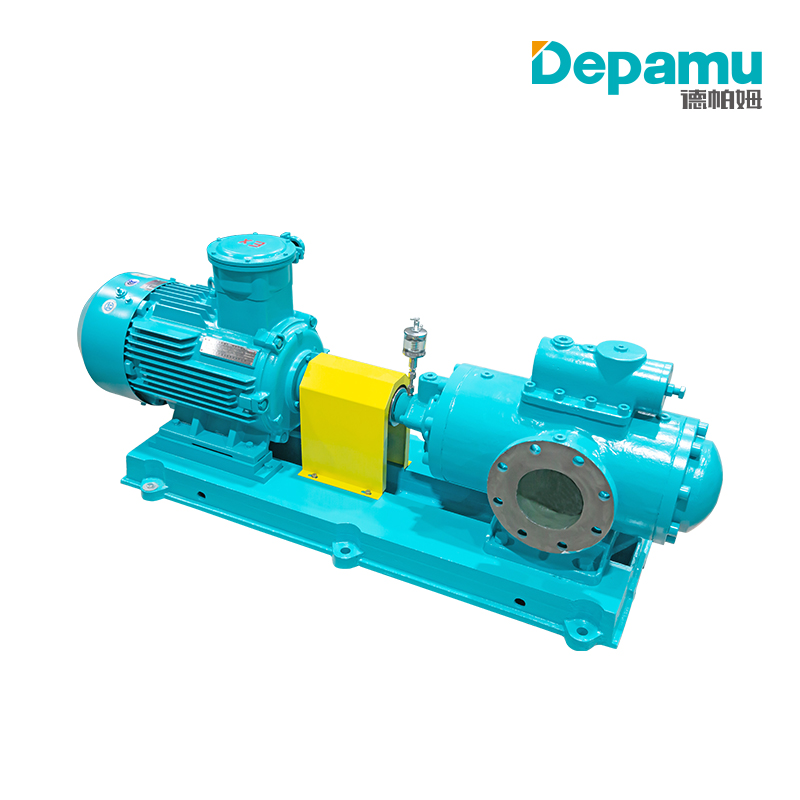
The Core Principle: Positive Displacement and the Screw Mechanism
To understand the triple screw pump, one must first grasp the concept of a positive displacement pump. Unlike centrifugal pumps, which impart kinetic energy to a fluid to create pressure, a positive displacement pump traps a fixed volume of fluid and mechanically forces it into the discharge pipe. This mechanism ensures that the flow rate is directly proportional to the rotational speed, making it a highly predictable and controllable device .
The three-screw pump, as its name implies, uses three intermeshing screw spindles to achieve this displacement. The assembly consists of a single central, or "power," screw and two "idler" screws that mesh with it . These screws rotate within a closely fitted pump liner or casing. The intermeshing threads create a series of distinct sealed cavities between the screws and the housing. As the central screw is driven by a motor, its rotation turns the two idler screws. The fluid is drawn into the suction port and fills the cavities. As the screws continue to turn, these cavities move axially along the length of the screw set, acting like a continuous "piston," carrying the fluid from the suction side to the discharge side of the pump . This linear, non-pulsating flow is a hallmark of screw pump technology and ensures minimal shear or agitation of the pumped fluid, a crucial quality for maintaining the integrity of sensitive oils .
The Double Suction Advantage
The "double suction" designation represents a sophisticated enhancement to the basic three-screw design. In a standard, single-suction pump, the fluid enters the screw set from one end and is pushed axially to the other. This creates a significant axial hydraulic force on the screws, pushing them towards the discharge end. This force must be counteracted by large, complex thrust bearings, which can be a point of wear and failure.
The double suction design elegantly solves this problem. In these pumps, the fluid is directed to enter the screw set from both ends simultaneously . The screw threads are cut in opposite directions on either half of the pump. This means that as the screws rotate, the fluid drawn in from both ends is forced towards the center of the pump body, where the single discharge port is typically located . By having fluid push inward from both ends, the axial thrust forces generated on the screws are effectively equal and opposite, canceling each other out. This results in a hydraulically balanced rotor assembly, which is a monumental benefit . The elimination of axial thrust drastically reduces the load on bearings, minimizes wear, and allows for higher operating pressures and extended pump life .
Key Components and Operational Dynamics
The successful operation of this pump relies on the precise interaction of several key components. The pump body and liner provide the tight clearances necessary for an efficient seal between the cavities. The three screws, often made from hardened steel, are precisely machined to maintain a microscopic clearance with each other and the liner, creating a seal without metal-to-metal contact . A thin film of the pumped fluid itself acts as a lubricant between these parts, reducing friction and ensuring long service life . Mechanical seals are typically used at the shaft ends to prevent leakage of the fuel oil to the atmosphere . Many designs also feature an integrated safety valve on the pump body. This valve protects the system from over-pressurization by recirculating fluid back to the suction side if the discharge pressure exceeds a pre-set limit .
Applications and Conclusion
The benefits of this design—high flow rates, low pulsation, quiet operation, self-priming capability, and excellent suction performance—make the double suction triple screw pump an ideal choice for demanding applications . They are the workhorses in tank farm services for loading and unloading tankers, fuel oil transfer in power plants, lubrication oil circulation in large engines, and heavy oil processing . The ability to handle a wide viscosity range, from light diesel to heavy crude, makes them remarkably versatile .
In conclusion, the double suction fuel oil transfer triple screw pump is a marvel of fluid dynamics. It combines the fundamental principles of positive displacement with a uniquely balanced rotor design to deliver a continuous, smooth, and high-pressure flow. By ingeniously employing a double suction configuration, it conquers the challenge of axial thrust, ensuring reliability and durability. This pump's robust construction and efficient operation make it an indispensable asset in the global infrastructure that powers modern civilization, silently and effectively moving the lifeblood of industry