

Depamu FO Supply Horizontal Screw Pump for Vessel: A Comprehensive Technical Overview
Introduction
In the demanding environment of marine and vessel operations, the reliable transfer of fuel oil (FO) and other viscous fluids is critical for engine performance, auxiliary systems, and overall operational safety. DEPAMU (Hangzhou) Pumps Technology Co., Ltd., a high-tech enterprise established in 2003 and based in Hangzhou Qiantang Area, has emerged as a significant player in the fluid equipment industry, offering a range of pumping solutions that meet the rigorous standards of the maritime sector. This article provides an in-depth technical and operational analysis of DEPAMU's horizontal screw pump specifically designed for vessel fuel oil supply applications, examining its design philosophy, technical specifications, operational advantages, and its strategic position in the competitive marine pump market.
Company Background and Industry Positioning
DEPAMU has established itself as a specialist in the research, development, production, and sales of a comprehensive range of pumping equipment. The company's product portfolio extends beyond screw pumps to include Metering Pumps (plunger, mechanical diaphragm, and hydraulic diaphragm types), high-pressure process Reciprocating Pumps, electric and pneumatic Diaphragm Pumps, Rotor Pumps, and various chemical dosing packages. This diversified expertise provides DEPAMU with a holistic understanding of fluid transfer challenges, which directly informs the design and engineering of their screw pump offerings.
The company holds significant industry credentials, including ISO 9001, ISO 14001, ISO 45001, CE, and API certifications, and serves as a drafter of pump industry standards in China. These qualifications are particularly relevant for marine applications, where compliance with international maritime regulations and classification society requirements is non-negotiable. DEPAMU's established partnerships with major state-owned enterprises such as CNPC, SINOPEC, and CNOOC, along with exports to over 50 countries including the United States, the United Kingdom, and France, demonstrate the company's ability to meet diverse and demanding operational requirements.
The Horizontal Screw Pump: Design and Engineering Principles
Fundamental Operating Principle
DEPAMU's horizontal screw pumps are engineered based on the positive displacement principle, which offers distinct advantages over centrifugal pumps when handling viscous fluids, shear-sensitive media, or fluids containing suspended solids. The pump's design allows for bidirectional rotation and fluid transport, providing operational flexibility in vessel fuel systems where flow direction may need to be reversed for maintenance or system flushing.
The core mechanism involves one or more helical rotors turning within a stator or housing, creating progressive cavities that move fluid from suction to discharge with minimal pulsation. This design results in exceptionally smooth flow characteristics, which is crucial for maintaining steady pressure in fuel supply lines to marine diesel engines and boiler burner systems.
Technical Specifications and Performance Parameters
DEPAMU's horizontal screw pumps offer a broad operational envelope suitable for the varied conditions encountered in vessel fuel systems:
Flow and Pressure Capabilities: The pumps demonstrate consistent performance across a wide range of viscosities, from 1 mPas to 1,000,000 mPas. This versatility allows the same pump model to handle marine gas oil (MGO), marine diesel oil (MDO), heavy fuel oil (HFO), and bunker oil, accommodating the different fuel grades typically carried aboard vessels. Flow rates vary by model, with specific configurations available for different vessel sizes and fuel consumption requirements.
Temperature Range: The pump's engineered design accommodates fluid temperatures from -12°C to +150°C. This capability is essential for handling both cold fuels and pre-heated heavy fuel oils, which often require elevated temperatures to achieve proper viscosity for atomization in engines and burners.
Suction Performance: With an optimal suction capacity of 8 meters of water column, the pumps demonstrate robust self-priming capability, a critical feature for vessel fuel transfer applications where the pump may be located at a significant distance from the fuel tank. This suction lift capability reduces the need for additional booster pumps in many installations.
Solids Handling: The progressive cavity design allows the pump to transport fluids containing hard suspended particles up to 30mm in size. This robustness is particularly valuable in marine fuel systems where fuel contamination, though minimized through filtration, cannot always be completely eliminated.
Horizontal Configuration Advantages
The horizontal mounting configuration offers specific benefits for vessel installations:
Space Optimization: The horizontal layout facilitates installation in the typically confined machinery spaces of vessels, allowing for efficient utilization of available floor area while maintaining accessibility for maintenance.
Stability and Vibration Control: The horizontal arrangement provides a stable operating platform, with proper alignment reducing vibration transmission to the vessel's structure. This is particularly important for vessels where prolonged vibration can lead to structural fatigue and increased noise levels.
Simplified Maintenance Access: Horizontal mounting positions critical components at accessible heights, simplifying routine inspection, maintenance, and component replacement without requiring specialized access equipment or extensive disassembly of surrounding systems.
Suitability for Vessel Fuel Oil Supply Systems
Fuel Oil Handling Requirements
Vessel fuel oil systems present unique challenges that demand specialized pumping solutions:
Viscosity Management: Marine fuels vary significantly in viscosity, with heavy fuel oils requiring pre-heating to achieve pumpable viscosity while lighter distillate fuels may be handled at ambient temperatures. DEPAMU's screw pumps maintain consistent volumetric efficiency across this viscosity spectrum, ensuring reliable fuel delivery regardless of fuel grade or operating conditions.
Shear Sensitivity: The progressive cavity design ensures non-shearing, non-mixing transfer that preserves the molecular structure and specific fluid properties formed during processing. This characteristic is particularly important for maintaining fuel properties, including viscosity characteristics and stability, which directly impact combustion efficiency and engine performance.
Pressure Stability: The positive displacement nature of screw pumps provides steady, pulsation-free flow, maintaining consistent pressure in the fuel supply line. This stability is essential for modern marine engines with sensitive fuel injection systems that require precise pressure control for optimal combustion.
Integration with Fuel Management Systems
DEPAMU's horizontal screw pumps are designed to integrate seamlessly with vessel fuel management systems:
Modular Configuration: Multiple modular structural combinations allow customization to suit specific vessel requirements, including options for variable speed drives, pressure relief systems, and instrumentation packages.
Material Compatibility: The pumps offer flexibility in materials of construction, allowing selection based on fuel composition and corrosion resistance requirements. This includes options for carbon steel, stainless steel, and specialized alloys appropriate for the specific fuel types being handled.
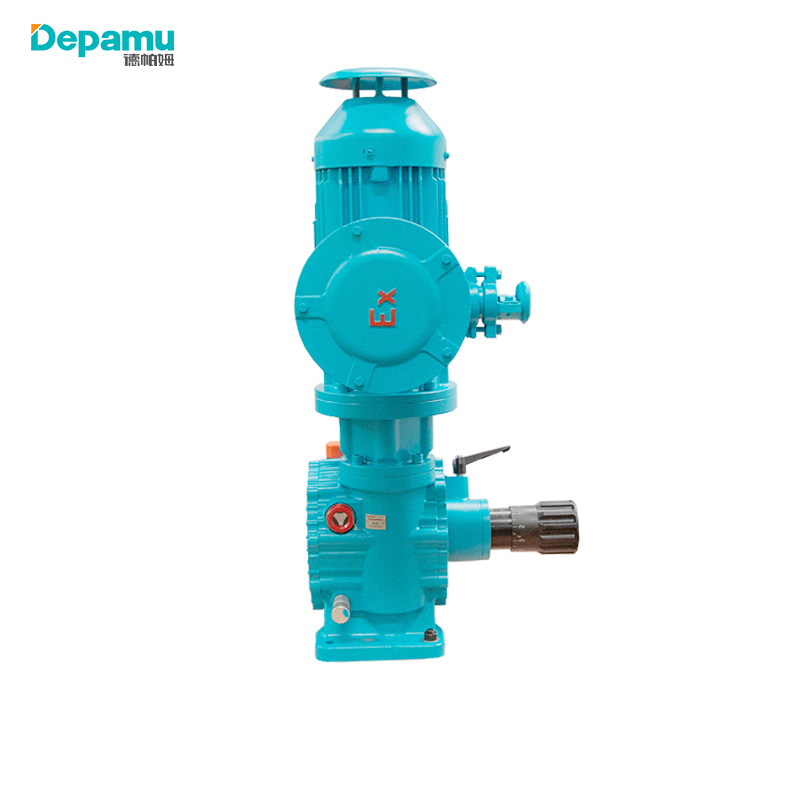
Explosion-Proof Options: For installations in hazardous areas, explosion-proof motor configurations are available, ensuring safe operation in compliance with marine safety regulations.
Comparison with Alternative Pump Technologies
Advantages over Centrifugal Pumps
Viscosity Independence: Unlike centrifugal pumps whose flow rate decreases significantly with increasing viscosity, screw pumps maintain consistent flow characteristics across a wide viscosity range. This performance consistency is crucial for marine fuel handling where viscosity can vary dramatically depending on fuel grade and temperature.
Self-Priming Capability: Screw pumps offer superior suction lift and self-priming characteristics compared to centrifugal pumps, which often require flooded suction or priming systems to establish flow.
Pulsation-Free Flow: While reciprocating pumps produce pulsatile flow requiring pulsation dampeners, screw pumps deliver smooth, continuous flow that minimizes system stress and eliminates the need for additional dampening equipment.
Advantages over Gear Pumps
Extended Service Life: The progressive cavity design distributes wear evenly across the rotor and stator surfaces, often resulting in longer service intervals compared to gear pumps that may experience accelerated wear when handling abrasive or contaminated fuels.
Reduced Shear: The gentle pumping action minimizes shear degradation of the pumped fluid, preserving fuel properties that can be affected by the high shear forces in gear pumps.
Solids Handling Capability: The ability to handle fluids with suspended particles gives screw pumps an advantage in fuel systems where contamination, despite filtration, can damage close-tolerance gear pump components.
Operational Considerations for Vessel Installations
Maintenance Requirements
DEPAMU's horizontal screw pumps are designed with serviceability in mind, employing modular construction that facilitates component replacement without requiring pump removal from service:
Stator and Rotor Replacement: The progressive cavity design allows for replacement of elastomeric stators without complete pump disassembly, reducing maintenance time and vessel downtime.
Seal Maintenance: The horizontal configuration provides straightforward access to shaft seals, enabling routine seal inspection and replacement without extensive system disassembly.
Bearing Inspection: Accessible bearing housings facilitate regular lubrication and inspection, extending bearing life and preventing unexpected failures that could result in system shutdown.
Installation Best Practices
Foundation Preparation: Proper foundation preparation is essential to ensure pump alignment and vibration control. Horizontal pumps require level, rigid mounting surfaces to maintain bearing alignment and seal integrity.
Piping Design: Inlet and outlet piping should be designed to minimize flow restrictions and prevent air entrainment. The suction piping should be sized to maintain adequate NPSH (Net Positive Suction Head) to prevent cavitation, particularly when handling viscous fuels.
System Protection: The installation of appropriate instrumentation, including pressure gauges, temperature sensors, and vibration monitoring, allows early detection of developing issues and supports condition-based maintenance strategies.
Industry Compliance and Certification
DEPAMU's horizontal screw pumps are manufactured in facilities with API, CE, ISO 9001, ISO 14001, and ISO 45001 certifications, ensuring compliance with international quality, environmental, and safety standards. This certification portfolio provides vessel owners and operators with confidence in product quality and regulatory compliance.
The company's role as a drafter of pump industry standards in China further demonstrates its technical competence and commitment to industry best practices, ensuring that DEPAMU pumps meet or exceed applicable performance and safety requirements.
Conclusion
DEPAMU's horizontal screw pump for vessel fuel oil supply represents a carefully engineered solution for the demanding requirements of marine fuel handling systems. By combining the inherent advantages of progressive cavity pump technology with thoughtful design features optimized for vessel installations, DEPAMU offers a pumping solution that delivers reliable performance across a range of fuel grades and operating conditions.
The pump's ability to handle a wide viscosity range, its self-priming capability, and its gentle, pulsation-free flow characteristics make it well-suited for marine fuel transfer applications where reliability, efficiency, and safety are paramount. Combined with DEPAMU's established industry credentials and commitment to quality, this product line represents a viable option for vessel owners and operators seeking dependable fuel supply pumping solutions.
As the maritime industry continues to navigate the transition toward cleaner fuels and increasingly stringent environmental regulations, DEPAMU's horizontal screw pump technology positions the company as a responsive partner capable of meeting evolving market requirements. With its comprehensive certification portfolio, global export experience, and demonstrated technical capability, DEPAMU continues to strengthen its position in the competitive marine pumping equipment market