

The Depamu Gear Oil Transfer Pump: Engineering Excellence for High-Viscosity Fluid Handling
In the industrial landscape, the transfer of high-viscosity fluids presents a distinct set of engineering challenges. From heavy lubricating oils and gear oils to viscous chemicals and food-grade syrups, these fluids resist flow, demand significant energy to move, and can quickly degrade standard pumping equipment. The Depamu gear oil transfer pump has emerged as a specialized solution within this demanding niche, offering a robust design that prioritizes efficiency, reliability, and longevity. By leveraging the fundamental principles of positive displacement and engineering them for extreme conditions, Depamu has positioned its gear pumps as a critical component in industries ranging from petrochemicals to food processing.
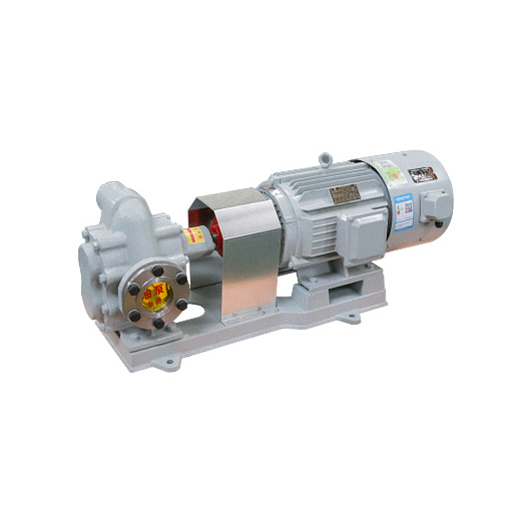
The Core Challenge of High-Viscosity Transfer
To appreciate the Depamu gear pump's design, one must first understand the physics of high-viscosity fluids. Viscosity, a measure of a fluid's resistance to flow, is often quantified in centistokes (cSt) or centipoise (cP). For context, water at room temperature has a viscosity of approximately 1 cSt. In contrast, gear oils and heavy lubricants can range from 100 to over 2,000 cSt, while some industrial pastes and polymers can reach into the millions of cSt .
The challenge of pumping these fluids is twofold. First, the high internal friction of the fluid creates massive resistance to flow, requiring pumps to generate substantial pressure to overcome it. Second, the fluid's cohesive nature means that standard centrifugal pumps, which rely on high-speed impellers, are often ineffective. Centrifugal pumps can cause "cavitation" and "vapor lock" when trying to pull thick fluids, as the fluid cannot move into the impeller fast enough to fill the void created by the spinning blades. This is where positive displacement pumps, specifically gear pumps, become indispensable.
Why Gear Pumps Excel with Viscous Media
The Depamu gear oil transfer pump operates on a principle of positive displacement that is inherently suited to high-viscosity fluids. The pump contains two interlocking gears—typically a driving gear and an idler gear—enclosed within a tight-fitting housing. As the gears rotate, they unmesh on the inlet side of the pump, creating a vacuum that draws fluid into the cavities between the gear teeth and the housing. This trapped volume of fluid is then carried around the outside of the gears to the discharge side. As the gears re-mesh on the discharge side, the fluid is forced out of the cavities and into the discharge pipe under pressure .
This mechanism is fundamentally a "sealed" volume transfer. Because the fluid is trapped and physically moved, the pump's performance is not significantly degraded by high viscosity. In fact, gear pumps become more efficient as viscosity increases, as the thicker fluid helps to seal the tight clearances between the gears and the pump casing, reducing internal "slip" (the tendency of fluid to leak back from the high-pressure discharge side to the low-pressure suction side) . This is the opposite of a centrifugal pump, whose efficiency plummets as viscosity rises.
The Depamu Advantage: Design and Engineering
Depamu has built upon this robust principle to create a line of gear pumps that are not just functional but highly optimized for industrial use. The company's approach integrates high-quality materials, precision engineering, and user-centric design features.
1. Superior Material and Construction
The handling of abrasive or corrosive fluids is a common requirement in high-viscosity transfer. Depamu addresses this by offering a range of material options for the pump head and wetted parts. Common materials include Cast Iron for general industrial applications, Bronze for enhanced corrosion resistance in certain chemical environments, and Stainless Steel (AISI 316) for applications demanding high purity or resistance to aggressive chemicals . This material flexibility allows the same fundamental gear pump design to be tailored to transfer everything from acidic polymers to viscous food oils.
2. Impressive Operating Parameters
The Depamu gear pump's specifications underscore its capability in demanding applications. The pumps are engineered to handle fluids with temperatures ranging from -10°C to 300°C, making them suitable for both cold-weather operations and hot-process transfer . They can achieve discharge pressures up to 2.0 MPa (approximately 290 psi) and flow rates up to 200 m³/h . This high-pressure capability is critical for pushing viscous fluids through long pipelines or overcoming system backpressure. The pump's viscosity range is equally impressive, with the ability to handle fluids up to 2,000,000 cSt in some configurations, making it a truly universal solution for viscous media .
3. Enhanced Reliability and Maintenance
One of the key differentiators for Depamu is the emphasis on pump longevity. High-viscosity fluids exert tremendous stress on pump components. To mitigate this, Depamu employs a bath lubrication system for the drive parts. This ensures that the gear reducers, bearings, and shafts are constantly bathed in oil, significantly reducing wear and extending the service life of the power end . Furthermore, the maintenance schedule for critical components is well-defined, with recommended replacement cycles of 4,000 operating hours or one year for check valves and other wear parts, ensuring predictable operation and reducing unplanned downtime .
Comparative Advantage Over Other Technologies
While gear pumps are a primary solution, Depamu's product portfolio often includes other technologies like Diaphragm Pumps and Screw Pumps. How does the gear pump compare?
Compared to diaphragm pumps, gear pumps offer superior performance with high-viscosity fluids. Diaphragm pumps, especially Metering Pumps, can struggle with thick fluids due to check valve sticking and flow pulsation issues . Gear pumps, with their continuous rotary action, provide a smoother, more consistent flow with less pulsation, making them ideal for applications like lubrication circuits or bulk transfer .
Compared to screw pumps, gear pumps are generally more compact and cost-effective for applications requiring high pressure and a simpler design . While a screw pump can excel with very high viscosity and shear-sensitive fluids, a gear pump often provides the perfect balance of performance, cost, and simplicity for gear oil and lubricant transfer .
Conclusion
The Depamu gear oil transfer pump represents a sophisticated engineering response to the persistent industrial challenge of moving thick, viscous fluids. By harnessing the proven physics of gear-type positive displacement and augmenting it with high-grade materials, robust lubrication systems, and broad operational parameters, Depamu has created a solution that is reliable and efficient. Whether in a chemical plant, an oil refinery, or a food processing facility, this pump ensures that the most stubborn fluids are transferred with precision, minimal maintenance, and maximum uptime. It is not merely a pump but a cornerstone of operational integrity in industries where viscosity is a way of life