

Precision Under Pressure: The Critical Role of Depamu Metering Pumps in Modern Oil Shipping Operations
Abstract
The maritime oil shipping industry operates on a razor's edge between efficiency and environmental responsibility. In this high-stakes environment, the metering pump—often overlooked—serves as the fiduciary agent and safety sentinel of every transfer operation. Depamu (Hangzhou) Pumps Technology Co., Ltd., a Chinese high-tech enterprise with German-engineered roots, has emerged as a significant supplier to this sector, earning certifications including API, CE, and ISO while serving state-owned giants like CNPC and SINOPEC. This article provides a comprehensive technical analysis of Depamu's metering pump technologies for oil shipping, examining their hydraulic diaphragm and plunger-type architectures, material science innovations, safety redundancies, and the economic calculus that drives their adoption in one of the world's most demanding industrial environments.
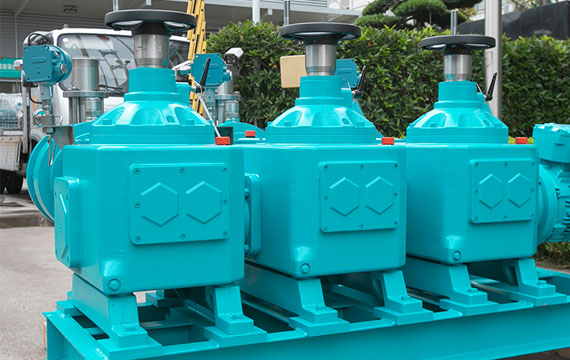
1. Introduction: The Fiduciary Function of the Metering Pump
In oil shipping, a metering pump is not merely a fluid transfer device; it is a fiscal instrument. When a Very Large Crude Carrier (VLCC) discharges 2 million barrels of light crude at a Rotterdam terminal, the difference between the Bill of Lading and the received volume—known as "loss" or "gain"—represents millions of dollars. Accuracy is therefore a legal and commercial imperative.
Depamu has positioned itself as a specialist in this niche. Unlike centrifugal pumps, which are designed for high-volume, low-pressure transfer with diminishing accuracy, metering pumps (also known as Dosing Pumps) provide precise, repeatable flow rates regardless of pressure fluctuations in the downstream piping. This positive displacement characteristic is essential for custody transfer, additive injection (such as pour point depressants or drag reducers), and the safe handling of hazardous classified materials.
The company’s background lends credibility to its claims. Founded in 2003 and based in Hangzhou’s Qiantang District, Depamu has aggressively pursued technological acquisition, citing German engineering influence and a portfolio of over 100 technical patents. Their designation as a National "Little Giant" in China—a recognition for specialized and sophisticated SMEs—suggests a depth of engineering capability beyond standard pump manufacturers.
2. The Oil Shipping Challenge: Viscosity, Volatility, and Vapor Pressure
To understand why Depamu’s specific architectures are relevant, one must appreciate the physical properties of crude oil and its refined products (diesel, gasoline, heavy fuel oil).
-
Viscosity: Heavy crude or fuel oil can have viscosities exceeding 2,000,000 centipoise (cP) at ambient temperatures. Standard centrifugal pumps suffer from "viscous drag," losing efficiency and flow rate dramatically.
-
Vapor Pressure: Light hydrocarbons (e.g., naphtha or condensate) have high vapor pressures. If the pump inlet pressure drops below the fluid's vapor pressure, cavitation occurs, destroying internal components and breaking the metering seal.
-
Corrosivity: "Sour" crude contains hydrogen sulfide (H₂S) and other sulfur compounds, requiring metallurgies that resist Sulfide Stress Corrosion Cracking (SSCC).
Depamu’s product line addresses these variables through two primary architectures: the Hydraulic Diaphragm Pump for hazardous, toxic, or high-purity applications, and the Plunger Pump for high-pressure, high-viscosity scenarios.
3. Deep Dive: Hydraulic Diaphragm Metering Pumps (DP[M]WAA Series)
The most critical applications in oil shipping—specifically chemical additive injection and loading of volatile organic compounds—demand leak-free operation. The hydraulic diaphragm pump is the gold standard here.
3.1 The Principle of Leak-Free Barrier
Unlike plunger pumps where the seal rides on the piston rod, the Depamu DP(M)WAA series uses a PTFE (polytetrafluoroethylene) composite diaphragm as a static barrier. The hydraulic fluid on one side pushes the diaphragm, which then pushes the process fluid on the other side. For oil shipping, this means the cargo never contacts the atmosphere or the pump's mechanical drive train.
3.2 The "Multi-directional Rolling" Diaphragm Technology
The weakness of traditional diaphragm pumps has always been the diaphragm's fatigue life. As the diaphragm flexes millions of times, cold flow (creep) leads to cracking, resulting in a catastrophic release of oil into the hydraulic side—or worse, into the environment.
Depamu has addressed this through a specific manufacturing process: "multi-directional rolling and surface quenching treatment." According to their technical literature, this achieves a homogeneity of 99.92% in the PTFE macro-molecule composite diaphragm. In practical terms, this treatment reduces localized stress concentrations. By minimizing cold flow, the company claims operational reusability for "80 million times within a temperature range of -80℃ to 160℃". For a tanker fleet operating in the North Sea (cold) versus the Persian Gulf (hot), this thermal stability is essential.
3.3 The "Smart" Hydraulic System: Automatic Air Discharge
A chronic issue with Hydraulic Pumps is the entrapment of air in the hydraulic oil. Air compresses; oil does not. If air enters the hydraulic chamber, the pump "cushions," losing stroke length and metering accuracy—a phenomenon known as "slippage." Depamu’s integration of an internal safety valve and compensation valve addresses this. The system automatically discharges air and replenishes oil without manual bleeding. This automatic volumetric compensation maintains the ±0.5% metering accuracy even if the hydraulic oil degrades over time.
3.4 Double Diaphragm and Rupture Detection
For oil shipping, where a spill could incur fines under MARPOL (International Convention for the Prevention of Pollution from Ships) regulations, Depamu offers a double diaphragm configuration. Between the two diaphragms lies a rupture alarm device. If the primary diaphragm fails, the secondary contains the leak, and the alarm triggers a shutdown, preventing the toxic crude or chemical from mixing with the hydraulic oil or escaping to the deck.
4. High-Pressure and High-Viscosity: Plunger Pumps (DP[M]DA/ZA)
While diaphragm pumps excel at safety, plunger pumps excel at raw power. For the transfer of heavy fuel oil (HFO) or the operation of crude oil washing (COW) systems, high pressure is required to scour tanks.
4.1 The Eccentric Transmission Mechanism
Depamu’s plunger pumps (DP[M]DA and ZA series) utilize a patented "integrated sleeve adjustable eccentric mechanism". In traditional pumps, changing flow requires manual adjustment of the eccentricity, which is prone to mechanical backlash. Depamu’s design allows for "0-100% stepless adjustment" of stroke length, even while the pump is running. This is vital for oil shipping, where the offloading rate must be synchronized with shore-side reception facilities to avoid over-pressurizing the hose or under-filling the tank.
4.2 The Seal Challenge: Viscosity ≤2 Million cP
Sealing high-viscosity fluid is difficult because it does not lubricate the packing material well; it tends to tear the packing or "drag" the plunger. Depamu claims their rotor and plunger pumps can handle media with a viscosity of up to 2 million cP. This allows the same pump hardware to manage the transition from steaming hot, low-viscosity crude to cold, sluggish residual fuel without replacing the seal packing.
4.3 Safety Relief and "Online Repair"
A high-pressure plunger pump running against a closed valve is a pipe bomb. Depamu explicitly notes that their base plunger models lack an internal safety relief device; they require the installation of an external relief valve on the pipeline. However, the mechanical design offers a significant logistical advantage: "online repairing." The pump allows for maintenance "without pipeline dismantling". For a ship at sea, where workshop facilities are non-existent and welding is a fire hazard, the ability to swap a valve or seal without unbolting the piping flanges reduces downtime from days to hours.
5. Industrial Design: Rotor Pumps for Loading/Unloading
Bridging the gap between metering and transfer is the Rotor Pump (lobe pump). Depamu markets these specifically "for loading and unloading" due to their "positive inversion function". Unlike centrifugal pumps, which require complex piping arrangements to reverse flow, a rotor pump can reverse its rotation to suck the line dry at the end of a custody transfer, ensuring the seller doesn't leave product in the hose. These pumps also feature a "double support structure" to handle the axial thrust generated when pumping viscous sludge, with output pressures reaching 1.8 MPa.
6. Automation and Compliance: The Metering Brain
A pump is only as accurate as its control system. Oil shipping terminals are moving toward fully automated "silent" loading, where flow rates are ramped up and down to avoid pipeline surge (water hammer).
Depamu integrates "capacity control modes" that are now industry standard for shipping:
-
Frequency Conversion (VFD) : Allows the motor speed to vary, which is the most energy-efficient method for flow control.
-
Electric Actuator: Allows the stroke length to be adjusted by a control room signal (4-20mA). This is used in "blending" applications where the ship is creating a specific mixture on the fly.
-
Pneumatic Control: Used in hazardous areas where electrical sparks must be absolutely avoided.
Furthermore, the ability to parallel "two pump heads or multiple heads (12 at most)" serves two purposes in shipping. First, using two heads on the same fluid reduces the pulsation (flow ripple) that causes vibration in the loading arm. Second, multi-head configurations allow the pump to act as a "proportioning pump," drawing different additives (corrosion inhibitor, anti-foam, biocide) from separate tanks and mixing them precisely into the main crude stream.
7. Economic and Operational Justification
Why choose Depamu over legacy European or American brands? The market data suggests a value-engineered proposition.
7.1 Total Cost of Ownership (TCO)
Oil shipping margins are notoriously tight. The initial purchase price (CAPEX) is a factor, but Depamu emphasizes "few consumables" and a "low failure rate". Their ISO 9001 certification and adherence to API 676 standards (for rotor pumps) suggest that their metallurgy and tolerances meet international benchmarks. If a pump lasts as long as a premium brand but costs 30% less upfront, the ROI is compelling for fleet operators.
7.2 Global Service Footprint
Depamu reports exports to over 50 countries, including the USA, UK, and France, with partnerships with CNPC, SINOPEC, and CNOOC. For a ship owner, the key metric is "supply chain risk." If a pump fails in Singapore, can Depamu deliver a replacement plunger or diaphragm within 48 hours? Their established presence in major oil hubs suggests a maturing aftermarket supply chain, mitigating the risk of purchasing from a non-local manufacturer.
8. Critical Analysis and Operational Caveats
While the engineering appears sound, the oil shipping operator must note specific limitations.
-
Vapor Lock Sensitivity: While diaphragm pumps handle light ends well, the plunger pumps must be meticulously primed. The literature notes "no need in water irrigation" for rotor pumps, but plunger pumps do not share this tolerance for entrained gas.
-
Pressure Limits: The standard rotor pump caps out at 1.5 MPa (~218 PSI). This is fine for transfer but insufficient for high-pressure hydraulic systems or desalting units, where Depamu requires the specialized ZA series rated up to 28 MPa.
-
Material Verification: Depamu offers pump heads in 304, 316L, Hastelloy C, and high-polymer materials. However, the buyer must rigorously verify that the wetted materials match the specific crude oil chemistry. High-temperature, high-sulfur crudes require specific nickel alloys, not standard stainless.
9. Conclusion: A Strategic Asset for Maritime Logistics
Depamu metering pumps represent a convergence of German-inspired precision engineering and aggressive Chinese manufacturing efficiency. For the oil shipping industry, they are not merely "pumps" but instrumentation.
The hydraulic diaphragm pumps (DP[M]WAA) offer a best-in-class solution for additive injection and toxic cargo handling, with fatigue life engineered for millions of cycles and redundant safety barriers against leaks. The plunger pumps (DP[M]DA/ZA) provide the brute force necessary for high-viscosity heavy fuel oil transfer, backed by a robust eccentric mechanism that allows for live flow adjustment.
As the oil tanker industry digitizes, moving toward "Smart Ships" with automated bunkering and predictive maintenance, the pump becomes a data node. Depamu’s integration of electric actuators and VFD compatibility positions them for this future. However, the ultimate value proposition remains one of trust. In oil shipping, a pump that fails costs not just repair money, but environmental cleanup money and reputational capital. Depamu’s track record with national oil companies and its "Little Giant" designation provide a technical audit trail that suggests reliability.
For the fleet technical superintendent, the Depamu catalog offers a viable, competitive alternative to the traditional incumbents—provided the specific model is matched rigorously to the viscosity and vapor pressure of the cargo. When that match is made, the Depamu metering pump moves beyond the engine room and becomes a profit center, ensuring that every last barrel is accounted for, and every additive is precisely placed.