

The Comprehensive Guide to Sizing and Selecting Hydraulic Diaphragm Depamu-pumps.com/Metering-pump.html target='_blank'>Metering Pumps
Abstract: Hydraulic Diaphragm Metering Pumps are precision positive displacement devices engineered for accurate, reliable, and leak-free dosing of fluids across a wide spectrum of industrial applications. This article provides a comprehensive, step-by-step methodology for selecting the optimal pump for a given process. It systematically examines the critical parameters of hydraulic performance, material compatibility, fluid properties, control strategies, and system integration, translating engineering requirements into a structured selection process.
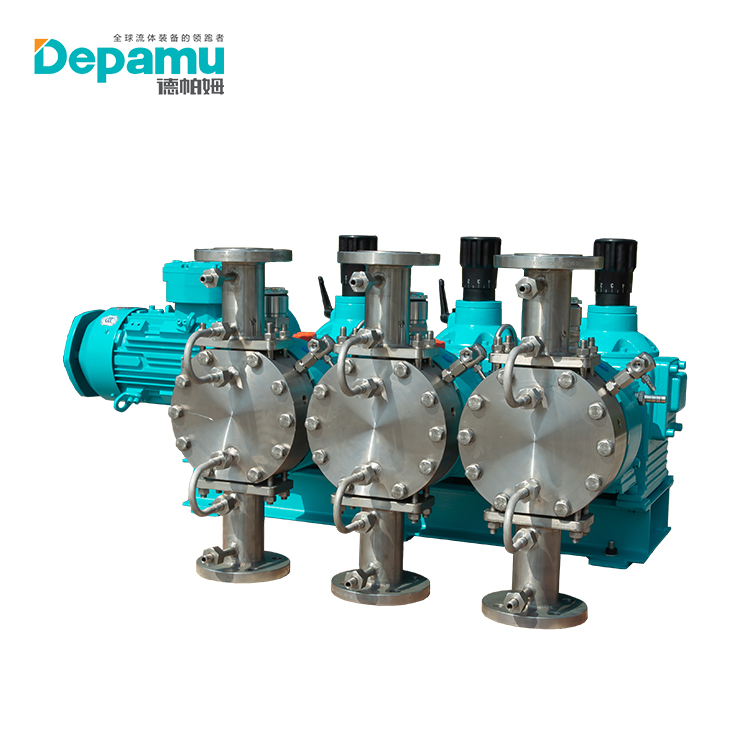
1. Introduction: The Case for Hydraulic Diaphragm Technology
In the demanding landscape of chemical processing, oil and gas, and water treatment, the accurate and safe injection of additives, reactants, and catalysts is paramount. The hydraulic diaphragm metering pump stands as a premier solution for these critical tasks. Its core advantage lies in its design: a hydraulic fluid is used to drive a diaphragm, which in turn displaces the process fluid . This creates a hermetically sealed environment where the pumped chemical is completely isolated from moving mechanical parts, eliminating the leaks common in packed plunger pumps and the pressure limitations of mechanically actuated diaphragms.
The benefits of this design are significant and directly impact process reliability and safety. These pumps offer exceptional dosing precision, typically better than ±1% across a defined stroke length range . Furthermore, industry-standard safety features, such as multi-layer PTFE diaphragms with integral rupture warning systems and integrated hydraulic relief valves, ensure process integrity and protect against over-pressure events . To harness these benefits, a rigorous and systematic selection process is essential.
2. Foundational Parameters: Defining the Duty Point
The selection process begins not with the pump, but with a precise definition of the application's "duty point." This is a set of quantifiable parameters that describe what the pump must achieve. A common and critical error is oversizing the pump; a metering pump should be sized so the maximum expected flow rate is 85-90% of the pump's rated capacity, allowing for future flexibility while maintaining accuracy .
2.1. Flow Rate
The required flow rate is the foundational metric and must be defined in volumetric (e.g., L/h, GPH) or mass (e.g., kg/h) terms. It is essential to consider the required turndown ratio, which is the ratio of the maximum required flow to the minimum required flow. Hydraulic Diaphragm Pumps typically maintain accuracy (±1%) down to 10-20% of their rated stroke length .
2.2. System Pressure and its Nuances
The required discharge pressure is often assumed to be a single static number, but a proper analysis is more nuanced. The key considerations are:
-
Net Positive Suction Head (NPSH): Hydraulic diaphragm pumps are positive displacement pumps and have specific NPSH requirements to prevent cavitation, which can lead to diaphragm failure and loss of accuracy. The available NPSH (NPSH_A) must be greater than the required NPSH (NPSH_R). Calculations for NPSH_A must account for the acceleration losses inherent in Reciprocating Pumps, especially with viscous fluids .
-
Minimum Differential Pressure: To ensure the suction and discharge check valves seat correctly, a minimum differential pressure (discharge pressure - suction pressure) is required. If the system has insufficient backpressure (e.g., when pumping to an open tank), an anti-siphon or backpressure valve is necessary to create artificial backpressure and ensure linear pump performance .
-
Maximum System Pressure: The pump must be rated for the maximum possible system pressure, including potential deadhead conditions. While hydraulic diaphragm pumps have internal relief valves for protection, system components must also be rated accordingly .
3. The Fluid and Materials of Construction
The chemical being pumped dictates the materials used for all wetted parts. Incorrect material selection can lead to rapid corrosion, erosion, and pump failure.
3.1. Chemical Compatibility and Temperature
This is a critical step. The pump manufacturer must be consulted to select a material for the pump head, valves, seats, and seals that is compatible with the process fluid at its maximum operating temperature. Common materials include 316L Stainless Steel, Hastelloy C, and various plastics like PVDF and PVC . For example, solvent-based chemicals may dissolve plastic heads, while acids and caustics often require stainless steel or alloy liquid ends .
3.2. Viscosity and Abrasiveness
-
Viscosity: Standard metering pumps can typically handle clear liquids with viscosities up to ~1500 cps. Special designs, such as those with larger valve openings or specific hydraulic systems (e.g., variable oil bypass), can handle fluids up to 20,000 cps or more . High viscosity affects the NPSH requirements and the sizing of suction piping .
-
Abrasives/Slurries: Pumping fluids with solids content requires special consideration. Tubular diaphragm heads or pumps designed specifically for slurries are necessary to prevent excessive wear on check valves and the diaphragm. Standard pumps are designed for clear liquids .
4. System Dynamics and Control
Hydraulic diaphragm pumps are not steady-state devices; they are reciprocating pumps, meaning they produce pulsating flow. This inherent characteristic must be managed for successful system integration.
4.1. The Role of Pulsation Dampeners
The reciprocating action of the pump creates pressure surges and velocity peaks that can damage piping, cause instrumentation errors, and compromise system stability. Pulsation dampeners, installed in both the suction and discharge lines, are often essential. They act as accumulators, smoothing out flow and pressure fluctuations . Piping must be sized based on peak, not average, flow velocities .
4.2. Capacity Control Methods
Once the physical pump is selected, the method of flow control must be determined. Hydraulic diaphragm pumps offer several options:
-
Stroke Length Adjustment: The most common method, which varies the effective displacement per stroke. This can be done manually or automatically via electric or pneumatic actuators .
-
Stroke Speed Adjustment: Varying the motor speed (stroking rate) via a Variable Frequency Drive (VFD). This method offers a wide turndown ratio but is typically recommended to maintain a minimum stroking rate (e.g., >20 spm) for accuracy .
-
Combined Control: In complex applications, a combination of both methods is used to achieve maximum turndown and precision, often controlled by a 4-20 mA signal from a process control system .
5. Selecting the Pump
With all the above parameters defined, the selection process can commence. The main considerations are:
-
Capacity and Pressure: Identify pump models that meet the calculated maximum flow and system pressure requirements.
-
Liquid End Material: Select the pump model with the correct wetted material for the process fluid and temperature.
-
Safety Features: For hazardous or toxic fluids, ensure the pump is equipped with a double diaphragm with leak detection . Confirm compliance with relevant standards like API 675 for the oil and gas industry .
-
Flow Control: Specify the required control method (manual, electric, pneumatic, or variable speed drive) and actuator .
-
System Accessories: Plan for necessary accessories like pulsation dampeners, backpressure valves, and relief valves to ensure the pump operates reliably within the system.
6. Conclusion
Selecting a hydraulic diaphragm metering pump is a critical engineering decision with significant implications for process safety, product quality, and operational efficiency. By meticulously defining the duty point, analyzing the fluid's properties, understanding system dynamics, and correctly specifying materials and control methods, engineers can ensure the selection of a pump that not only meets the immediate requirements but also provides a long, reliable, and cost-effective service life. The "100,000 products and infinite applications" for which these pumps are used make a systematic approach not just beneficial but essential .