

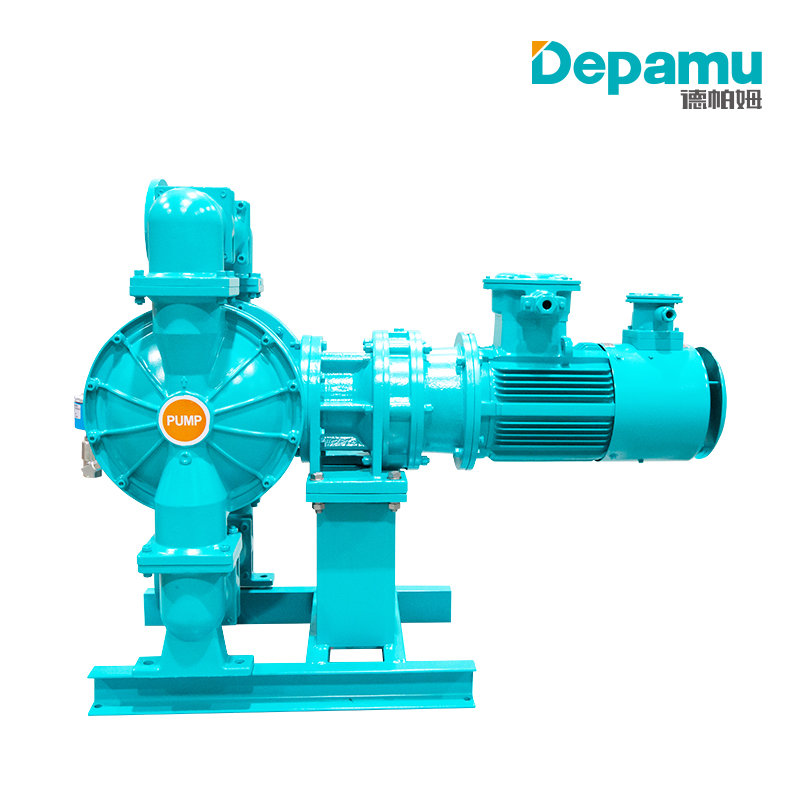
Depamu Electric Diaphragm Pump for Wastewater Treatment
Abstract
The treatment of wastewater is a critical process for environmental protection and public health, requiring reliable and efficient equipment for fluid handling. Among the essential components in wastewater treatment facilities are pumps, which must contend with corrosive chemicals, abrasive sludges, and variable flow conditions. The Depamu Electric Diaphragm Pump represents a technological solution tailored to these demanding applications. This article examines the design features, operational principles, and practical benefits of Depamu electric diaphragm pumps in wastewater treatment contexts, drawing on product specifications and industry case studies to demonstrate their effectiveness in chemical dosing, sludge transfer, and process control applications.
1. Introduction
Wastewater treatment involves a complex sequence of physical, chemical, and biological processes designed to remove contaminants from water before it is returned to the environment or reused. Throughout these processes, pumps play an indispensable role in moving fluids, dosing chemicals, and transferring sludges. The selection of appropriate pumping technology directly impacts treatment efficiency, operational costs, and system reliability.
Diaphragm pumps have emerged as a preferred solution in many wastewater applications due to their ability to handle challenging fluids while maintaining consistent performance and eliminating leakage risks . Depamu (Hangzhou) Pumps Technology Co., Ltd., a Chinese manufacturer with over seventeen years of industry presence, produces a range of electric diaphragm pumps specifically designed for these demanding environments. This article explores how Depamu's electric diaphragm pump technology addresses the unique challenges of wastewater treatment.
2. Operating Principles of Depamu Electric Diaphragm Pumps
2.1 Basic Mechanism
The Depamu electric diaphragm pump operates on a positive displacement principle. An electric motor drives a worm gear pair, converting the rotary motion of the motor into reciprocating movement through an eccentric mechanism. This reciprocating motion is transmitted to a mechanical diaphragm, which undergoes periodic deformation to create suction and discharge cycles .
This fundamental design ensures that the pump delivers a consistent flow rate regardless of pressure variations in the discharge pipeline—a critical feature for precise chemical dosing applications in wastewater treatment.
2.2 Key Components
The Depamu pump incorporates several engineered components that enhance its suitability for wastewater applications:
Power End: The power transmission system features an adjustable eccentric mechanism that ensures smooth flow rate changes with minimal pulsation. The cast aluminum housing provides effective heat dissipation and corrosion resistance, while bath lubrication extends the service life of drive components .
Hydraulic End: The fluid handling section features PTFE diaphragms manufactured through special compression molding, offering excellent mechanical performance and resistance to strong acids, bases, and solvents. The diaphragm design eliminates the need for dynamic seals, preventing the leakage that commonly plagues traditional plunger pumps .
Valve System: Self-cleaning check valves prevent clogging and ensure reliable operation even when handling fluids containing suspended solids. The valve assembly is designed to resist bonding and precipitation, allowing efficient transport of viscous fluids and those containing particles .
3. Design Features for Wastewater Applications
3.1 Corrosion and Chemical Resistance
Wastewater treatment involves exposure to aggressive chemicals, including acids, alkalis, and oxidants used for pH adjustment and disinfection. Depamu pumps address this challenge through multiple material options for wetted parts. Users can select from 304 stainless steel, 316 stainless steel, 316L, PVC, PVDF, PP, or PTFE based on the specific chemical compatibility requirements of their application .
The PTFE diaphragm material deserves particular attention. PTFE exhibits exceptional resistance to corrosion by strong acids, bases, and solvents, ensuring long service life even in aggressive chemical environments . This chemical resistance is essential for dosing applications where pumps handle concentrated treatment chemicals.
3.2 Leak Prevention and Environmental Safety
One of the most significant advantages of Depamu electric diaphragm pumps is their leak-free operation. The diaphragm provides a hermetic seal between the drive mechanism and the compression chamber, eliminating the contamination risks associated with traditional pumps that rely on dynamic seals .
This feature is particularly valuable in wastewater treatment for two reasons. First, it prevents the leakage of untreated or partially treated wastewater, which could pose environmental and health hazards. Second, it eliminates the risk of process chemicals escaping into the environment, ensuring compliance with increasingly stringent environmental regulations.
3.3 Diaphragm Monitoring Systems
Depamu offers optional double-diaphragm configurations with rupture alarm systems. These systems can detect the failure of one diaphragm and provide real-time monitoring, allowing continued operation until a scheduled maintenance shutdown, thereby avoiding unplanned downtime .
This proactive monitoring capability translates directly to operational reliability in wastewater treatment plants, where unplanned pump failures can disrupt treatment processes and potentially lead to permit violations.
3.4 Flow Control Flexibility
Precise chemical dosing is essential for effective wastewater treatment. Depamu pumps offer multiple flow adjustment options, including manual, electric, and variable frequency control. Flow rate can be adjusted across a 0-100% range in both static and dynamic states, with steady-state accuracy of ±2% .
The turndown ratio of 10:1 provides operators with substantial flexibility to respond to changing treatment demands, whether adjusting chemical feed rates or matching varying influent flows.
4. Wastewater Treatment Applications
4.1 Chemical Dosing
The Depamu DP Series mechanical diaphragm Metering Pumps are specifically designed for precise chemical dosing in wastewater treatment . These pumps are employed to deliver treatment chemicals at controlled rates, including:
pH Adjustment: Dosing acidic or alkali chemicals to maintain optimal pH ranges for biological treatment processes and regulatory compliance.
Coagulation and Flocculation: Adding metal salts or polymers to promote the aggregation of suspended particles, facilitating their removal through sedimentation or filtration.
Disinfection: Metering chlorine compounds, ozone, or other disinfectants to eliminate pathogens before effluent discharge or reuse.
The DP Series offers flow rates per head up to 2300 L/h and discharge pressures up to 1.2 MPa, covering a broad range of dosing requirements .
4.2 Sludge and Slurry Transfer
Wastewater treatment generates sludge—a semi-solid material containing concentrated solids from the treatment process. Transferring this abrasive, viscous material presents significant pumping challenges. Depamu electric diaphragm pumps are engineered to handle sludge and slurries effectively .
The pump's diaphragm construction eliminates the mechanical seals that would quickly fail in abrasive sludge applications. The self-cleaning check valve design further enhances reliability when handling fluids with suspended solids, reducing the risk of clogging that plagues many pump types in sludge transfer service.
4.3 High-Pressure Applications
For certain wastewater applications, such as filter press feeding or high-pressure cleaning of treatment equipment, Depamu offers high-pressure diaphragm pumps capable of substantial discharge pressures. The 3HD160B-MSBD13-16.5 model, for instance, delivers a maximum flow rate of 42 m³/h with high-pressure capability .
These high-pressure models find application in:
-
Oil-water separation processes
-
Filter press feed systems
-
Pipeline cleaning operations
-
Pressure filtration applications
4.4 Solids-Laden Fluid Handling
Wastewater frequently contains suspended solids of varying sizes and concentrations. Depamu electric diaphragm pumps are designed to handle liquids containing particles, making them suitable for applications such as:
-
Primary sludge transfer
-
Return activated sludge pumping
-
Waste activated sludge handling
-
Dewatering applications
The pump's positive displacement design ensures reliable operation even with varying solids content, unlike centrifugal pumps whose performance degrades significantly with increased viscosity or solids loading.
5. Operational Benefits
5.1 Maintenance and Reliability
Maintenance requirements directly impact the total cost of pump ownership. Depamu pumps are designed with serviceability in mind, featuring straightforward maintenance procedures and extended maintenance intervals. Under typical operating conditions, maintenance periods extend to 4000 hours at pressures up to 1.0 MPa and 8000 hours at pressures up to 0.7 MPa .
The elimination of dynamic seals—a common failure point in other pump types—significantly reduces maintenance frequency. When maintenance is required, the modular design of the liquid end simplifies component replacement.
5.2 Energy Efficiency
Energy consumption represents a significant operating cost for wastewater treatment facilities. Electric diaphragm pumps offer a more energy-efficient alternative to traditional air-operated diaphragm pumps, which require compressed air generation—a notoriously energy-intensive process .
Industry case studies demonstrate the energy efficiency potential of electric diaphragm pump technology. In one documented wastewater application, an electric diaphragm pump operated continuously with average current draw of only 3.6 amps, achieving average flow rates of 30 gallons per minute while maintaining consistent performance across varying operating conditions .
5.3 Noise Reduction
Wastewater treatment facilities often operate in urban or residential areas where noise pollution is a concern. Electric diaphragm pumps generate substantially less noise than their air-operated counterparts, which produce significant noise from compressed air exhaust. Case study data indicate that electric diaphragm pump installation results in significant noise reduction compared to alternative technologies .
5.4 Run-Dry Capability
Process upsets in wastewater treatment can lead to temporary loss of suction or dry running conditions. Depamu electric diaphragm pumps can operate dry without damage—a critical feature that protects equipment during process fluctuations and simplifies startup procedures .
6. Installation and Integration
6.1 System Compatibility
Depamu pumps are designed for seamless integration into existing wastewater treatment systems. Multiple connection options accommodate various piping configurations, with both threaded and flanged connections available for different pressure ratings .
6.2 Control Integration
Modern wastewater treatment plants increasingly rely on automated control systems to optimize operations and reduce labor costs. Depamu pumps support integration with these systems through variable frequency drive compatibility and remote stroke adjustment options .
The ability to control pump output electronically enables integration with supervisory control and data acquisition (SCADA) systems, allowing for remote monitoring and automated adjustment based on process parameters.
7. Case Studies and Performance Validation
The performance of electric diaphragm pumps in wastewater applications is well-documented. A case study involving a commercial cleaning product manufacturing facility demonstrates the practical benefits of this technology:
The facility required a pump capable of maintaining consistent flow rates at varying head pressures, operating continuously at multiple speeds, and precisely metering wastewater discharge. An electric diaphragm pump was installed to push wastewater through a filtration system with varying pressures. Over 1,600 hours of operation, the pump demonstrated several key benefits: low pulsation resulting in significant output efficiency, consistent performance at different speeds, significant noise reduction, and zero maintenance requirements during the observation period .
These results highlight the operational reliability and efficiency gains achievable with properly selected electric diaphragm pump technology.
8. Conclusion
Depamu electric diaphragm pumps represent a well-engineered solution for the demanding requirements of wastewater treatment. Their design incorporates features specifically suited to the challenges of this application: chemical resistance through multiple material options, leak-free operation through diaphragm sealing technology, precise flow control for chemical dosing, and robust construction for handling abrasive sludges and solids-laden fluids.
The elimination of dynamic seals reduces maintenance requirements and eliminates leakage risks, while the ability to operate dry provides process flexibility during upsets. The range of available flow rates and pressure capabilities—from low-pressure Dosing Pumps delivering precise chemical additions to high-pressure models suitable for filter press feeding—ensures that appropriate equipment is available for diverse wastewater treatment applications.
As wastewater treatment regulations become increasingly stringent and facilities seek to optimize operational efficiency, the role of reliable, energy-efficient pumping technology will only grow in importance. Depamu's electric diaphragm pumps offer a technology platform that addresses these evolving requirements while delivering the durability and performance essential for continuous treatment plant operation.