

Depamu Triple Screw Pumps: Precision Fluid Handling for Lube Oil, Diesel, Bitumen, and Fuel Oil
Introduction
In the intricate world of industrial fluid handling, the reliable transfer of viscous, lubricating, and high-temperature media is a critical operational requirement. From the lubrication systems of massive marine diesel engines to the heated pipelines carrying bitumen for road construction, the pumps selected for these duties must deliver unwavering performance. Depamu (Hangzhou) Pumps Technology Co., Ltd., a Chinese high-tech enterprise founded in 2003, has established itself as a significant player in this field, producing triple screw pumps that leverage advanced German technology and hold numerous international patents. This article explores the technical foundations, design features, and specific applications of Depamu triple screw pumps in handling four challenging media: lube oil, diesel, bitumen, and fuel oil.
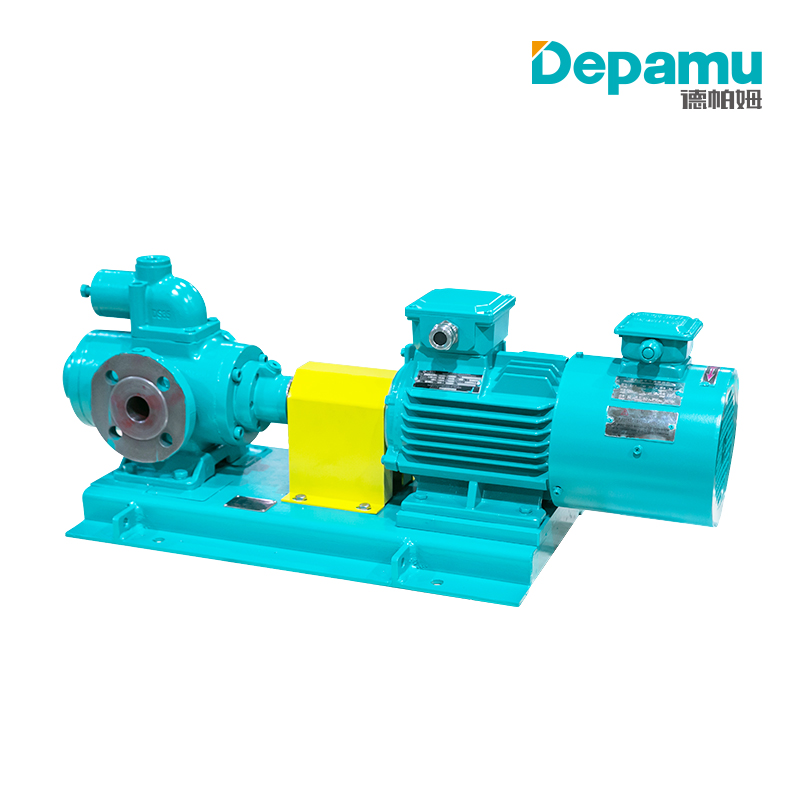
The Triple Screw Pump: A Positive Displacement Marvel
The triple screw pump, also known as a three-spindle screw pump, is a type of rotary positive displacement pump renowned for its ability to handle clean, lubricating fluids without solid content. Its operation relies on a deceptively simple yet highly effective mechanism. Within a precisely machined casing, three intermeshing screws—one central drive screw (the main rotor) and two laterally engaging idler screws—rotate in unison. The torque generated by an external motor is transmitted from the central drive screw to the idler screws through their meshing profiles. As these screws turn, their interlocking threads create closed, moving chambers. Fluid is trapped within these chambers at the suction port and transported axially, without turbulence or pulsation, to the discharge port.
A defining characteristic of the triple screw pump is its reliance on the pumped fluid itself for lubrication. Under normal operating conditions, there is no mechanical contact between the drive screw and the idler screws. Instead, a hydrodynamic oil film, formed by the pumped liquid, separates the metallic surfaces. This film also supports the idler screws radially within the casing liner, preventing metal-to-metal contact and wear. This design feature explains why triple screw pumps are ideally suited for fluids that possess natural lubricity, such as lube oil, diesel, and fuel oil, and why they are less appropriate for abrasive or non-lubricating media.
Depamu's Engineering Excellence
Depamu's triple screw pumps embody a philosophy of precision and durability. The company, located in the Hangzhou Economic and Technological Development Zone, has integrated German advanced technology with its own research and development to produce pumps that excel under demanding conditions. The pumps feature a compact and robust construction, a small footprint, and low weight, making them adaptable to a variety of installation scenarios.
One of the most significant advantages of the Depamu design is its extended service life. Because the main and idler screws operate without mechanical contact during normal running, mechanical friction is drastically minimized, leading to what is often described as a semi-permanent lifespan. The screw surfaces are protected by an oil film, and Depamu has paid special attention to material selection and processing precision to withstand the critical moments of pump startup and stop, when brief contact between the screws may occur. This focus on material and machining quality ensures that the pump maintains its volumetric efficiency over long operational periods.
Furthermore, Depamu triple screw pumps offer excellent self-priming capability, eliminating the need for auxiliary vacuum equipment or bottom valves. The flow is uniform and continuous, with minimal pulsation, which is crucial for processes requiring a steady feed rate, such as fuel injection into a burner or lubrication of a bearing. The pumps also exhibit a high tolerance for fluids containing entrained gases or slight contaminants, and their low noise and vibration levels contribute to a safer and more comfortable working environment.
Application Focus: Lube Oil
Lubricating oil is the quintessential application for triple screw pumps. The primary function of a lube oil pump is to circulate clean, filtered oil to bearings, gears, and other moving parts, providing a continuous protective film that reduces friction and carries away heat. Depamu triple screw pumps are extensively used as main, auxiliary, and emergency lubricating pumps in marine diesel engines, steam turbines, and industrial gearboxes.
The suitability of the Depamu pump for lube oil service stems from several factors. Lube oil is a clean, non-abrasive, lubricating fluid—precisely the medium for which the triple screw principle is designed. The pump's ability to generate a smooth, non-pulsating flow protects sensitive lubrication points from pressure surges. Its self-priming nature ensures reliable operation even if the suction line is momentarily emptied. Additionally, the pump's compact design allows it to be integrated neatly into the confined spaces of engine rooms and skids. Depamu has specifically developed mature technologies to avoid common issues in lubricating oil transfer, ensuring that the oil film between the screws and the liner is maintained for reliable, long-term operation.
Application Focus: Diesel
Diesel fuel presents a different set of considerations for pump selection. It has a lower viscosity than lube oil and, while still a lubricating fluid, its film-forming capability is less pronounced. In power plants, diesel is often used as a starting fuel for gas turbines or as a primary fuel for diesel generator sets. Here, Depamu triple screw pumps perform critical duties as fuel oil unloading pumps, oil feed pumps, booster pumps, fuel injection pumps, and ignition supply pumps.
For diesel applications, the pump must deliver precise, metered flow to the engine's combustion system or burner. The positive displacement nature of the triple screw pump ensures that flow is directly proportional to rotational speed, providing accurate control over fuel delivery. The pump's ability to handle fluids with some gas content is advantageous when dealing with diesel that may have absorbed air during storage or transfer. Furthermore, the smooth, low-shear pumping action avoids the risk of fuel degradation or emulsification that can occur with high-shear pump types. Depamu's pumps are engineered to handle the viscosity range of diesel and similar light fuel oils, making them a reliable choice for both continuous duty and intermittent operation.
Application Focus: Bitumen
Bitumen, also known as asphalt, represents the most challenging of the four media discussed. At ambient temperatures, it is a semi-solid, highly viscous material that will not flow. To be pumped, it must be heated—often to temperatures exceeding 150°C and sometimes up to 250°C—to reduce its viscosity to a manageable level. For this demanding application, Depamu offers specialized triple screw pumps equipped with heating jackets.
A heating jacket (or thermal jacket) is an outer casing that surrounds the pump body. A heating medium—such as steam, hot oil, or hot water—is circulated through this jacket, maintaining the bitumen at the required elevated temperature throughout the pumping process. This ensures that the bitumen remains fluid and can be transferred without solidifying inside the pump. Depamu's LQ3G series is a prime example of a heat-preserving bitumen pump. The double-jacketed casing design keeps the bitumen hot, from the suction port to the discharge, allowing for reliable transfer from storage tanks, drums, or tankers.
These pumps are widely used in road construction, roofing material production, and asphalt plants. They can handle flow rates ranging from 0.2 to 600 m³/h and are designed to accommodate media viscosities from 3.0 to 760 mm²/s when heated. The strong self-priming ability and resistance to high temperatures make Depamu's jacketed triple screw pumps an indispensable tool for industries that rely on the efficient movement of this heavy, sticky material.
Application Focus: Fuel Oil
The term "fuel oil" encompasses a broad spectrum of petroleum products, from light gas oils to heavy residual fuels. In power generation, marine propulsion, and industrial boilers, heavy fuel oil is often the fuel of choice due to its energy density and cost-effectiveness. However, its high viscosity and potential for containing impurities make it difficult to pump.
Depamu triple screw pumps are engineered to handle light and heavy fuel oils, including gas oils, in a variety of roles: as main fuel oil transfer pumps, burner feed pumps, and booster pumps. For heavy fuel oil, which may need to be heated to reduce its viscosity to a pumpable range, Depamu can supply pumps with heating jackets, similar to those used for bitumen. The pump's positive displacement action ensures a consistent flow rate even as viscosity changes with temperature, providing a stable fuel supply to the burner or engine. The robust construction and minimal internal clearances of the Depamu pump allow it to efficiently move high-viscosity fuel oil without the loss of efficiency that can plague centrifugal pumps under similar conditions.
Technical Specifications and Selection Considerations
Selecting the appropriate Depamu triple screw pump requires a careful assessment of the application parameters. Key factors include the fluid's viscosity, temperature, lubricity, and the presence of any solid particles. Triple screw pumps are designed for clean, lubricating fluids and are generally not suitable for abrasive slurries. For high-viscosity media like bitumen or heavy fuel oil, a jacketed pump is mandatory to maintain fluidity.
The required flow rate and discharge pressure determine the pump size and the power of the drive motor. Depamu's triple screw pumps are capable of developing pressures up to 160 bar, depending on the model and application. The pumps are available in various mounting configurations, including horizontal and vertical, with options for mechanical seals or packed glands, to suit the specific installation requirements. For marine applications, pumps can be supplied with approval certificates from classification societies. The speed of the pump is also a consideration; higher speeds yield greater flow but may require a higher net positive suction head (NPSH) to avoid cavitation. Depamu provides technical support to help customers select the optimal pump for their unique operating conditions.
Conclusion
The Depamu triple screw pump represents a sophisticated solution to some of the most common and challenging fluid transfer problems in industry. By harnessing the principles of positive displacement and hydrodynamic lubrication, these pumps deliver a unique combination of efficiency, reliability, and longevity. Whether the task is circulating vital lubricating oil in a marine engine, precisely metering diesel to a gas turbine, or moving heated bitumen to a paving site, Depamu's range of triple screw pumps—backed by German-inspired engineering and a commitment to quality—offers a dependable answer. As industries continue to demand higher efficiency and lower maintenance costs from their equipment, the triple screw pump, and Depamu's contribution to its evolution, will remain a cornerstone of effective fluid handling.