

Depamu Single Screw Pump for Conveying Syrups, Jams, and Fermentation Broths
In the food and bioprocessing industries, the efficient and gentle transfer of viscous, shear-sensitive, and particle-laden fluids is a critical operational challenge. Products such as syrups, jams, and fermentation broths are not merely commodities to be moved from one vessel to another; they are complex fluids whose physical and chemical integrity often defines their market value. For a high-fructose corn syrup, a deviation in viscosity can affect downstream crystallization; for a premium fruit jam, the destruction of suspended fruit pieces compromises mouthfeel; and for a fermentation broth, the shearing of mycelia or bacterial cells can drastically reduce yield. The Depamu single screw pump, rooted in advanced German engineering principles and refined for global industrial standards, represents a sophisticated solution to these challenges, offering a combination of low-shear action, high suction capability, and robust construction that is particularly well-suited for these demanding applications.
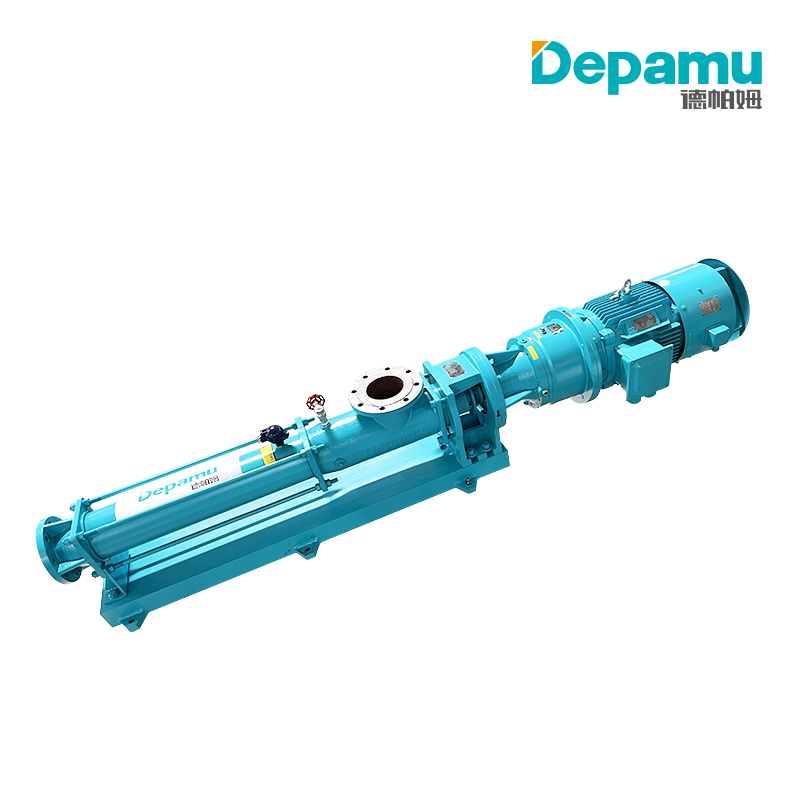
The Operating Principle: Progressive Cavity Technology
The Depamu single screw pump, also known as a progressive cavity pump, operates on a principle that is fundamentally different from centrifugal or positive displacement pumps like gear or lobe pumps. At its core is a single helical rotor, typically made of metal, which rotates eccentrically within a double-helix stator, usually manufactured from an elastomer . This geometric configuration creates a series of continuous, sealed cavities that progress axially from the suction to the discharge end as the rotor turns.
This mechanism is not merely about creating flow; it is about creating a metered, non-pulsating flow that is directly proportional to the rotational speed of the pump . For applications requiring precise metering, such as the addition of syrups in a blending operation or the consistent feeding of a fermenter, this linear flow-speed relationship offers a distinct advantage, allowing for accurate control through simple speed regulation . Unlike centrifugal pumps that impart high velocity and shear to the fluid, the progressive cavity design moves the fluid gently within these enclosed, unchanging volumes, a feature that is central to its success with delicate media.
Conveying Syrups: Managing Viscosity and Temperature
Syrups, from simple sucrose solutions to complex glucose and maltose blends, present a wide range of viscosities that can be highly sensitive to temperature. The viscosity of a 67.5% solids high-fructose corn syrup can be hundreds of times greater than water at room temperature, and its behavior can become significantly non-Newtonian, exhibiting characteristics like pseudoplasticity or thixotropy.
The Depamu single screw pump is engineered to handle this demanding rheological profile. With the capability to pump fluids with viscosities ranging from as low as 1 mPas up to 1,000,000 mPas (or even 3,000,000 mPas according to some specifications), it offers exceptional versatility for a production line that might process both thin syrups and dense molasses . The pump's design allows for an impressive suction lift of up to 8 meters of water column, enabling it to efficiently draw viscous syrups from vessels or storage tanks, a task that can be problematic for other pump types .
Furthermore, the pump's construction can accommodate a significant temperature range, with options for handling media from -12°C to +150°C . This is crucial for applications where syrups are processed hot to reduce viscosity for pumping, which is common in refineries. By maintaining its performance across this wide thermal spectrum, the Depamu pump provides reliable, continuous service without the need for bypassing or complex pre-heating strategies. The gentle, low-velocity action within the pump also ensures that the molecular chain structure of the syrup's sugars and polymers remains undamaged, preventing degradation that could lead to discoloration or the formation of undesirable byproducts .
Conveying Jams: Handling Solids and Protecting Structure
The transfer of jams and fruit preparations is arguably one of the most rigorous tests for any industrial pump. These are heterogeneous fluids containing fruit pieces, seeds, and pulp, suspended in a viscous, high-sugar, and often acidic gel. The primary requirements for a jam pump are to avoid damaging the integrity of the fruit pieces, to handle the high viscosity of the gel, and to resist the abrasive nature of the suspended solids.
The Depamu single screw pump's design is uniquely suited for this task. Its gentle, progressive cavity action is universally recognized for its low shear, which is essential to maintain the shape and texture of fruit pieces . The pump does not employ high-speed impellers or intermeshing lobes that would macerate the product. Instead, the continuous formation of cavities envelops and transports the solid particles as part of the fluid mass.
The pump's robust construction is a key factor in this application. The metal rotor can be manufactured from corrosion-resistant materials such as 316L stainless steel, while the stator elastomer is chosen from over 40 available formulations to resist the chemical and abrasive challenges of specific food products . With the ability to handle solid particles up to 30mm in diameter and slurries with up to 60% solid content, the Depamu pump can process a wide variety of jam formulations, from smooth spreads to chunky preserves, without clogging or losing efficiency . The elimination of pulsation ensures that the filling process downstream is consistent and accurate, preventing overfilling or spillage in high-speed packaging lines .
Conveying Fermentation Broths: Preserving Biological Integrity
Fermentation broths are complex, dynamic fluids that often contain living microorganisms (bacteria, yeast, or fungi), nutrient solids, and extracellular products like enzymes or antibiotics. The primary concern when pumping these broths is to maintain cell viability and structural integrity, as shear stress can lyse cells, reducing the final product yield and complicating downstream separation processes.
The Depamu pump's non-shearing, non-mixing, and non-pulsating flow is a critical advantage in this sensitive application. Unlike centrifugal pumps, which create high shear zones that can be detrimental to microbial cells, the progressive cavity pump moves the broth at low internal velocities, ensuring that cells and filamentous mycelia are not damaged . This is crucial for maintaining the metabolic activity and viability of the culture.
Moreover, the ability to pump media with high gas content is invaluable in biotechnology. Aeration and CO₂ production during fermentation can lead to two-phase flow, which can cause cavitation and loss of prime in many pumps. The progressive cavity pump can effectively handle mixed media containing gas, liquid, and solids, ensuring a stable and continuous supply to downstream processes such as filtration or centrifugation . The all-stainless-steel contact parts available for Depamu pumps also enable thorough cleaning and sterilization via Clean-in-Place (CIP) and Steam-in-Place (SIP) protocols, which are non-negotiable in pharmaceutical and food-grade biotechnology applications .
Key Technical Features and Design Advantages
The Depamu single screw pump's suitability for these applications is underpinned by a set of well-engineered design features. The pump adheres to international standards such as API 676, ensuring reliability and performance in demanding industrial environments . Its modular design allows for a vast array of configurations, including vertical, horizontal, and hopper-fed variants, enabling seamless integration into existing production lines .
Crucially, the pump offers excellent corrosion resistance, handling media across the full pH spectrum from 0 to 14. The range of rotor and stator materials available ensures that the specific chemical and abrasive challenges of each fluid, be it the acidity of a fruit jam or the abrasiveness of a fungal broth, can be effectively managed . The ability to achieve high discharge pressures, particularly in multi-stage configurations (up to 2.4 MPa or 12 bar per stage), makes it suitable for long-distance transfer or for feeding high-pressure downstream equipment like homogenizers and spray dryers .
Conclusion
The Depamu single screw pump is more than just a piece of industrial equipment; it is a finely tuned solution to the complex fluid-handling challenges of the modern food and bioprocessing industries. Its fundamental design, based on the progressive cavity principle, addresses the key requirements for handling syrups, jams, and fermentation broths: it preserves product quality through gentle, low-shear action; it maintains a precise, non-pulsating, and easily controllable flow; and it demonstrates remarkable versatility in managing a wide range of viscosities, solids content, and temperatures. Through its robust construction, multiple configuration options, and adherence to international engineering standards, Depamu has created a pump that not only transfers media but actively safeguards the qualities that define them, contributing to operational efficiency and product excellence.