

The Depamu Plunger Metering Pump: A Technical Analysis of High-Pressure Dosing Solutions
In the complex ecosystem of industrial fluid handling, precision and reliability are not merely operational advantages—they are fundamental requirements. Among the various technologies available for accurate chemical injection, the Plunger Metering Pump stands apart for its ability to deliver consistent, high-pressure dosing across demanding applications. Depamu (Hangzhou) Pumps Technology Co., Ltd. has established a significant presence in this specialized field, offering a range of plunger metering pumps designed to meet the rigorous demands of chemical processing, petrochemical operations, and other high-stakes industrial environments. This article examines the technical features, operational principles, and application advantages of Depamu's plunger metering pump technology.
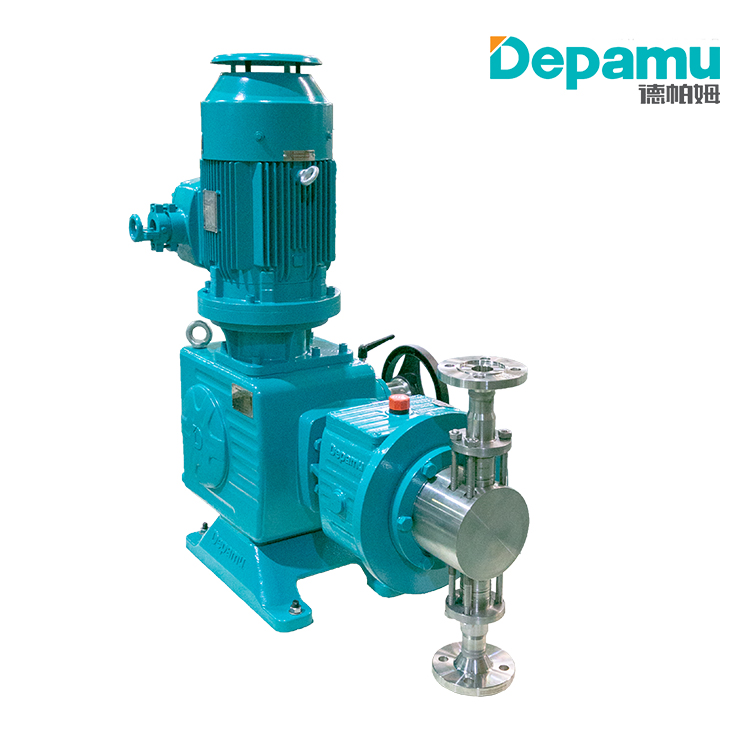
Fundamental Operating Principle
The Depamu plunger metering pump operates on the positive displacement principle, where fluid is drawn into and expelled from a chamber through the reciprocating motion of a plunger . As the plunger retracts, it creates a vacuum that opens the inlet check valve, allowing fluid to fill the working chamber. Upon forward stroke, the plunger displaces the fluid, closing the inlet valve and forcing the medium through the outlet check valve at the desired pressure. This cyclical operation, driven by a motor coupled through a worm gear speed reduction mechanism, enables precise volumetric control independent of system pressure variations .
Engineered for High-Pressure Performance
What distinguishes Depamu's offering in the high-pressure dosing segment is its robust engineering. The DP(M)XAA series, a flagship product line, demonstrates pressure capabilities reaching up to 228 MPa, positioning it as a solution for some of the most demanding industrial applications . This extreme pressure handling is achieved through several design features: high-performance plungers manufactured from specialized materials, proprietary packing and sealing components that maintain integrity under high loads, and precisely machined inlet and outlet check valves that ensure both metering accuracy and fluid stability .
The plunger diameter range of ф2-ф150mm allows for flexibility in matching flow requirements to pressure capabilities—typically, smaller plunger diameters are employed for higher pressure applications while larger diameters accommodate higher flow rates . This relationship between plunger diameter, stroke length, and operating pressure is fundamental to the pump's performance characteristics.
Precision Metering and Control Systems
The hallmark of any metering pump is its dosing accuracy, and Depamu has incorporated several technological innovations to achieve this objective. The integrated sleeve adjustable eccentric transmission mechanism, a patented design, enables stepless stroke adjustment across the full 0-100% range . This translates to a metering accuracy of ±0.5% within the 10-100% adjustment range, ensuring that operators can maintain precise chemical feed rates even as process conditions fluctuate .
Control flexibility is another noteworthy aspect of the Depamu design. Operators can choose from manual adjustment, electrical actuation, pneumatic control, or frequency conversion methods to regulate flow rates . The availability of electric actuators further enables remote automatic control, integrating the pump into modern distributed control systems (DCS) for seamless process automation. This adaptability is particularly valuable in applications where dosing requirements change based on upstream process variables or where hazardous environments necessitate remote operation.
Multi-Head Configurations and System Integration
For applications requiring multiple chemical additions or flow pulsation reduction, Depamu offers the capability to configure pumps with two or more heads—up to twelve in parallel . This modular approach serves two primary purposes: first, multiple heads can handle the same fluid to reduce pulsation effects that might otherwise disturb downstream processes; second, different fluids can be metered proportionally through individual heads, functioning as a chemical proportioning system . This eliminates the need for multiple separate dosing systems in many applications, reducing footprint and simplifying control architecture.
Material Selection for Media Compatibility
The chemical resistance and durability of wetted components are critical considerations in metering pump specification. Depamu addresses this through offering pump head materials including 304 stainless steel, 316 stainless steel, 316L, 904, Hastelloy C, and various high-polymer materials . This breadth of material options allows the pump to handle aggressive chemicals, high-temperature fluids, and viscous media that would rapidly degrade inferior materials. The choice of material must be carefully matched to the specific chemical being dosed, considering factors such as corrosivity, temperature, and viscosity.
Application Scope and Industry Implementation
Depamu plunger metering pumps find application across diverse industrial sectors. In chemical and petrochemical processing, they are employed for catalyst injection, additive dosing, and chemical feed in reaction processes . The oil and gas sector utilizes these pumps for methanol injection, corrosion inhibitor dosing, and scale inhibitor application in production and pipeline operations . Power generation facilities employ them for boiler water treatment chemical injection, while metallurgical operations use them for precise reagent addition in extraction and refining processes .
One particularly notable capability is the pump's suitability for handling high-viscosity liquids, often a challenge in metering applications. The direct-acting plunger design provides the force necessary to move viscous fluids that would stall less robust pumping mechanisms, making it suitable for applications such as polymer injection, lubricant dosing, and emulsion handling .
Operational Considerations and Best Practices
Several operational aspects warrant attention for optimal performance. Depamu explicitly notes that their plunger metering pumps lack integral safety relief devices, recommending installation of a safety valve on the outlet pipeline . This is standard practice for positive displacement pumps where a blocked discharge could lead to pressure buildup beyond safe operating limits. Additionally, the oil-immersion lubrication system employed for the transmission mechanism ensures reliable long-term operation but requires periodic maintenance checks to maintain lubricant quality . The pump's relatively simple structure facilitates maintenance, with readily accessible components for repair or replacement .
Comparative Position in the Market
While Depamu represents one of several manufacturers in the plunger metering pump space, including established names like OBL and Tohkemy, the company's technical specifications are competitive . OBL's R series, for example, reaches pressures up to 100 bar and handles viscosities to 55,000 cps , while Depamu's pressure capability of 228 MPa significantly exceeds this figure . Tohkemy's Sigma series achieves 32 MPa maximum pressure , positioning Depamu as a higher-pressure solution for specialized applications. Other Chinese manufacturers such as Ronda offer similar pressure capabilities up to 50 MPa , suggesting Depamu's specifications place them at the high end of the pressure spectrum for plunger metering pumps.
Conclusion
The Depamu plunger metering pump represents a technically sophisticated solution for high-pressure dosing applications. Its combination of robust construction, precise metering capability, flexible control options, and material versatility positions it as a viable choice for demanding industrial applications . The pressure range capability of up to 228 MPa distinguishes it from many competitors , while the patented eccentric drive mechanism provides the accuracy required in critical chemical dosing operations . For engineers and process designers seeking a reliable, high-performance metering solution, Depamu's plunger pump technology merits careful consideration within the broader context of application-specific requirements and operational constraints