

Depamu Screw Pump: A Critical Component for Bilge Cleaning and Marine Incinerator Delivery
In the demanding environment of marine engineering, the reliability of fluid handling systems is paramount. Vessels generate waste streams—oily bilge water and sludge—that require careful management to comply with environmental regulations and ensure operational efficiency. The Depamu Screw Pump, engineered with German technology and robust construction, has emerged as a versatile solution for these critical onboard applications. This article examines the technical characteristics and operational roles of Depamu screw pumps in bilge cleaning systems and marine incinerator sludge delivery.
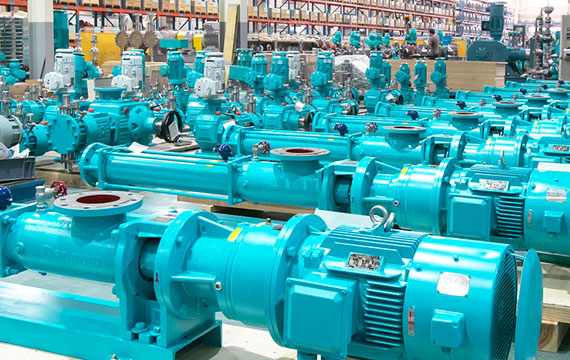
Technical Foundation: The Depamu Screw Pump Advantage
Depamu (Hangzhou) Pumps Technology Co., Ltd., established in 2003, has positioned itself as a high-tech enterprise specializing in fluid transfer equipment. The company holds API, CE, ISO 9001, ISO 14001, and ISO 45001 certifications, and has applied for over 100 technical patents since its founding . Their single screw pumps are based on advanced German technologies, demonstrating "obvious superiority in terms of special working conditions like fluids with a high viscosity, containing hard suspended particles, etc." .
The fundamental advantage of the Depamu single screw pump lies in its positive displacement mechanism. Unlike centrifugal pumps that can shear and degrade sensitive fluids, the screw pump's design ensures "no shearing or mixing during transfer" which protects "the molecular chain structure and specific fluid properties" . This characteristic is particularly valuable when handling waste streams containing oil-water emulsions and sludge that must maintain their integrity for effective incineration.
The pump's performance envelope is exceptionally broad. It can handle media with viscosities ranging from 1 mPas to 1,000,000 mPas, accommodating everything from relatively thin bilge water to thick, viscous sludge. The design allows for handling media with solid particle sizes up to 30mm, a critical feature for bilge water that often contains debris, rust particles, and other contaminants . Furthermore, the pump can handle abrasive media, cohesive substances, and media with gas or fiber content—all common challenges in marine waste management .
Bilge Cleaning Application
Bilge water is an inevitable byproduct of vessel operations, accumulating in the lowest part of the hull. This water becomes contaminated with oil, fuel, lubricants, hydraulic fluids, and various solid particulates. Regulatory frameworks such as MARPOL Annex I impose strict limits on the oil content of water discharged overboard, typically requiring treatment to below 15 parts per million before discharge. Effective bilge cleaning systems depend on reliable pumps to transfer this challenging fluid through oily water separators and treatment trains.
Marine screw pumps are specifically designed for pumping bilge waters containing impurities of oil products. As documented in technical literature, these pumps are deployed on "separation units of the marine ships" and can handle "mechanical non-abrasive impurities of up to 2.5% by weight" . The Depamu screw pump is particularly well-suited to this role due to its ability to handle fluids with varying oil-to-water ratios without performance degradation.
The pumping of bilge water presents several technical challenges. The fluid is often a complex emulsion with varying viscosity, containing both free and emulsified oil, suspended solids, and potentially aggressive chemicals. The self-priming capability of screw pumps—achieving suction lifts of up to 8 meters water column—is essential for drawing water from the deepest parts of the vessel where bilge wells are located . This suction capacity ensures reliable operation even when the bilge water level is low, preventing the pump from losing prime and maintaining the integrity of the separation process.
The structural design of the Depamu pump further supports bilge cleaning operations. The pump can be configured in multiple mounting arrangements, including horizontal and vertical orientations, providing flexibility for installation in confined machinery spaces where space is at a premium . The temperature range of -12°C to +150°C allows the pump to handle bilge water regardless of ambient conditions or the temperature of fluids entering the bilge from various machinery sources .
The modular construction of Depamu screw pumps offers significant advantages for maintenance in the marine environment. When dealing with abrasive particles that can cause wear on pump components, the modular design allows for targeted replacement of worn parts rather than complete pump overhaul, reducing downtime and maintenance costs. This is particularly important for vessels operating on extended voyages where access to repair facilities may be limited.
Marine Incinerator Sludge Delivery
Marine incinerators represent an essential waste management solution on modern vessels, providing a means to dispose of oil sludge, waste oil, and other combustible waste streams that cannot be discharged overboard. Incinerator feed systems require consistent, controlled delivery of sludge to maintain combustion stability and ensure complete destruction of waste. The sludge oil circulation pump is critical to this process, and as noted in marine equipment specifications, these pumps are "a piece of equipment optimal for completion of incinerator in water treatment plant" .
The Depamu screw pump demonstrates particular suitability for incinerator feed applications. The single screw design provides "continuous and nearly pulsation-free pumping," which is essential for maintaining a steady feed rate to the incinerator burner . Pulsation in sludge delivery can cause flame instability, incomplete combustion, and potentially dangerous flashback conditions. The positive displacement nature of the screw pump ensures that regardless of variations in sludge viscosity or the presence of entrained solids, the delivered volume remains consistent.
Sludge intended for incineration typically consists of a mixture of waste oils, water, and solid residues that may exceed 30mm in particle size. The Depamu pump's ability to handle "mixed media containing gas, solid or fiber" makes it uniquely suited to this heterogeneous waste stream . The pump's design prevents blockages that would be common with other pump types when encountering the fibrous and particulate content present in shipboard sludge.
Temperature control is another critical consideration in sludge delivery. Marine sludge can have elevated temperatures due to the heating of heavy fuel oils and lubrication systems. The Depamu pump's capability to operate with fluid temperatures up to 150°C ensures it can handle hot sludge directly from settling tanks and separators . The high-viscosity pumping capability allows it to handle fuel oil derivatives that may be highly viscous at lower temperatures, maintaining flow even during cold start conditions.
In a typical marine incinerator system, the sludge tank connects to the incinerator through a circulation pump . The pump must overcome the pressure requirements of the burner nozzle while maintaining consistent flow regardless of suction conditions. The Depamu pump's positive displacement characteristics ensure it develops sufficient pressure to atomize sludge effectively for combustion, while the modular design allows for the integration of pressure relief valves to protect the system from overpressure conditions.
Synergistic System Integration
The role of the Depamu screw pump extends beyond individual applications to facilitate the integration of bilge water treatment and sludge incineration systems. In a comprehensive waste management system, bilge water separators produce a concentrated oil sludge that must be transferred to the incinerator. The same screw pump technology that handles bilge water separation can be employed for this sludge transfer, providing consistency across the waste management train.
Modern marine waste management systems incorporate sophisticated control and monitoring capabilities. Depamu's product range includes pumps that can be configured with variable frequency drives and remote monitoring capabilities, enabling "real-time data and allowing remote adjustments" . This integration is increasingly important as vessels move toward automated machinery spaces requiring minimal crew intervention. The ability to monitor pump performance, adjust flow rates, and detect anomalies remotely enhances both operational efficiency and safety.
The versatility of the Depamu screw pump also extends to dual-function installations where the same pump can serve both bilge cleaning and sludge transfer duties, with appropriate valving and system design. This can reduce the number of pumps required on board, saving valuable space and reducing maintenance requirements. The pump's ability to operate in either direction—"able to rotate and transport fluids in both directions"—further enhances system design flexibility .
Conclusion
The Depamu screw pump represents a sophisticated solution to the demanding fluid handling requirements of modern marine operations. Its application in bilge cleaning takes advantage of its ability to handle the complex, multi-phase fluids characteristic of vessel bilge water, with self-priming capability, high suction lift, and resistance to abrasive wear. In incinerator sludge delivery, the pump provides the steady, pulsation-free flow essential for stable combustion of heterogeneous waste streams, with the ability to handle elevated temperatures and high solids content.
The maritime industry continues to face increasing environmental regulation and operational pressures that demand reliable, efficient waste management systems. By providing a single pump technology capable of addressing both bilge cleaning and incinerator feed requirements, the Depamu screw pump offers vessel operators a proven solution for maintaining environmental compliance while minimizing equipment footprint and maintenance burden. The combination of German engineering heritage, robust construction, and adaptable configuration ensures these pumps will continue to play a critical role in marine waste management for years to come.