

Introduction
In the world of industrial manufacturing, two-component (2K) adhesives—such as epoxies, polyurethanes, and silicones—are indispensable for creating high-strength bonds in aerospace, automotive, electronics, and medical devices. However, the chemistry of these adhesives is unforgiving. A 1% deviation in the mix ratio can result in uncured material, catastrophic bond failure, or hazardous chemical reactions.
At the heart of every successful 2K dispensing system lies the Depamu-pumps.com/Metering-pump.html target='_blank'>Metering Pump. Whether you are evaluating a Depamu metering pump (a recognized name in volumetric precision) or a comparable high-end solution, the physics of fluid dynamics remain the same. Selecting the wrong pump technology leads to downtime, wasted material, and scrapped parts.
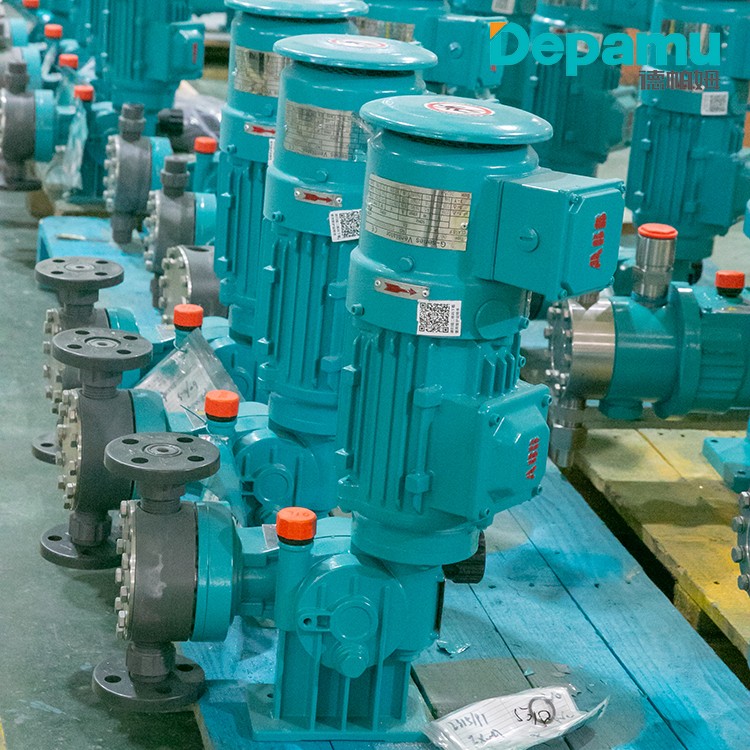
This guide provides a deep technical framework for choosing a metering pump for two-component adhesives, focusing on five critical parameters: viscosity and rheology, abrasive fillers, mix ratio flexibility, shear sensitivity, and output consistency.
Part 1: The Core Function of a Metering Pump in a 2K System
Before selecting a pump, one must understand the architecture of a 2K metering system. Unlike single-fluid transfer, a 2K system requires two separate pumps synchronized by a common drive or PLC control. One pump handles Component A (usually the base resin) and the other handles Component B (the curative/hardener).
The pump must perform two distinct jobs:
-
Volumetric Accuracy: It must deliver a precise, repeatable volume of fluid regardless of temperature fluctuations or back-pressure changes.
-
Ratio Integrity: The relative speeds or displacements of the two pumps must maintain the exact mix ratio (e.g., 10:1 or 100:2) from the first shot to the ten-thousandth shot.
Depamu and similar manufacturers offer four primary pump technologies for this task: Piston, Gear, Screw, and Progressive Cavity (PC) . Each has a distinct "personality" that aligns with specific adhesive chemistries.
Part 2: The Four Pump Technologies Explained
1. Piston Pumps (Positive Displacement)
Piston pumps operate via a reciprocating rod displacing a fixed volume within a cylinder. They are the "brute force" option in metering.
-
Best for: Low-viscosity fluids (solvents, cyanoacrylates) or medium-viscosity oils. They excel in shot dispensing (start/stop applications).
-
Mechanics: The ratio is often fixed by the bore size of the cylinder. To change the ratio from 1:1 to 2:1, you must physically change the cylinder hardware.
-
The Catch: Piston pumps inherently produce pulsation. As the piston reaches the end of its stroke, flow drops to zero before reversing. In a 2K mixing head, this pulsation causes temporary ratio skews (A comes out, then B comes out, then A, etc.), leading to a striped, unmixed blob.
2. Gear Pumps (External/Internal)
Gear pumps use meshing gears to trap fluid in the cavities between the gear teeth and the housing, transporting it from inlet to outlet.
-
Best for: Low-to-medium viscosity fluids (100 – 50,000 cP). They are the industry standard for polyurethanes and non-filled epoxies.
-
Mechanics: Highly accurate and capable of very high pressures (up to 250 bar).
-
The Catch: Gear pumps are "clearance pumps." The gears must spin with tight clearances (microns) against the housing. If abrasive fillers (like aluminum oxide or silica) enter this gap, they act as lapping compound, eroding the gear teeth and destroying accuracy within hours.
3. Screw Pumps (Twin or Triple Spindle)
Screw pumps utilize the Archimedes principle; rotating screws push fluid axially through a chamber.
-
Best for: High-viscosity fluids and applications requiring pulsation-free flow.
-
Mechanics: They are gentler than gear pumps because the fluid path is straight rather than turning corners.
-
The Catch: Screw pumps share the same vulnerability as gear pumps regarding abrasive fillers. The close tolerances of the spindles mean abrasive particles will jam or wear the rotors.
4. Progressive Cavity (PC) Pumps
PC pumps consist of a helical rotor (metal) turning inside a flexible stator (elastomer, usually FKM or EPDM). This creates moving sealed cavities.
-
Best for: High viscosity (up to 1,000,000 cP), shear-sensitive, and abrasive-filled materials.
-
Mechanics: Low shear, zero pulsation, and gentle handling. The elastic stator allows abrasive particles to be "absorbed" into the elastomer rather than crushing metal.
-
The Catch: The stator is a wear part. If the pump runs dry, the rotor will burn the elastomer in seconds. Also, they are generally more expensive than gear pumps.
Part 3: How to Match Pump Type to Adhesive Properties
To choose a Depamu pump, you must analyze your specific adhesive data sheet. Here is the decision matrix based on physical properties.
Scenario A: Handling Abrasive Fillers (Thermally Conductive Adhesives)
Many modern 2K adhesives are packed with fillers. Thermally conductive epoxies contain Boron Nitride or Aluminum Oxide. Electrically conductive adhesives contain Silver or Nickel. Structural adhesives often contain Glass Microspheres or Silica.
-
The Danger: Abrasive fillers destroy Gear and Screw pumps. They act like sandpaper on the precision-machined surfaces. Additionally, Piston pumps suffer from seal failure; the abrasive grit gets caught between the piston rod and the seal, shredding the elastomer and causing leaks.
-
The Solution: You require a Progressive Cavity (PC) Pump or a specialized Piston pump with hardened seals (though PC is superior for continuous flow).
-
Depamu Selection: Look for PC pumps with ceramic-coated rotors or hardened stainless steel.
-
Warning on Hollow Fillers: If your adhesive contains Hollow Glass Microspheres (used to lightweight the adhesive), avoid Gear pumps. The shear forces in a gear pump will crush these microspheres, turning a lightweight paste into a dense, useless sludge.
-
Scenario B: Dealing with High Viscosity & Thixotropy
High-viscosity adhesives (paste-like, >100,000 cP) do not "pour"; they tear.
-
The Danger: Gear pumps struggle to "fill" the teeth with high-viscosity fluid, leading to cavitation (vacuum pockets). Piston pumps require massive hydraulic force to move the cylinder.
-
The Solution: Progressive Cavity pumps excel here because of their large, open inlet cavities. Screw pumps also handle high viscosity well but lack abrasive tolerance.
Scenario C: Low Viscosity (Watery) Fluids
If you are metering low-viscosity materials (like reactive polyurethanes or MMA adhesives).
-
The Danger: Low viscosity fluid slips through the clearances of a PC pump or Gear pump easily. It acts like water leaking through a screen door.
-
The Solution: Gear pumps are ideal because their tight clearances provide resistance to slippage. Piston pumps are also excellent for low viscosity, provided you can tolerate the pulsation.
Part 4: The Critical Evaluation of "Depamu" Specifications
When reviewing the technical datasheet for a Depamu metering pump (or any equivalent), you must look beyond the "Max Pressure" figure. Focus on these specific metrics:
1. The Mix Ratio Window
Look at the Ratio Range. Can the pump system handle your specific ratio?
-
1:1 ratios are easy. Most pump types (dual piston, twin gear, dual PC) work.
-
High ratios (10:1 or 100:2) are dangerous. The small pump (Component B) must dispense very tiny volumes. In a Gear pump system, the small gear might be too small to maintain accuracy.
2. Volumetric Accuracy (Repeatability)
Adhesive manufacturers often specify a ratio tolerance (e.g., ±2%). Your pump must exceed this.
-
Gear Pumps: Typical accuracy ±0.5% – ±1%. Very high.
-
Progressive Cavity: Typical accuracy ±1%. Excellent for continuous flow.
-
Piston Pumps: Accuracy depends on seal wear. New pistons are ±0.5%; worn pistons slip significantly.
3. Output Consistency (The Pulse Factor)
Ask the supplier: Is the flow continuous or intermittent?
-
Piston pumps are intermittent (pulsing). If you are dispensing a bead of adhesive on a moving conveyor, a piston pump will leave a "zebra stripe" bead (thick, thin, thick, thin).
-
Gear & PC pumps are continuous. The Depamu gear pump will lay a perfectly uniform bead because the meshing gears provide constant, non-pulsing pressure.
4. Compatibility with Mixing Heads
Your pump is only half the system. It feeds a static or dynamic mixer.
-
High Pressure Need: If you use a Static Mixer (disposable plastic nozzle), you need high pressure (often 20-30 bar). Gear pumps are excellent for this.
-
Low Pressure/Shear Need: If you use a Dynamic Mixer (powered mixing pin), you need low pulsation. PC pumps are ideal.
Part 5: The Maintenance and Total Cost of Ownership (TCO)
Engineers often buy the cheapest pump initially but pay 10x more in downtime later. Here is the reality of maintenance for Depamu pumps:
Gear & Screw Pumps
-
Maintenance: Sudden death. When the gears wear out or seize, the pump stops entirely.
-
Cost to Fix: High. You must replace the hardened gear sets and re-machine the housing.
-
User Skill: Requires technical disassembly to maintain micron clearances.
Progressive Cavity Pumps
-
Maintenance: Gradual death. You will notice "slippage" (lower output) first. The stator (elastomer) wears down.
-
Cost to Fix: Moderate. Staters are consumables. You can replace a stator in 10 minutes.
-
User Skill: Low. Simple pull-and-replace.
Piston Pumps
-
Maintenance: Seal failure (leaking fluid out the back).
-
Cost to Fix: Low (seals are cheap), but downtime is high if the cylinder must be removed.
-
User Skill: Moderate (lapping the piston to the cylinder).
Recommendation: If your Depamu system is processing abrasives, budget for a Stator Replacement Kit for a PC pump every 3-6 months, versus a Full Pump Replacement for a gear pump every 1 month.
There is no single "best" pump; there is only the best pump for your specific two-component adhesive. The Depamu brand, like any quality metering pump manufacturer, relies on the engineering team's ability to match the pump physics to the fluid chemistry.
If you prioritize low initial cost and are pumping clean, low-viscosity oil: A Depamu Gear Pump is your solution.
If you need to dispense thermally conductive, abrasive epoxy: You must choose a Depamu Progressive Cavity Pump or risk destroying your equipment within weeks.
If you need high-pressure static mixing for water-thin material: The Depamu Piston Pump (in a dual configuration) may suffice.
Ultimately, the choice is a trade-off between shear tolerance, pressure requirements, and filler abrasiveness. Always perform a "pump-off" test with your actual adhesive. Run the Depamu pump for 1,000 cycles, then measure the output volume. If the volume has dropped by more than 1%, the wear characteristics of your adhesive demand a different pump technology.
By evaluating your viscosity, filler type, and required ratio, you can confidently select the Depamu metering pump that ensures your two-component adhesive cures correctly—every single time.
Conclusion