

Depamu Food Grade Sanitary Pumps for Sanitary Manufacturing
In modern sanitary manufacturing industries, the integrity of fluid handling systems is no longer a secondary consideration—it is the very foundation that guarantees product safety, regulatory compliance, and consumer trust. For sectors ranging from food and beverage processing to pharmaceutical production, from dairy manufacturing to high-purity cosmetic formulation, every drop of fluid that moves through a production line carries with it the potential to define product quality or introduce irreversible risks. This reality has elevated the food grade sanitary pump from a simple mechanical component to a critical strategic asset, one that must balance precision, hygiene, durability, and efficiency in equal measure. Among the global providers of such specialized equipment, Depamu has established a distinct reputation for engineering sanitary pumps that are purpose-built to meet the evolving demands of clean, contamination-free manufacturing.
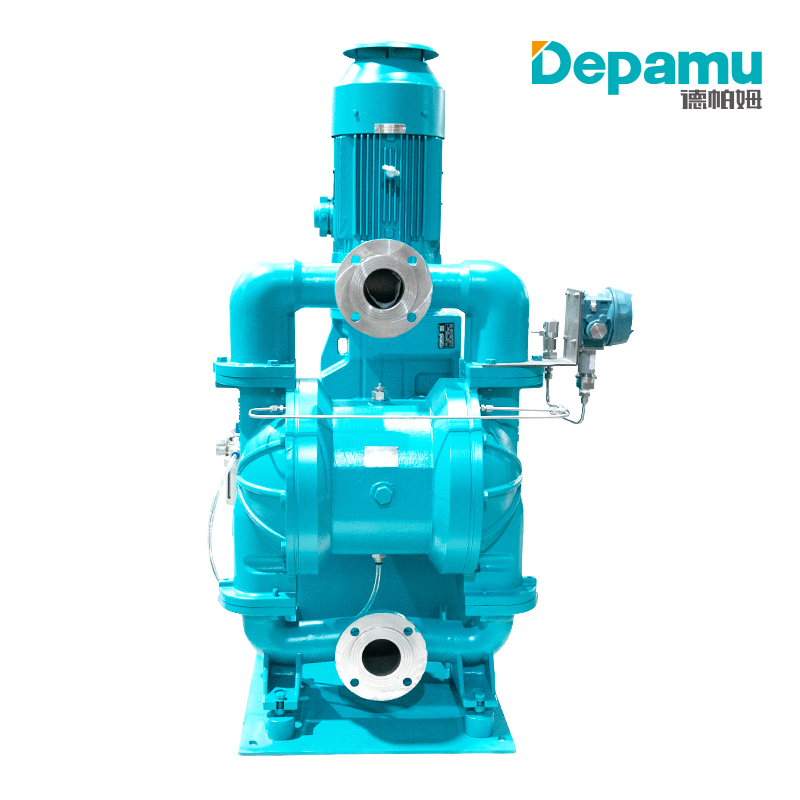
The Core Imperative of Sanitary Fluid Handling
Before exploring the technical and operational strengths of Depamu’s food grade sanitary pump portfolio, it is essential to understand why sanitary fluid handling demands such rigorous standards. Unlike general industrial pumps designed for water, oil, or non-sensitive chemical transfer, food grade sanitary pumps operate in environments where even microscopic contaminants can compromise entire production batches. A single stray metal particle, a trace of residual cleaning agent, a hidden crevice where organic matter can accumulate, or an inconsistent flow rate that disrupts a delicate formulation—all these seemingly minor issues can lead to product recalls, regulatory penalties, damage to brand reputation, and in the most severe cases, risks to public health.
In the food and beverage sector, for example, the transfer of fruit juice, beer, milk, honey, sauce, and edible oils requires that every contact surface between the pump and the product remains completely non-reactive, easy to inspect, and fully cleanable. In pharmaceutical manufacturing, the stakes are even higher: pumps handling oral liquids, injectable solutions, and biopharmaceutical media must prevent any cross-contamination while maintaining precise, repeatable flow rates that ensure consistent dosing and formulation accuracy. For manufacturers producing high-viscosity products such as date paste, yogurt concentrates, or cosmetic creams, the challenge extends beyond hygiene alone—pumps must also move thick, shear-sensitive materials without altering their physical properties or compromising texture.
Traditional general-purpose pumps often fall short in these scenarios. Pumps with threaded connections, unsealed gaps, carbon steel casings, or complex internal geometries create dead zones where product residues can accumulate, evade routine cleaning, and eventually spoil or contaminate subsequent batches. This is why leading sanitary manufacturers have turned to specialized food grade sanitary pumps that are engineered from the ground up with hygiene as the primary design principle.
Depamu’s Engineering Philosophy for Food Grade Sanitary Pumps
Depamu, a technology-driven pump manufacturer with decades of experience in fluid transfer innovation, approaches sanitary pump design with a clear philosophy: every engineering decision must serve to enhance hygiene, reliability, and process compatibility. This commitment is reflected not only in material selection but also in every detail of mechanical structure, sealing performance, and long-term maintainability.
At the core of Depamu food grade sanitary pumps is the use of high-quality stainless steel for all product-wetted components. Most models feature 304 or 316L stainless steel, materials that are non-toxic, corrosion-resistant, and fully compliant with international food contact safety standards. Unlike ordinary carbon steel or lower-grade metal alloys, these stainless steel grades resist reactions with acidic dairy products, sugary beverages, saline solutions, and mild organic compounds that are common in sanitary production. This ensures that no unwanted metallic ions leach into the product stream, preserving both the purity of the medium and the long service life of the pump itself.
Beyond material selection, Depamu places enormous emphasis on surface finish. All product-contact surfaces are polished to a smooth, mirror-like standard that eliminates microscopic pits and irregularities where organic particles could adhere. This level of finishing is not merely a cosmetic detail—it drastically improves the effectiveness of Clean-in-Place (CIP) and Sterilize-in-Place (SIP) operations, two processes that are indispensable in modern sanitary manufacturing. When CIP cycles run with alkaline or acidic cleaning solutions at controlled temperatures, the smooth internal geometry of Depamu pumps allows cleaning fluids to wash away all residual product completely, without leaving hidden pockets of contamination that could spoil future production runs.
Another defining feature of Depamu’s sanitary pump design is the elimination of unnecessary gaps, threads, and dead spaces. Where many conventional pumps rely on threaded joints that can trap product residue over time, Depamu’s sanitary models prioritize clamp connections, quick-fit couplings, and seamless welded surfaces that can be easily disassembled for manual inspection and deep cleaning. This design choice makes routine maintenance far more efficient, while also giving plant operators full confidence that every part of the pump can be verified as visually clean before production resumes.
Key Product Lines and Their Real-World Applications
Depamu’s food grade sanitary pump family covers multiple pump types, each tailored to address specific fluid characteristics and production requirements across different sanitary industries. This diverse product range ensures that manufacturers can select a pump that perfectly matches their unique process conditions, rather than forcing a one-size-fits-all solution into a mismatched application.
One of the most widely adopted models is the Stainless Steel Food Grade Hygienic Sanitary Rotary Rotor Lobe Pump. This pump is engineered specifically for high-viscosity media transfer, making it ideal for moving thick products such as peanut butter, chocolate paste, fruit puree, and cheese spreads. The gentle, low-shear action of the rotating lobes ensures that delicate product textures are preserved, preventing the breakdown of emulsions or the separation of ingredients that can ruin the final product quality. Food processing plants that handle high-viscosity materials often struggle with pumps that cause excessive shear, leading to inconsistent product consistency and higher rates of production waste. Depamu’s rotor lobe pump solves this problem by delivering a steady, pulsation-free flow that protects the physical integrity of sensitive high-viscosity fluids.
For low-viscosity applications such as transferring milk, beer, juice, and purified water, Depamu’s Factory Selling Sanitary Stainless Steel Food Grade Centrifugal Pump offers exceptional performance. Compact, energy-efficient, and easy to integrate into small to medium production lines, this centrifugal pump is a popular choice for craft breweries, small-scale dairy processors, and beverage bottling facilities. Its hygienic design ensures that even during continuous, high-volume operation, the product stream remains uncontaminated, while its straightforward structure simplifies daily inspection and routine maintenance. Many small and mid-sized manufacturers particularly value this model because it delivers professional-grade sanitary performance without the complexity of overly specialized equipment.
For the most demanding high-viscosity applications involving extremely thick media such as date paste, honey concentrates, and cosmetic creams, Depamu’s Xs Sanitary High Viscosity Low Shear Twin Screw Pump represents an industry-leading solution. This twin-screw design moves fluid through the pump using the precise meshing action of two screws, creating a smooth, low-shear flow that handles even the most viscous materials without damaging their structure. This makes it an invaluable asset for manufacturers who need to transfer dense, shear-sensitive products at consistent flow rates, without sacrificing hygiene or process efficiency.
In addition to these core product lines, Depamu’s expertise in Diaphragm Pump and metering technology extends into sanitary dosing and metering applications. For processes that require the precise addition of additives, preservatives, flavorings, or nutritional supplements, Depamu’s sanitary Metering Pumps deliver highly accurate, repeatable dosing volumes that help manufacturers maintain strict formulation consistency across every production batch. This level of precision is critical for ensuring that every unit of a finished product meets the exact nutritional, flavor, and safety specifications that consumers expect.
Advantages That Set Depamu Apart in Sanitary Manufacturing
What makes Depamu food grade sanitary pumps stand out in a competitive global market is the combination of technical performance, operational reliability, and long-term value that few other manufacturers can match.
First, these pumps are designed for real-world manufacturing resilience. Sanitary production facilities often run long continuous shifts, with pumps operating for hours or even days at a time. Depamu builds its sanitary pumps with robust, wear-resistant components that minimize downtime and extend service life, even under demanding 24/7 operating conditions. This reliability translates directly into tangible business benefits: fewer unexpected breakdowns, less lost production time, and lower overall operating costs over the full lifecycle of the equipment.
Second, the pumps are engineered to support modern efficiency standards. By optimizing hydraulic performance and reducing unnecessary energy loss, Depamu sanitary pumps help manufacturers lower their power consumption without compromising flow performance or hygiene standards. In an era where industrial energy costs continue to rise and sustainability targets are increasingly important for food and pharmaceutical brands, this energy efficiency becomes a meaningful advantage that supports both operational cost control and environmental responsibility.
Third, Depamu provides more than just equipment—it delivers end-to-end technical support tailored to each customer’s unique process requirements. Many sanitary manufacturing projects involve complex challenges: selecting the correct pump model for a specific viscosity range, calculating the exact flow rate and head requirements for a new production line, integrating the pump into an existing CIP system, or training on-site maintenance teams to perform proper inspection and cleaning procedures. Depamu’s experienced engineering teams work closely with customers at every stage, from initial consultation and pump selection through installation, commissioning, and long-term after-sales support. This collaborative approach ensures that the pump not only arrives at the facility with strong technical specifications, but also performs exactly as intended in the customer’s actual production environment.
Finally, Depamu’s long-standing experience in fluid transfer technology, backed by hundreds of patents and deep involvement in industry standard development, means that every sanitary pump benefits from decades of accumulated engineering knowledge. Unlike many new market entrants that offer basic sanitary pumps without deep process understanding, Depamu brings insights gained from working across industries including petrochemical, environmental engineering, and pharmaceutical manufacturing. This broad technical background allows the company to anticipate and solve the subtle, hidden challenges that often appear in complex sanitary fluid handling systems.
Looking Ahead: The Future of Sanitary Fluid Handling
As global sanitary manufacturing standards continue to rise, the role of high-quality food grade sanitary pumps will only grow more important. Regulatory bodies around the world are introducing stricter requirements for food contact materials, cleaning validation, and traceability across the entire production supply chain. At the same time, consumers are demanding greater transparency, higher product quality, and cleaner ingredient profiles from the brands they trust. These trends are pushing manufacturers to upgrade their production infrastructure, replacing older, less hygienic pump systems with modern sanitary solutions that can meet the next generation of industry standards.
In this evolving landscape, Depamu continues to invest in research and development to advance sanitary pump technology further. Ongoing innovation efforts are focused on areas including enhanced real-time monitoring capabilities, improved energy efficiency, smarter connectivity for digital manufacturing systems, and even more optimized geometries that make CIP and SIP processes faster and more resource-efficient. By combining its deep engineering heritage with forward-looking innovation, Depamu is positioning itself to remain a trusted long-term partner for sanitary manufacturers around the world.
Conclusion
For any business operating in sanitary manufacturing, the choice of a food grade sanitary pump is far more than a simple equipment purchase—it is an investment in product safety, process reliability, and brand reputation. Depamu’s full range of food grade sanitary pumps delivers exactly this kind of value, combining hygienic design, robust engineering, precise performance, and expert customer support to meet the diverse challenges of modern clean production. Whether a facility is processing milk and beer, transferring thick food pastes, dosing pharmaceutical ingredients, or formulating high-purity cosmetics, there is a Depamu sanitary pump engineered to fit the application perfectly. In an industry where even the smallest detail can make a huge difference, Depamu proves that excellence in fluid handling is not just a technical goal—it is the foundation upon which great sanitary manufacturing is built.