


Depamu High Pressure Water Jet Cleaner / Reciprocating Plunger Pump for Ship Hulls Cleaning
Introduction
The maritime industry faces a persistent and costly challenge: biofouling. The accumulation of marine organisms such as barnacles, algae, and mollusks on ship hulls increases hydrodynamic drag, elevates fuel consumption, accelerates corrosion, and facilitates the transport of invasive species across global waterways. Regular inspections and hull cleanings are essential to prevent biofouling on ships. Traditional cleaning methods—manual scraping, brush cleaning, and dock-based high-pressure washing—are often ineffective in reaching niche areas like bow thrusters and sea chests, and brushes can damage hull coatings, allowing biofouling to penetrate compromised areas.
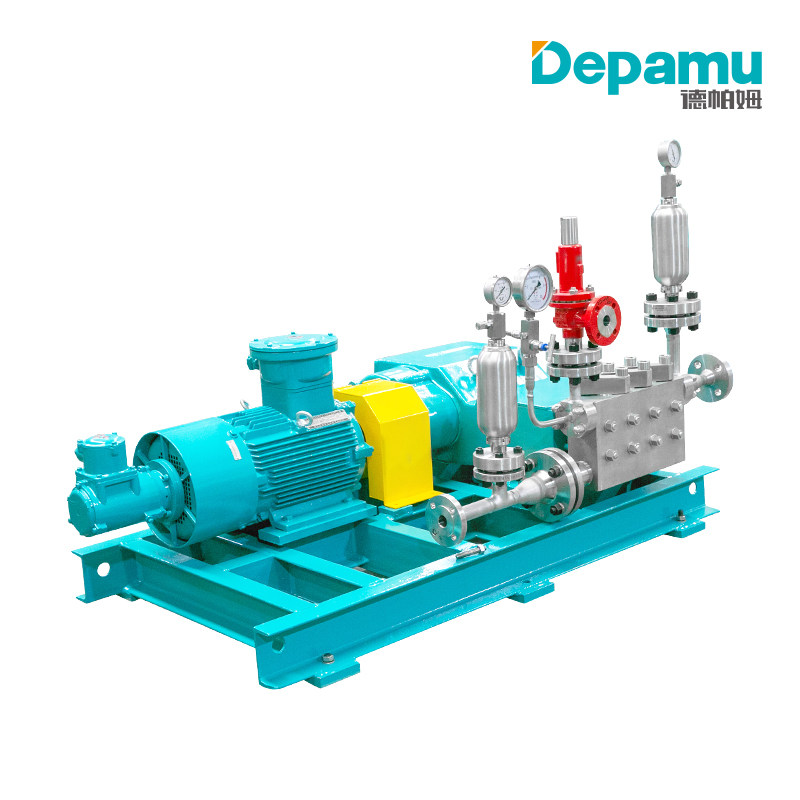
Enter the Depamu High Pressure Water Jet Cleaner, powered by Depamu's advanced reciprocating plunger pump technology. As a leading manufacturer of industrial pumping solutions, Depamu (Hangzhou) Pumps Technology Co., Ltd. has established itself as a trusted supplier of high-pressure Reciprocating Pumps, Metering Pumps, and water treatment equipment. Headquartered in Hangzhou's Economic and Technological Development Zone, the company designs its reciprocating pumps according to the American Petroleum Institute standard (API674), representing world-class quality backed by numerous patents. This article explores the technology, applications, and advantages of Depamu's high-pressure water jet cleaning systems for ship hull maintenance.
The Working Principle of Depamu's Reciprocating Plunger Pump
At the heart of Depamu's high-pressure water jet cleaner lies the reciprocating plunger pump—a positive displacement pump that generates exceptionally high pressures through a straightforward yet highly effective mechanical principle.
Fundamental Operation
In a Depamu reciprocating plunger pump, the plunger contacts the fluid directly. As the plunger reciprocates—driven by a rotating crankshaft via a connecting rod mechanism—the volume of the working chamber changes cyclically. During the suction stroke, the plunger retracts, expanding the chamber volume and creating a pressure differential that opens the inlet check valve, allowing fluid to enter. During the discharge stroke, the plunger advances, compressing the chamber volume and forcing the outlet check valve open, expelling the fluid at high pressure.
Key Design Features
Depamu's pumps incorporate several engineering innovations that make them particularly suitable for demanding marine cleaning applications:
High-Performance Plunger and Sealing Components: The pumps employ high-performance plungers with specially designed stuffing boxes and sealing components, ensuring long service life and excellent sealing performance even under extreme pressures. This is critical in marine environments where pumps must operate reliably with seawater and cleaning solutions.
High-Precision Check Valves: Inlet and outlet check valves are manufactured to high precision standards, effectively guaranteeing metering accuracy and fluidity. This ensures consistent flow rates and pressure delivery during cleaning operations.
Integrated Worm Gear Drive: The variable speed drive mechanism features an integrated worm gear pair, delivering low noise and high efficiency—a significant advantage in shipyard and dock environments where noise pollution is a concern.
Patented Eccentric Transmission: Depamu's patented integrated sleeve adjustable eccentric transmission mechanism is simple and reliable, allowing stroke adjustment within 0-100% range. This enables stepless flow rate adjustment with metering accuracy of ±0.5% across the 10%-100% adjustment range.
Oil-Immersed Lubrication: The oil-immersed lubrication system ensures long-term reliability of transmission components, reducing maintenance frequency and extending operational life—essential for equipment deployed in remote or hard-to-access locations.
Material Versatility: Pump heads can be manufactured from a range of materials including 304, 316, 316L, 904 stainless steels, Hastelloy C, and high polymer materials. This flexibility allows customization for seawater resistance and compatibility with various cleaning agents.
Performance Specifications
Depamu's reciprocating plunger pumps deliver impressive performance metrics:
-
Flow Adjustment Modes: Manual, electrical, pneumatic, or frequency conversion; remote automatic control via electric actuator
These specifications place Depamu's pumps firmly in the ultra-high-pressure category, capable of generating the forces required for aggressive hull cleaning tasks.
High-Pressure Water Jet Cleaning: Principles and Advantages
How Water Jet Cleaning Works
High-pressure water jet cleaning operates on a simple but powerful principle: water, pressurized to extreme levels, is expelled through specialized nozzles at supersonic velocities. The kinetic energy of the water jet impacts the target surface, shearing away contaminants, biofouling, rust, and old coatings without the need for abrasive materials or harsh chemicals.
Modern high-pressure water jetting systems, including those powered by Depamu pumps, are increasingly deployed via Remotely Operated Vehicles (ROVs) that utilize electromagnets to maintain stable adhesion to the ship's surface. These ROVs integrate high-pressure water jets for biofouling removal and debris clearance, along with filtration systems to capture and contain contaminants, minimizing environmental impact.
Advantages Over Traditional Methods
Coating Preservation: Unlike brush-based cleaning methods that can damage hull coatings and create entry points for biofouling, high-pressure water jetting effectively removes old coatings, rust, and biomass while preserving the hull's original surface profile.
Environmental Responsibility: Water jet cleaning eliminates the need for chemical biocides and abrasive media that can harm marine ecosystems. Integrated filtration systems capture removed contaminants, preventing their release into the water column.
Access to Difficult Areas: While traditional dock-based cleaning struggles with niche areas like bow thrusters and sea chests, robotic water jetting systems can access these challenging locations, setting new global standards in shipyard maintenance.
Operational Efficiency: Robotic water jetting can clean hulls while vessels remain in water, reducing dry-docking time and associated costs.
Depamu's Pumps in Marine Cleaning Applications
Product Portfolio
Depamu's product line includes several pump series suitable for high-pressure cleaning applications:
DP(M)ZA Series: This reciprocating metering pump series features flow rates up to 12,100 L/h and pressures up to 228 MPa. It is widely used in chemical, petrochemical, oil and gas, and metallurgical applications, with particular popularity in process flows involving high-viscosity and high-pressure liquid media.
HD Series High-Pressure Reciprocating Pumps: These pumps are explicitly designed for pipeline cleaning, coal seam water injection, and high-pressure and ultra-high-pressure cleaning applications. They can serve as high-pressure and ultra-high-pressure cleaning pumps for a variety of industrial cleaning tasks.
Triplex Reciprocating Pumps: Depamu's triplex plunger pumps are specifically suited for high-pressure water jet cleaning applications.
Marine-Specific Considerations
Several features make Depamu's pumps particularly well-suited for marine hull cleaning:
Corrosion Resistance: With pump head options including 316L stainless steel and Hastelloy C, Depamu pumps can withstand the corrosive effects of seawater and marine environments.
High-Pressure Capability: The 228 MPa maximum pressure ratingexceeds the requirements for most hull cleaning applications. For reference, commercial hull cleaning operations typically operate at pressures around 220 bar (22 MPa) for cavitation-based cleaning, while heavy-duty rust and paint removal may require 1,000 bar (100 MPa) or more.
Flow Rate Flexibility: The ability to achieve flow rates up to 12,100 L/h per pump head, combined with stepless flow adjustment, allows operators to match cleaning parameters to specific fouling conditions—from light slime removal to heavy barnacle and rust removal.
Modular Configuration: Depamu pumps can be configured with two or multiple heads (up to twelve) in parallel connection. This allows transporting the same fluid to reduce pulsation or transporting multiple media for use as a proportional pump—valuable for complex cleaning operations requiring multiple fluid streams.
Versatile Mounting Options: Available in horizontal, vertical, fixed, and mobile configurations, Depamu pumps can be integrated into various cleaning system designs, from fixed dock-side installations to mobile cleaning carts and ROV-integrated systems.
Applications in Ship Hull Cleaning
Depamu's high-pressure water jet cleaners, powered by reciprocating plunger pumps, address multiple hull cleaning requirements:
Marine Growth Removal: High-pressure water jets effectively remove barnacles, algae, and other biofouling organisms from hull surfaces. The cleaning performance is influenced by factors including pressure, nozzle design, standoff distance, and traverse speed.
Paint and Coating Removal: Ultra-high-pressure water jetting removes old antifouling coatings and paint layers in preparation for recoating, without damaging the underlying steel substrate.
Rust and Corrosion Removal: High-pressure water blasting effectively removes rust and corrosion products, preparing surfaces for protective coating applications.
Deck and Ballast Tank Cleaning: Beyond hull exteriors, high-pressure water jetting is used for cleaning decks, ballast tanks, and other vessel structures.
Operational and Economic Benefits
Reduced Fuel Consumption
Biofouling increases hydrodynamic drag, forcing ships to burn more fuel to maintain speed. Regular high-pressure water jet cleaning restores hull smoothness, reducing fuel consumption and associated greenhouse gas emissions. The return on investment for hull cleaning equipment is typically realized through fuel savings alone.
Extended Dry-Docking Intervals
By enabling in-water cleaning, Depamu-powered water jet systems allow vessels to maintain optimal hull condition without the expense and downtime of dry-docking. This extends the interval between mandatory dry-dock inspections and reduces overall maintenance costs.
Regulatory Compliance
International regulations, including the International Maritime Organization's (IMO) Biofouling Guidelines, require ship operators to manage biofouling to prevent the transfer of invasive aquatic species. High-pressure water jet cleaning, particularly when combined with contaminant capture systems, provides an environmentally compliant cleaning method.
Enhanced Safety
Automated and robotic water jetting systems reduce the need for human divers in hazardous underwater environments. Remote operation capabilities enhance worker safety while improving cleaning consistency and quality.
Conclusion
The Depamu High Pressure Water Jet Cleaner, powered by advanced reciprocating plunger pump technology, represents a significant advancement in ship hull maintenance. With pressure capabilities up to 228 MPa, flow rates reaching 12,100 L/h, metering accuracy of ±0.5%, and construction adhering to API674 standards, Depamu's pumps deliver the performance, reliability, and durability that marine cleaning operations demand.
As the maritime industry continues to prioritize operational efficiency, environmental responsibility, and regulatory compliance, high-pressure water jet cleaning technology will play an increasingly central role. Depamu's commitment to quality—evidenced by its patented technologies, diverse material options, and versatile configuration capabilities—positions the company as a valuable partner for ship owners, shipyards, and cleaning service providers worldwide.
From removing stubborn barnacles and rust to preparing surfaces for recoating, Depamu's high-pressure water jet cleaning systems offer a solution that is powerful, precise, and environmentally sound. In an industry where hull condition directly impacts profitability and environmental performance, Depamu provides the technological foundation for cleaner, more efficient shipping