

Depamu AODD Pumps for Offshore Marine Applications: Engineering Reliability in the Harshest Environments
Introduction
Offshore marine operations demand pumping equipment that can withstand some of the most punishing conditions on Earth. From the corrosive salt spray of open-sea platforms to the explosive atmospheres of hydrocarbon processing decks, every component must deliver unwavering reliability. Air Operated Double Diaphragm (AODD) pumps have long been recognized as an ideal solution for these challenging environments due to their seal-less design, dry-run capability, and resistance to harsh chemicals. Among the leading providers of this technology, Depamu (Hangzhou) Pumps Technology Co., Ltd. has established itself as a critical supplier to the offshore oil and gas industry, particularly through its successful deployments with China National Offshore Oil Corporation (CNOOC). This article examines the technical and operational dimensions of Depamu AODD pumps in offshore marine applications, covering the unique challenges of the offshore environment, the advantages of AODD technology, and the specific engineering solutions that Depamu brings to this demanding sector.
The Offshore Environment: A Test of Engineering Endurance
The offshore marine environment presents a convergence of extreme conditions that accelerate equipment degradation and elevate safety risks. High temperatures, high humidity, and intense salt spray create a highly corrosive atmosphere that attacks structural components and sealing surfaces alike. In the South China Sea and Bohai Bay—where Depamu equipment is actively deployed—equipment must endure year-round exposure to these aggressive elements while maintaining operational integrity.
Beyond corrosion, offshore platforms face the constant risk of explosive atmospheres. Hydrocarbon vapors, whether from produced fluids, fuel storage, or chemical injection systems, can create hazardous zones that require all electrical and mechanical equipment to meet stringent explosion-proof standards. The International Electrotechnical Commission (IEC) and the European Union's ATEX directives define the classifications for such environments, and equipment deployed in these zones must carry appropriate certification. AODD pumps, by virtue of their pneumatic drive mechanism, inherently eliminate the risk of electrical sparks, making them a natural fit for these hazardous areas.
A third challenge is space. Offshore platforms operate under the principle that every square meter of deck space carries enormous capital and operational cost. Equipment must be compact, modular, and capable of fitting into tightly constrained footprints without sacrificing performance. This reality has driven significant innovation in pump packaging and skid design, particularly for chemical injection and utility systems.
Why AODD Technology Suits Offshore Operations
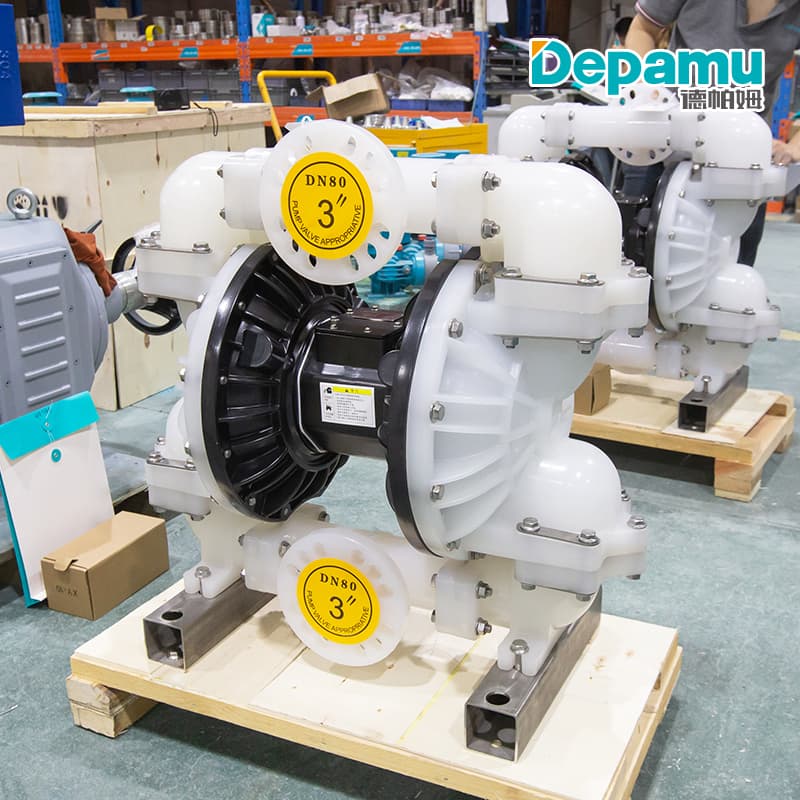
The AODD pump's fundamental design advantages align remarkably well with offshore requirements. Unlike centrifugal or positive displacement pumps that rely on mechanical seals and close-tolerance rotating components, AODD pumps use a pair of flexible diaphragms driven by compressed air to displace fluid through alternating pumping chambers. This architecture yields several operational benefits that are particularly valuable offshore.
First, AODD pumps are inherently self-priming and can run dry without damage. On an offshore platform, where process conditions may fluctuate or where tank emptying operations require the pump to continue operating after the liquid level drops, this capability prevents the catastrophic failures that would otherwise occur with seal-dependent pumps. The pumps can also operate against closed discharge valves for extended periods—a condition that would rapidly destroy most other pump types—without causing damage to the pump or the surrounding environment.
Second, the seal-less design virtually eliminates the risk of process fluid leakage. In offshore applications where pumped fluids may include toxic corrosion inhibitors, flammable methanol, or environmentally harmful chemicals, leak prevention is both a safety and an environmental imperative. The double diaphragm construction creates a secondary containment barrier between the process fluid and the atmosphere, ensuring that even in the event of a primary diaphragm failure, hazardous fluids remain contained.
Third, AODD pumps offer exceptional versatility in handling diverse fluids. Offshore platforms require the transfer of drilling muds, completion fluids, produced water, chemical additives, and viscous slops—all with varying viscosities, solids content, and chemical compositions. AODD pumps can handle high-viscosity fluids and suspended solids without clogging, and their flow rate can be infinitely adjusted simply by regulating the air supply pressure.
Finally, the pneumatic drive eliminates electrical components entirely, which reduces both the risk of ignition and the maintenance burden associated with electrical motors, starters, and control systems in corrosive marine atmospheres.
Depamu's Engineering Approach to Offshore Marine
Depamu has developed a focused capability in delivering AODD and associated pumping solutions to offshore oil and gas operations. The company's track record includes the successful delivery of multiple sets of offshore platform chemical injection skid equipment and high-pressure Reciprocating Pumps to CNOOC, with deployment across the South China Sea and Bohai Bay.
A defining feature of Depamu's offshore approach is its three-tier skid-mounted structural design. Recognizing that offshore platforms operate under severe space constraints, Depamu's engineering team broke away from conventional single-level layout thinking to arrange chemical totes, storage tanks, and pump groups in a vertically integrated configuration. This innovation reduces the system footprint by 40 to 50 percent compared to traditional designs. The vertical arrangement also exploits gravity to reduce the net positive suction head required, lowering the risk of cavitation and extending pump service life—a critical consideration for high-value offshore equipment where maintenance access is difficult and costly.
For corrosion resistance in marine atmospheres, Depamu has optimized its welding processes for structural steel components, employing full-penetration welds at critical joints and upgrading to corrosion-resistant materials including duplex stainless steel and titanium where warranted. These material choices are particularly important for equipment destined for the South China Sea, where high salinity and humidity accelerate corrosion in ways that inland or even coastal installations do not experience.
The company's AODD pump product line encompasses the DP series, with the 2DPMFXAA model offering maximum flow rates up to 3,200 liters per hour per pump head and maximum discharge pressures of 0.6 MPa. For applications requiring higher pressures, Depamu's broader pump portfolio includes models capable of discharge pressures up to 95 MPa and flow rates of 12,100 liters per hour. Wetted parts are available in materials including 304 and 316L stainless steel, PVC, PVDF, polypropylene, and PTFE, allowing configuration to match specific fluid compatibility requirements. Diaphragm options include PTFE, Santoprene, NBR, Hytrel, and EPDM, providing further flexibility in chemical resistance and temperature tolerance.
Safety, Certification, and Operational Reliability
Safety certification is a non-negotiable requirement for offshore equipment. AODD pumps destined for hazardous areas must comply with ATEX Directive 2014/34/EU or equivalent IECEx standards, with certification appropriate to the zone classification of the installation location. The DEPA pump platform, under which Depamu technology is aligned, has achieved ATEX Zone 0 certification—the most stringent classification, indicating suitability for areas where explosive atmospheres are present continuously or for long periods. DEPA is currently the only AODD pump manufacturer to hold Zone 0 certification for its product range. The AirSave system associated with these pumps is also ATEX compliant when used in combination with certified pumps, meeting equipment group II, category 2GD requirements.
Beyond certification, operational reliability in offshore service depends on design robustness and maintenance accessibility. Depamu's AODD pumps feature a modular construction philosophy that allows rapid replacement of wear components without disconnecting piping or removing the pump from its installation. The pumps use no mechanical seals, no rotating shafts, and no close-tolerance fits that require lubrication, substantially reducing the number of failure modes and the maintenance skill level required for field service. This is particularly valuable offshore, where maintenance windows are constrained by weather, helicopter schedules, and the competing demands on limited technical personnel.
The company's broader quality infrastructure reinforces this reliability. Depamu holds ISO 9001 and ISO 14001 certifications and has been recognized as a national-level “Little Giant” enterprise specializing in precision and innovation within the pump manufacturing sector. Its products are exported to more than 20 countries and regions, including Russia, Japan, Thailand, Brazil, Australia, Iran, and Iraq, demonstrating the international credibility of its manufacturing and quality control systems.
Application Scenarios in Offshore Marine Operations
The practical applications of Depamu AODD pumps in offshore marine settings span several critical operational categories.
Chemical injection represents one of the most demanding applications. Offshore platforms require precise dosing of corrosion inhibitors, scale inhibitors, demulsifiers, and oxygen scavengers to protect pipelines, processing equipment, and wells from degradation. Depamu's chemical injection skid equipment, as delivered to CNOOC, functions as what the company describes as a “precision pharmacist” for offshore operations, capable of accurate and stable injection of various high-risk chemical agents. The accuracy of chemical dosing directly affects both the effectiveness of the treatment program and the volume of chemicals consumed—a significant cost driver for offshore operations.
Maintenance and utility pumping constitutes another major application area. AODD pumps are used for transferring waste oils, cleaning platform surfaces with high-pressure water, and managing bilge and slop fluids. Their ability to handle viscous fluids, suspended solids, and corrosive cleaning chemicals without clogging or leakage makes them ideal for these non-routine but essential tasks.
Well service and completion fluid transfer represents a third category. During well intervention operations, AODD pumps move completion brines, stimulation fluids, and displacement fluids between storage tanks and the wellhead. The ability to operate at variable flow rates and to handle fluids with varying solids content makes AODD technology well-suited to these operations.
Depamu's offshore credentials extend beyond AODD pumps. The company has delivered large-scale Water Injection Pumps for CNOOC's floating production, storage, and offloading (FPSO) platforms, with maximum working pressures of 30 MPa and single-unit daily injection volumes reaching 2,000 cubic meters. This experience with high-pressure, high-reliability offshore equipment informs the design philosophy applied across its entire product range.
Integration with Offshore Systems and Future Directions
The integration of AODD pumps into offshore platform systems requires careful attention to several engineering interfaces. Air supply systems must provide clean, dry compressed air at sufficient pressure and volume to support pump operation. Depamu's AirSave system addresses this requirement by reducing air consumption through optimized air valve design, achieving reduced energy consumption while maintaining performance. The system enables pump operation at a starting pressure of just 0.5 bar, with reduced leakage and extended service life of up to 50 million cycles.
Pipework and support structures must accommodate the pulsating flow characteristics inherent to reciprocating Diaphragm Pumps. Depamu's skid-mounted designs incorporate appropriate dampening and support features to manage vibration and pressure fluctuations, ensuring smooth integration with platform piping systems. The flexiport design available on certain models enables on-site adjustment of port orientation, simplifying installation in confined platform spaces and accommodating as-built piping configurations.
Looking forward, the offshore industry is moving toward greater digitalization and condition-based maintenance. Smart monitoring capabilities, including diaphragm leakage detection, stroke counting, and IoT-enabled performance tracking, are becoming standard expectations for critical offshore equipment. These features allow operators to predict maintenance needs, optimize pump performance, and document compliance with safety and environmental regulations. Depamu's AODD platform is well-positioned to incorporate these capabilities through available accessories and the company's demonstrated engineering flexibility.
Conclusion
The offshore marine environment is unforgiving of equipment weakness and intolerant of unplanned downtime. Depamu AODD pumps address the fundamental challenges of this environment—corrosion, explosion risk, space constraints, and fluid diversity—through a combination of robust design, material science, and application-specific engineering. The company's successful deployment of chemical injection skids and pumping equipment to CNOOC's offshore platforms demonstrates both the technical competence and the project delivery capability required to serve this demanding market. As offshore oil and gas operations continue to push into deeper waters and more remote locations, the need for reliable, certified, and maintenance-friendly pumping solutions will only intensify. Depamu's AODD technology, backed by rigorous certification, proven field performance, and a modular architecture designed for real-world maintainability, represents a credible and increasingly important component of the offshore pumping equipment landscape.