

The NaOCl Unloading Pump: Essential Equipment for Safe and Efficient Chemical Transfer
Introduction
Sodium hypochlorite (NaOCl) is one of the most widely used industrial chemicals, serving critical roles in water and wastewater treatment, healthcare disinfection, household bleaching, and various industrial processes . With typical commercial strengths ranging from 3 to 20 percent, NaOCl is transported in bulk quantities via rail tank cars, road tankers, and intermediate bulk containers (IBCs) . The transfer of this corrosive and reactive chemical from delivery vehicles to storage facilities presents significant engineering and safety challenges—challenges that are met by a specialized piece of equipment known as the NaOCl unloading pump.
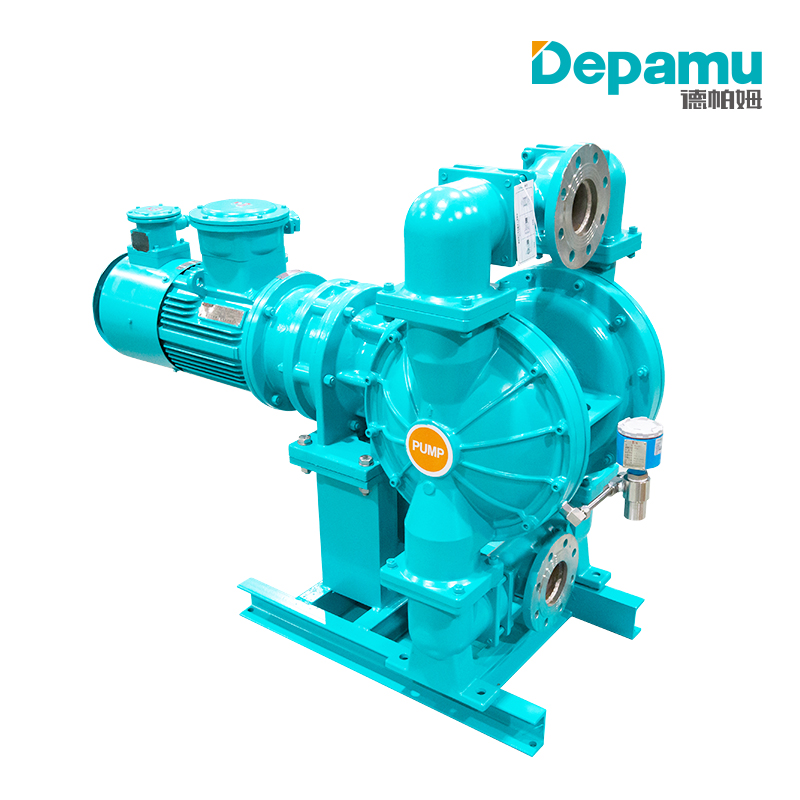
Defining the NaOCl Unloading Pump
A NaOCl unloading pump is a specialized chemical transfer pump designed specifically for safely moving sodium hypochlorite solution from delivery tankers or containers into on-site storage tanks. While often discussed in the context of bulk receiving facilities, the term "unloading pump" can refer to either truck-mounted pumps used during delivery or permanently installed pumps at receiving facilities . These pumps are engineered to handle the unique challenges posed by sodium hypochlorite: its corrosive nature, tendency to release gas (outgassing), and potential for decomposition.
At its core, an unloading pump creates the pressure differential needed to transfer liquid from the delivery vehicle's container to the storage tank. However, unlike pumps designed for benign fluids, NaOCl unloading pumps feature specific material selections and design characteristics that make them suitable for this demanding application.
The Unique Challenges of Sodium Hypochlorite
Understanding why NaOCl unloading pumps are distinct from general-purpose pumps requires an appreciation of the chemical's challenging properties.
Corrosiveness is perhaps the most immediate concern. Sodium hypochlorite is highly corrosive to common metals such as stainless steel, iron, and copper . Exposure can lead to rapid equipment degradation, leaks, and safety hazards. Consequently, pumps must be constructed from chemically resistant materials such as polyvinylidene fluoride (PVDF), polytetrafluoroethylene (PTFE), titanium, and high-performance composites .
Reactivity poses another significant challenge. NaOCl reacts vigorously with acids, organic materials, and reducing agents, potentially producing hazardous chlorine gas . This reactivity demands careful material selection and equipment design to prevent unintended chemical interactions.
Gas handling is a particularly problematic characteristic for pumping equipment. Sodium hypochlorite solutions are inherently unstable and can decompose over time, especially when exposed to light, heat, or contaminants . This decomposition releases oxygen gas, creating bubbles that can cause conventional pumps to become "air-bound" or lose prime. A pump that cannot handle entrained gas will lose its ability to transfer fluid effectively .
Stability concerns also affect storage and transfer. NaOCl solutions degrade over time, losing their effectiveness as disinfectants. Decomposition can create gas pressure buildup in closed containers, introducing additional safety considerations .
Types of NaOCl Unloading Pumps
The market offers several pump technologies suitable for NaOCl unloading, each with distinct advantages and operational characteristics.
Magnetic Drive Pumps
Magnetic drive pumps have become a popular choice for sodium hypochlorite applications. These pumps use a magnetic coupling between the motor and the pump head, eliminating the need for mechanical seals that can leak or fail . The Eclipse Hypopump from Pulsafeeder, specifically designed for sodium hypochlorite, exemplifies this technology with wetted components made entirely from non-metallic engineered composites and PVDF fluoropolymer . Its magnetically driven, sealless design prevents leakage, crystallization, and emissions—common problems with mechanical seals in NaOCl service. The pump's ability to handle entrained gases and its bidirectional operation further enhance its suitability for unloading applications.
Peristaltic (Hose) Pumps
Peristaltic pumps offer another robust solution for NaOCl transfer. In these pumps, the fluid is contained entirely within a flexible hose or tube; rotating rollers compress the tube, propelling the fluid forward . This design completely eliminates mechanical seals and valves—common failure points in corrosive chemical service. The fluid is fully contained, ensuring zero leakage and minimal operator exposure. Peristaltic pumps are self-priming, can run dry without damage, and handle entrained gases effectively . The Qdos CWT series, for example, has been successfully deployed at water reclamation facilities for sodium hypochlorite dosing, with operators reporting reduced maintenance frequency and improved safety .
Progressive Cavity Drum Pumps
For unloading from smaller containers such as drums and IBCs, progressive cavity drum pumps offer specific advantages. These portable pumps feature pumping elements inserted directly into the fluid, creating positive pressure on the suction side that simplifies transfer . Available with titanium internals and PTFE housings, these pumps excel with liquids that have high vapor pressures—including NaOCl—because they can lift fluid without needing to pull prime . The positive displacement nature of these pumps provides reliable transfer regardless of suction conditions.
Self-Priming Centrifugal Pumps
Self-priming centrifugal pumps with thermoplastic casings represent another category used for NaOCl unloading. These pumps can operate with suction lifts up to four meters without requiring filling of the feeding chamber . Designed for loading and unloading from ponds, tankers, and tanks, these pumps are specified for sodium hypochlorite transfer in various industrial applications. However, their reliance on mechanical seals may make them more challenging to maintain in NaOCl service compared to sealless alternatives.
Unloading Operations: Process and Safety
The unloading process itself is a carefully orchestrated procedure involving multiple safety checks and operational steps. The delivery driver typically arrives with a cargo tank containing NaOCl, and the unloading pump—whether truck-mounted or facility-installed—initiates the transfer .
Standard protocols require establishing a safety perimeter of at least 25 feet from hoses and connections . Operators and drivers must wear appropriate personal protective equipment (PPE), including chemical-resistant suits, gloves, and face shields . Safety showers and eyewash stations must be tested and available .
The unloading procedure includes: verifying the product matches the bill of lading, confirming storage tank capacity, inspecting hoses and connections for integrity, installing drip buckets under connections, opening tank valves, starting the pump, and continuously monitoring tank levels during transfer . For pump unloading, operators must open the cargo tank dome lid to prevent tank collapse during withdrawal—a critical safety consideration .
Upon completion, the hose must be cleared of product and pressure before disconnection, all valves closed, and connections secured . Many facilities incorporate alarm systems to prevent overfilling and provide high-level shutdown protection .
Facility Infrastructure and Integration
In permanent installations, the NaOCl unloading pump is typically part of a more comprehensive chemical receiving system. The load-in panel serves as the transfer connection point, generally positioned at a safe and ergonomic height of 1000mm above floor level . The panel may include displays, lights, and sirens for monitoring and alarming, ideally located away from the connection point to minimize corrosion of instrumentation .
The unloading system often incorporates multiple valves for isolation, flushing, and drainage. For example, typical installations include suction isolation valves, service water flush valves, tank fill valves, and flush drain valves . After unloading, a flushing sequence using service water removes residual chemical from the pump and manifolds, reducing corrosion and maintaining the pump's service life .
Electrical infrastructure may be required to support permanently mounted unloading pumps, with power outlets located within 7.5 meters of the tanker but away from the hose connection point—enabling emergency shutdown if leaks occur .
Maintenance Considerations
Given the corrosive nature of sodium hypochlorite, maintenance demands are significant. Pump designs that facilitate easy servicing reduce downtime and improve safety. Some pumps feature front pull-out designs that allow maintenance without disconnecting piping or electrical connections, while others use modular components that can be replaced quickly .
Sealless pumps eliminate dynamic seal maintenance—historically a common failure point and leak source . Peristaltic pumps reduce maintenance to periodic hose replacement, which can be completed quickly and without tools . The frequency of required service varies with operating conditions, but well-designed pumps may provide years of reliable service between major overhauls .
Conclusion
The NaOCl unloading pump represents a critical intersection of chemical engineering, materials science, and safety design. It is far more than a simple fluid mover—it is a carefully engineered system that enables the safe, efficient, and reliable transfer of one of the world's most important industrial chemicals. From magnetic drive pumps with non-metallic construction to seal-less peristaltic pumps and versatile progressive cavity designs, the available technologies reflect decades of experience addressing sodium hypochlorite's unique challenges: corrosiveness, reactivity, gas handling, and decomposition.
As water treatment facilities continue to expand and industrial processes demand greater reliability, the design evolution of NaOCl unloading pumps will likely continue. Emerging technologies focus on extended maintenance intervals, improved gas handling capabilities, and enhanced safety features—all while reducing total cost of ownership. For operators, engineers, and safety professionals, understanding the role and characteristics of these pumps is essential for maintaining both operational efficiency and personnel safety in sodium hypochlorite service