

Engineering Excellence in High-Pressure Ammonia Transfer: The Depamu Process Diaphragm Reciprocating Pump
Abstract
In the demanding landscape of chemical processing, particularly within ammonia synthesis loops and urea production facilities, the safe and reliable transfer of liquid ammonia presents unique engineering challenges. Ammonia's high vapor pressure, toxicity, and corrosive nature demand pumping solutions that transcend conventional designs. The Depamu high-pressure process diaphragm reciprocating pump, engineered in strict accordance with API 674 standards, represents a paradigm shift in positive displacement pumping for hazardous services. This article provides a comprehensive technical examination of the Depamu pump's architecture, operational principles, material science considerations, and application-specific advantages for ammonia handling.
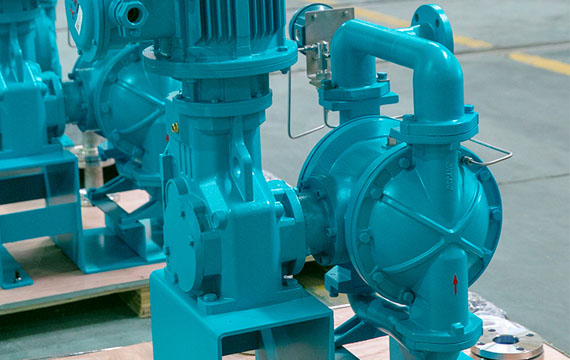
Introduction: The Critical Nature of Ammonia Pumping
Ammonia (NH₃) stands as one of the world's most produced industrial chemicals, with annual production exceeding 200 million metric tons. As a cornerstone of nitrogen-based fertilizer production, ammonia is also fundamental to refrigerants, explosives manufacturing, and various pharmaceutical intermediates. However, its physical and chemical properties render it one of the most challenging fluids to pump reliably.
Liquid ammonia exhibits a high vapor pressure—approximately 10 bar at ambient temperature—requiring pumps to maintain net positive suction head (NPSH) conditions to prevent cavitation. More critically, ammonia is toxic (immediately dangerous to life and health at 300 ppm), corrosive to copper and zinc-based alloys, and readily absorbs moisture, forming caustic ammonium hydroxide. Any leakage from pump seals or connections poses significant safety, environmental, and operational risks.
Traditional centrifugal pumps, while suitable for low-pressure, high-flow water-like services, prove inadequate for high-pressure ammonia transfer due to their inability to achieve the required discharge pressures (frequently exceeding 250 bar in synthesis loops) and their susceptibility to internal recirculation-induced cavitation. Reciprocating positive displacement pumps, conversely, excel in high-pressure, low-to-medium flow applications. However, conventional packed-plunger Reciprocating Pumps present their own challenges: the reciprocating rod seal constitutes a dynamic leak path, inevitably allowing microscopic seepage over time—an unacceptable risk for toxic ammonia service.
This is where Depamu's high-pressure process diaphragm reciprocating pump transforms the paradigm.
Fundamental Architecture and Operating Principle
The Depamu ammonia pump belongs to the hydraulically-actuated diaphragm reciprocating pump family, a configuration that combines the high-pressure capability of piston pumps with the leak-proof integrity of diaphragm technology.
Power End (Drive Mechanism)
The power end of the Depamu pump incorporates a robust, API 674-compliant drive train. A high-strength forged steel crankshaft, supported by heavy-duty roller bearings, converts rotary input from an electric motor (or diesel engine) into reciprocating linear motion. Depamu employs internal-meshing double helical gears for speed reduction, selected for their exceptional load-carrying capacity, quiet operation (typically below 85 dBA at full load), and inherent axial thrust cancellation.
Key design features of the power end include:
-
Force-Fed Lubrication System: An oil pump delivers pressurized lubricant to all bearings, crossheads, and connecting rod journals, ensuring reliable operation even under continuous duty cycles.
-
Modular Construction: The power end is designed as a standalone, skid-mounted assembly, facilitating maintenance access and field serviceability.
-
Variable Speed Capability: Compatible with variable frequency drives (VFDs) for flow adjustment without stroke-length modification, offering turndown ratios up to 10:1.
Liquid End: The Hydraulic Diaphragm System
The liquid end represents the core innovation of the Depamu design. Instead of a plunger directly contacting the process fluid (ammonia), the hydraulic diaphragm configuration employs an intermediate hydraulic fluid (typically a high-grade mineral oil or synthetic fluid compatible with ammonia) to actuate a metallic or PTFE diaphragm.
Operational Cycle:
Suction Stroke: As the plunger retracts within its cylinder, hydraulic fluid is drawn from the reservoir into the plunger chamber. The resulting pressure drop across the diaphragm causes the diaphragm to flex toward the power end. This expansion of the process-side chamber creates negative pressure, drawing liquid ammonia through the inlet check valve into the diaphragm chamber.
Discharge Stroke: The plunger advances, pressurizing the hydraulic fluid. This pressure is transmitted hydraulically to the diaphragm, which flexes toward the process side. The resulting compression of the process chamber forces liquid ammonia through the discharge check valve at system pressure.
The hydraulic fluid serves multiple critical functions: it provides nearly incompressible force transmission, lubricates the plunger seals, and—most importantly—eliminates any direct contact between the reciprocating mechanical components and the toxic ammonia.
Diaphragm Technology: The Ultimate Barrier
Depamu distinguishes itself through sophisticated diaphragm engineering. Two diaphragm configurations are available depending on service severity:
Metallic Diaphragms (typically stainless steel or Hastelloy): Employed for the most demanding high-cycle, high-pressure applications. Metallic diaphragms offer infinite fatigue life when operated within their design envelope, zero permeability to gases, and exceptional resistance to ammonia-induced stress corrosion cracking. They are typically double-diaphragm designs with an intermediate monitoring chamber.
PTFE (Polytetrafluoroethylene) Diaphragms: Selected for applications requiring maximum chemical compatibility at moderate pressures. PTFE exhibits complete resistance to ammonia and excellent flex life. Depamu employs virgin, skived PTFE membrane with molded-in stress-relief features. All PTFE diaphragms are backed by a elastomeric support diaphragm to provide mechanical backup and leak detection capability.
Critical Safety Features for Ammonia Service
Given ammonia's toxicity, Depamu integrates multiple fail-safe provisions:
1. Diaphragm Rupture Detection System
As illustrated in the company's technical documentation, the pump can be equipped with a diaphragm破裂报警装置 (rupture alarm device). This system continuously monitors the cavity between dual diaphragms. Should either diaphragm fail, the resulting pressure change triggers an audible/visual alarm and can automatically initiate a pump shutdown sequence or switch to a standby pump, preventing any release of ammonia to atmosphere.
2. Mechanical Replenishing Valve Assembly
The hydraulic circuit incorporates a sophisticated auto-replenishing valve package. This assembly—comprising a replenishing valve, limiter valve, relief valve, and bleed valve—maintains precise hydraulic fluid volume within the chamber. Proper hydraulic volume is critical: insufficient fluid reduces volumetric efficiency, while excess fluid can cause over-pressurization and diaphragm rupture. The mechanical replenishing system compensates for minor fluid losses without operator intervention.
3. Hermetic Process Seal
Unlike packed-plunger pumps that rely on dynamic seals with finite service lives, the Diaphragm Pump's process seal is entirely static. All ammonia-wetted components are permanently welded or gasketed with metallic seals. This hermetic configuration ensures zero fugitive emissions, meeting the most stringent environmental regulations, including the EPA's leak detection and repair (LDAR) requirements for volatile hazardous air pollutants (VHAPs).
Material Selection for Ammonia Compatibility
Ammonia's material compatibility requirements are specific and non-negotiable. Depamu's engineering team applies rigorous material selection protocols for ammonia pumps:
Wetted Components (ammonia-contacting surfaces):
-
316L Stainless Steel: Preferred for general ammonia service due to its excellent corrosion resistance and immunity to ammonia-induced stress corrosion cracking at moderate temperatures.
-
Duplex Stainless Steel (2205/2507): Selected for higher-pressure applications or where chloride stress corrosion cracking is a concern.
-
Hastelloy C-276: Specified for ammonia containing significant moisture or oxygen impurities, or for elevated temperature service.
-
Titanium Grade 2: Employed in extreme corrosion environments or where absolute immunity to ammonia attack is required.
Non-Wetted Hydraulic Components:
-
High-strength alloy steel, protected by the hydraulic fluid, forms the plungers, connecting rods, and crankshaft.
Sealing Materials:
-
Virgin PTFE for static gaskets and diaphragms
-
Buna-N (Nitrile) for hydraulic seals (compatible with mineral oil)
-
Graphite-impregnated compressed fiber for metallic flange gaskets
Performance Specifications for Ammonia Applications
The HD3H(M) and HD3E(M) series pumps, specifically engineered for high-pressure process applications including liquid ammonia, deliver the following performance characteristics:
HD3H(M) Series (High Pressure Heavy Duty):
-
Flow Range: 2.74 – 32.14 m³/h
-
Pressure Range: 2.2 – 41.6 MPa (approximately 320 – 6,030 psi)
-
Suitable for large-scale ammonia transfer and injection applications
HD3E(M) Series (Economic/Efficient):
-
Flow Range: 0.76 – 10.74 m³/h
-
Pressure Range: 3.1 – 50.9 MPa (approximately 450 – 7,380 psi)
-
Ideal for metering and precise chemical injection duties
Common Specifications:
-
Speed Range: 90 – 320 spm (strokes per minute)
-
Power Range: 0.76 kW – 32.14 kW (base pump, motor sizing dependent on pressure)
-
Steady-state flow accuracy: ±1% or better
-
Pulsation dampeners available as integral options
The wide selection of plunger diameters (25 mm to 80 mm) and reduction gear ratios allows precise matching to specific process requirements. This modularity is particularly valuable in ammonia service, where plants frequently require different flow rates at identical discharge pressures.
Applications in Ammonia and Fertilizer Industries
The Depamu high-pressure diaphragm reciprocating pump serves multiple critical functions within ammonia production and consumption facilities:
1. Liquid Ammonia Transfer (液氨泵)
From refrigerated storage (-33°C) to vaporizers or directly to process, these pumps handle saturated liquid ammonia at temperatures as low as -33°C without seal failure or cavitation.
2. Ammonium Carbamate Service
In urea synthesis, ammonium carbamate (NH₄CO₂NH₂) is an aggressive intermediate that crystallizes readily. The diaphragm pump's smooth flow characteristic and heated liquid end options prevent crystallization-induced damage.
3. High-Pressure Synthesis Loop Injection
Ammonia converters operate at 150-350 bar. Depamu pumps provide the necessary suction pressure boosting and makeup ammonia injection with precise flow control.
4. Fertilizer Process Pump (化肥流程泵)
Integrated into NPK (nitrogen-phosphorus-potassium) granular fertilizer production, these pumps handle molten ammonium nitrate/phosphate mixtures with specialized material upgrades.
Compliance and Industry Standards
Depamu's ammonia pumps are designed, manufactured, and tested in accordance with:
-
API 674: Positive Displacement Pumps—Reciprocating (the defining standard for petroleum, chemical, and gas industry reciprocating pumps)
-
ATEX Directive 2014/34/EU: For operation in potentially explosive atmospheres (ammonia is classified as flammable)
-
ISO 5199: Technical specifications for centrifugal pumps (applicable sections for baseplate and piping design)
-
PED 2014/68/EU: Pressure Equipment Directive for European installations
API 674 compliance is particularly significant, as it imposes stringent requirements for fatigue analysis, vibration limits, pressure containment, and documentation that go far beyond general industrial pump standards.
Installation Configurations and Auxiliaries
Depamu offers extensive installation flexibility to accommodate plant layout constraints:
Mounting Configurations:
-
Horizontal skid-mounted (standard)
-
Vertical space-saving arrangement
-
Stationary foundation mount
-
Mobile/portable skid for temporary service
Drive Options:
-
Electric motor (standard TEFC or explosion-proof)
-
Diesel engine for remote locations
-
Solar-powered for low-flow, off-grid applications
Auxiliary Systems Available:
-
Pulsation dampeners (suction and discharge side)
-
Relief valves with ASME certification
-
Explosion-proof controls and instrumentation
-
Jacketed liquid end for heated ammonia service (-33°C to +150°C range)
-
Double diaphragm with intermediate monitoring
Maintenance Considerations
While diaphragm pumps significantly reduce maintenance frequency compared to packed-plunger designs, they are not maintenance-free. Standard preventative maintenance for Depamu ammonia pumps includes:
Every 2,000 operating hours:
-
Oil analysis and change (hydraulic and power end lubricants)
-
Inspection of check valve seats and balls for wear or pitting
-
Verification of diaphragm rupture alarm function
Every 8,000 operating hours:
-
Diaphragm replacement (preventative, regardless of visible condition)
-
Replenishing valve disassembly, cleaning, and seal replacement
-
Plunger seal replacement
Every 16,000-24,000 hours:
-
Bearing inspection and replacement as indicated by vibration monitoring
-
Crankshaft alignment verification
-
Complete pump overhaul
Depamu's modular design ensures that all wearing parts are accessible without complete pump disassembly, minimizing downtime.
Economic Justification
The initial capital cost of a Depamu high-pressure diaphragm reciprocating pump exceeds that of a comparable centrifugal or packed-plunger pump. However, total cost of ownership (TCO) analysis reveals rapid payback:
Operating Cost Advantages:
-
Zero Product Loss: No ammonia seepage eliminates both material cost and fugitive emission reporting burdens.