

Abstract
In the modern industrial landscape, the transportation of high-viscosity, high-temperature fluids such as asphalt and bitumen presents significant engineering challenges. Conventional centrifugal pumps often fail under these conditions due to cavitation and efficiency loss, while gear pumps suffer from rapid wear and pulsation. The Depamu three-Screw Pump, a positive displacement rotary pump based on German technology, has emerged as a leading solution for these demanding applications. This article provides a comprehensive technical analysis of the Depamu three-screw pump’s working principle, focusing on the fluid dynamic interactions between the power rotor and idler rotors. It explores the mechanical design features that enable the handling of asphalt—specifically heating jacket systems and material selection—and outlines the key operational advantages such as pulsation-free flow, high volumetric efficiency, and structural durability. By examining the scientific principles of hydrodynamic films, axial balancing, and positive displacement, this paper explains why the three-screw pump is the industry standard for bitumen transfer in highway construction, petrochemicals, and marine engineering.
1. Introduction
Asphalt and bitumen are crucial materials in construction, particularly for road paving and waterproofing. However, their physical properties—specifically high viscosity (often exceeding 3,000 cSt at room temperature) and the requirement for high-temperature processing (typically 150°C to 300°C)—make them notoriously difficult to pump . Traditional pumps struggle with these media: centrifugal pumps lose suction due to low vapor pressure, while gear pumps create destructive pulsation and shear stress.
The three-screw pump, originally invented in 1923 by Carl Montelius, solves these problems through a unique hydraulic principle . Depamu (Hangzhou) Pump Technology Co., Ltd. has refined this technology, incorporating German engineering standards to produce a pump specifically suited for "special working conditions like high viscosity, high pressure, and high temperature" .
This article explains the "how" and "why" behind the Depamu three-screw pump. By breaking down the mechanics into the interaction of three specific components—the power rotor and two idler rotors—we will illustrate how the pump achieves positive displacement without metal-to-metal contact, ensuring longevity and efficiency when moving bitumen.
2. The Core Mechanism: The Principle of Progressive Cavities
To understand the Depamu three-screw pump, one must first abandon the logic of centrifugal force. This pump operates on the principle of positive displacement via progressive cavities. Unlike a centrifugal pump that imparts velocity, a three-screw pump traps fluid and mechanically moves it from the inlet to the outlet.
2.1 The Rotor Configuration
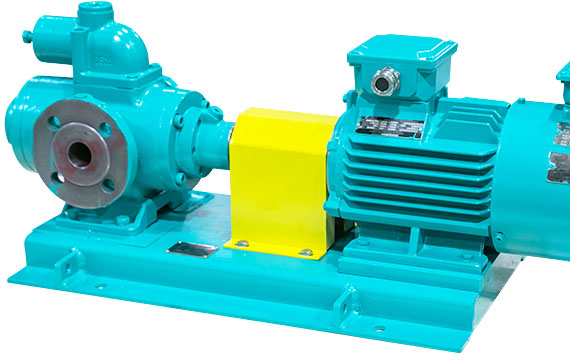
The heart of the Depamu DPSN series pump consists of three rotating elements: one central "power rotor" (drive screw) and two "idler rotors" (sealing screws) . The power rotor is the primary driven shaft connected to the motor. Its helical threads intermesh precisely with the threads of the two idler rotors, which rotate freely on lubricating fluid films.
Critically, in a three-screw pump design—unlike two-screw pumps that require timing gears—the friction of the fluid itself causes the idler rotors to rotate against the power rotor. There is no mechanical contact between the rotors; they are separated by a thin film of the liquid being pumped .
2.2 The "Closing" Action
As the power rotor turns, the combination of the rotor grooves and the pump housing bore creates a series of sealed chambers (cavities) at the suction port. As the rotors spin, these cavities move axially along the length of the pump. The fluid is trapped between the screw threads and the housing, and as the screw rotates, the fluid is pushed linearly from the suction side to the discharge side.
In the context of bitumen, this progressive cavity action is essential. It produces a "uniform and continuous flow, no pulsation" . For asphalt transfer, pulsation is dangerous; it can cause air entrainment, leading to voids in the road surface. The three-screw pump delivers a smooth, non-pulsating stream that allows for precise metering.
3. Mechanical Engineering: Handling High Viscosity and Temperature
Standard pumps fail in asphalt service because the fluid becomes too thick to move or too hot to handle without damaging the pump’s internals. Depamu three-screw pumps overcome this through specific mechanical adaptations.
3.1 The Heating Jacket System
One of the most critical features for the "Asphalt and Bitumen Transfer Pump" is the heating jacket. Bitumen is solid at room temperature. To pump it, it must be liquefied. Depamu addresses this by integrating a hydraulic temperature control system around the pump head .
This jacket surrounds the fluid cavity. Hot oil or steam is circulated through the jacket before the pump is started. The principle is thermal transfer: the heat penetrates the pump housing, melting the solidified bitumen inside. This is known as "cold-hot exchange," which ensures that the medium reaches the correct fluidity (mobility) before the mechanical parts begin to move . Without this feature, the rotors would be locked in solid asphalt, leading to shear failure or motor burnout.
3.2 High-Pressure Differential Capabilities
Asphalt systems often require pumping over long distances or through fine spray nozzles (as in emulsion applications). The Depamu pump can achieve a maximum differential pressure of up to 40 bar, with flow rates up to 456 m³/h . High differential pressure is achieved because the tight clearances within the pump minimize "slip" (the leakage of fluid back from the discharge to the suction side), even with low-viscosity fluids .
4. The Fluid Dynamics of Non-Contact Operation
The most sophisticated aspect of the three-screw pump is that the metal parts do not touch each other. In traditional gear pumps, the gears mesh physically, grinding against each other and generating wear particles. Depamu three-screw pumps utilize the fluid being pumped as the bearing medium.
4.1 Hydrodynamic Fluid Films
When the pump is in operation, the pumped fluid (asphalt or bitumen) enters the clearances between the power rotor and the idler rotors. Because the rotors are rotating at high speed (up to 2900 r/min), the viscosity of the fluid generates a hydrodynamic film .
This film pushes the rotors slightly apart. The idler rotors essentially "float" within the housing. This principle is similar to how a car hydroplanes on a wet road, but here it is precisely controlled. It provides radial support similar to journal bearings . As a result, there is no metal-on-metal contact, which dramatically extends the service life of the pump, even when handling the abrasive particulates sometimes found in commercial bitumen.
4.2 Hydraulic Axial Balance (Symmetric Pressure Loading)
High-pressure pumps typically suffer from axial thrust—the tendency of the pressure to push the rotor back toward the motor, destroying the bearings. Depamu three-screw pumps solve this through symmetrical pressure loading.
In the design referenced in technical literature, the power rotor is subjected to pressure from both ends. By leading discharge pressure to the back of the rotor, the forces equalize. The pump is "hydraulically balanced," meaning the net axial force is near zero . This eliminates the need for heavy thrust bearings. Only a small ball bearing is required to hold the rotor in position, primarily for static positioning rather than dynamic load handling .
5. Operational Advantages for Bitumen Transfer
Based on the engineering principles discussed, the Depamu three-screw pump offers several quantifiable advantages over competing technologies for asphalt and bitumen applications.
5.1 Strong Self-Priming Capability
Asphalt plants often store bitumen in underground tanks or remote vessels. The Depamu pump exhibits "strong self-priming capacity," eliminating the need for bottom valves or auxiliary evacuating equipment . Because the rotating screws create a vacuum by expanding the cavity volume at the inlet, the pump can draw the heavy asphalt up vertical heights effectively. Unlike centrifugal pumps, it does not cavitate when handling viscous fluids.
5.2 Low Noise and Vibration
Bitumen transfer often occurs in urban industrial zones or on ships where noise control is a regulatory requirement. The three-screw pump is notably quiet. Because the flow is non-pulsating and the rotors are hydrodynamically suspended, there is no mechanical impact. Depamu literature highlights "low noise" and "stable delivery" as primary benefits . Compared to the chattering of a Diaphragm Pump or the whine of a gear pump, the three-screw pump operates with a smooth, consistent hum, typically below 75 db(A) .
5.3 Tolerance to Temperature Fluctuations
Asphalt viscosity is highly sensitive to temperature. As the material cools, it thickens. A gear pump might seize or break. A three-screw pump tolerates this fluctuation well. The design allows for "highly viscous and high-temp fluid transport" . If the asphalt thickens due to a temperature drop, the screw pump can still generate the necessary pressure to push it through the line, whereas a centrifugal pump would simply spin the fluid in place (slip).
6. Conclusion
The Depamu asphalt and bitumen transfer pump (Three-screw pump) represents a sophisticated application of classical fluid dynamics to solve a modern industrial problem. It does not rely on brute force to move thick liquids; rather, it uses the liquid’s own viscosity to create a dynamic seal and fluid bearing.
The working principle can be summarized in three distinct advantages:
-
Geometric Displacement: The intermeshing of the power rotor and idler rotors creates progressive cavities that positively displace the fluid without pulsation.
-
Hydrodynamic Suspension: The pumped bitumen forms a protective film that prevents metal-to-metal contact, allowing the pump to run dry (briefly) and last significantly longer than traditional pumps.
-
Thermal Management: The integrated heating jacket allows for the controlled liquefaction of asphalt prior to startup, ensuring that the mechanical components are never subjected to the stress of moving solid material.
For industries relying on bitumen transfer—from the construction of highways to the waterproofing of subways—the Depamu three-screw pump offers the reliability, efficiency, and smooth operation necessary to maintain continuous production. Its design, rooted in German engineering principles and adapted for high-viscosity media, confirms its position as a critical machine in the fluid handling chain.