

The Depamu Injection Package: An Integrated Solution for Precision Chemical Water Treatment
Introduction
In the complex landscape of modern industrial water treatment, precision, reliability, and automation are not just operational goals; they are fundamental requirements for efficiency, safety, and regulatory compliance. Whether in a thermal power plant, a petroleum refinery, or a municipal wastewater facility, the accurate dosing of chemicals is critical for processes ranging from pH adjustment and scale inhibition to disinfection and corrosion control. The Depamu injection package, a comprehensive chemical dosing skid, emerges as a sophisticated answer to these challenges. As a complete, integrated system, it transcends the limitations of traditional, piecemeal equipment setups by offering a unified solution for chemical dissolving, preparation, metering, and injection. This article provides a detailed examination of the Depamu injection package, exploring its design philosophy, core components, diverse applications, and the advanced automation that defines its operational excellence.
Design Philosophy and Core Components
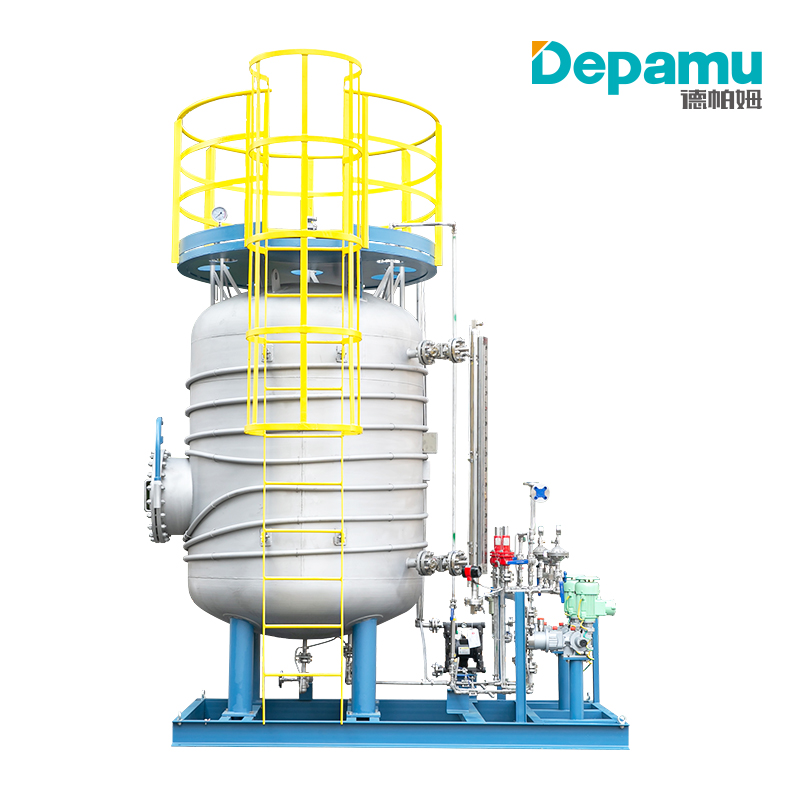
The Depamu injection package is engineered as a modular, skid-mounted system, representing a departure from conventional designs where individual components like pumps, tanks, and controls are sourced and assembled separately, often leading to compatibility and performance issues. The brand's approach is rooted in a "systematic design," which ensures that all components work in harmony, thereby avoiding the "systematic differences existing in traditional products under single-equipment or single-part design" . This integrated philosophy results in a compact footprint, simplified installation, and ease of transportation.
At the heart of the Depamu injection package are its key functional units. The solution tank serves as the reservoir for the prepared chemical mixture, with volumes ranging from 0.5 to 20 cubic meters depending on the application . These tanks are constructed from a variety of materials—including 304 or 316 stainless steel, carbon steel with rubber lining, FRP, and PE—to accommodate different chemicals and corrosion resistance requirements . The system is driven by Metering Pumps, which are responsible for the precise injection of the chemical solution into the process stream. These pumps can be configured in various combinations, such as one tank with two pumps or two tanks with four pumps, often with one serving as a standby unit to ensure uninterrupted operation . The entire system is orchestrated by an advanced control cabinet, which can range from local manual controls to fully automated systems integrated with a Plant's DCS (Distributed Control System). Ancillary components, including safety valves, pulsation dampers, level gauges, and pressure gauges, ensure safe and stable operation .
Versatility and Application Scope
One of the most compelling features of the Depamu injection package is its exceptional versatility across a broad spectrum of industrial water treatment scenarios. The product line is categorized to address specific needs, highlighting its role as a comprehensive solution provider .
-
Boiler Water Treatment: In thermal power plants and other steam-generating facilities, water quality is paramount. Depamu offers specialized packages for ammonia injection to regulate pH and prevent corrosion, hydrazine injection for oxygen scavenging to eliminate dissolved oxygen that causes pitting, and phosphate injection for conditioning boiler water to prevent scale formation . The automatic nature of these packages allows for continuous adjustment based on real-time water quality parameters, ensuring the "good quality of system water vapor and safe unit operation" .
-
Circulating Water Treatment: In cooling water systems, scale, corrosion, and biological growth are persistent threats. Depamu packages are designed for injecting scale inhibitors and corrosion inhibitors to protect heat exchange equipment, as well as germicides to control microbial proliferation . The system can be further specialized for specific chemicals like PAC (Polyaluminum Chloride), PAM (Polyacrylamide), or concentrated sulfuric acid, demonstrating its adaptability .
-
Wastewater and Raw Water Treatment: For both municipal and industrial wastewater treatment, flocculation is a key process for solids removal. The Depamu system is adept at automatically preparing and injecting flocculants and coagulants from dry powder, a process it handles with unique precision. It also manages the dosing of dispersants, acids, and alkalis for pH adjustment in various stages of treatment . This is particularly critical for "flocculation treatment for municipal or industrial wastewater" and "drinking water purification" .
-
Oil and Gas Industry: The demands of petroleum and natural gas exploitation are met with packages for injecting demulsifiers, corrosion inhibitors, deoxidants, and methanol for hydrate inhibition. These applications often require higher-pressure pumps and larger tanks, underscoring the system's ruggedness and ability to handle a wide range of chemical properties .
Advanced Automation and Control
The modern Depamu injection package is not merely a passive piece of equipment; it is an intelligent system capable of sophisticated automation. The core of this intelligence is the PLC (Programmable Logic Controller) or a host computer that interfaces with the plant's DCS. The system can receive signals from online analyzers measuring flow rate, pH, electrical conductivity, turbidity, and dissolved oxygen content . Based on these inputs, the PLC calculates the optimal chemical dosing rate and automatically adjusts the speed of the metering pump's motor via a frequency converter, or its stroke length.
This closed-loop control system allows the injection package to maintain precise chemical concentrations in the water, even as process conditions fluctuate. For example, in a hydrazine injection package, the system can "automatically adjust based on the actual boiler operation situation, maintaining hydrazine concentration in water within a best range," preventing both under-dosing, which leads to corrosion, and over-dosing, which causes waste and pollution . The automation features extend to remote operation, with all status and fault signals transmittable to a central control room, enabling operators to start or stop the injection pumps remotely . This capability is central to the package's function as a "complete pump solution" that delivers "enhanced efficiency, efficacy, and total operational excellence" .
Conclusion
The Depamu injection package represents a significant advancement in the field of chemical water treatment. By integrating robust mechanical components with intelligent, automated control systems, it offers a solution that is precise, reliable, and remarkably adaptable to the needs of diverse industries. Its skid-mounted, modular design simplifies installation and reduces the engineering challenges associated with traditional, fragmented systems. From safeguarding boilers and cooling towers to enabling clean water production and supporting critical oil and gas extraction, the Depamu injection package proves to be an indispensable asset for ensuring the efficiency, safety, and environmental compliance of modern industrial water management.