

Depamu Skid-Mounted Natural Gas Chiller Package for Hydrocarbon Dew Point Control
Introduction
Natural gas transported through transmission pipelines must meet stringent quality specifications to ensure safe and efficient delivery to end users. Among the most critical parameters is the hydrocarbon dew point, which represents the temperature at which heavy hydrocarbon components in the gas stream begin to condense into liquid form. Pipeline operators typically specify hydrocarbon dew point limits ranging from −10°C to −20°C to prevent liquid dropout during transmission. When condensation occurs within a pipeline, the resulting liquid hydrocarbons can accumulate at low points, reduce flow capacity, accelerate corrosion, and potentially cause operational disruptions that lead to contractual penalties.
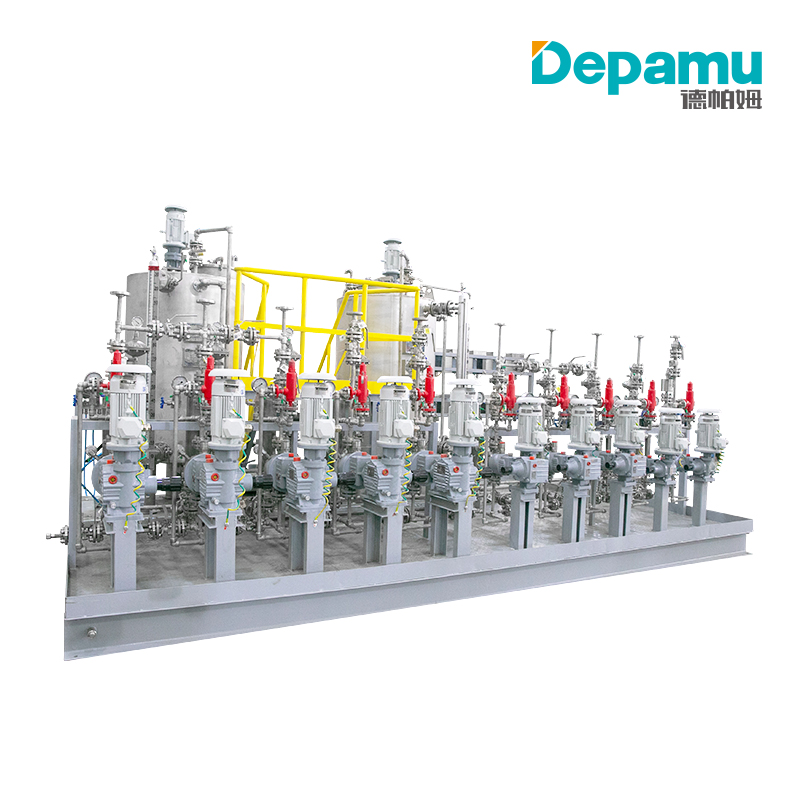
The Depamu skid-mounted natural gas chiller package represents a purpose-engineered solution to this challenge, integrating mechanical refrigeration technology into a compact, factory-assembled unit that cools the gas stream to condense heavy hydrocarbons before they reach the pipeline. By removing condensable components through controlled cooling and liquid separation, the package ensures that the treated gas meets pipeline hydrocarbon dew point specifications while recovering valuable natural gas liquids as a byproduct.
Understanding Hydrocarbon Dew Point and Its Significance
The hydrocarbon dew point is a function of both gas composition and pressure. Natural gas produced from wellheads contains a spectrum of hydrocarbons, ranging from light methane and ethane to heavier components such as pentanes, hexanes, and trace quantities of C7+ compounds. Under pipeline operating pressures, typically between 300 and 1500 psig, these heavier components have a tendency to condense when the gas temperature drops below a critical threshold. This threshold is the hydrocarbon dew point, and it varies dynamically with changes in gas composition and system pressure.
The cricondentherm, which represents the maximum temperature at which two phases can coexist for a given hydrocarbon mixture, is often the most relevant parameter for pipeline design. If the pipeline operating temperature falls below the cricondentherm, liquid hydrocarbons will form regardless of pressure. The conventional approach to managing this risk involves either operating the pipeline above the cricondentherm or processing the gas to reduce its heavy hydrocarbon content before transmission.
Pipeline specifications commonly mandate maximum hydrocarbon dew point values that can range from 0°C to −20°C, depending on the jurisdiction and the specific gas sales agreement. Meeting these specifications requires either the removal of heavy hydrocarbons through dew point control processing or the addition of heat to maintain the gas above its condensation temperature. In most production and midstream applications, dew point control processing—employing refrigeration-based cooling and liquid separation—is the preferred and more economical solution.
The Depamu Skid-Mounted Chiller Package: System Architecture
The Depamu skid-mounted natural gas chiller package is a fully integrated refrigeration system designed to cool natural gas streams for hydrocarbon dew point control and moderate natural gas liquids recovery. The package is assembled on a structural steel skid, pre-piped, pre-wired, and factory-tested before shipment, minimizing field construction time and ensuring consistent quality control during fabrication.
Refrigeration Cycle and Cooling Process
At the heart of the package lies a mechanical refrigeration cycle that utilizes propane or a mixed refrigerant as the working fluid. Propane is widely selected for dew point control applications because its normal boiling point aligns well with the target hydrocarbon dew point temperatures required for pipeline specifications. The refrigeration cycle consists of four essential stages: compression, condensation, expansion, and evaporation.
In the compression stage, a refrigerant compressor raises the pressure and temperature of the refrigerant vapor. The compressor may be driven by an electric motor or a gas engine, depending on site power availability and operational preferences. The hot, high-pressure refrigerant vapor then enters a condenser, where it releases heat to the ambient environment through either air-cooled or water-cooled heat exchange. The condensed liquid refrigerant passes through an expansion valve, which reduces its pressure and temperature, preparing it for the cooling duty.
The cold, low-pressure refrigerant then enters the gas chiller, which functions as the evaporator in the refrigeration cycle. Process gas flows through plate-fin or shell-and-tube heat exchangers, where the evaporating refrigerant absorbs heat from the gas stream, causing the gas temperature to drop from ambient conditions to the target range of −20°C to −40°C depending on the specification. This temperature reduction causes heavy hydrocarbon components—primarily C5 and heavier—to condense into liquid form.
Cold Separation and Liquid Recovery
Downstream of the chiller, the cooled gas-liquid mixture enters a cold separator, also known as a low-temperature separator. This vessel provides sufficient residence time for the condensed hydrocarbon liquids to disengage from the gas phase. The separated liquids, which constitute a valuable natural gas liquids product, are withdrawn from the bottom of the separator for further stabilization or fractionation. The treated gas, now meeting the required hydrocarbon dew point specification, exits the top of the separator and flows to the pipeline.
Heat Integration for Efficiency
A critical design feature of the Depamu package is the gas-gas heat exchanger, which precools the incoming warm gas stream using the cold outlet gas from the separator. This heat integration serves dual purposes: it reduces the refrigeration duty required to achieve the target temperature and it warms the outlet gas to prevent downstream freezing issues and hydrate formation in the pipeline. By recovering cold energy from the treated gas, the overall energy efficiency of the process is significantly improved, reducing compressor power consumption and operating costs.
Key Components and Engineering Considerations
The Depamu chiller package incorporates a comprehensive array of components that work in concert to deliver reliable, continuous operation. The refrigerant compressor is selected based on the required cooling capacity, which typically ranges from 100 to 500 horsepower depending on the gas flow rate and temperature reduction requirements. Reciprocating and screw compressors are both employed, with the choice depending on capacity, pressure ratio, and operational preferences.
The gas chiller heat exchangers are designed for low-temperature service and must accommodate thermal expansion and contraction without compromising structural integrity. Materials of construction are selected to withstand the corrosive effects of any acid gas components that may be present in the gas stream, with stainless steel or corrosion-resistant alloys often specified for wetted surfaces.
The cold separator is sized to provide adequate liquid holdup and residence time for effective phase separation. Internals such as vane packs or mesh pads are incorporated to minimize liquid entrainment in the gas outlet, ensuring that the treated gas meets pipeline specifications without carryover of hydrocarbon liquids.
Instrumentation and control systems are integrated into the package to monitor and regulate critical operating parameters. Temperature transmitters, pressure gauges, level indicators, and flow meters provide real-time data to the programmable logic controller, which manages compressor operation, refrigerant levels, and temperature setpoints. Anti-surge protection systems prevent compressor damage during low-load conditions, while variable speed drives adapt the refrigeration capacity to changing process conditions, optimizing energy efficiency.
Control Systems and Automation
The Depamu package is equipped with a sophisticated PLC-based control system that automates the entire dew point control process. The PLC continuously monitors inlet gas conditions, outlet gas temperature, separator liquid level, and refrigerant system parameters, making real-time adjustments to maintain the target hydrocarbon dew point. Temperature control is achieved by modulating the refrigerant flow through the expansion valve, which in turn regulates the evaporating temperature in the gas chiller.
Dew point analyzers can be integrated into the control scheme to provide direct feedback on the treated gas quality. These analyzers measure the actual hydrocarbon dew point of the outlet gas and transmit the data to the PLC, which adjusts the chiller operation accordingly to maintain compliance with pipeline specifications. This closed-loop control approach ensures that the gas consistently meets the required dew point without excessive refrigeration that would waste energy and unnecessarily cool the gas below the specification.
The control system also incorporates comprehensive safety interlocks to protect personnel and equipment. High-pressure and high-temperature alarms trigger automatic shutdown sequences if operating parameters exceed safe limits. Low refrigerant level detection prevents compressor damage from inadequate lubrication or overheating. Emergency stop functions are provided both locally at the package and remotely through the supervisory control and data acquisition system.
Remote monitoring capabilities enable operators to track package performance from a central control room or even off-site locations. Performance data is logged and trended, allowing maintenance personnel to identify developing issues before they cause unplanned downtime and to optimize refrigeration cycles based on historical operating data.
Applications and Operational Benefits
The Depamu skid-mounted chiller package serves a wide range of applications across the natural gas value chain. In gas gathering systems, the package is deployed to condition raw gas from separators before it enters the transmission network, ensuring that the heavy hydrocarbon content is reduced to acceptable levels. At processing plant outlets, the package provides final conditioning of residue gas before pipeline transmission, meeting the dew point specifications stipulated in gas sales contracts.
In production facilities with rich gas streams containing significant quantities of condensable hydrocarbons, the package serves a dual purpose: meeting pipeline specifications while recovering valuable natural gas liquids that can be sold as separate products. The recovered condensate offsets a portion of the operating costs associated with refrigeration, improving the overall economics of the facility.
The skid-mounted configuration offers significant advantages over field-erected alternatives. Factory assembly in a controlled environment ensures that all piping, wiring, and instrumentation are installed to high quality standards, reducing the risk of leaks, loose connections, and other defects that can occur during field fabrication. The pre-tested nature of the package means that commissioning time is dramatically reduced, allowing gas processing operations to commence more quickly and generating revenue sooner.
The compact footprint of the package is particularly advantageous for space-constrained sites, including offshore platforms, remote well pads, and brownfield expansions where available real estate is limited. Modular design allows capacity expansion through the addition of parallel units, providing flexibility to accommodate growing gas volumes without the need for extensive re-engineering.
Design Standards and Quality Assurance
The Depamu chiller package is designed and fabricated in accordance with applicable international standards, including ASME Section VIII for pressure vessels, API standards for gas processing equipment, and electrical codes for hazardous area classification. Materials of construction are selected for low-temperature service with appropriate impact testing to ensure ductility and fracture resistance at operating temperatures.
Insulation and heat tracing are applied where necessary to prevent external condensation and to maintain process temperatures during shutdown periods. Weather-protected enclosures protect instrumentation and electrical components from environmental exposure, enabling reliable outdoor installation in diverse climatic conditions.
Full factory testing validates the performance of each package before shipment, including hydrostatic testing of pressure vessels, functional testing of control systems, and performance testing of the refrigeration cycle. Complete documentation is provided, including P&IDs, equipment datasheets, operating procedures, and maintenance guidelines, supporting safe and efficient operation throughout the life of the facility.
Conclusion
The Depamu skid-mounted natural gas chiller package provides an effective, integrated solution for hydrocarbon dew point control in natural gas streams. By combining mechanical refrigeration, efficient heat integration, and advanced process control into a compact, factory-assembled unit, the package ensures that treated gas consistently meets pipeline specifications while recovering valuable natural gas liquids. The robust design, comprehensive instrumentation, and automated control systems deliver reliable performance across a wide range of operating conditions, from small-scale gathering systems to large gas processing facilities. As pipeline specifications continue to tighten and the demand for cleaner-burning natural gas grows, solutions such as the Depamu chiller package will play an increasingly important role in enabling the safe and efficient transportation of natural gas from production sites to end users.