

Depamu Chemical Injection Skid for Gas and Oil: A Technical Overview
Introduction
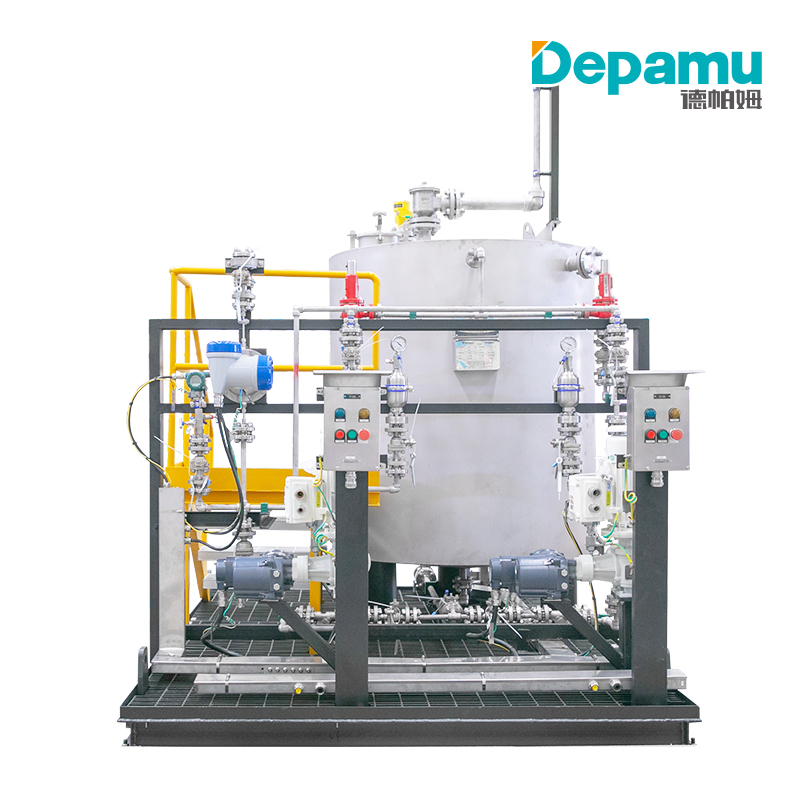
In the demanding environments of oil and gas production, the precise injection of chemicals is not merely an operational convenience; it is a critical necessity for maintaining asset integrity, ensuring flow assurance, and optimizing production. Chemical injection skids serve as the frontline defense against the myriad challenges that plague the industry, from internal pipeline corrosion to the formation of gas hydrates that can block flow. As a comprehensive, pre-assembled solution, these skids integrate storage, metering, and control systems into a single, compact unit designed for reliability and precision. This article provides an in-depth look at the DEPAMU chemical injection skid and its critical applications in the oil and gas sector, framed within the broader context of industry standards and operational requirements.
The Critical Role of Chemical Injection in Oil & Gas
The operational integrity of oil and gas infrastructure hinges on the continuous and accurate application of treatment chemicals. Pipelines and processing equipment are constantly exposed to harsh conditions, including water, carbon dioxide (CO₂), hydrogen sulfide (H₂S), and various salts, which create highly corrosive environments . Without intervention, these factors can lead to pipeline leaks, reduced flow efficiency, environmental incidents, and costly unplanned shutdowns .
Chemical injection skids are the primary tools used to combat these threats. They ensure the precise delivery of a range of chemicals, including corrosion inhibitors to protect metal surfaces, scale inhibitors to prevent mineral buildup, demulsifiers to separate oil and water, and methanol or glycol to prevent hydrate formation in subsea or cold climates . The effectiveness of these treatments depends entirely on the accuracy and reliability of the injection system. Insufficient dosing leaves infrastructure vulnerable, while excessive dosing wastes chemicals and increases operational costs . This is where the engineering of a system like DEPAMU's chemical injection skid becomes indispensable.
DEPAMU: Engineering for Demanding Applications
DEPAMU has established itself as a manufacturer capable of meeting the high standards required by the oil and gas industry. A cornerstone of its engineering capability is its adherence to the American Petroleum Institute's API 674 standard for Reciprocating Pumps . This standard ensures that the pumps at the heart of its skids are designed for quality, reliability, and performance under severe working conditions.
The company's reciprocating pumps, which serve as the core of many of its chemical Injection Packages, are noted for their compact structure, high efficiency, and stable transmission with low noise . This reliability is crucial in remote or offshore locations where maintenance is challenging. Furthermore, DEPAMU offers a wide selection of materials for wetted parts, including alloy steel, stainless steel, duplex steel, titanium, and Hastelloy, allowing for customization to handle corrosive, toxic, or abrasive media .
Technical Composition and Functionality
A DEPAMU chemical injection skid is not simply a pump on a frame; it is a fully integrated system designed for autonomous operation. A typical package combines several key components onto a single, modular base, which simplifies installation and reduces the need for extensive on-site assembly and piping .
Core Components and Design
The skid generally comprises chemical storage tanks, Metering Pumps (often of the plunger or hydraulic diaphragm type for high-pressure accuracy), a mixer for solution preparation, a control system, and the necessary piping and valves . The tank volume and pump specifications are tailored to the specific application, with DEPAMU offering configurations ranging from single-tank, dual-pump setups to more complex arrangements with multiple tanks and pumps for injecting different chemicals simultaneously .
One of the key features of DEPAMU's pump technology is its metering accuracy. Models like the 3DP(M)DAA Hydraulic Diaphragm Metering Pump, which is a core component in many of their skids, offer a flow rate adjustment range of 10%-100% with a metering accuracy of ±0.5% . This high level of precision is critical for optimizing chemical usage and ensuring effective treatment.
Automation and Control
Modern oil and gas operations demand a high degree of automation, and DEPAMU's chemical injection skids are designed to integrate seamlessly into these environments. The skids are equipped with Programmable Logic Controller (PLC) based control systems that can be integrated with a facility's Distributed Control System (DCS) or host computer .
These automated systems enable real-time monitoring and adjustment. By receiving signals for parameters like flow rate, pH value, and turbidity, the PLC can automatically adjust the speed and stroke of the metering pump, ensuring that the chemical dosing rate is perfectly matched to the process conditions . This not only optimizes chemical consumption but also allows for remote monitoring and control from a centralized control room, increasing safety by minimizing manual intervention in hazardous areas .
Applications Across the Oil and Gas Value Chain
The versatility of the DEPAMU chemical injection skid makes it suitable for a wide array of applications throughout the oil and gas industry.
Upstream Production
In upstream operations, these skids are deployed for a variety of critical tasks. The company lists applications for "oil-gas field water injection pump, polymer injection pump, ... alcohol injection pump, [and] liquid methanol pump" among others . This includes injecting methanol to prevent hydrate formation, which is a significant hazard in cold environments or subsea pipelines. They are also used for injecting corrosion inhibitors and demulsifiers to protect wellhead equipment and facilitate the separation of oil and water at the surface .
Midstream Transportation
For midstream pipelines, maintaining flow assurance is paramount. Chemical injection skids are used to inject corrosion inhibitors to protect the long, often inaccessible pipelines from internal corrosion. They are also used to inject drag-reducing agents (DRAs) to increase flow efficiency and scale inhibitors to prevent mineral deposits from forming and restricting flow .
Downstream Processing
Even in downstream refineries and processing plants, chemical injection remains vital. Here, skids are used for treating boiler feed water, injecting chemicals to control corrosion and scale in cooling water systems, and for various process treatment applications .
Compliance and Industry Standards
Compliance with stringent international standards is a hallmark of equipment used in the global oil and gas industry, and chemical injection skids are no exception. DEPAMU's pump designs are based on the rigorous API 674 standard, which dictates the design, manufacturing, and testing requirements for reciprocating pumps used in petroleum, petrochemical, and natural gas services .
Furthermore, the complete skid packages are often engineered to meet other relevant standards. For instance, a recent major order for chemical injection skids destined for LNG fields in Nigeria specified API 675 compliance, which applies specifically to controlled volume pumps . This standard dictates strict requirements for accuracy, reliability, and performance, highlighting the level of engineering expected for critical infrastructure projects.
Advantages of a Skid-Mounted Design
The skid-mounted design of DEPAMU's Chemical Injection Packages offers significant logistical and operational advantages. By pre-assembling and factory-testing the entire system, DEPAMU delivers a "ready-to-run" unit that minimizes the need for on-site labor, reduces installation time, and lowers the risk of installation errors . This is particularly valuable for projects in remote locations or for brownfield installations where space is limited and work must be carried out with minimal disruption to existing operations .
Conclusion
The DEPAMU chemical injection skid represents a sophisticated, engineered solution to the critical challenges of asset protection and flow assurance in the oil and gas industry. By integrating high-precision, API-standard compliant pumps with advanced automation and control systems on a compact, modular skid, DEPAMU provides a reliable and efficient means of delivering essential chemicals across the entire hydrocarbon value chain. As the industry continues to operate in increasingly challenging environments and faces heightened pressure to ensure operational integrity and environmental protection, the role of dependable equipment like the DEPAMU chemical injection skid will only become more central to sustainable and profitable operations