

A Technical and Operational Comparison of Skid-Mounted Gas-Driven vs. Solar-Powered DC Motor Driven Chemical Depamu-pumps.com/list-8-56.html target='_blank'>Injection Packages
Introduction
In the oil and gas industry, Chemical Injection Packages are critical for ensuring flow assurance, preventing corrosion, inhibiting hydrate formation, and managing a host of other production challenges. These skid-mounted systems are deployed everywhere from remote onshore wellheads to offshore platforms. The choice of driver—the mechanism that powers the injection pump—has profound implications for operational reliability, environmental compliance, economic performance, and safety. Two of the most prominent driver technologies for remote or off-grid applications are gas-driven (pneumatic) systems and solar-powered DC motor-driven systems.
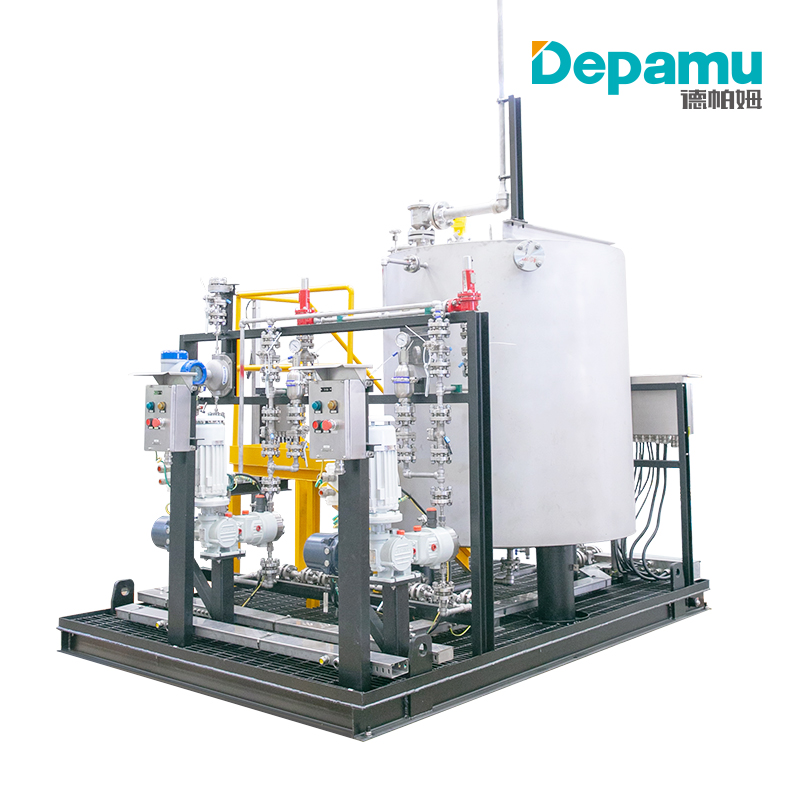
This essay explores the fundamental differences between these two skid-mounted chemical injection configurations, focusing on their operational principles, performance characteristics, economic considerations, and environmental impact. By examining the technical trade-offs, we can see why the industry is increasingly shifting from gas-driven packages to solar-electric alternatives, despite the latter's specific limitations.
Section 1: Core Operational Principles and Power Sources
The fundamental distinction between the two packages lies in their energy input.
Gas-Driven Packages utilise high-pressure natural gas from the wellhead or pipeline to power a pneumatic pump. This gas acts as the motive force, driving a piston or diaphragm that, in turn, pressurizes and injects the liquid chemical into the process stream. After performing this work, the gas is typically vented to the atmosphere, though some systems may have a pilot exhaust route . These packages are self-contained in the sense that they draw their energy from the very hydrocarbon stream they serve, requiring no external electrical grid connection.
Solar-Powered DC Motor-Driven Packages rely on a photovoltaic (PV) panel array to convert sunlight into direct current (DC) electricity. This energy is stored in a bank of batteries, which powers an efficient DC motor coupled to a Metering Pump, such as a diaphragm or peristaltic type . These packages are also self-contained but harvest renewable energy from the environment rather than consuming process gas. Proserv's engineering specifications for a 24 VDC solar-driven system demonstrate the standard voltage for these packages, designed to operate in ambient temperatures ranging from 4°C to 50°C .
Section 2: Environmental Impact and Regulatory Compliance
This difference in power source creates a stark environmental contrast.
The most significant drawback of gas-driven packages is their operational emissions. As a normal part of their cycle, they vent methane-rich natural gas directly into the atmosphere. According to the U.S. Environmental Protection Agency's Natural Gas STAR Program, replacing a single pneumatic chemical injection pump with a solar-electric alternative can reduce methane emissions by approximately 182.5 Mcf per year . The PTAC (Petroleum Technology Alliance Canada) Eco-Efficiency Handbook further highlights that these methane emissions constitute a significant source of greenhouse gases and are a primary target for regulatory compliance in jurisdictions like Canada and the U.S. .
Solar-powered packages, conversely, produce zero operational emissions. They do not vent methane, consume no chemical for fuel, and emit no greenhouse gases during operation (Scope 1 emissions are zero). This distinction is paramount not just for environmental stewardship but for regulatory compliance. Many production sites, particularly those designated as "sour" (high H2S content) or with "wet fuel gas," are now preferentially deploying solar systems to eliminate venting hazards and meet stringent emissions reduction targets .
Section 3: Operational Performance and Reliability
While both systems aim for reliable fluid delivery, their performance and reliability profiles diverge sharply.
Gas-Driven Systems are historically known for their simplicity and high-power density. However, they suffer from several critical operational challenges. Performance is highly dependent on the quality of the fuel gas. "Wet" gas containing liquids or contaminants can cause freezing, corrosion, and erratic pump operation, leading to significant downtime . Furthermore, these pumps are notoriously less accurate than their electric counterparts. The mechanical imprecision of gas-driven controllers often leads to over-injection of chemicals, as operators must "overfeed" to ensure the minimum required dosage is met. This results in wasted chemicals and increased operational expenses .
Solar-Powered DC Systems offer superior precision. The DC motor and electronic controller allow for highly accurate flow control using techniques like pulse width modulation (PWM), which enables exact dosing that can reduce chemical usage by up to 50% compared to pneumatic pumps . These systems are also inherently more reliable in challenging gas compositions because they do not use wet fuel gas, eliminating the freeze-up and corrosion issues that plague pneumatic pumps. However, solar systems have a critical vulnerability: solar intermittency. The system must be sized correctly for the location, considering the number of sunlight hours, especially during winter. The PTAC Handbook notes that solar panels have a lifespan of up to 15 years, but batteries must be sized to provide sufficient autonomy for periods of minimal sunlight, and they remain the primary failure point, with electric motors lasting approximately 5 years in continuous service . In high-pressure applications, gas-driven pumps still maintain an advantage; a study cited by PTAC notes that high-pressure wells may exceed solar capabilities, though injection into downstream flowlines remains feasible .
Section 4: Economic Considerations (CAPEX & OPEX)
The economic comparison is a study in contrasts between upfront capital and long-term operational costs.
Solar-Powered Packages generally command a higher capital expenditure (CAPEX). For a greenfield installation, costs are estimated between $7,500 and $10,000, while a retrofit can cost between $12,000 and $16,000 . This cost includes the solar panels, batteries, charge controller, and the skid itself. However, the operating expenditure (OPEX) is exceptionally low, estimated at $0 to $400 per year, primarily for battery maintenance and component replacement . The EPA highlights that despite the higher upfront cost, the payback period (when accounting for emissions offsets) can be as low as 3 years .
Gas-Driven Packages have a lower initial purchase price, often in the realm of $2,000 per pump replacement . However, their OPEX is deceptively high. They incur the "cost" of wasted natural gas that is vented. At a gas price of $5.00 per Mcf, the annual lost revenue from vented gas is approximately $1,015 per pump . Furthermore, the maintenance costs are higher due to the wear and tear from wet gas, freeze-ups, and the need to service pneumatic components. When these factors are combined with the cost of wasted chemicals due to over-injection, the total cost of ownership over a 5-year period often favors the solar solution.
Section 5: Safety and Applicability
Safety is a paramount concern. Gas-driven systems present a fire and explosion risk due to the continuous venting of flammable gas into the atmosphere . Solar-powered systems, on the other hand, utilize low-voltage DC electricity and do not vent flammable gases, significantly improving site safety. However, solar equipment must be certified for hazardous locations (e.g., Class 1, Division 2) to prevent ignition from electrical sparks .
Applicability also diverges. Gas-driven packages are suitable for high-pressure applications where electrical alternatives struggle, but only if gas quality is consistent. Solar packages are ideal for remote sites with good sun exposure, particularly for low-pressure flowline injection. As the PTAC handbook outlines, solar chemical systems are preferred for "sour sites" and sites with "wet fuel gas" to eliminate the safety and reliability problems associated with using contaminated gas as a fuel source .
Conclusion
The selection between a skid-mounted gas-driven and a solar-powered DC motor-driven chemical injection package is a strategic decision that balances immediate cost against long-term efficiency, reliability, and environmental responsibility.
While gas-driven packages offer a low-cost, simple solution with proven high-pressure capabilities, their operational inefficiencies, high maintenance demands, and significant methane emissions are increasingly unacceptable in a tightening regulatory landscape. Solar-powered DC motor packages, despite their higher upfront capital cost and dependence on adequate sunlight, offer superior precision, drastically lower operating costs, and zero emissions. They represent the future of remote chemical injection, particularly for low to medium-pressure applications where chemical usage is high and gas quality is poor.
The industry is clearly shifting, as evidenced by major operators replacing thousands of pneumatic pumps with solar alternatives to reduce emissions, cut chemical costs, and improve safety. The true difference is not just in the driver, but in the paradigm: one consumes the product to inject the chemical, while the other harnesses a renewable resource to do so with precision and responsibility.