

Abstract
Fluoride compounds present one of the most challenging scenarios for industrial pumping equipment. Whether it is Hydrofluorosilicic Acid (H₂SiF₆), Sodium Fluoride (NaF), or Aqueous Hydrogen Fluoride (HF), these chemicals are characterized by extreme corrosivity, high toxicity, and a tendency to crystallize. In water treatment facilities and industrial processing plants, the failure of a fluoride dosing pump is not merely a maintenance inconvenience—it is a public health hazard and a safety violation. This paper analyzes the technical specifications, material science, and hydraulic engineering of Depamu Metering Pumps, specifically evaluating their suitability for the rigorous demands of fluoride chemical injection.
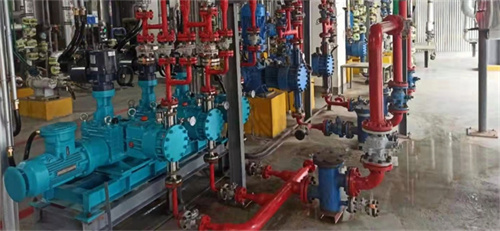
1. Introduction: The Hostility of Fluoride Chemistry
Fluoride injection is a critical unit operation in municipal water fluoridation (adjusting water to optimal levels for dental health) and industrial wastewater neutralization. However, the physical chemistry of these fluids creates a "perfect storm" for pump degradation.
Fluorides, particularly H₂SiF₆, are known to attack silicon compounds commonly found in standard metals and glass. Furthermore, fluoride solutions exhibit low surface tension, making them prone to leakage past static seals. When fluorides leak into the atmosphere, they hydrolyze to form Hydrofluoric Acid, which attacks human tissue and equipment electronics.
Depamu, a manufacturer specializing in chemical Injection Packages, has addressed these challenges through a combination of advanced diaphragm isolation, strict material selection (PTFE, PVC, PVDF), and high-accuracy stroke adjustment mechanisms.
2. The Application Challenge: Why Fluorides Destroy Standard Pumps
Before selecting a pump, engineers must understand the specific threats posed by fluoride compounds:
-
High Corrosivity: Fluoride ions (F⁻) are small and highly electronegative. They penetrate passivation layers on stainless steel (316L), causing pitting and stress corrosion cracking. Standard metallic pump heads fail rapidly.
-
Crystallization & Settling: Many fluoride salts have inverse solubility. If the pump stops or experiences low flow, the fluid crystallizes. These crystals act as abrasives, scoring plungers and breaking valve seats.
-
Gassing: Fluoride solutions often release gas. This can cause "vapor lock" in standard pumps, where the gas pocket prevents the fluid from being drawn into the chamber (loss of prime).
To survive this environment, a pump must feature Zero-Leakage design, Chemically Inert wetted paths, and High Suction Capability.
3. Core Technology: The Depamu Diaphragm Advantage
Depamu offers several pump series (DP-Series, DPM Series). For fluoride applications, the Mechanical Diaphragm (DP/MFX/WA series) and Hydraulic Diaphragm (DP/MWA series) are the most relevant. Plunger pumps are generally not recommended for toxic fluoride due to the risk of atmospheric leakage via the stuffing box.
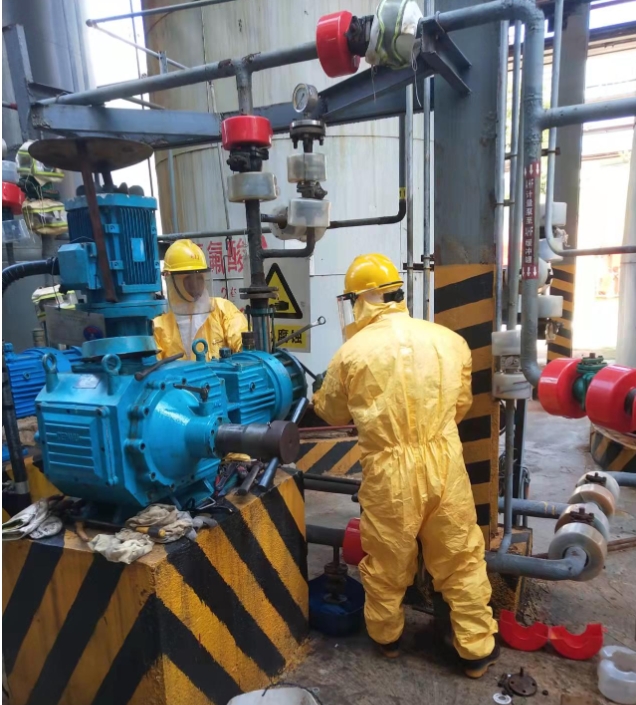
3.1 The Isolation Barrier
Unlike plunger pumps that rely on sliding seals, Depamu Diaphragm Pumps use a PTFE (Teflon) diaphragm to separate the hydraulic fluid (oil) from the process fluid (fluoride).
-
Benefit: There are no dynamic seals exposed to the atmosphere. If the diaphragm is intact, the fluoride stays inside the pipe.
3.2 Mechanical vs. Hydraulic Actuation
Depamu provides two primary actuation methods suitable for fluoride:
-
Mechanical Diaphragm (DP Series): The diaphragm is physically attached to a plunger. For low-to-medium pressure fluoride dosing (under 1.2 MPa), this is economical and reliable. The "DPMFXWA" series offers a 10:1 turndown ratio and steady-state accuracy of ±2%.
-
Hydraulic Diaphragm (DP(M)WA Series): For high-pressure injection or high-viscosity fluoride concentrates, the hydraulic series is superior. It uses a piston to push oil, which gently flexes the diaphragm. It features an internal relief valve and automatic compensation, providing a metering accuracy of ±0.5%.
4. The Material Matrix: Surviving the Acid
The search results reveal that Depamu offers a "cafeteria" of wetted materials. For fluoride applications, the selection hierarchy is critical:
Expert Note: For municipal water fluoridation using H₂SiF₆ (typically 23-25% solution), the industry standard is a PVC or PVDF pump head combined with Viton or PTFE O-rings. Depamu’s specifications explicitly support PVC and PTFE options for wetted parts.
5. Technical Deep Dive: The DPMFXWA Series
The Depamu DPMFXWA mechanical diaphragm pump is a workhorse for fluoride dosing. Let us analyze why its architecture suits this specific chemical.
5.1 The "Self-Cleaning" Valves
Fluoride crystallization is the number one cause of pump failure. Micro-crystals form on ball valves, causing them to stick open or closed. Depamu specifies that their check valves utilize a "self-cleaning structure". This typically means high-velocity ball and seat designs where the impact of the ball shatters nascent crystals before they can harden.
5.2 Stroke Adjustment Mechanism
Fluoride dosing requires precise control to avoid over-feeding (which wastes chemical) or under-feeding (which violates regulatory standards). The DPMFXWA series features:
-
Manual/Electric Stroke Adjustment: 0-100% adjustment range.
-
Variable Frequency Drive (VFD) Option: Adjusting motor speed to change flow.
While ±2% is acceptable for water treatment, plants requiring higher precision (like pharmaceutical fluoride additives) typically upgrade to the hydraulic diaphragm series (DP(M)WA) which boasts ±0.5% accuracy.
5.3 Thermal Limitations
Fluoride solutions are often stored outdoors or concentrated via solar evaporation. The Depamu specification limits PVC pump heads to ≤40°C and PTFE heads to ≤80°C. In hot climates, engineers must ensure the fluoride feed temperature does not exceed the PVC limit to prevent softening and creep of the pump head.
6. High-Stakes Dosing: The Chemical Injection Package
Depamu recognizes that a pump is not a standalone device; it is part of a system. Their "Factory Source" Chemical Injection Package is highly relevant for fluoride.
This package integrates:
-
Solution Tank: Made of FRP, PE, or PVC (specifically to hold Fluoride).
-
The Metering Pump: (Mechanical or Hydraulic diaphragm).
-
Piping & Valves: PVC schedule 80.
-
Safety Valve & Pulsation Damper: Crucial for fluoride, as water hammer can crack brittle PVC piping.
6.1 Dual Pump Configurations
Fluoride systems cannot go offline. The Depamu package supports configurations such as "2 Tanks + 3 Pumps". This allows for:
-
Standby redundancy: If Pump A fails, Pump B takes over.
-
Alternating operation: Switching between two tanks allows one to be cleaned of fluoride sediment while the other is in service.
7. Operational Protocols: Preventing Fluoride Solidification
The most dangerous moment for a fluoride pump is not when it is running, but when it stops. Depamu pumps offer features that mitigate the "solidification risk":
7.1 Flushing Capability
Because the hydraulic end (pump head) can be specified with 304 stainless steel or PVC connections, it is relatively easy to plumb a flush water line into the discharge line. Before shutting down a Depamu pump for maintenance, the operator can flush the head with water to dissolve residual fluoride, preventing the pump from being "glued" shut by crystals upon restart.
7.2 High Suction Lift
Fluoride drums are often stored below ground level or in containment basins. Depamu mechanical diaphragm pumps offer a suction head lift of up to 4 meters (5.8 psi) and a maximum inlet pressure of 2 bar. This NPSH (Net Positive Suction Head) capability ensures that the pump can pull the heavy fluoride solution up from the storage tank even if the foot valve is partially clogged by sediment.
8. Comparative Analysis: Depamu vs. Industry Standards
How does Depamu stack up against European (ProMinent, Sera) or American (Milton Roy, LMI) brands for fluoride?
While Depamu may lack the "digital drive" high turndown ratios of some premium brands, their mechanical simplicity is an asset for fluoride. Digital drives add electronics that can be corroded by the acidic fumes present in a fluoride dosing room. Depamu's robust analog manual controls are often more reliable in highly aggressive environments.
9. Maintenance and Safety Considerations
Operating Depamu pumps for fluoride requires a specific maintenance rhythm based on the data provided: