

Depamu Screw Vacuum Pump for Chemical Processing
Introduction
The chemical processing industry operates at the intersection of precision, safety, and reliability. Every unit operation—from distillation and drying to solvent recovery and degassing—depends on a vacuum system that can handle aggressive media, corrosive vapours, and varying process conditions without compromising product purity or operational uptime. Among the various vacuum technologies available, the dry screw vacuum pump has emerged as a preferred solution for many chemical applications because it eliminates the contamination risks and waste streams associated with oil‑sealed and liquid‑ring pumps. Depamu, a Chinese pump manufacturer with a growing international footprint, has developed Screw Pump technology rooted in German engineering that positions the company to serve the demanding vacuum needs of chemical processors. This article examines the technical basis, operational advantages, and practical considerations of deploying Depamu screw vacuum pumps in chemical processing environments.
The Chemical Processing Vacuum Challenge
Chemical processes rarely involve clean, inert gases. A vacuum pump in a chemical plant must contend with solvents, acids, bases, reactive intermediates, and particulate matter. Traditional vacuum technologies impose significant penalties in such environments. Oil‑sealed rotary vane pumps suffer from oil degradation and require frequent oil changes, generating hazardous waste that must be disposed of at considerable cost. Liquid‑ring pumps consume large quantities of water and produce contaminated effluent that requires treatment before discharge. Steam ejectors, while robust, are energy‑intensive and can introduce steam into the process stream, complicating condensation and recovery.
Dry screw vacuum pumps address these issues at the source. By operating without any sealing or lubricating fluid in the pumping chamber, they avoid the contamination pathways that plague wet technologies. The process gas contacts only the screw rotors and the compression housing, both of which can be manufactured from corrosion‑resistant materials. This design principle—oil‑free, contact‑free compression—is the foundation upon which Depamu has built its screw pump portfolio.
Depamu: Engineering Heritage and Manufacturing Capability
Depamu (Hangzhou) Pumps Technology Co., Ltd. was founded in 2003 and is headquartered in the Qiantang District of Hangzhou, China. The company describes itself as a high‑tech enterprise specialising in the research, development, manufacture, and sale of fluid transfer equipment, with a product range that includes Metering Pumps, high‑pressure process Reciprocating Pumps, Diaphragm Pumps, and screw pumps in single, double, and triplex configurations. Depamu holds CE, EAC, ISO 9001, ISO 14001, and ISO 45001 certifications, and its products are deployed across petrochemical, oil and gas, nuclear power, pharmaceutical, and water treatment sectors.
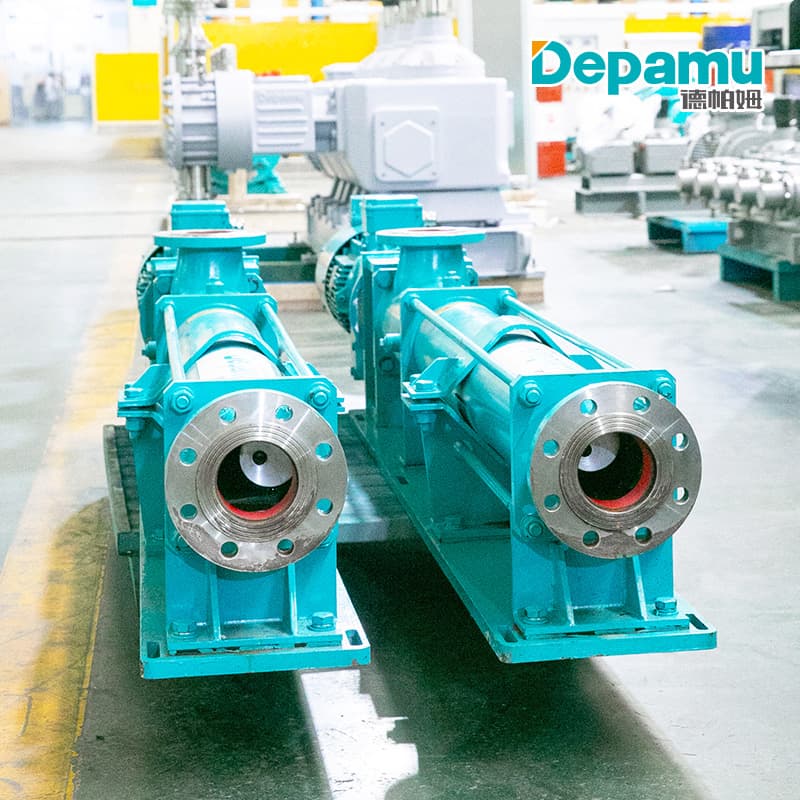
The company’s screw pump line is explicitly based on “advanced German technology and professional certifications,” and Depamu emphasises that its screw pumps deliver reliable performance for high‑viscosity media and media containing suspended particles. While Depamu’s publicly documented product catalogue centres on screw pumps for fluid transfer rather than on a dedicated dry screw vacuum pump series, the underlying engineering competency—rotor profiling, tight‑clearance machining, synchronisation gearing, and corrosion‑resistant material selection—is directly transferable to vacuum service. A chemical processor evaluating Depamu for vacuum duty is therefore evaluating a manufacturer with deep screw‑rotor expertise and a demonstrated capacity to handle the aggressive media that characterise chemical processing.
How a Screw Vacuum Pump Works
Understanding the operational principle of a screw vacuum pump clarifies both its advantages and its limitations. The core of the pump consists of two parallel, non‑contacting helical screw rotors that rotate synchronously in opposite directions inside a common cylinder. The rotors are timed by precision gears so that they never touch each other or the cylinder wall; a thin clearance separates the moving parts, and no lubricant is required in the compression chamber. As the rotors turn, gas is drawn through the suction port, trapped between the screw threads and the cylinder wall, and transported axially toward the discharge. In variable‑pitch designs, the volume between the threads decreases progressively, compressing the gas before it is expelled. In constant‑pitch designs, the gas is simply conveyed without internal compression, which can be advantageous when handling condensable vapours or when the pump operates against a low pressure differential.
This contact‑free, dry operation has profound implications for chemical service. There is no oil to degrade, no water to become contaminated, and no sealing fluid to react with process gases. The absence of internal compression in constant‑pitch designs also means that condensable vapours are less likely to liquefy within the pump, reducing the risk of corrosion and deposit formation. Depamu’s screw pump heritage in handling “media with a big content of solids (max. particle size 30 mm),” “corrosive media (pH = 0–14),” and “mixed media containing gas, solid or fibre” suggests that the company’s rotor geometries and material selections are already optimised for the kinds of challenging streams that chemical vacuum systems encounter.
Advantages of Depamu Screw Vacuum Pumps in Chemical Processing
The case for dry screw vacuum technology in chemical processing rests on several interconnected benefits. Depamu’s engineering approach, derived from its screw pump experience, reinforces each of these advantages.
Contamination‑Free Operation
The most immediate benefit is the elimination of process contamination. Because no oil or water contacts the process gas, the vacuum stream remains clean and the recovered solvent or product is not adulterated by pump fluids. This is particularly important in pharmaceutical and fine chemical manufacturing, where product purity specifications are stringent and cross‑contamination between batches can be catastrophic. A dry screw vacuum pump from Depamu would allow solvent recovery downstream without the need for separation from pump oil, simplifying the recovery train and improving the quality of the recovered material.
Corrosion Resistance and Material Flexibility
Chemical process gases are frequently corrosive. Depamu’s screw pumps are rated for media across the full pH range of 0 to 14, and the company’s manufacturing capability extends to corrosion‑resistant centrifugal pumps as well. This material expertise is directly applicable to vacuum pump construction. Rotors and housings can be fabricated from stainless steels, duplex alloys, or coated materials to suit the specific chemistry of the process. The absence of water in the pumping chamber also reduces the risk of aqueous corrosion, which is a common failure mode in liquid‑ring pumps handling acidic vapours.
Tolerance to Particulates and Condensables
Many chemical processes generate fine particulates—catalyst fines, crystallised solids, or polymer particles—that can destroy close‑clearance vacuum pumps. Depamu’s screw pump technology is designed for media with solid content up to 30 mm, demonstrating a rotor profile and clearance strategy that accommodates particulate matter. In vacuum service, this translates into a pump that can tolerate carryover without seizing or suffering rapid wear. Similarly, the large pumping chamber and absence of internal compression in constant‑pitch designs allow condensable vapours to pass through the pump without liquefying, provided the exhaust temperature is maintained above the dew point. For processes where condensation is unavoidable, a variable‑pitch pump can be used with a gas ballast or a heated exhaust to manage liquid formation.
Energy Efficiency and Low Maintenance
Dry screw vacuum pumps are inherently energy‑efficient because they do not need to overcome the viscous drag of sealing fluids or the hydraulic losses of liquid‑ring circulation. The contact‑free rotor design also eliminates wear on the compression components, so maintenance is largely limited to bearing lubrication and gearbox oil changes—both of which occur outside the process gas path. Depamu’s after‑sales infrastructure, which includes a 7‑day × 24‑hour service hotline and a commitment to provide solutions within 24 hours of a reported fault, further supports the low‑maintenance value proposition. For a chemical plant operating continuously, the ability to keep a vacuum pump in service for extended periods without intervention is a significant operational advantage.
Compact Footprint and Flexible Installation
Screw vacuum pumps are generally more compact than equivalent liquid‑ring or steam ejector systems, and they can be mounted in a variety of orientations. Depamu’s screw pumps feature “multiple modular structural combinations” and “flexible mounting types,” which gives system designers latitude in layout and integration. In brownfield chemical plant upgrades, where space is at a premium, this flexibility can be decisive.
Applications in Chemical Processing
The chemical industry encompasses a broad spectrum of processes, and the suitability of a given vacuum pump depends on the specific duty. Depamu screw vacuum pumps are well matched to the following application categories.
Distillation and Fractionation. Vacuum distillation is used to separate heat‑sensitive compounds, and the vacuum system must handle large volumes of condensable vapour. A dry screw pump with a variable‑pitch rotor and an appropriate knock‑out pot can manage these vapours efficiently, while the oil‑free design prevents contamination of the distillate.
Drying and Evaporation. Many chemical intermediates are dried under vacuum to remove residual solvent or water. The vacuum pump must tolerate solvent‑laden air and, in some cases, fine powder carryover. Depamu’s screw geometry, which is already proven for high‑solid‑content media, is a natural fit for this duty.
Solvent Recovery. The pharmaceutical and fine chemical sectors recover solvents for economic and environmental reasons. A dry screw vacuum pump allows the recovered solvent to remain uncontaminated, so it can be reused or sold rather than disposed of as hazardous waste.
Degassing and Stripping. Removing dissolved gases or volatile organic compounds from liquid streams often requires a moderate vacuum with high tolerance for condensable vapours. Screw vacuum pumps handle this duty without the effluent problems of liquid‑ring alternatives.
Crystallisation and Filtration. Vacuum is used to drive crystallisation and to draw filtrate through filter media. In these applications, the pump may be exposed to saturated vapours and occasional liquid carryover. A well‑designed screw vacuum system with a liquid separator and appropriate materials of construction can operate reliably in this environment.
Depamu’s broader product portfolio includes equipment for “chemical injection,” “water treatment,” and “supercritical fluid” processes, indicating an organisational familiarity with the unit operations that define chemical processing. This context matters: a vacuum pump supplier that understands the surrounding process is better positioned to recommend the right pump configuration, materials, and accessories.
Selection and Integration Considerations
Deploying a Depamu screw vacuum pump in a chemical process requires careful attention to several factors. The following considerations are essential for a successful installation.
Materials of Construction. The process gas composition determines the appropriate metallurgy. For neutral or mildly corrosive vapours, cast iron or standard stainless steel may suffice. For aggressive acids or halide‑containing streams, higher‑alloy stainless steels or nickel‑based alloys are required. Depamu’s manufacturing capability in corrosion‑resistant pumps suggests that these options are available, but the specific material should be confirmed with the manufacturer based on a detailed gas analysis.
Rotor Pitch and Compression Strategy. Constant‑pitch rotors are simpler and better suited to high condensable loads and particulate carryover. Variable‑pitch rotors offer higher efficiency and deeper ultimate vacuum but may be more sensitive to liquid slugs. The choice depends on the process pressure profile and the anticipated composition of the gas stream.
Sealing and Purge Systems. Although the compression chamber is dry, the shaft seals and bearing housings require protection. In chemical service, double mechanical seals with a barrier fluid or gas purge are often specified to prevent process gas from migrating into the bearing lubricant and to prevent atmospheric moisture from entering the pump. The purge medium must be compatible with the process and must not introduce contamination.
Temperature Control. The exhaust temperature of a screw vacuum pump can rise significantly, particularly with variable‑pitch designs that compress the gas internally. For condensable vapours, maintaining the exhaust above the dew point is essential to prevent condensation inside the pump. Heating jackets, gas ballast, or dilution with a dry gas can be used to manage temperature. Depamu’s experience with heated pumps and jacketed pump heads is relevant here.
Control and Instrumentation. Modern chemical plants require vacuum pumps that integrate with distributed control systems. Speed control, temperature monitoring, and seal‑fluid pressure monitoring are standard requirements. Depamu’s experience in supplying pumps to the oil and gas and petrochemical sectors suggests familiarity with industrial control interfaces.
Maintenance and Reliability
A well‑selected and properly installed screw vacuum pump should deliver years of reliable service with minimal maintenance. The primary maintenance items are the gearbox oil, shaft bearings, and seals. Because the compression chamber is dry and contact‑free, there is no routine rotor or cylinder wear to address. Periodic inspection of the clearances and rotor condition—typically during planned shutdowns—is sufficient to detect any abnormal wear that might indicate a process upset or material incompatibility.
Depamu’s after‑sales model is built around rapid response. The company operates a 24‑hour service hotline and commits to providing a solution within 24 hours of a reported issue, with the option of dispatching a service team to the site if necessary. For chemical plants where unplanned vacuum downtime can halt production, this level of support is a meaningful differentiator.
Conclusion
The chemical processing industry demands vacuum systems that are robust, contamination‑free, and adaptable to a wide range of aggressive media. Dry screw vacuum pumps meet these demands by eliminating sealing fluids from the compression chamber and by using contact‑free rotors that tolerate particulates and condensable vapours. Depamu, with its German‑derived screw pump technology, its experience in corrosion‑resistant and solids‑handling pump design, and its established presence in the petrochemical and chemical sectors, is a credible partner for chemical processors seeking a reliable screw vacuum solution. While the company’s public product literature emphasises screw pumps for fluid transfer, the engineering foundation is directly applicable to vacuum service. For chemical processors evaluating dry screw vacuum technology, Depamu warrants serious consideration—particularly where corrosion resistance, particulate tolerance, and responsive after‑sales support are priorities. As the chemical industry continues to move away from oil‑sealed and water‑ring vacuum systems in favour of dry, clean technologies, manufacturers like Depamu that combine screw‑rotor expertise with chemical‑industry familiarity will play an increasingly important role in enabling efficient and sustainable production.