

Depamu Stainless Steel Food-Grade Rotary Lobe Pump: Engineering Precision for Hygienic Fluid Handling
Introduction
In the food and beverage industry, the reliable and hygienic transfer of highly viscous, shear-sensitive, and particulate-laden fluids presents unique engineering challenges. From chocolate and tomato ketchup to dairy products and fruit preserves, the equipment used must not only withstand aggressive cleaning regimes but also preserve the integrity of the product itself. Depamu (Hangzhou) Pumps Technology Co., Ltd., a high-tech enterprise established in 2003 and headquartered in the Qiantang District of Hangzhou, has emerged as a significant player in this specialised field. Leveraging advanced German technologies introduced in 2007, the company has secured more than 100 technical patents and developed a comprehensive product portfolio that includes Metering Pumps, high-pressure Reciprocating Pumps, Screw Pumps, and, of particular relevance to the food sector, the stainless steel food-grade rotor rotary lobe pump.
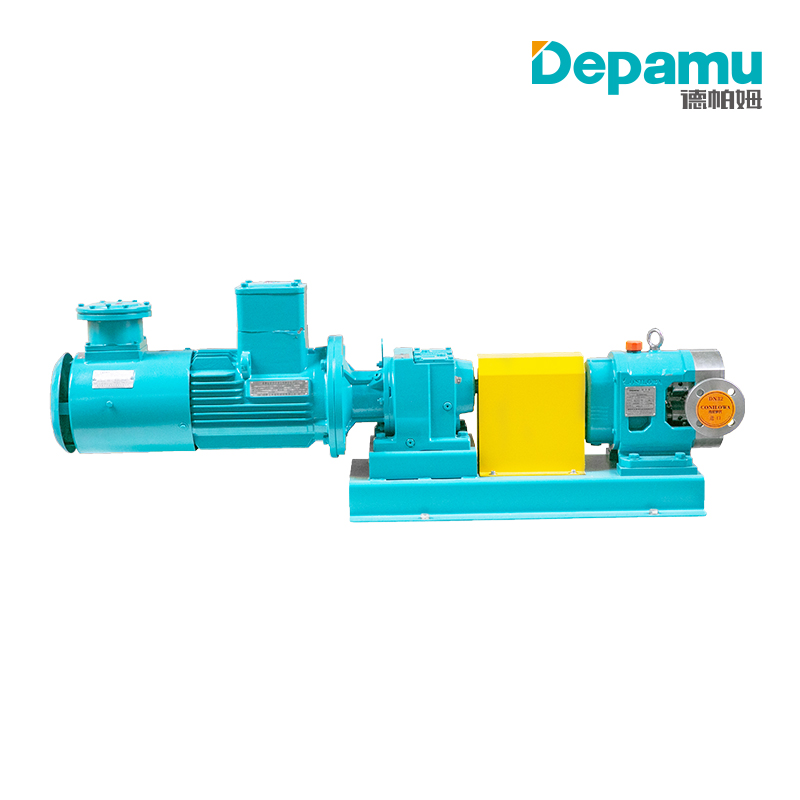
This article provides a detailed examination of the Depamu stainless steel food-grade rotary lobe pump, exploring its working principles, design features, material construction, performance specifications, applications within the food and beverage industry, and the certifications that underpin its suitability for hygienic processing environments.
Working Principle and Fundamental Design
The Depamu rotary lobe pump is a positive displacement pump designed in accordance with the API 676 standard, a specification that underscores its robustness and suitability for demanding industrial applications. At its core, the pump operates on a simple yet highly effective principle. Two synchronised rotors, typically bi-lobe or tri-lobe in configuration, rotate within a stationary pump casing without making direct contact with each other or with the casing walls. As the rotors turn, a low-pressure zone is created at the suction port, drawing fluid into the expanding cavities between the lobes and the casing. The fluid is then transported around the periphery of the pump chamber as the rotors continue their rotation. On the discharge side, the diminishing volume between the lobes and the casing forces the fluid out under pressure in a smooth, continuous flow.
A critical aspect of this design is the precise clearance maintained between the rotors and between the rotors and the pump body. This clearance, typically in the range of 0.05 to 0.3 millimetres, is determined by factors such as the viscosity and characteristics of the fluid being pumped. The absence of metal-to-metal contact within the pumping chamber eliminates wear and significantly extends the operational lifespan of the pump. Furthermore, the fluid itself acts as a lubricant and sealant, with its surface tension helping to minimise slip through the clearances.
The low rotational speed of the Depamu lobe pump, ranging from 10 to 650 revolutions per minute, is a defining characteristic that contributes to its gentle handling of delicate products. This low-speed operation, combined with the positive displacement mechanism, ensures that the pumped medium experiences minimal shear stress, making the pump particularly suitable for fluids that are sensitive to agitation, emulsification, or structural degradation.
Material Construction and Hygienic Design
The designation "stainless steel food-grade" is central to the Depamu lobe pump's identity and utility. All components that come into contact with the pumped product are manufactured from high-quality stainless steel, predominantly AISI 316L. This austenitic stainless steel grade is selected for its superior corrosion resistance, particularly against chlorides and other aggressive agents commonly encountered in food processing and cleaning chemicals. The use of 316L also ensures compliance with the stringent hygiene standards required in food, pharmaceutical, and cosmetic production.
The internal surface finish of the pump is a critical factor in hygienic design. Depamu sanitary lobe pumps are engineered with surface roughness values typically below 0.8 micrometres (Ra), creating a smooth, non-porous surface that inhibits the adhesion of product residues and the formation of bacterial biofilms. This smooth finish facilitates effective Clean-in-Place (CIP) procedures, allowing the pump to be cleaned and sanitised without the need for time-consuming manual dismantling.
The hygienic integrity of the pump is further enhanced by the use of FDA-compliant elastomeric materials for gaskets and seals. Compounds such as EPDM (ethylene propylene diene monomer) are commonly employed for their resistance to a wide range of food products, cleaning agents, and temperature fluctuations. These gaskets are often designed with deformation limiters to prevent the creation of dead legs where product could stagnate and harbour microorganisms.
The mechanical seal, a critical component for preventing leakage and maintaining hygiene, is typically a single or double sanitary mechanical seal. The stationary and rotary faces are often made from silicon carbide (SiC) or carbon, paired with EPDM or other FDA-approved elastomers. The seal is designed for internal assembly and can be accessed and replaced from the front of the pump without the need to disconnect the pump casing or pipework, a feature that greatly simplifies maintenance and reduces downtime.
Depamu offers a range of rotor materials and designs to suit different applications. Metal rotors, often with replaceable tips, are available for general-purpose duty, while rubber rotors provide enhanced flexibility and are better suited to handling fluids containing larger solid particles or for applications requiring extremely low shear. The modular design concept employed by Depamu means that a single series of pumps shares common components such as rotors, gears, bearings, axial lining boards, and mechanical seals, streamlining spare parts inventory and maintenance procedures.
Performance Capabilities and Technical Specifications
The Depamu stainless steel food-grade rotary lobe pump is engineered to deliver exceptional performance across a wide spectrum of operating parameters. The pump is capable of handling fluids with viscosities up to an impressive two million centipoise (cP), making it suitable for extremely thick and pasty products. Furthermore, it can efficiently transport media containing up to 60% solid content, a capability that is invaluable when processing products such as fruit jams, vegetable purees, and sauces with visible particulates.
Flow rates for Depamu lobe pumps vary depending on the specific model and application, with the broader product range encompassing capacities from 0.1 to 10,000 cubic metres per hour. For the food-grade sanitary models, typical flow rates may range from 0.2 to 1,500 cubic metres per hour, with discharge pressures reaching up to 1.5 megapascals (MPa) for standard single-stage configurations. The maximum discharge pressure can reach 2.0 MPa across the broader lobe pump series, and in multi-stage configurations, pressures as high as 3.0 MPa are achievable.
The pump's excellent self-priming capability, with a maximum suction lift of up to nine metres, eliminates the need for water irrigation or auxiliary priming devices, simplifying installation and operation. The pump is also designed for reverse rotation, which enables quick and efficient clearing of blockages and facilitates easy loading and unloading operations.
Temperature tolerance is another key attribute. Depamu lobe pumps can operate across a temperature range of -40°C to 280°C, accommodating processes from the chilling of dairy products to the high-temperature handling of melted chocolate and sugar masses. The pump can be equipped with head insulation and cooling features, as well as safety valves and other configurations, to meet the specific technical requirements of particular operating conditions.
Applications in the Food and Beverage Industry
The food and beverage sector is a primary beneficiary of the Depamu stainless steel food-grade rotary lobe pump's unique capabilities. The pump's ability to handle high-viscosity fluids without damaging shear-sensitive components makes it an ideal choice for a diverse range of applications.
In confectionery manufacturing, rotary lobe pumps are extensively used for transferring chocolate, compounds, and sugar syrups. The low-shear pumping action preserves the temper and texture of chocolate, preventing the formation of undesirable fat crystals. The pump's ability to maintain precise flow rates ensures consistent enrobing and moulding operations. For products such as toffee and caramel, the pump's high-viscosity handling capability is essential.
The dairy industry utilises these pumps for transferring products such as cream, yoghurt, curd, and processed cheese. The gentle handling preserves the texture of curd and cultured products, while the hygienic design and CIP compatibility ensure that stringent microbiological standards are maintained. The pump's resistance to temperature variations allows it to handle both chilled and heated dairy products.
Fruit and vegetable processing benefits from the pump's ability to handle purees, concentrates, and products containing solid particles such as diced fruit, seeds, and pulp. The large, unobstructed flow passages and the option of rubber rotors ensure that delicate solids pass through the pump without damage, preserving the visual appeal and texture of the final product.
Sauce and condiment production, including ketchup, mayonnaise, mustard, and barbecue sauce, relies on the lobe pump for its accurate metering and gentle transfer of abrasive and viscous formulations. The pump's consistent capacity and low pulsation ensure precise filling operations, while its corrosion-resistant construction withstands the acidic nature of many sauces.
In the beverage industry, the pump is employed for transferring fruit juices, concentrates, and syrups. Its hygienic design and ability to handle pulpy and viscous beverages make it a versatile choice for both clear and cloudy juice production.
The pump's applications extend beyond the food itself. It is also used in the transfer of cleaning solutions and CIP fluids, where its corrosion resistance and ability to handle a range of temperatures and chemicals are valuable assets.
Certification and Quality Assurance
Depamu's commitment to quality and safety is evidenced by the extensive certifications held by the company and its products. Depamu (Hangzhou) Pumps Technology Co., Ltd. is certified according to API, CE, EAC, and ISO standards, including ISO 9001 for quality management, ISO 14001 for environmental management, and ISO 45001 for occupational health and safety management. The company has also participated in the formulation of industry standards and received recognition such as the National Key "Little Giant" award for specialised and innovative small and medium-sized enterprises.
For food-grade applications, the materials used in the construction of the pump are of paramount importance. The elastomeric components, such as gaskets and seals, are selected to comply with FDA regulations, including 21 CFR 177.2600 for rubber articles and 21 CFR 177.1550 for perfluorocarbon resins, as well as BfR Recommendation XXI (Category 3) for materials intended to come into contact with foodstuffs. These certifications provide assurance that the pump will not leach harmful substances into the product stream and is safe for use in direct contact with food and beverage products.
Maintenance and Operational Reliability
The design of the Depamu lobe pump prioritises ease of maintenance and long-term operational reliability. The simple, compact structure and the modular design mean that many components are shared across different models within a series, simplifying the stocking of spare parts. The unique patented design of the replaceable rotor tips allows for cost-effective refurbishment of worn rotors without the need to replace the entire rotor assembly.
The large seal chamber accommodates a variety of mechanical seal types, providing flexibility to select the most appropriate sealing solution for the specific application and cleaning regime. The easy-open pump cover allows for straightforward inspection and servicing of the internal pump body, reducing downtime during maintenance operations.
The low rotational speed of the pump minimises wear on the rotors, bearings, and seals, contributing to a long service life and predictable maintenance intervals. The use of abrasion-resistant and corrosion-resistant axial and radial bushes further enhances durability, particularly when handling abrasive food products such as those containing high solids or crystalline ingredients.
Depamu supports its products with a professional after-sales service team that provides a 24/7 service hotline and rapid response to customer needs, ensuring that any technical issues or equipment failures are addressed promptly to minimise disruption to production.
Conclusion
The Depamu stainless steel food-grade rotary lobe pump represents a sophisticated engineering solution to the challenges of hygienic fluid handling in the food and beverage industry. Its positive displacement working principle, combined with a low-speed, low-shear pumping action, makes it exceptionally well-suited to the gentle transfer of high-viscosity, particulate-laden, and shear-sensitive products. The use of AISI 316L stainless steel for all product-contact components, coupled with fine surface finishes and FDA-compliant elastomers, ensures that the highest standards of hygiene and product safety are met.
The pump's impressive technical specifications—handling viscosities up to two million cP, solid contents up to 60%, flow rates up to 1,500 m³/h, and temperatures from -40°C to 280°C—demonstrate its versatility and capability across a wide range of food processing applications. The robust construction, modular design, and emphasis on ease of maintenance contribute to reliable operation and reduced total cost of ownership.
Backed by a comprehensive certification portfolio and a strong commitment to research and development, Depamu has positioned its stainless steel food-grade rotary lobe pump as a dependable and efficient choice for food and beverage manufacturers seeking to optimise their hygienic processing operations. As the industry continues to demand higher standards of product quality, safety, and operational efficiency, pumps of this calibre will remain essential components of modern production facilities.