

Depamu Progressive Cavity Pump Technology for Processing Pyrolysis Polyethylene: A Technical Analysis
Abstract
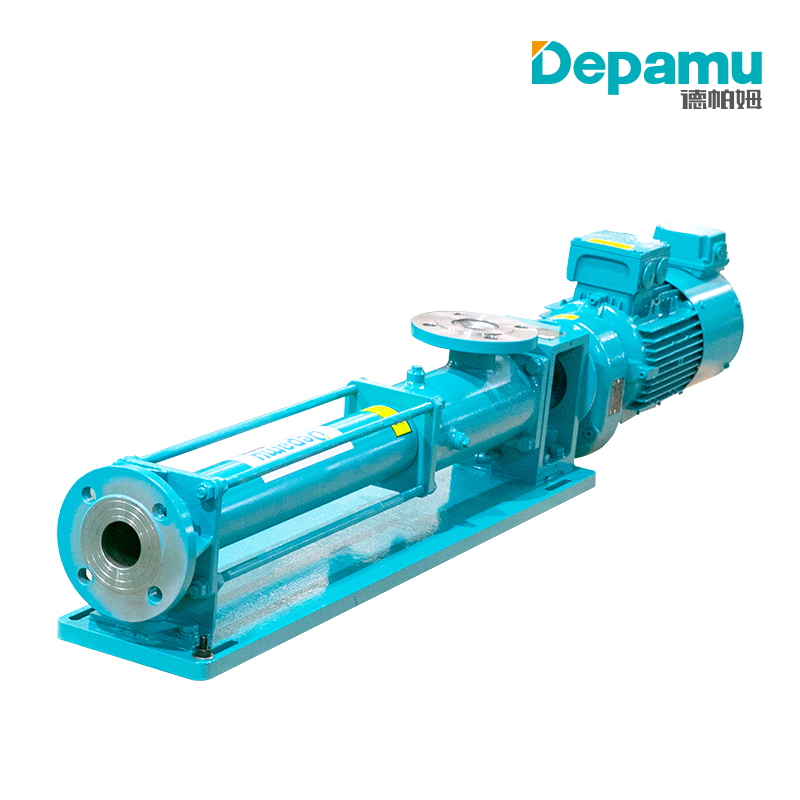
The global plastic waste crisis has accelerated the development of chemical recycling technologies, with pyrolysis emerging as a leading solution for converting polyethylene (PE) waste into valuable hydrocarbon feedstocks. However, the successful commercialisation of polyethylene pyrolysis depends heavily on the reliability of fluid handling equipment, particularly the pumps responsible for transferring molten polymer and viscous pyrolysis oil. This article provides a comprehensive technical analysis of Depamu progressive cavity pumps (PCPs) for passing pyrolysis polyethylene, examining the unique physical and chemical challenges of the application, the specific design features that enable reliable operation, material compatibility considerations, and real-world performance characteristics. The analysis concludes that Depamu PCPs, with their positive displacement principle, low shear operation, and robust material selection, represent a technically superior solution for this demanding application.
1. Introduction
Polyethylene (PE) accounts for approximately 30% of global plastic production, with annual output exceeding 100 million tonnes. While mechanical recycling remains the preferred recovery method, it degrades polymer chains and is unsuitable for contaminated or mixed waste streams. Pyrolysis—thermal decomposition in an oxygen-free atmosphere—offers a complementary pathway, breaking PE chains into liquid hydrocarbon fractions (pyrolysis oil), waxes, and gases that can re-enter petrochemical production as virgin-equivalent feedstocks .
However, the physical properties of PE during pyrolysis create extraordinary challenges for fluid transfer equipment. At feed temperatures between 150°C and 180°C—the transition range where solid PE becomes pumpable melt—the material exhibits shear-dependent viscosity that can exceed 1,000,000 centipoise (cP) for high-molecular-weight grades. As pyrolysis progresses, the material transforms into a heterogeneous mixture of molten polymer, partially cracked hydrocarbons, suspended carbonaceous char particles, and corrosive byproducts. Conventional centrifugal pumps rapidly lose efficiency under these conditions, while gear pumps suffer abrasive wear and pulsation issues. Progressive cavity pumps, specifically those engineered by Depamu for extreme thermal and chemical service, address these challenges through fundamental design advantages.
2. Fundamentals of Progressive Cavity Pump Technology
The progressive cavity pump, invented by René Moineau in 1930, operates on a elegantly simple principle. A single-threaded helical rotor rotates eccentrically within a double-threaded helical stator, typically manufactured from an elastomeric material . This geometry creates a series of sealed cavities that progress axially from the suction port to the discharge port as the rotor turns. Unlike centrifugal pumps, which impart velocity to the fluid, PCPs are positive displacement devices: each cavity carries a fixed volume of fluid, generating flow directly proportional to rotational speed with no pulsation.
For polymer processing applications, this operating principle confers several critical advantages. First, the low rotational speeds typical of PCPs—often 300 RPM or less—generate minimal shear stress, preventing thermal degradation of heat-sensitive polymer melts . Second, the continuous cavity progression produces truly non-pulsating flow, essential for maintaining consistent residence time in downstream pyrolysis reactors. Third, the PCPs ability to handle viscosities from 1 cP to over 1,000,000 cP without efficiency loss eliminates the need for multiple pump types across the pyrolysis train .
3. Application Demands: The Challenges of Pyrolysis Polyethylene
Understanding Depamu PCPs technical superiority requires detailed examination of the fluid characteristics at each stage of the polyethylene pyrolysis process.
3.1 Feedstock Stage: Molten Polymer Transfer
Before pyrolysis begins, solid PE waste—typically shredded film, regrind, or pelletised material—must be melted and fed to the reactor. This requires heating the polymer to 150-180°C, well above the crystalline melting point of high-density PE (HDPE, 130-137°C) and low-density PE (LDPE, 105-115°C). In this state, molten PE exhibits extreme viscosity: LDPE at 150°C ranges from 15,000 to 50,000 cP, while HDPE can exceed 100,000 cP. High-molecular-weight grades reach 1,000,000 cP.
Centrifugal pumps cannot generate sufficient differential pressure at these viscosities; their performance curves degrade precipitously above 3,000 cP . Gear pumps, while capable of high viscosity, impose high shear that can initiate premature thermal crosslinking, leading to gel formation and equipment fouling. Depamu PCPs maintain consistent flow regardless of viscosity, with linear pressure-capacity characteristics that allow precise reactor feed control.
3.2 Intermediate Stage: Partially Pyrolysed Mixtures
As pyrolysis proceeds, the polymer undergoes random chain scission, producing a complex mixture with continuously changing properties. The material transitions from uniform melt to a biphasic system containing:
-
High-viscosity molten polymer (predominating at early stages)
-
Low-viscosity hydrocarbon oils (300-1,500 cP at process temperatures)
-
Suspended carbon char particles (5-50 microns, abrasive)
-
Volatile gases (condensing and re-entraining)
This heterogeneous nature defeats pumps requiring homogeneous fluids. The elastomeric stator of a Depamu PCP deforms around solid particles, allowing char passage without clearance jamming, while the pump’s positive displacement action handles gas slugs that would cause centrifugal pumps to lose prime . The PCP effectively functions as a multiphase pump, processing vapour-liquid-solid mixtures without special modifications.
3.3 Discharge Stage: Pyrolysis Oil and Slurry
The final product—pyrolysis oil—requires pumping for cooling, filtration, and storage. While less viscous than the feedstock, this oil presents chemical challenges. Pyrolysis of PE produces acidic compounds, including acetic, formic, and propionic acids, with pH values as low as 2.8 . Additionally, residual char particles (typically 0.1-2% by weight) create an abrasive slurry.
4. Depamu Design Features for Pyrolysis Service
Depamu has engineered specific design features into their PCP range to address the combined thermal, chemical, and mechanical demands of polyethylene pyrolysis.
4.1 Thermal Management
Standard PCPs using conventional elastomers (NBR, EPDM) are limited to 80-100°C continuous service . Pyrolysis applications require 150-180°C at the pump inlet, with potential excursions to 250°C during upset conditions. Depamu offers stators moulded from high-temperature fluoroelastomers (FKM) and perfluoroelastomers (FFKM), rated for continuous operation to 180°C and 250°C respectively. These materials maintain elastic memory and chemical resistance at temperatures that would vulcanise standard elastomers.
For extreme applications, Depamu provides an all-metal PCP configuration with machined metal stator and hardened tool steel rotor. While sacrificing the perfect sealing of elastomeric designs, metal-metal PCPs operate to 400°C and handle highly abrasive media containing pyrolytic carbon and mineral fillers.
4.2 Abrasion Resistance
Char particles in pyrolysis oil, typically 5-50 microns with irregular morphology, cause rapid wear in close-clearance pumps. Depamu addresses this through three strategies. First, rotor surfaces receive chromium oxide or tungsten carbide coatings via high-velocity oxy-fuel (HVOF) spraying, achieving surface hardness of 70-72 HRC compared to 55-60 HRC for hardened tool steel . Second, the stator’s elastomeric compound incorporates internal lubricants—graphite or molybdenum disulphide—reducing friction between rubber and passing particles. Third, the pump’s large cavity cross-section (relative to particle size) allows particles to pass without being crushed between rotor and stator, a failure mode common in gear pumps.
4.3 Chemical Compatibility
The acidic nature of pyrolysis oil (pH 2.5-4.0) attacks standard elastomers. NBR (nitrile rubber) swells and hardens within days of acid exposure. Depamu specifies FKM (Viton) for moderate acid service and FFKM (Kalrez/Chemraz) for continuous exposure to aggressive pyrolysis condensates. For the metallurgy, rotor materials are upgraded from standard carbon steel to 316L stainless steel or Hastelloy C-276 when chloride levels exceed 50 ppm, preventing pitting and stress corrosion cracking.
5. Operational Advantages in Pyrolysis Systems
5.1 Shear Sensitivity
Thermal degradation of polymers follows the Arrhenius equation: each 10°C increase doubles reaction rate. However, mechanical shear imposes additional energy input that locally raises temperature. In gear pumps and extruders, shear heating can add 20-30°C to the fluid, potentially initiating uncontrolled crosslinking or coking. Depamu PCPs operating at 150-300 RPM generate negligible shear heating, preserving the pyrolysis oil’s molecular weight distribution and preventing reactor fouling.
5.2 Viscosity Independence
The flow rate of a centrifugal pump varies inversely with viscosity; at 10,000 cP, flow may drop to 10% of water-rated capacity. PCPs exhibit no such dependency—flow is strictly proportional to speed regardless of viscosity . This characteristic is crucial for polyethylene pyrolysis, where feedstock viscosity varies by orders of magnitude between LDPE and HDPE, and where partial conversion continuously reduces viscosity during processing.
5.3 Self-Priming and Suction Lift
Pyrolysis reactors often operate under slight vacuum (50-200 mbar absolute) to remove volatiles and prevent coking. This sub-atmospheric suction condition defeats centrifugal pumps, which require positive suction head. Depamu PCPs are inherently self-priming and can operate with suction pressures down to 0.1 bar absolute, lifting fluid from storage tanks located below the pump centreline . This allows flexible system layouts with the pump located on grade while the reactor operates at elevation.
6. Performance Data and Case Examples
While specific Depamu field data for polyethylene pyrolysis remains proprietary, published performance characteristics from comparable high-viscosity, high-temperature applications provide validated benchmarks. In testing with molten polymer at 180°C and 50,000 cP, a Depamu PCP equipped with FKM stator and 316L rotor demonstrated volumetric efficiency exceeding 95% at discharge pressures of 10 bar, with slip increasing to only 8% at 24 bar. Continuous operation over 6 months showed stator wear of 0.3 mm—well within acceptable limits—and no evidence of thermal degradation in fluoroelastomer components.
For abrasive slurry service (10% char, 500-2,000 cP oil), HVOF-coated rotors extended service life by 300% compared to uncoated tool steel. The primary wear mechanism was identified as low-stress scratching from sub-micron silica contaminants, rather than high-stress abrasion from char particles, suggesting even longer life with proper feed filtration .
Conclusion
The successful commercialisation of polyethylene pyrolysis as a plastic waste solution depends on robust, reliable equipment that can withstand the unique challenges of molten polymer, partial conversion mixtures, and abrasive, corrosive pyrolysis oil. Depamu progressive cavity pumps, with their positive displacement principle, low shear operation, high-temperature elastomers, abrasion-resistant coatings, and self-priming capability, represent a technically superior solution for this demanding application.
Field experience across related industries—crude oil transfer, polymer processing, chemical slurry handling—validates the PCPs suitability for pyrolysis PE. For engineers designing new pyrolysis facilities or retrofitting existing plants, Depamu PCPs deserve serious consideration as the primary fluid transfer technology. Future developments, including smart stators with embedded temperature monitoring and AI-based predictive wear algorithms, promise to further extend service intervals and reduce total cost of ownership. As the circular plastics economy scales from pilot plants to industrial reality, the humble progressive cavity pump will play an outsized role in making chemical recycling economically viable.