

Depamu Heavy Duty High Pressure Industrial Piston Pump: Engineering Reliability for the World’s Toughest Fluid Handling Challenges
Introduction
In the most demanding industrial environments—from municipal wastewater treatment plants to deep mining operations and large-scale construction sites—the reliable movement of abrasive, viscous, and high-solids fluids is a persistent engineering challenge. Conventional centrifugal pumps often falter when confronted with slurries containing large particles, dewatered sludge, or paste-like tailings. It is in these extreme conditions that the Depamu heavy duty high pressure industrial piston pump emerges as a purpose-built solution. Designed and manufactured by Depamu (Hangzhou) Pumps Technology Co., Ltd., this positive displacement pump combines German-influenced engineering principles with robust Chinese manufacturing, delivering the pressure and durability required to handle the most unforgiving media in slurry transfer, sewage processing, wastewater treatment, mining, and construction.
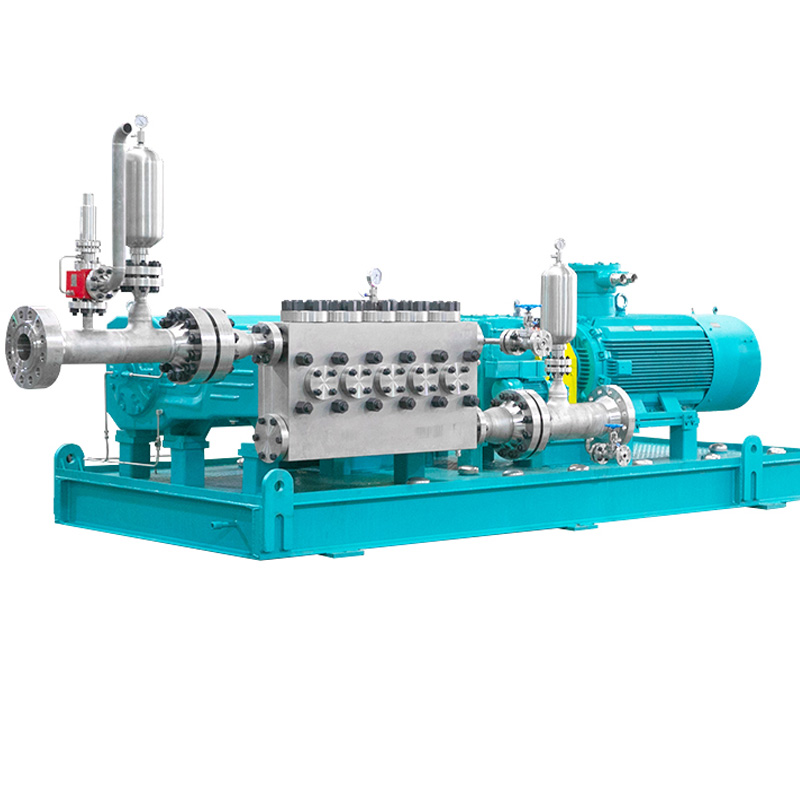
This article provides a comprehensive technical and application-focused examination of Depamu’s piston pump technology. It explores the working principles, material options, performance parameters, and real-world deployment scenarios that make these pumps indispensable across critical infrastructure and heavy industry.
The Engineering Philosophy Behind Depamu Piston Pumps
At its core, a piston pump operates on a simple yet powerful principle: a plunger moves reciprocally within a cylinder, displacing fluid through check valves. Depamu’s DP(M)DA and DP(M)XAA series embody this principle with precision. The plunger contacts the fluid directly, and the volume of the working chamber changes cyclically with each reciprocation, enabling the inlet and outlet check valves to suction and discharge the medium effectively. This direct-displacement mechanism allows the pump to generate exceptionally high pressures—up to 228 MPa in certain configurations—while maintaining metering accuracy as fine as ±0.5% across a 10% to 100% adjustment range.
What distinguishes Depamu’s design is its deliberate focus on maintainability and longevity. The pump utilizes an integrated worm gear pair for variable-speed drive, resulting in low noise and high transmission efficiency. The stroke can be adjusted steplessly from 0% to 100% through an integrated sleeve adjustable eccentric transmission mechanism, offering operators precise control over flow rates without complex external modifications. Oil-immersed lubrication ensures that transmission components remain reliable over extended operational periods, reducing downtime in continuous-process industries.
Multi-Head Configuration and Control Flexibility
A distinctive advantage of Depamu’s piston pump platform is its modularity. Two or more heads—up to twelve in a single assembly—can be connected in parallel. This configuration serves dual purposes: transporting the same fluid with reduced pulsation, or simultaneously transferring multiple media as a proportional pump. For wastewater treatment facilities that must dose several chemicals simultaneously, this multi-head capability simplifies piping and control architecture while ensuring accurate ratios between additives.
Control options further enhance operational versatility. Flow rate adjustment can be executed manually, electrically, pneumatically, or through frequency conversion. Electric actuators enable remote automatic control, allowing integration into centralized supervisory systems. This is particularly valuable in large mining or construction sites where pumps are distributed across wide areas and must respond to fluctuating process demands without direct human intervention.
Material Engineering for Abrasive and Corrosive Media
The fluids encountered in slurry, sewage, wastewater, mining, and construction applications are rarely benign. They may contain hard suspended particles, corrosive chemical agents, or both. Depamu addresses this through a comprehensive material selection strategy. Pump heads can be fabricated from 304, 316, and 316L stainless steels, 904 duplex stainless steel, Hastelloy C, and high-polymer materials. For the HD3M(M) series, wetted parts may also include alloy steel, dual-phase steel, and titanium. This spectrum of options allows engineers to match the pump’s wetted components to the specific chemistry and abrasiveness of the medium, whether it is acidic mine drainage, alkaline industrial wastewater, or chloride-rich sewage.
The sealing system is equally critical. Depamu employs high-performance plungers with specially designed stuffing and sealing components, achieving both long service life and excellent sealing performance. High-precision inlet and outlet check valves further ensure metering accuracy and unimpeded fluidity, preventing the clogging that plagues diaphragm and centrifugal pumps in solids-laden service.
Performance Envelope: Flow and Pressure Capabilities
The Depamu piston pump portfolio spans a wide performance envelope to accommodate diverse duty requirements. The DP(M)DA and DP(M)XAA single-head models deliver flow rates up to 12,100 L/h with pressure ratings reaching 228 MPa. For larger-volume applications, the HD3E(M) and HD3M(M) reciprocating pump series offer flow ranges from 2.52 to 94.61 m³/h and pressure ranges from 2.5 to 160.3 MPa. These parameters position the pumps for both precision metering tasks and high-volume transfer duties.
The HD3M(M) series, designed according to American Petroleum Institute standard API 674, is explicitly engineered for severe working conditions. It transports materials accurately and reliably, meeting the highest requirements for pumps of its type. The process diaphragm variant within this series ensures zero leakage during transportation of toxic, flammable, or abrasive media—a critical safety consideration in chemical and petrochemical contexts that often intersect with wastewater and slurry handling.
| Model Series | Flow Range | Pressure Range | Primary Orientation |
|---|---|---|---|
| DP(M)DA / DP(M)XAA | ≤ 12,100 L/h per head | ≤ 228 MPa | Precision metering, high-pressure injection |
| HD3E(M) / HD3M(M) | 2.52 – 94.61 m³/h | 2.5 – 160.3 MPa | High-volume transfer, process diaphragm service |
Application in Slurry and Sewage Transfer
Slurry—whether derived from coal processing, mineral extraction, or municipal sewage—presents one of the most difficult pumping challenges. High solid content, large particle sizes, and a tendency to precipitate can quickly incapacitate pumps not designed for such duty. Depamu’s piston pump architecture is inherently suited to these conditions because the positive displacement mechanism does not rely on impeller velocity to impart energy to the fluid. Instead, the plunger physically pushes the medium through the system, maintaining pressure even when the fluid is highly viscous or contains significant solids.
The company’s dedicated coal water slurry Diaphragm Pump, developed under the API 674 framework, exemplifies this capability. It is designed for slurry water with high solid content, large particle size, and easy precipitation characteristics—precisely the conditions that cause conventional pumps to fail. The same engineering principles extend to sewage sludge transfer, where the pump must handle dewatered sludge with dry solid content approaching 40% and paste-like consistency. In these applications, the Depamu piston pump maintains consistent flow without the shear degradation that can alter the molecular structure of sludge flocs, preserving downstream treatment efficiency.
For sewage treatment plants, Depamu also offers complementary pump technologies. The DP Series wastewater treatment dosing pump handles flow rates up to 2,300 L/h and discharge pressures up to 1.2 MPa, purpose-built for chemical dosing in treatment processes. Rubber Rotor Pumps such as the CLJ50F0.4-15 serve sewage treatment and resource recovery systems with flow capacities up to 15 m³/h. Together, these products allow a facility to standardize on Depamu technology across multiple process stages, simplifying maintenance and spare parts management.
Wastewater Treatment: Precision Under Pressure
Wastewater treatment is a multi-stage process requiring precise chemical addition, reliable sludge conveyance, and robust handling of abrasive residuals. Depamu piston pumps contribute at several critical points.
In chemical dosing for coagulation, flocculation, pH adjustment, and disinfection, metering accuracy is paramount. The DP(M)DA and DP(M)XAA series deliver ±0.5% accuracy, ensuring that coagulant and flocculant doses remain within tight tolerances. Overdosing wastes chemicals and can impair biological treatment; underdosing fails to achieve required effluent quality. The stepless flow adjustment and multi-head parallel configuration allow a single pump assembly to dose multiple chemicals proportionally, reducing footprint and capital expenditure.
For sludge transfer—particularly dewatered sludge destined for incineration, land application, or further processing—the piston pump’s ability to handle paste-like media at high pressure is decisive. The pump can convey extremely abrasive, compact media such as dehydrated sewage sludge through long piping runs without dilution, a significant operational advantage. This capability reduces the volume that must be managed downstream and preserves the calorific value of sludge intended for energy recovery.
Depamu’s broader portfolio also includes rotor pumps and air-operated double diaphragm pumps suited to wastewater environments. The air-operated double diaphragm pump DPQ-80, for instance, offers a maximum flow of 34.2 m³/h and a head of 40 meters, with applications spanning environmental protection and water treatment. Rotor pumps are widely applied in petroleum chemical, wastewater treatment, drinking water supply, and offshore oil pollution recovery. This breadth means that a treatment plant can source multiple pump types from a single qualified supplier, streamlining procurement and technical support.
Mining Applications: Tailings, Backfill, and Beyond
Mining operations demand pumps that can withstand continuous duty, abrasive slurries, and remote locations with limited maintenance access. Depamu piston pumps meet these demands through their heavy-duty construction and the material options available for wear components.
In tailings management, the pump must transport mineral slurry from the processing plant to the tailings storage facility, often over long distances and significant elevation changes. The high-pressure capability of Depamu piston pumps—up to 228 MPa in metering configurations and 160.3 MPa in the HD3E(M) series—enables single-stage transfer where multiple centrifugal pumps in series would otherwise be required. This simplification reduces energy consumption, maintenance points, and the risk of cascade failure.
For mining backfill operations, where cemented tailings or paste backfill is placed underground to stabilize voids, the pump must deliver a highly viscous, abrasive mixture at consistent pressure. Piston pumps are particularly well-suited to this duty because their output is largely independent of fluid viscosity. The KOS 25200 HP, a comparable heavy-duty piston pump in the industry, is cited as ideally suited for high flow rates typically required for backfilling mining voids. Depamu’s HD3M(M) series, with its API 674 design pedigree, is engineered for similarly severe conditions.
Beyond tailings and backfill, Depamu piston pumps serve salt mine water injection, coal seam water injection, and high-pressure cleaning applications within mining operations. The ability to customize wetted materials—including Hastelloy and titanium for corrosive mine waters—ensures that the pump can be adapted to the specific geochemistry of each site.
Construction Applications: Dewatering, Grouting, and Material Transfer
Construction sites present a different but equally demanding set of pumping requirements. Groundwater infiltration, bentonite slurry for diaphragm wall excavation, grout injection for ground improvement, and the transfer of cementitious materials all require pumps that can handle abrasive suspensions at pressure.
Depamu piston pumps are deployed in construction contexts for high-pressure cleaning, pipeline cleaning, and the transfer of construction slurries. The pump’s ability to generate high discharge pressures makes it suitable for jetting and cleaning operations that remove hardened deposits from pipes and surfaces. In grouting applications, the precise flow control and high pressure ensure that grout penetrates soil or rock voids effectively, forming a continuous impermeable barrier.
The compact modular structure of Depamu Reciprocating Pumps—with small size and light weight—facilitates installation on mobile skids or in confined plant rooms. Power sources can be electric motors, diesel engines, or solar energy, making the pumps adaptable to remote construction sites without grid connection. Deceleration mechanisms including double helical gears, worm and gear sets, reducers, and belt pulleys offer further flexibility in matching pump speed to available prime mover characteristics.
For tunnel construction, piston pumps transfer muck and slurry from excavation faces to surface handling facilities. The pump’s resistance to clogging and its ability to handle large particles—up to 30 mm in some Depamu Screw Pump configurations, with piston pumps generally capable of comparable or larger solids passage depending on valve design—make it a reliable choice for the variable and unpredictable media encountered underground.
Competitive Advantages: Why Piston Technology Excels in Harsh Service
The choice of pump technology is rarely arbitrary; it reflects a calculated assessment of lifecycle cost, reliability, and process compatibility. Piston pumps offer several inherent advantages over centrifugal and diaphragm alternatives in heavy-duty slurry and sludge service.
First, pressure independence from flow. A centrifugal pump’s discharge pressure is a function of impeller speed and diameter; as wear occurs or viscosity increases, performance degrades. A piston pump, by contrast, generates pressure through positive displacement, maintaining output as long as the drive train and sealing components remain functional. This characteristic is invaluable when pumping non-Newtonian fluids whose viscosity changes with shear rate or temperature.
Second, high solids handling without dilution. Centrifugal pumps require sufficient fluid velocity to keep particles in suspension and often need dilution to reduce viscosity. Piston pumps can convey paste-like media directly, reducing or eliminating the water addition that would otherwise increase downstream treatment or disposal volumes.
Third, metering precision. For chemical dosing and process control, the ±0.5% accuracy of Depamu’s piston pumps provides a level of precision that centrifugal pumps cannot match. This precision translates directly into chemical cost savings and process consistency.
Fourth, sealing integrity. Depamu’s process diaphragm pumps ensure no leakage during transportation of toxic, flammable, or abrasive media. This is critical in wastewater treatment where hazardous chemicals are dosed, and in mining where process water may contain heavy metals or reagents.
Fifth, modularity and customization. The ability to configure multiple pump heads in parallel, select from a wide range of wetted materials, and choose among manual, electric, pneumatic, or variable-frequency control modes means that a Depamu pump can be tailored to the specific requirements of each installation rather than forcing the process to adapt to a standard product.
Maintenance, Reliability, and Lifecycle Support
Industrial pumps are judged not only by their performance on commissioning day but by their reliability over years of continuous operation. Depamu addresses this through design features that facilitate maintenance and extend service intervals.
The integrated worm gear pair and oil-immersed lubrication system reduce wear on transmission components, allowing reliable long-term operation. The simple structure of the pump—with fewer moving parts than a comparable centrifugal or screw pump—translates to fewer failure modes and easier field service. The high-precision inlet and outlet check valves are designed for effective metering and fluidity, but they are also accessible for inspection and replacement without major disassembly.
Depamu’s manufacturing operations are certified and audited, with the company holding a 17-year profile as an audited supplier certified by SGS and BV. This third-party verification provides assurance of quality management systems and production consistency. The company is located in the National High-tech Development Zone, reflecting its status as a technology-oriented manufacturer rather than a low-cost commodity producer.
For operators, Depamu recommends installing a relief valve on the outlet pipeline of piston pumps, as the pump itself does not incorporate a safety relief device. This is standard practice for positive displacement pumps and reflects the company’s commitment to transparent technical guidance rather than overselling product capabilities.
Selection Considerations for Engineers
When specifying a Depamu piston pump for a slurry, sewage, wastewater, mining, or construction application, several factors should guide the selection process.
Fluid characteristics. Solid particle size, concentration, abrasiveness, corrosivity, viscosity, and temperature all influence material selection and valve design. Depamu’s wetted material options span stainless steels, duplex, Hastelloy, titanium, and high polymers, providing a solution for nearly any fluid chemistry.
Pressure and flow requirements. The DP(M)DA and DP(M)XAA series are optimal for high-pressure, low-to-moderate flow duties such as chemical injection and cleaning. The HD3E(M) and HD3M(M) series serve higher-flow applications where process diaphragm or reciprocating piston action is required for toxic or abrasive media.
Control and automation. Manual adjustment suffices for steady-state processes. Electric or pneumatic actuation with remote control capability is recommended for processes that require frequent setpoint changes or integration with plant-wide control systems. Frequency conversion offers the highest energy efficiency when flow requirements vary significantly over time.
Installation environment. Horizontal, vertical, stationary, and mobile assembly forms are available. Power source options include electric motor, diesel engine, and solar energy, enabling deployment in locations without reliable grid power.
Redundancy and multi-head configuration. For critical dosing applications, a multi-head pump with parallel heads can provide N+1 redundancy or proportional dosing without separate pump units.
Conclusion
The Depamu heavy duty high pressure industrial piston pump represents a mature, field-proven solution for the most challenging fluid handling tasks in slurry transfer, sewage processing, wastewater treatment, mining, and construction. Its positive displacement architecture delivers pressure independent of flow, handles high-solids and paste-like media without dilution, and achieves metering accuracy that supports precise chemical dosing and process control. The availability of multiple model series—from the precision-oriented DP(M)DA to the API 674-compliant HD3M(M)—allows engineers to match pump capability to duty requirements across a wide performance envelope.
Material options spanning stainless steels, Hastelloy, titanium, and high polymers ensure compatibility with corrosive and abrasive media. Multi-head configurations, flexible control modes, and diverse power source options provide the customization that real-world installations demand. Backed by a manufacturer with audited quality systems and decades of application experience, Depamu piston pumps offer a lifecycle value proposition that extends well beyond initial purchase price.
For industries where pump failure means process stoppage, environmental risk, or safety hazard, the choice of pumping technology is a strategic decision. Depamu’s heavy duty high pressure piston pumps are engineered to meet that decision with reliability, precision, and durability.