

How the Depamu High Pressure Screw Bilge Pump is Shaping the Modern Shipbuilding Industry
The shipbuilding industry, a complex nexus of engineering, metallurgy, and hydraulics, demands equipment that can withstand the most unforgiving environments. At the heart of a vessel's operational safety and efficiency lies its pumping systems. Among the myriad of pumps on board, the bilge pump is arguably the most critical for survivability, tasked with removing unwanted water from the ship's lowest compartments. In this demanding sector, the high-pressure Screw Pump, particularly those engineered by manufacturers like Depamu (Hangzhou) Pumps Technology Co., Ltd., has emerged not merely as a component, but as a strategic asset in modern ship design, offering unparalleled reliability, efficiency, and versatility.
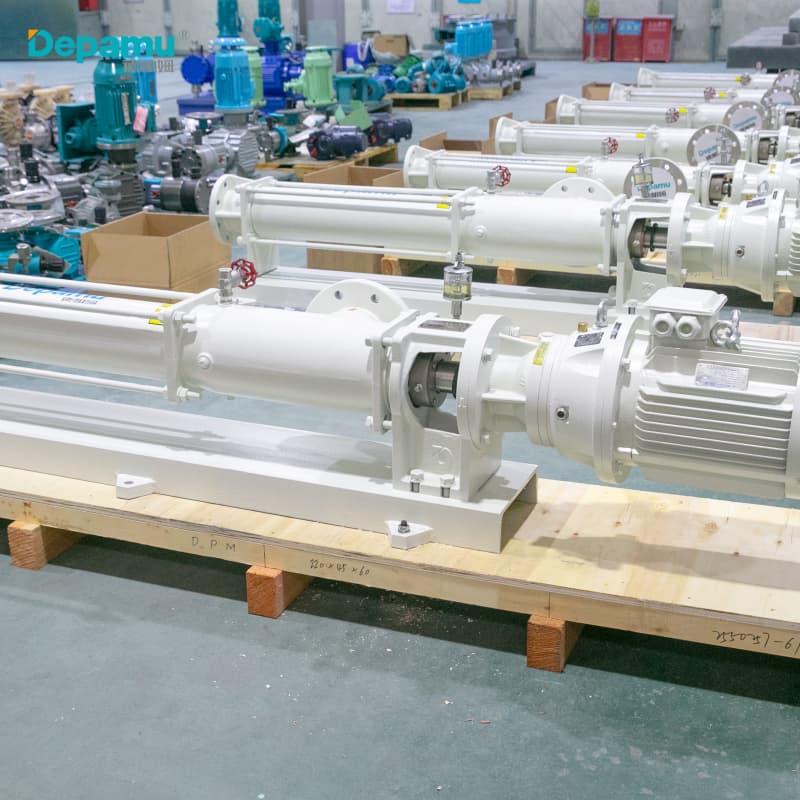
The Bilge Challenge and the Screw Pump Solution
The bilge water found in the lower decks of a ship is far from pure water. It is a challenging, often corrosive mixture of seawater, condensation, lubricating oils, fuel residues, detergents, and various solid particulates . Traditional centrifugal pumps, while effective for large volumes of clean water, struggle significantly with this mixture. They are prone to cavitation, lose suction when entrained with air or gas, and their impellers can be rapidly degraded by abrasive particles. This inherent vulnerability creates a critical safety risk: a pump failure during an emergency flooding scenario can be catastrophic.
This is where the positive displacement screw pump excels. Unlike centrifugal pumps that impart velocity to the fluid, screw pumps operate on a principle of containment and displacement. They feature one or more rotating screws (rotors) that intermesh within a tight-fitting stator or casing. This action creates a series of sealed cavities that progress axially, trapping the fluid and moving it smoothly from the suction to the discharge port . This mechanism provides a host of advantages that make the screw pump, especially high-pressure variants from manufacturers like Depamu, the preferred choice for bilge and general service applications in modern shipbuilding.
Key Advantages of Depamu High-Pressure Screw Pumps in Marine Applications
-
Superior Self-Priming and Suction Capability: One of the most significant operational challenges in bilge pumping is the presence of air in the line. A pump that loses its prime is useless in an emergency. Depamu Screw Pumps, and screw pumps in general, are renowned for their exceptional self-priming ability. They can generate a powerful suction lift capable of drawing water and air mixtures from depths of up to 8 meters and can handle gaseous media without interruption of supply . This "dry-running" capability, even for short periods, provides a critical safety margin that centrifugal pumps simply cannot offer .
-
Handling High Viscosity and Multi-Phase Fluids: The bilge is an emulsion of oil, water, and solids. Screw pumps are uniquely suited to handle this "sludge." They are not shear-sensitive and can effortlessly pump highly viscous liquids, from light fuel oils to heavy residual oils, with viscosities exceeding 1,000,000 centistokes . Furthermore, they are capable of moving multiphase mixtures (oil, water, and gas) without structural damage or performance loss . This versatility is invaluable, allowing the same pump to serve as a bilge pump, a sludge transfer pump, or a fuel oil service pump, simplifying shipboard inventory and maintenance.
-
A Flow Without Pulsation: The continuous, non-pulsating flow of the screw pump is a major advantage for system integrity. As the screws rotate, they create a constant axial flow that is virtually pulse-free . This characteristic minimizes shock and vibration within the piping network, reducing stress on the entire pumping system, reducing noise levels for crew comfort, and extending the lifespan of downstream components like valves and filters . In an environment where constant vibration is a given, minimizing it is a significant advantage.
-
High Efficiency and Energy Savings: The volumetric efficiency of a screw pump is high, and it maintains this efficiency across a wide range of pressures and viscosities. Because the internal clearances are precisely maintained, the pump can generate high discharge pressures (often up to 16 bar or 24 bar) with relatively low power consumption compared to other positive displacement or centrifugal options. This leads to significant energy savings over the vessel’s operational life .
-
Robust Construction and Reliability: The shipbuilding industry requires equipment built to last in a harsh, salt-laden environment. Depamu and other leading manufacturers offer screw pumps in a variety of robust materials including cast iron, ductile iron, stainless steel, and bronze . The design often features replaceable liners and corrosion-resistant coatings to combat wear and tear. The use of timing gears ensures that there is no metal-to-metal contact between the screws, allowing the pump to handle non-lubricating liquids and even run dry for short periods without catastrophic damage . This robust construction contributes to a long service life and high maintenance period, a critical factor for vessel owners looking to minimize downtime.
Technical Specifications and Operational Compliance
In the context of shipbuilding, compliance with international standards is non-negotiable. Pumps specified for critical applications like bilge and ballast systems must carry type-approval certifications from major classification societies such as the American Bureau of Shipping (ABS), Bureau Veritas (BV), Det Norske Veritas (DNV), Korean Register (KR), and Lloyd's Register (LR) .
Depamu pumps are designed with this in mind, offering a range of configurations—horizontal, vertical, and submersible—to suit different vessel layouts and installation requirements . The integration of features like built-on pressure relief valves for overload protection further enhances the safety and reliability of the system, making it a standard choice for both new builds and retrofits .
The application of the Depamu high-pressure screw bilge pump extends beyond mere water removal. It is a fundamental component for:
-
Bilge Pumping: The primary duty of removing accumulated water and oil mixtures from the engine room and other low points.
-
Ballast Pumping: Managing the ship's stability by moving seawater in and out of ballast tanks.
-
Cargo Pumping: Transferring high-viscosity cargoes like heavy fuel oil and bitumen.
-
General Service: Acting as a transfer pump for lube oil, diesel oil, and sludge within the engine room .
Conclusion
The high-pressure screw bilge pump from Depamu represents the pinnacle of a century of pump engineering, adapted to the rigorous demands of the 21st-century shipyard. Its unique ability to self-prime, handle a mixture of gases, liquids, and solids, and deliver a high-pressure, pulse-free flow makes it a far superior choice over traditional alternatives . By prioritizing reliability, efficiency, and compliance with stringent marine standards, Depamu is not just selling a pump; they are providing a guarantee of operational safety and efficiency.
In the high-stakes world of marine engineering, where the margin for error is virtually zero, the choice of a bilge pump is a decision of immense consequence. The adoption of the Depamu high-pressure screw pump is a testament to the industry's evolution toward proactive risk mitigation. It is an acknowledgment that the workhorse of the engine room must be more than just a pump; it must be a bastion of safety, ensuring that the vessel's crew and cargo remain secure, regardless of the conditions. As shipbuilding continues to push the boundaries of size and efficiency, the role of such robust, versatile, and reliable pumping technology will only become more pivotal .