

Depamu Chemical Injection Skid for Water Treatment
Introduction
In the realm of industrial water treatment, precision and reliability are paramount. Chemical injection systems serve as the critical interface between treatment chemicals and the water streams that require conditioning, purification, or protection. Among the industry leaders in this specialized field, Depamu (Hangzhou) Pumps Technology Co., Ltd. has established itself as a prominent manufacturer of chemical injection skids, offering comprehensive solutions for water treatment applications across multiple industrial sectors.
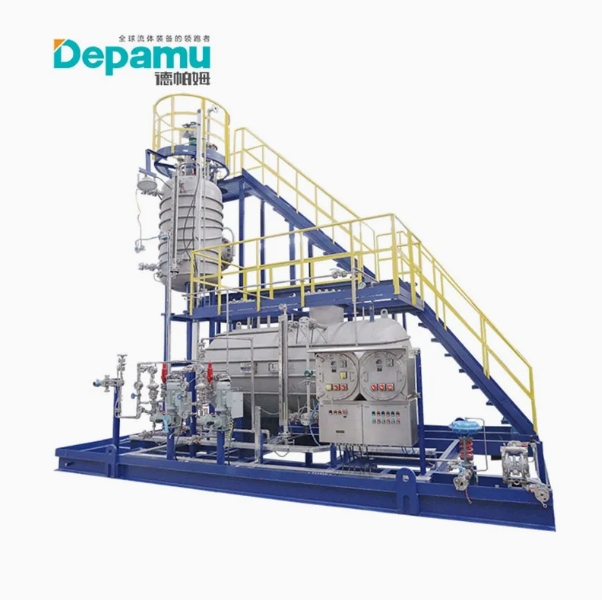
Depamu's chemical injection skids—particularly the DPJY series—represent a paradigm shift from traditional single-equipment or single-part design approaches. Through systematic design methodology and the integration of advanced production technologies from America, Germany, and Japan, these skids deliver fully integrated, pre-assembled systems that eliminate the inconsistencies and compatibility issues often encountered with piecemeal equipment procurement. This article provides a comprehensive examination of Depamu chemical injection skids for water treatment, exploring their design philosophy, core components, application scope, technical specifications, and operational advantages.
Core Components and System Architecture
A Depamu chemical injection skid is fundamentally a complete chemical dosing system—integrating tanks, pumps, pipework, valves, instruments, and controls onto a single, compact base frame. This skid-mounted approach ensures that the entire system is built, tested, and validated before it ever reaches the installation site, dramatically reducing on-site commissioning time and minimizing the risk of field integration errors.
Solution Tank
The solution tank serves as the primary storage and preparation vessel for treatment chemicals. Depamu offers tanks manufactured from a variety of materials to accommodate different chemical compatibilities and anti-corrosion requirements, including 304 stainless steel, 316 stainless steel, FRP (fiber-reinforced plastic), and PE (polyethylene). The selection of tank material is critical, as different water treatment chemicals—from aggressive acids and alkalis to gentle polymer flocculants—demand specific material compatibilities to ensure long-term system integrity and safety. Tank volumes typically range from 0.5 to 4 cubic meters depending on the specific application and dosing requirements.
Metering Pump
At the heart of every Depamu chemical injection skid is the metering pump, responsible for delivering precise, controllable volumes of chemical solution into the water stream. Depending on the application, Depamu offers various pump types including hydraulic Diaphragm Pumps, with flow capacities ranging from as low as 20 L/h for boiler water treatment applications up to 1,500 L/h for circulating water treatment systems. Discharge pressures are equally versatile, spanning from 0.3 MPa for standard circulating water applications to 32 MPa for high-pressure boiler feedwater treatment.
The metering pump's flow rate can be adjusted across a 0–100% range through variable speed control or stroke adjustment, providing exceptional dosing flexibility. This broad adjustment capability allows the same skid to accommodate varying treatment demands without requiring hardware modifications.
Mixing System
For applications requiring chemical dissolution or preparation—particularly with dry powder or granular chemicals—Depamu integrates mechanical mixers into the solution tank. These mixers ensure thorough homogenization of the chemical solution, preventing stratification and ensuring consistent dosing concentration. In automatic dissolving and Injection Packages, Depamu employs scientifically designed servo mechanisms and unique powder transport systems that prevent powder heating, caking, or sticking, thereby securing high injection precision.
Control System
The control system constitutes the "brain" of the Depamu chemical injection skid, enabling everything from basic local manual operation to fully automated, remotely supervised dosing. Electrical control cabinets can be configured for local manual control, semi-automatic operation, or fully automatic control based on specific technical requirements.
In automatic mode, the system receives input signals from various process analyzers—including flow rate meters, pH sensors, electrical conductivity monitors, and turbidity meters—and processes these signals through a PLC (Programmable Logic Controller), host computer, or DCS (Distributed Control System). Based on these real-time process measurements, the system automatically adjusts metering pump speed and stroke to maintain optimal chemical dosing. The frequency converter that drives the pump accepts standard 4–20 mA control signals, ensuring seamless integration with existing plant control infrastructure.
Ancillary Components
Beyond the primary components, Depamu chemical injection skids incorporate a comprehensive array of ancillary equipment including level gauges for tank monitoring, safety valves for overpressure protection, pressure gauges for system diagnostics, pulsation dampers for flow smoothing, convectors, various types of valves, complete pipe systems, support bases, and in larger configurations, stairways with handrails for safe access. Each component is carefully selected and integrated to ensure the entire system operates as a cohesive, reliable unit.
Applications in Water Treatment
Depamu chemical injection skids find application across a remarkably broad spectrum of water treatment scenarios, serving industries including thermal power generation, petroleum refining, chemical processing, natural gas, water supply, nuclear power, pharmaceutical manufacturing, and food processing.
Boiler Water Treatment
Boiler water treatment represents one of the most critical applications for Depamu chemical injection skids. In thermal power plants and industrial boiler systems, feedwater must be rigorously conditioned to prevent corrosion, scale formation, and carryover. Depamu offers specialized injection packages for ammonia injection, hydrazine injection, acetoxime injection, and phosphate injection.
Dissolved oxygen in boiler feedwater is a primary cause of thermal equipment corrosion, threatening safe boiler operation. Hydrazine injection into feedwater provides a chemical deoxidization approach that intensifies oxygen removal beyond what mechanical deaerators can achieve alone. The automatic hydrazine injection package from Depamu continuously monitors boiler operating conditions and automatically adjusts hydrazine dosing volume to maintain optimal concentration—preventing both under-dosing (which compromises corrosion protection) and over-dosing (which wastes chemicals and creates environmental concerns).
Circulating Water Treatment
Cooling water systems—whether in power plants, chemical facilities, or HVAC systems—require continuous chemical treatment to control scale, corrosion, and biological growth. Depamu's circulating water injection packages address these needs through specialized configurations for scale inhibitor injection, corrosion inhibitor injection, and germicide injection. Flow rates for these applications typically range from 50 to 1,500 L/h with discharge pressures of 0.3 to 2.0 MPa.
Raw Water Pretreatment
Raw water—whether sourced from surface water, groundwater, or municipal supplies—typically requires pretreatment before it can be used in industrial processes or consumed as potable water. Depamu offers raw water pretreatment injection packages for coagulant and flocculant addition (including PAC and PAM injection), pH adjustment, and disinfection. The DPJY-0.3X1-DPMSWAB10-14.5 model, for example, is specifically designed for raw water pretreatment applications.
Wastewater Treatment
Industrial and municipal wastewater treatment presents unique challenges that demand reliable chemical dosing. Depamu's wastewater injection packages handle flocculant injection, dispersant injection, acid injection, and alkali injection. Additionally, automatic dissolving and injection packages are specifically applicable to flocculation treatment for municipal or industrial wastewater, flocculation treatment during sludge dewatering processes, and drinking water purification. These systems can automatically and continuously prepare liquid media in different concentrations from dry powder and granular chemicals, which are then accurately injected into the process stream.
Specialized Applications
Beyond these primary categories, Depamu chemical injection skids support numerous specialized water treatment applications including:
-
Concentrated sulfuric acid injection for pH control and scale prevention
-
Reverse osmosis feed conditioning for membrane protection
Control and Automation Capabilities
The automation capabilities of Depamu chemical injection skids represent a significant advancement over traditional dosing systems. In fully automatic mode, the system continuously monitors key water quality parameters—flow rate, pH value, electrical conductivity, turbidity, and in specialized applications, dissolved oxygen content.
The PLC or DCS processes these signals and adjusts metering pump output accordingly, maintaining chemical concentrations within precise control bands. All signals related to pump and mixer status, as well as fault conditions, can be transmitted to the plant's DCS or host computer, enabling remote monitoring and control. Operators can remotely start or stop injection pumps as required, providing exceptional operational flexibility.
This level of automation delivers multiple benefits:
-
Consistent water quality through continuous, real-time adjustment
-
Chemical savings by preventing over-dosing
-
Reduced operator intervention freeing personnel for other tasks
-
Enhanced safety through remote operation and automated fault detection
-
Comprehensive data logging for compliance and optimization
Key Advantages of Depamu Chemical Injection Skids
Systematic Design Philosophy
Depamu's adoption of systematic design represents a fundamental departure from traditional approaches where individual components were specified and assembled separately. By designing the entire system as an integrated whole, Depamu eliminates the systematic differences and compatibility issues that plague piecemeal solutions. This holistic approach ensures that every component—from tank to pump to control system—works in harmony.
Modularity and Scalability
The modular design of Depamu chemical injection skids provides exceptional flexibility. Capacity and functionality can be readily extended as treatment demands evolve, protecting the capital investment and avoiding the need for complete system replacement. Users can select from various tank materials, pump types, and control configurations to match their specific requirements.
Pre-Engineered Reliability
Every Depamu chemical injection skid is engineered, assembled, and tested at the factory before shipment. This pre-engineering approach dramatically reduces on-site installation time, minimizes field integration risks, and ensures that the system arrives ready for commissioning. The plug-and-play nature of these skids is particularly valuable in remote locations or projects with tight schedules.
Material Versatility
Recognizing that different water treatment applications demand different material compatibilities, Depamu offers solution tanks in 304 stainless steel, 316 stainless steel, FRP, and PE. This material versatility ensures that the skid can handle aggressive chemicals—from concentrated acids to corrosive oxidizers—without compromising system integrity or service life.
Comprehensive Application Coverage
From boiler feedwater treatment to wastewater flocculation, from cooling water biocides to raw water coagulation, Depamu chemical injection skids address virtually every water treatment chemical dosing requirement. This breadth of application coverage makes Depamu a single-source solution provider for industrial water treatment needs.
Conclusion
Depamu chemical injection skids represent the convergence of advanced engineering, systematic design, and practical industrial experience. By integrating all necessary components—tanks, pumps, mixers, controls, piping, and instrumentation—onto a single, compact skid, Depamu delivers water treatment solutions that are reliable, precise, and easy to deploy.
The DPJY series, in particular, exemplifies Depamu's commitment to quality and innovation. Drawing on production technologies from America, Germany, and Japan while adapting to the practical realities of the Chinese industrial landscape, these injection packages meet the demanding requirements of industries ranging from thermal power generation to pharmaceutical manufacturing.
As water treatment challenges continue to evolve—driven by stricter environmental regulations, increasing water scarcity, and the need for greater operational efficiency—the role of reliable, accurate chemical injection systems becomes ever more critical. Depamu's chemical injection skids, with their robust construction, flexible configurations, and advanced automation capabilities, are well-positioned to meet these challenges, providing industrial water treatment professionals with the tools they need to maintain water quality, protect valuable equipment, and operate sustainably.