

Engineering Precision: The Depamu High-Pressure Diaphragm Pump for Ethylene Oxide Sterilization
Introduction
In the critical intersection of pharmaceutical manufacturing and industrial sterilization, few processes demand as much precision and safety as the handling of ethylene oxide (EO). This colorless gas, renowned for its exceptional ability to sterilize heat- and moisture-sensitive medical devices, presents a unique paradox: it is both indispensable and dangerous. Ethylene oxide is highly flammable, explosive, and toxic, requiring engineering solutions that prioritize absolute containment while maintaining process efficiency. At the heart of these systems lies the transfer pump—a component that, if it fails, can compromise entire sterilization batches and create hazardous operational conditions.
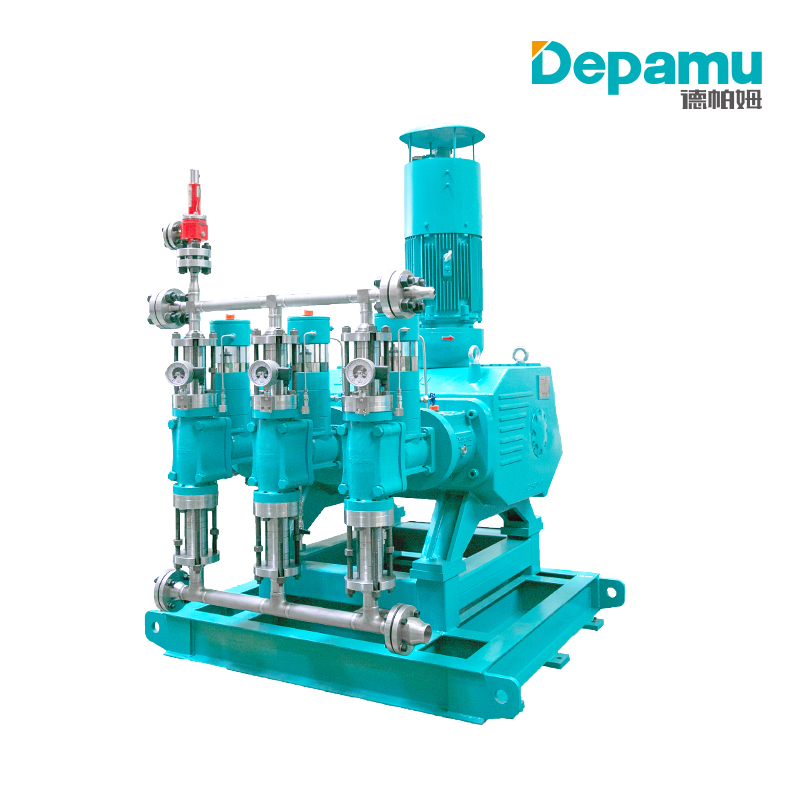
Among the specialized equipment addressing these challenges is Depamu's high-pressure diaphragm reciprocating pump, a device engineered specifically for the demanding task of ethylene oxide transfer. This article examines the technical specifications, safety features, and operational principles that make this pump a noteworthy solution in the sterilization industry.
The Challenge of Ethylene Oxide Transfer
Understanding the Depamu pump's significance requires first appreciating the difficulty of its intended application. Ethylene oxide sterilization is the method of choice for approximately 50% of all sterile medical devices, including surgical kits, catheters, syringes, and complex electronic equipment that cannot withstand high-temperature steam sterilization. The process involves exposing products to EO gas under controlled conditions of temperature, humidity, and pressure—typically in the range of 37°C to 63°C.
However, transferring EO from storage vessels to sterilization chambers introduces numerous engineering challenges. The gas is typically stored as a liquid under pressure, requiring pumps capable of handling varying states of matter. Its low boiling point (10.7°C) means that pressure fluctuations can cause unexpected vaporization, leading to cavitation and inconsistent flow rates. Furthermore, EO's molecular structure makes it an aggressive solvent, capable of degrading standard elastomers and seals.
The most critical requirement, however, is absolute containment. Ethylene oxide is classified as a Group 1 carcinogen by the International Agency for Research on Cancer, with occupational exposure limits typically set below 1 part per million over an eight-hour workday. Any leakage during transfer creates immediate health hazards and regulatory violations. This containment requirement eliminates centrifugal pumps—which rely on dynamic seals that inevitably weep—and points decisively toward diaphragm pump technology.
Depamu's Engineering Solution
The Depamu high-pressure diaphragm pump represents a considered response to these challenges. Based on the company's HD3H(M) series, which complies with American Petroleum Institute Standard API 674 for Reciprocating Pumps, this equipment is designed for what Depamu terms "extremely severe working conditions". The API 674 certification is significant; it indicates that the pump meets rigorous international standards for reliability, maintainability, and safety in critical service applications.
Reciprocating Diaphragm Architecture
Unlike centrifugal pumps that use rotating impellers, Depamu's pump employs a reciprocating diaphragm mechanism. The operational principle is straightforward yet effective: an electric motor drives a worm gear pair, converting rotary motion into reciprocating movement through an eccentric mechanism. This linear motion pushes a mechanical diaphragm—typically manufactured from PTFE (polytetrafluoroethylene)—through a stroke cycle that alternately creates suction and discharge pressures.
For ethylene oxide applications, this architecture offers inherent safety advantages. The diaphragm serves as a hermetic barrier between the pumped fluid and the pump's mechanical drive components. There are no rotating shaft seals penetrating the fluid chamber, eliminating the primary leakage path found in conventional pump designs. The fluid contacts only the diaphragm and the pump head materials, allowing complete control over chemical compatibility.
Material Selection for Chemical Compatibility
Depamu demonstrates material sophistication in constructing wetted components—the surfaces that contact ethylene oxide. The company offers pump heads machined from 304 stainless steel, 316 stainless steel, 316L (low-carbon variant), and various alloys including Hastelloy for extremely aggressive applications. For EO service, 316L stainless steel is typically specified due to its superior corrosion resistance and compatibility with the gas's chemical properties.
The diaphragm material selection is equally critical. Depamu utilizes PTFE diaphragms, which exhibit exceptional chemical resistance across nearly all industrial chemicals, including ethylene oxide. PTFE's non-stick surface properties also prevent EO residues from adhering to the diaphragm surface, maintaining pumping efficiency over extended periods. The company employs a mechanically driven PTFE diaphragm design without a protection plate on the feeding side, which allows smooth material transfer and safe operation.
Performance Specifications for Sterilization Applications
The technical literature identifies specific Depamu models applicable to ethylene oxide transfer, including the 3HD160G-MSD45-10 and 3HD120B-MSBD10.0-0.3W configurations. These models share core specifications that align well with sterilization facility requirements.
Flow Capacity and Pressure Capability
The pumps achieve maximum flow rates up to 42 cubic meters per hour, though typical sterilization applications require significantly lower flows. Ethylene oxide sterilization cycles generally involve controlled introduction of the gas into vacuum-evacuated chambers, with flow rates determined by chamber volume and desired concentration levels. The pump's high-pressure capability—extending to 41.6 MPa (approximately 6,000 psi) in certain configurations—far exceeds typical EO transfer requirements, providing substantial safety margins.
This pressure capability proves valuable for liquid EO transfer from storage cylinders or bulk tanks, where maintaining liquid state requires elevated pressures. The pump can handle the full range of EO conditions, from liquid transfer at high pressure to vapor recirculation at lower pressures.
Precision and Control
Sterilization efficacy depends on maintaining precise gas concentrations, typically in the range of 400 to 800 milligrams of EO per liter of chamber volume. Depamu's pump design supports this precision through adjustable flow control. The eccentric mechanism allows stroke adjustment from 0 to 100%, enabling operators to fine-tune flow rates while the pump operates—a feature designated as "stroke adjustment in static and dynamic state".
The manufacturer specifies steady-state accuracy at ±2% with a turndown ratio of 10:1, meaning the pump maintains accuracy across a tenfold range of flow rates. For a sterilization facility operating multiple chamber sizes or varying production loads, this flexibility allows the same pump to serve diverse applications without compromising precision.
Safety Engineering for Hazardous Service
The Depamu pump's most sophisticated features address the inherent risks of ethylene oxide handling. These safety systems operate on multiple levels, from primary containment to failure monitoring and emergency response.
Double Diaphragm Configuration
For hazardous services like EO, Depamu offers a double diaphragm pump head structure. This configuration incorporates two diaphragms with a monitoring chamber between them. Under normal operation, both diaphragms contain the process fluid. If the primary diaphragm fails, the secondary diaphragm maintains containment while the monitoring chamber detects pressure changes or fluid presence, alerting operators to schedule maintenance before any release occurs.
This redundant containment approach is considered best practice for toxic and flammable fluid handling, providing protection against catastrophic failure while enabling condition-based maintenance rather than arbitrary replacement schedules.
Leak-Free Operation
The API 674 design specification emphasizes leak-free operation, and Depamu's implementation delivers on this requirement. All fluid wetted components are contained within the pump head assembly, which is sealed with gaskets compatible with EO service. The reciprocating mechanism is isolated from the fluid by the diaphragm, eliminating the need for dynamic seals on rotating shafts—the most common source of pump leakage.
This design choice has significant practical implications for sterilization facilities. Pumps can be located in classified hazardous areas without requiring expensive purge systems or secondary containment enclosures. Maintenance activities focus on the predictable wear of diaphragms and check valves rather than unpredictable seal failures.
Temperature and Pressure Monitoring
Modern Depamu pumps configured for ethylene oxide service integrate instrumentation for continuous condition monitoring. Temperature sensors track both fluid temperature and power end operating temperatures, detecting developing issues before they result in failures. Pressure monitoring on both suction and discharge sides provides data for flow verification and leak detection.
For EO applications, temperature monitoring is particularly important due to the gas's low boiling point. If the pump experiences suction pressure drop or localized heating, the EO may flash to vapor, causing cavitation that damages internal components and disrupts flow rates. Monitoring systems can alert operators to these conditions or trigger automatic pump shutdown to prevent damage.
Operational Advantages in Sterilization Facilities
Beyond safety and precision, the Depamu pump offers practical operational benefits that sterilization facility managers will appreciate.
Compact Modular Design
The pump features what Depamu describes as a "compact modular structure" with "small size and light weight". This design philosophy recognizes that sterilization facilities often operate within existing spaces where equipment footprint is at a premium. The pump can be configured for horizontal or vertical installation, stationary or mobile mounting, adapting to facility constraints rather than requiring facility modifications.
The modular approach extends to maintenance. Individual components—check valves, diaphragms, seals—can be replaced without dismantling the entire pump assembly, minimizing downtime for scheduled maintenance. Depamu specifies maintenance intervals of 4,000 hours for pressures up to 1.0 MPa and 8,000 hours for lower pressure applications, providing predictable maintenance scheduling.
Integration with Sterilization Cycles
Ethylene oxide sterilization follows defined cycles typically lasting several hours, including preconditioning, sterilization, and aeration phases. The Depamu pump's electric motor drive enables precise control integration with facility automation systems. Variable frequency drive options allow flow modulation under programmable logic controller (PLC) direction, synchronizing pump operation with chamber pressure conditions and cycle requirements.
This integration capability extends to safety systems. The pump can interface with gas detection systems, emergency ventilation controls, and facility shutdown systems, automatically ceasing operation if unsafe conditions develop elsewhere in the process.
Low Noise Operation
Industrial facilities increasingly recognize noise as both an operator comfort issue and a regulatory compliance matter. Depamu emphasizes the "stable and reliable transmission at drive end with low noise" characteristic of their pump design. The use of double helical gears in the drive mechanism reduces vibration and acoustic emissions compared to straight-cut gear designs common in lower-cost pumps.
For facilities where sterilization equipment operates continuously, this noise reduction contributes to improved working conditions for operators and maintenance personnel who must work near the equipment.
Market Positioning and Value Proposition
The Depamu high-pressure diaphragm pump occupies a specific market position: serving ethylene oxide sterilization applications where safety and precision justify investment in premium equipment. The published price point for a model like the 3HD160G-MSD45-10 is approximately $35,621, positioning it as a significant capital investment.
However, the total cost of ownership analysis likely favors this equipment class. Lower-cost alternative pumping technologies—gear pumps, lobe pumps, packed plunger pumps—would require frequent seal replacement, risk leakage, and potentially fail to maintain the precise flow control required for sterilization validation. In regulated industries where process deviations require costly batch rejection and investigation, the reliability premium becomes justifiable.
Depamu's two-year warranty and API 674 compliance provide purchasing confidence for engineering and procurement professionals. The company offers customization options for materials, drive configurations, and mounting arrangements, recognizing that each sterilization facility has unique requirements.
Conclusion
The Depamu high-pressure diaphragm pump represents a thoughtful engineering response to the demanding requirements of ethylene oxide sterilization. Its reciprocating diaphragm architecture provides the absolute containment that EO's toxicity and flammability demand, while precision flow control supports the accurate gas concentration maintenance that sterilization efficacy requires.
For medical device manufacturers, pharmaceutical companies, and contract sterilization providers, the selection of transfer pumping equipment directly impacts product quality, worker safety, and regulatory compliance. The Depamu pump, with its API 674 design basis, double diaphragm configuration options, and compatibility with aggressive chemical service, merits consideration in this critical equipment category.
As the medical device industry continues to grow—driven by aging populations, expanding healthcare access, and technological innovation—the demand for reliable sterilization equipment will only increase. Pumps like Depamu's high-pressure diaphragm models provide the infrastructure enabling this growth, quietly and reliably performing the essential work of moving hazardous gases with precision and safety.