

Depamu Mechanical Diaphragm Metering Pumps: Precision Dosing for Chemical, Paper, and Wastewater Treatment Industries
Introduction
In the demanding landscape of industrial fluid handling, precision, reliability, and durability are not merely desirable attributes—they are operational imperatives. Mechanical Diaphragm Metering Pumps have emerged as indispensable workhorses across sectors where accurate chemical dosing directly impacts product quality, regulatory compliance, and process efficiency. Among the manufacturers addressing these rigorous requirements, DEPAMU has established a presence with its DP-Series mechanical diaphragm metering pumps, engineered specifically for the chemical processing, pulp and paper, and wastewater treatment industries. This article examines the technical characteristics, operational advantages, and application-specific benefits of DEPAMU's mechanical diaphragm metering pump technology.
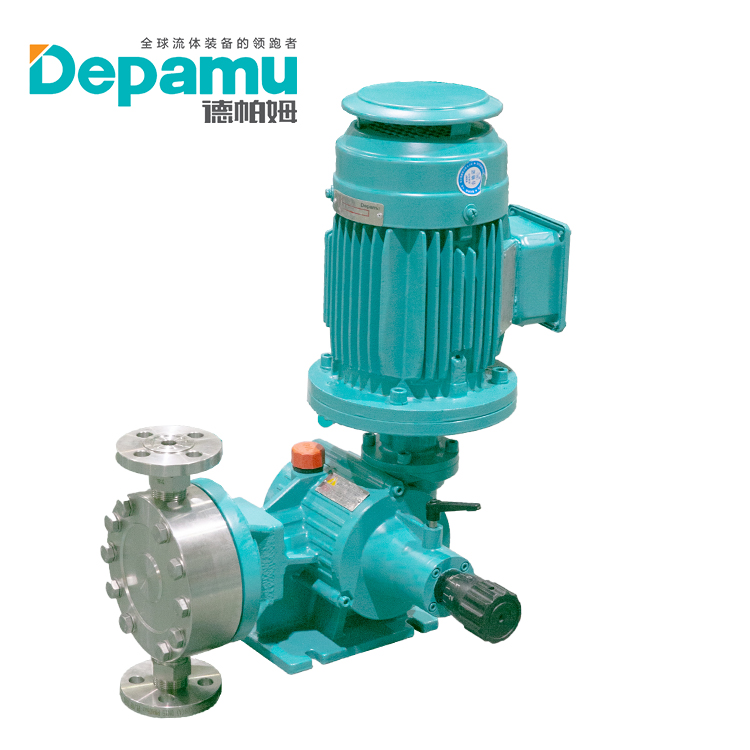
Operating Principle and Design Architecture
DEPAMU mechanical diaphragm metering pumps operate on a fundamentally sound electromechanical principle that ensures consistent, repeatable performance. The motor drives a worm gear pair, converting rotary motion into reciprocating movement through an eccentric mechanism. This reciprocating action drives the slide rod, which in turn causes the mechanical diaphragm to undergo periodic deformation, enabling precise fluid suction and discharge .
This design philosophy offers several distinct advantages. The mechanical actuation eliminates the need for hydraulic fluid systems found in hydraulically actuated Diaphragm Pumps, reducing potential leak points and maintenance complexity. The PTFE diaphragm, driven without a protection plate on the feeding side, ensures smooth material transfer and safe operation while maintaining chemical compatibility with aggressive media .
Performance Specifications
The DP-Series encompasses a versatile range of models capable of meeting diverse application requirements. Flow rates extend up to 3200 L/h per head, with maximum discharge pressures reaching 0.6 MPa for the larger models and up to 1.2 MPa for smaller configurations .
Key performance metrics include:
-
Steady-state accuracy: ±2%, ensuring dosing consistency essential for chemical processes and water treatment applications
-
Turndown ratio: 10:1, providing flexibility across varying flow demands without sacrificing accuracy
-
Temperature range: Compatible with fluids up to 40°C for PVC pump heads and 80°C for PTFE configurations
-
Suction lift capability: 4 meters maximum suction head lift, enabling flexible installation configurations
These specifications position DEPAMU pumps competitively within the mechanical diaphragm metering pump segment, aligning with industry standards for accuracy and turndown capability .
Material Selection and Chemical Compatibility
One of the defining features of Depamu metering pumps is the extensive range of wetted materials available. Pump heads can be specified in 304 stainless steel, 316 stainless steel, 316L stainless steel, PVC, PVDF, PP, and PTFE . This material versatility is critical for chemical processing applications where corrosion resistance and chemical compatibility determine equipment service life and process purity.
For paper industry applications, where aggressive bleaching chemicals are commonly handled, the availability of stainless steel liquid ends provides necessary corrosion resistance. In wastewater treatment, PVC and PVDF options offer cost-effective solutions for handling sodium hypochlorite, ferric chloride, aluminum sulfate, and other coagulants .
Chemical Processing Industry Applications
The chemical industry demands dosing equipment that can handle a wide spectrum of fluids, from corrosive acids to viscous polymers. DEPAMU mechanical diaphragm metering pumps address these requirements through several design features:
The self-cleaning check valve structure minimizes the risk of blockage, a common challenge when handling chemicals that precipitate or crystallize . The absence of dynamic seals on the liquid side eliminates a potential leak path, enhancing safety when pumping hazardous chemicals .
Flow rate can be adjusted in both static and dynamic states across the full 0-100% range, with options for manual, electric, and variable frequency stroke adjustment . This flexibility enables fine-tuned dosing control essential for chemical reactions requiring precise stoichiometric ratios.
The bath lubrication system for drive parts ensures extended service life, with maintenance intervals extending to 8000 hours for pressures up to 0.7 MPa . This reduces downtime and maintenance costs—critical considerations in continuous chemical production environments.
Paper Industry Considerations
The pulp and paper industry presents unique challenges for metering pumps. Chemical dosing applications include bleaching chemicals (chlorine dioxide, hydrogen peroxide, sodium hydroxide), retention aids, sizing agents, and biocides. These fluids often have high viscosities or contain particulates that can challenge conventional pump designs.
DEPAMU pumps address these challenges through robust construction and material options compatible with paper industry process fluids. The mechanical diaphragm design handles viscosities effectively, similar to comparable products in the market that demonstrate capability with fluids exceeding 5000 cps .
The ability to multiplex pumps (multiple pump heads driven by a single drive) offers paper mills the advantage of dosing multiple chemicals from a single equipment footprint—an efficiency consideration in space-constrained mill environments.
Wastewater Treatment Applications
Perhaps the most widespread application for mechanical diaphragm metering pumps is in water and wastewater treatment. DEPAMU pumps are specifically positioned for treatment processes for municipal water, industrial water, and wastewater .
In wastewater treatment, these pumps reliably inject chemicals including:
-
Ferric chloride and aluminum sulfate: For coagulation and flocculation processes
-
Sodium hydroxide and acids: For pH control and adjustment
-
Polymers: For sludge conditioning and dewatering
The challenges of off-gassing chemicals such as sodium hypochlorite are well-documented in the industry. While DEPAMU documentation does not specifically address gas-handling features, the mechanical diaphragm design inherently provides certain advantages over other pump types, and the self-priming capability helps maintain prime . Modern mechanical diaphragm metering pumps increasingly incorporate features to address this challenge, including automated venting and flow detection .
Operational Advantages
Several operational characteristics make DEPAMU mechanical diaphragm metering pumps particularly suitable for industrial applications:
Stroke Adjustment Flexibility: Flow rate adjustment capability across 0-100% range, with options for manual or automated control, enables adaptation to changing process conditions without pump replacement .
No Leakage: The mechanically actuated diaphragm eliminates the need for dynamic seals, creating a completely sealed liquid end that prevents leak paths—essential for environmental compliance and operator safety .
Long Maintenance Intervals: With maintenance periods extending to 8000 hours, these pumps reduce the frequency of service interventions, improving overall equipment effectiveness .
Compact Installation: The cast aluminum housing provides good heat dissipation with lightweight construction, and the ability to install above solution tanks enhances installation flexibility .
Comparative Considerations
When evaluating DEPAMU pumps against alternatives, several factors merit consideration. Hydraulically actuated diaphragm pumps generally offer higher pressure capabilities and slightly better metering accuracy (often ±1% compared to ±2% for mechanical designs) . However, Hydraulic Pumps introduce complexity with oil replenishment systems and potential for hydraulic fluid contamination.
Peristaltic pumps offer advantages in handling solids-laden fluids and simple maintenance through tube replacement. However, mechanical diaphragm pumps excel at higher pressure applications and typically offer longer service intervals .
For facilities seeking the right balance of accuracy, durability, simplicity, and cost-effectiveness, DEPAMU mechanical diaphragm metering pumps represent a strong value proposition.
Conclusion
DEPAMU mechanical diaphragm metering pumps deliver the precision, reliability, and chemical compatibility required across the chemical processing, pulp and paper, and wastewater treatment industries. With flow rates up to 3200 L/h, pressures to 1.2 MPa, and accuracy of ±2%, these pumps meet the demanding requirements of modern industrial dosing applications.
The extensive material selection—encompassing stainless steels, PVC, PVDF, and PTFE—ensures compatibility with aggressive chemicals commonly encountered in these sectors. The mechanically actuated diaphragm design eliminates dynamic seals, providing leak-free operation and reduced maintenance. Stroke adjustment options provide operational flexibility, while robust construction supports extended service life.
As industrial processes continue to demand tighter control, greater efficiency, and enhanced reliability, the role of precision metering equipment becomes increasingly critical. DEPAMU mechanical diaphragm metering pumps offer a solution that balances performance, durability, and value—making them a practical choice for engineers and operations professionals seeking dependable chemical dosing across challenging industrial applications