

Depamu Sanitary Type Electric Operated Diaphragm Pump: Redefining Hygienic Fluid Transfer for Modern Industries
In industries where fluid purity, operational safety, and zero cross-contamination are non-negotiable, the choice of transfer equipment can make or break the entire production chain. From pharmaceutical formulation and food processing to biotech manufacturing and cosmetic production, even the smallest leak, residual buildup, or material incompatibility can compromise product quality, regulatory compliance, and consumer trust. This is exactly where the Depamu Sanitary Type Electric Operated Diaphragm Pump steps in: a purpose-built fluid handling solution designed to merge the inherent leak-proof advantages of diaphragm technology with the strict hygienic standards that today’s regulated sectors demand. Unlike generic industrial pumps that treat “sanitation” as an afterthought, this Depamu model was engineered from the ground up to treat hygiene as its core design principle, delivering consistent, reliable performance even in the most sensitive operating environments.
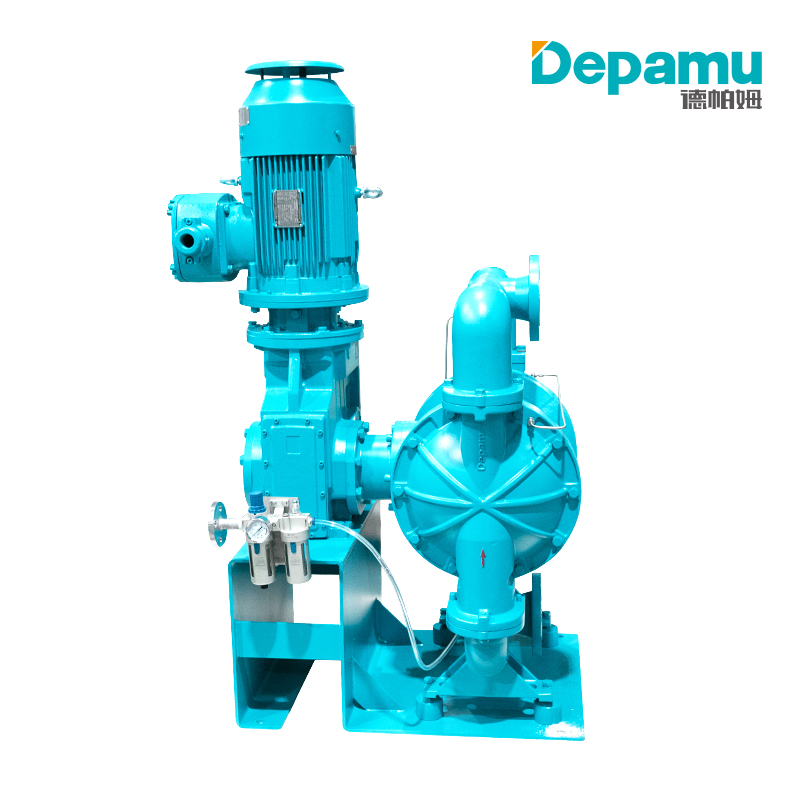
The Core Design Philosophy: Hygiene at Every Layer
At first glance, many pumps on the market claim to be “sanitary,” but the difference between a marketing label and a truly hygienic piece of equipment lies in hundreds of small, intentional design decisions. The Depamu Sanitary Electric Diaphragm Pump does not rely on coatings or post-production modifications to earn its sanitary classification. Instead, every component that comes into contact with process fluid is selected, shaped, and finished to meet global sanitary benchmarks. The wetted body is typically forged from high-grade 316L stainless steel, a material celebrated for its exceptional resistance to corrosion, its low carbon content that prevents carbide precipitation during welding, and its ability to withstand repeated exposure to aggressive cleaning agents without pitting or degradation. For facilities handling highly acidic, alkaline, or chemically aggressive media, optional PTFE or polished 304 stainless steel configurations are also available, ensuring full compatibility with the specific properties of the fluid being transferred.
One of the most critical sanitary advantages of this pump is its complete absence of dynamic shaft seals. In traditional centrifugal or rotary positive displacement pumps, a rotating shaft must pass through the pump casing, creating an unavoidable gap that requires packing, mechanical seals, or gland systems to prevent leakage. These seal areas are notorious for trapping residual product, harboring bacteria, and creating hidden dead zones that are almost impossible to fully clean. Over time, these trapped residues can spoil batches, introduce unwanted microorganisms, or cause unexpected chemical reactions with new process fluids. The Depamu sanitary electric diaphragm pump eliminates this entire weak point. Its double-diaphragm, motor-driven design keeps the process fluid fully contained within the closed pump chamber, completely separated from the electric motor, gearbox, and all external mechanical components. There is no point where a moving part penetrates the fluid path, so there is simply no location for unplanned leakage, microbial ingress, or cross-contamination to occur.
The surface finish of all wetted parts is another area where Depamu’s attention to sanitary detail stands out. The internal walls of the pump chamber, valve seats, and fluid passageways are precision-polished to a mirror-smooth Ra value that meets 3A and EHEDG standards. This ultra-smooth finish does not just look clean—it actively prevents tiny particles, protein films, or sticky residues from adhering to the metal surface. Even after hours of transferring viscous food pastes, concentrated pharmaceutical syrups, or nutrient-dense cell culture media, the pump interior remains far easier to rinse completely than the rough, uneven surfaces found on standard industrial pumps. The pump also eliminates unnecessary crevices, threaded joints inside the fluid path, and hidden corners where product could stagnate. Instead, all connections on the sanitary model use clamp-style quick-fit fittings, which allow operators to disassemble, inspect, and reassemble the entire fluid path in minutes without specialized tools.
How It Works: Reliable, Gentle, and Consistent Performance
The Depamu sanitary electric diaphragm pump operates on a proven, refined mechanical principle that balances gentle fluid handling with steady, predictable delivery. The system is driven by a standard electric motor, connected to a precision-engineered reduction gearbox that converts rotational motion into smooth reciprocating movement. This motion drives a set of carefully calibrated connecting rods, which move two synchronized, high-performance sanitary diaphragms back and forth in opposite phases. As the first diaphragm retracts, it creates a controlled vacuum inside its corresponding pump chamber, opening the inlet check valve and drawing process fluid into the cavity. At the exact same moment, the second diaphragm advances, gently compressing the fluid in its own chamber and pushing it out through the discharge check valve. The two diaphragms alternate their suction and discharge strokes continuously, creating a near-pulsation-free flow that moves fluid through the line without violent agitation, shear stress, or sudden pressure spikes.
This operating mechanism delivers a set of performance characteristics that are uniquely valuable for sanitary applications. First, the pump can run dry for short periods without immediate damage, a feature that drastically reduces the risk of accidental downtime during line changeovers, tank switchovers, or when operators temporarily forget to prime the system. Unlike many other sanitary pump types that will seize, overheat, or destroy critical components within seconds of running empty, the Depamu sanitary diaphragm pump is engineered to tolerate idle operation without catastrophic failure, giving maintenance teams far more flexibility during daily workflow. Second, it can easily handle fluids with a very wide viscosity range, from thin, watery ingredients like purified water or injection solutions all the way up to thick, sticky media like honey, cosmetic creams, or concentrated pharmaceutical slurries. It can also reliably pass small, soft suspended particles without clogging or damaging the product, making it suitable for transferring fruit pulps, probiotic suspensions, and other particle-containing fluids that many other hygienic pumps struggle to process.
Flow rate and pressure control are another major strength of the Depamu design. The pump comes equipped with an integrated patented adjustable eccentric transmission mechanism that allows operators to modify the stroke length anywhere from 0% to 100% while the pump is running. This means users can fine-tune the exact volume of fluid being transferred in real time, adjusting for changes in batch size, line pressure, or production speed without needing to swap out pulleys, change motors, or install external flow control valves. For facilities that need to maintain precise, repeatable dosing volumes for recipe formulation, this level of control ensures batch-to-batch consistency that would be extremely difficult to achieve with less flexible pump technology. The pump’s internal safety and compensation valve systems automatically manage pressure spikes during operation, venting excess pressure safely and refilling hydraulic fluid as needed, eliminating the risk of overpressurizing lines or damaging sensitive downstream equipment.
Real-World Applications Across Sanitary Industries
The versatility of the Depamu Sanitary Electric Operated Diaphragm Pump becomes most apparent when examining how it performs across different high-hygiene industry sectors. In the pharmaceutical and biotech space, where even a single unapproved foreign particle or microbial colony can lead to full batch rejection, regulatory audit failures, and costly product recalls, this pump has become a trusted workhorse. It is routinely used to transfer active pharmaceutical ingredients (APIs), sterile water for injection, buffer solutions, vaccine intermediates, and labile biologic products that cannot tolerate shear force. Its fully drainable design ensures that every last drop of high-value product can be recovered from the pump chamber, minimizing material waste and maximizing yield for expensive production batches. The pump’s compatibility with Clean-in-Place (CIP) and Sterilize-in-Place (SIP) protocols is another major advantage for pharma teams: operators can circulate hot cleaning solutions, caustic washes, and steam through the entire fluid path without disassembling the pump, ensuring full, validated sanitization that meets the strictest GMP requirements.
In the food and beverage industry, where natural flavor, nutritional value, and freshness are top priorities, the pump’s gentle transfer action is transformative. It can move delicate products like yogurt, fruit juice concentrates, craft beer, liquid dairy, salad dressings, and chocolate syrups without breaking down suspended fruit fibers, damaging living probiotic cultures, or introducing unwanted aeration that would spoil taste and texture. Unlike shear-intensive centrifugal pumps that can turn smooth cream into a separated, lumpy mess, the Depamu diaphragm pump moves these products with the soft, steady motion that preserves their original quality. The polished stainless steel surfaces resist buildup of sugar residues, milk proteins, and food oils, making post-production rinsing far faster and more water-efficient. For small craft producers and large-scale industrial food factories alike, this translates to less product waste, shorter changeover times between different product runs, and a dramatically lower risk of allergen cross-contamination when switching between recipes that contain different common allergens.
The cosmetic and personal care sector also benefits enormously from this pump’s sanitary design. Manufacturers regularly transfer thick, expensive media like face serums, lotions, shampoos, essential oil blends, and wax-based cosmetic formulations, all of which require zero contamination and zero product degradation during handling. The Depamu sanitary pump does not react with sensitive cosmetic ingredients, does not leach unwanted chemicals into the formula, and can be completely cleaned between batches to prevent cross-scent or cross-color contamination that would ruin an entire production run. Even in specialty sanitary sectors like fine chemical processing for high-purity cosmetics raw materials, or specialty chemical production for food-safe additives, the pump’s ability to handle mildly corrosive, high-purity fluids without contamination makes it an ideal choice.
Long-Term Value, Safety, and Operational Sustainability
Beyond its immediate performance and hygiene benefits, the Depamu Sanitary Electric Operated Diaphragm Pump is built to deliver exceptional long-term value for facilities that invest in it. The elimination of dynamic shaft seals means there are far fewer wearable parts that need regular replacement. There are no mechanical seal faces that can crack, no packing gaskets that can wear down and start leaking, and no frequent seal maintenance routines that pull operators away from other critical production tasks. This drastically reduces the total cost of ownership over the pump’s service life, cuts down on unplanned maintenance shutdowns, and creates a far more predictable operational budget. The diaphragms themselves are manufactured from premium-grade, sanitary-certified materials that are formulated to withstand millions of reciprocation cycles, even when running continuously for 24-hour production schedules.
Operational safety is another cornerstone of the pump’s design. For facilities handling flammable process fluids, alcohol-based sanitizer ingredients, or other potentially hazardous media, the fully sealed fluid path prevents any process vapors from escaping into the work environment, eliminating a major fire and exposure risk. Explosion-proof motor configurations are also available for production zones classified as hazardous locations, ensuring full compliance with workplace safety regulations. The pump does not require any compressed air supply to operate, unlike pneumatic diaphragm pumps that rely on a continuous, high-volume clean air system. This makes it far easier to install in existing facilities that do not have a high-capacity sanitary compressed air network, and eliminates the energy costs, noise, and air quality concerns that come with running large industrial air compressors for fluid transfer.
When it comes to sustainability, the Depamu sanitary electric pump also outperforms many competing technologies. Its electric drive system is far more energy efficient than equivalent pneumatic pumps, which typically waste large amounts of compressed air through exhaust during operation. The pump’s ability to fully drain every batch and eliminate trapped residual product reduces raw material waste, cutting down on the amount of valuable ingredients that end up being discarded as cleaning waste. The extended service life of all components, combined with easy access to replacement parts, means the pump can stay in reliable service for many years, rather than being discarded after a short operational lifespan. This aligns perfectly with the modern industrial trend toward circular manufacturing, reduced resource consumption, and lower overall environmental impact for sanitary production facilities.
Looking Ahead: The Future of Sanitary Fluid Handling
As global regulatory standards for hygienic production continue to grow stricter, and as industries place ever higher value on product safety, operational efficiency, and traceability, the role of purpose-built sanitary transfer equipment will only become more central. The Depamu Sanitary Type Electric Operated Diaphragm Pump represents a major step forward in this evolution, proving that it is possible to combine zero-leak reliability, full hygienic compliance, gentle fluid handling, and long-term operational value in a single, accessible piece of equipment. It is not just a pump that moves fluid from one tank to another—it is a critical system component that protects product quality, simplifies regulatory validation, reduces operational risk, and helps manufacturers deliver safer, more consistent products to their customers.
For any production facility operating in a sanitary-sensitive sector that is still struggling with leak-prone pumps, hard-to-clean fluid paths, frequent product contamination incidents, or high maintenance costs, upgrading to a purpose-designed sanitary electric diaphragm pump is not just an equipment purchase—it is an investment in the long-term stability, compliance, and reputation of the entire operation. As Depamu continues to refine this platform, adding new smart monitoring capabilities, digital flow tracking features, and even more advanced hygienic material options, this pump is set to remain a benchmark for sanitary fluid transfer technology for many years to come.