

Depamu Twin Screw Pump: The Versatile Solution for Fluid Water and Oil Transfer
Introduction
In the complex landscape of industrial fluid handling, the ability to transfer different media with a single, reliable piece of equipment is the hallmark of engineering efficiency. Among the various technologies available—from centrifugal pumps to Diaphragm Pumps—the twin screw pump occupies a unique position, offering the ability to handle both low-viscosity fluids like water and high-viscosity hydrocarbons like crude oil with equal finesse .
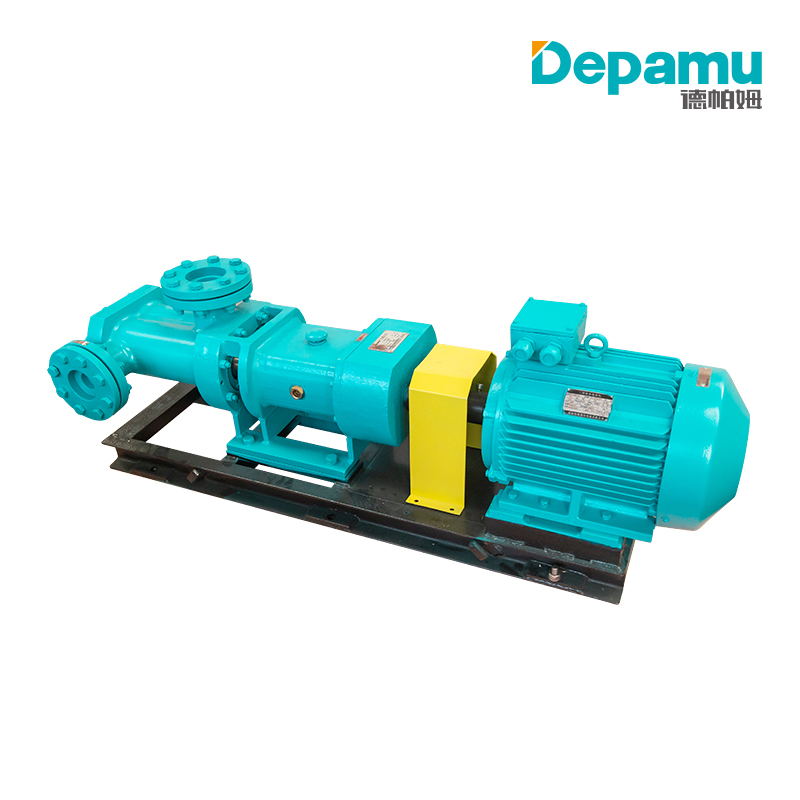
Depamu (Hangzhou) Pump Technology Co., Ltd., a high-tech enterprise based in Hangzhou’s Qiantang District, has emerged as a leader in this field. With over 100 technical patents and a strategic partnership with German engineering principles, Depamu has refined the twin screw pump into a device that not only moves fluid but does so with minimal pulsation, high suction lift, and remarkable energy efficiency .
This article provides a comprehensive analysis of the Depamu twin screw pump, exploring its engineering principles, material science, operational advantages, and specific applications in water and oil industries.
1. The Engineering Behind the Depamu Twin Screw Pump
1.1 The Principle of Progressive Cavities
Unlike centrifugal pumps that rely on high-speed impellers to fling fluid outward, or Reciprocating Pumps that use pistons to displace volumes, the Depamu twin screw pump operates on the principle of positive displacement. At its core are two synchronized, intermeshing screw rotors—typically one right-handed and one left-handed—housed within a precision-engineered liner .
As the rotors turn in opposite directions, cavities form at the suction end of the pump. These cavities progressively increase in volume, drawing fluid into the housing. The fluid is trapped between the rotor threads and the casing. As the screws continue to rotate, these cavities move axially along the pump, carrying the fluid smoothly toward the discharge port without turbulence or agitation .
1.2 Key Differentiators from Single Screw Pumps
It is crucial to distinguish the twin screw design from Depamu’s single screw (progressive cavity) pumps. A single screw pump uses a single metal rotor turning inside an elastic rubber stator, making it ideal for highly abrasive slurries and high-viscosity pastes (up to 1,000,000 CP) . However, the Depamu twin screw pump features two metal rotors that do not necessarily contact each other (timing gear-driven) or contact the liner with minimal clearance.
This distinction gives the twin screw pump a critical advantage: high pressure capability and the ability to handle non-Newtonian fluids and low-lubricity fluids like water. While single screw pumps excel at sludge and shear-sensitive foods, twin screw pumps are the preferred choice for oil transfer, chemical processing, and marine applications where high flow rates and medium-to-high pressures are required .
2. Technical Specifications and Construction
Depamu’s twin screw pump series is built following rigorous international standards, including API 676 (American Petroleum Institute standard for rotary positive displacement pumps) . This compliance ensures that the pumps are suitable for the most demanding refinery and offshore environments.
2.1 Material Science: The "German Technology" Edge
Depamu integrates German manufacturing technology, which is evident in the material selection . For handling water and oil, the pump bodies are typically constructed from:
-
High-Grade Cast Iron (GGG40): For general water and light oil applications, offering a balance of strength and cost-effectiveness.
-
Stainless Steel (304/316/316L): For corrosive environments, such as seawater transfer, chemical wash water, or emulsified oils containing acids .
The internal screws (rotors) are treated with specialized coatings. Depamu utilizes surface spraying technology and wear-resistant alloys to ensure that when pumping "difficult" media—such as produced water (oil mixed with sand)—the screws do not degrade prematurely .
2.2 Timing Gear Technology
One of the most critical components of a true twin screw pump is the timing gear. Located in a separate gearbox housing, the timing gears ensure that the two screws rotate in perfect synchronization without metal-to-metal contact inside the pump chamber .
This design allows the Depamu twin screw pump to run "dry" for short periods and handle non-lubricating fluids (like solvents or water) without seizure. For oil applications, this is vital during startup or when the pipeline runs dry.
2.3 Shaft Sealing Solutions
Leakage is the enemy of any pumping operation, especially when dealing with toxic hydrocarbons or expensive processed water. Depamu offers multiple sealing configurations for the twin screw pump:
-
Single Mechanical Seal: Standard for water and non-hazardous oils.
-
Cartridge Mechanical Seal: For easy maintenance.
-
API 682 Compliant Seals: For refinery and oilfield applications, including Plan 11, 52, and 53A support systems to ensure zero emissions .
3. Fluid Dynamics: Water vs. Oil
The true versatility of the Depamu twin screw pump lies in its ability to handle two extremes of the viscosity spectrum: water and oil.
3.1 Pumping Water (Low Viscosity)
Water poses a specific challenge for many positive displacement pumps. Because water is a low-viscosity fluid (1 cP), it tends to slip through internal clearances. Centrifugal pumps handle water well but lose efficiency if the pressure fluctuates.
The Depamu twin screw pump excels with water due to its tight internal clearances and high rotational speed capabilities.
-
Self-Priming: It is highly self-priming, capable of suction lifts up to 8-9 meters . This is invaluable for dewatering pits, drainage applications, or transferring water from tanks below grade.
-
Continuous Flow: Unlike diaphragm pumps, which create pulsating flow, the screw pump delivers a continuous, non-pulsating flow. This is critical for water treatment plants utilizing membrane filtration (UF/RO), where pulsation can damage membranes .
3.2 Pumping Oil (Medium to High Viscosity)
As viscosity increases (from 10 cP for light diesel to 10,000 cP for heavy crude), centrifugal pumps suffer from massive efficiency drops due to friction losses. The Depamu twin screw pump, however, increases in volumetric efficiency as viscosity rises because the fluid acts as a sealant.
-
Slip Reduction: The higher the viscosity, the less fluid slips back through the clearances, resulting in a near-perfect volumetric efficiency.
-
Multi-Phase Capability: Oil is rarely pure. Depamu twin screw pumps are designed for "gas-liquid-solid" mixing. They can handle crude oil with entrained gas (vapor) or sand without losing prime . This eliminates the need for costly separators upstream of the pump.
4. Operational Advantages
4.1 Low Shear and Emulsification Prevention
In oil extraction, emulsification (water mixing with oil to form a stable "mayonnaise" consistency) is a disaster for downstream refining. Centrifugal pumps act like blenders, violently agitating the mixture.
The Depamu twin screw pump operates at low rotational speeds (typically 500 to 1,500 rpm) with a laminar flow pattern. It moves the oil gently, preserving the natural fluid state and preventing costly demulsification processes later . Similarly, for industrial water applications, low shear prevents cavitation and damage to long-chain polymers used in treatment.
4.2 High Efficiency and Energy Savings
Because the Depamu twin screw pump uses a direct drive or reduced-speed gearbox with a vertical bevel gear design (as seen in Depamu’s drivetrain innovations), mechanical losses are minimized . The flow rate is directly proportional to the rotational speed (Q ∝ RPM). This allows operators to use Variable Frequency Drives (VFDs) to precisely match pump output to demand, saving electricity compared to throttling a centrifugal pump.
4.3 Maintenance and "In-Place" Repair
Downtime is expensive. The modular design of the Depamu pumps allows for online maintenance. In many configurations, the back pull-out design allows the rotating assembly (bearings, seals, and timing gears) to be removed and serviced without disconnecting the pump from the pipeline .
5. Application Case Studies
5.1 Scenario A: Crude Oil Transfer in a Refinery
The Challenge: A refinery needs to transfer heavy crude oil with 5% sand content and 10% dissolved gas from storage tanks to the processing unit. Traditional centrifugal pumps cavitate due to the gas and erode due to the sand.
The Depamu Solution: A twin screw pump with hardened steel screws and a replaceable liner.
-
Outcome: The pump strips the gas out of the oil without losing prime. The low shear ensures the oil's viscosity remains stable for the API separators. The pump runs at 600 RPM, drastically reducing wear from the sand particles compared to a 3,000 RPM centrifugal pump .
5.2 Scenario B: Industrial Wastewater Management
The Challenge: A chemical plant requires moving untreated effluent containing water, chemical solvents, and occasional solid rags. They need to pump it to the treatment center 500 meters away.
The Depamu Solution: A twin screw pump with stainless steel construction and carbon face mechanical seals.
-
Outcome: The pump handles the varying viscosity (water today, solvent sludge tomorrow) automatically. The self-priming capability clears the lines after shutdowns without manual intervention .
7. Future-Proof Fluid Handling
Depamu is not content with just manufacturing pumps; they are part of the industrial revolution towards smart manufacturing. As a drafter of pump industry standards in China and a holder of the "Little Giant" status for specialized technology, Depamu integrates IoT capabilities into their pump skids .
For water and oil applications, this means:
-
Remote Monitoring: Sensors track the temperature, vibration, and flow rate of the twin screw pump in real-time.
-
Predictive Maintenance: Algorithms predict when seals or bearings will fail, preventing unplanned shutdowns in remote oil fields or water treatment facilities .
Furthermore, with the global push for sustainability, the energy efficiency of the twin screw pump significantly reduces the carbon footprint of fluid transfer. By moving fluid at lower speeds and higher efficiencies, Depamu helps operators achieve carbon reduction targets without sacrificing throughput.
Conclusion
The Depamu twin screw pump represents a convergence of German engineering rigor and Chinese manufacturing scalability. It stands as a highly versatile workhorse capable of bridging the gap between the watery depths of environmental engineering and the viscous demands of the petrochemical industry.
For engineers and procurement managers facing the challenge of "one fluid today, another tomorrow," the twin screw pump offers a future-proof solution. Whether it is the gentle handling of crude oil to prevent emulsion, the robust suction lift required for pit dewatering, or the compliance with API 676 standards for refinery safety, Depamu has demonstrated that their twin screw technology is up to the task .
By choosing Depamu, industries are not just buying a pump; they are investing in reliability, efficiency, and the technological heritage of a company that has spent two decades perfecting the art of fluid motion.