

Precision Dosing in Hostile Environments: The Depamu Chemical Injection Package for Oil & Gas Applications
Abstract
In the oil and gas industry, "flow assurance" is the discipline that ensures hydrocarbons move from reservoir to refinery without interruption. Among the most critical tools for maintaining this flow is the Chemical Injection Package (CIP). Depamu (Hangzhou) Pumps Technology Co., Ltd. has positioned itself as a significant player in this niche, offering the DPJY-series chemical injection skids. Designed for applications ranging from offshore LNG treatment to Enhanced Oil Recovery (EOR), Depamu’s units represent a synthesis of international engineering standards and modular manufacturing efficiency. This article provides a comprehensive technical analysis of the Depamu Chemical Injection Package, exploring its engineering features, component architecture, application scope, and compliance with international standards in the context of modern oilfield challenges such as corrosion, scaling, and hydrate formation.
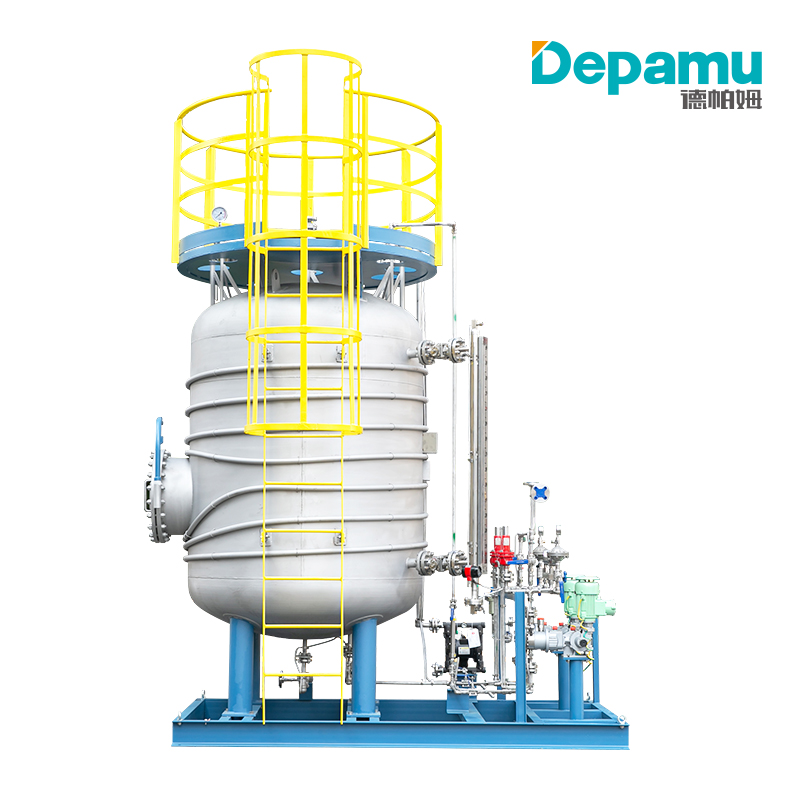
1. Introduction: The Role of Chemical Injection in Modern Energy Infrastructure
The extraction and transport of oil and natural gas involve a series of thermodynamic and chemical challenges. As reservoirs age and exploration moves into deeper waters or harsher terrains (such as the Niger Delta or Siberian Arctic), the raw production stream becomes increasingly problematic . Unrefined hydrocarbons often contain water, hydrogen sulfide (H2S), carbon dioxide (CO2), and paraffin. Without intervention, these elements cause rapid corrosion, the formation of gas hydrates (ice-like solids that block pipes), and emulsion viscosities that halt flow.
Chemical injection packages solve these problems by introducing precise volumes of specialty chemicals directly into the wellstream or downhole annulus . Unlike batch treatments, which are periodic, continuous injection via a CIP provides a persistent defense mechanism. The Depamu DPJY series is specifically engineered to meet these demands, providing a "plug-and-play" solution for upstream and midstream operators.
Depamu leverages manufacturing practices that incorporate design philosophies from the United States, Germany, and Japan, adapted for the rigorous conditions of the Chinese domestic market and international export . The result is a system that balances high-pressure performance with operational simplicity.
2. Core Engineering Design & Modular Architecture
The fundamental advantage of the Depamu package over "stick-built" (field-erected) systems is its skid-mounted, modular design.
Systematic Integration
Traditional chemical injection setups often suffer from "systematic differences" where pumps, tanks, and controls are sourced separately, leading to compatibility issues and bottlenecks. Depamu utilizes a systematic design approach. This means the hydraulic characteristics of the Metering Pump are perfectly matched to the viscosity of the chemical and the suction/discharge piping dynamics . By pre-engineering these relationships, Depamu eliminates the guesswork often encountered in field assembly.
Modularity and Expansion
The DPJY series utilizes a modular product structure. This is particularly beneficial for oil fields undergoing phased development. An operator can start with a single tank and dual pump configuration (e.g., 1 Tank + 2 Pumps) and, as production increases, add more pump heads or tanks without redesigning the entire chemical skid . This scalability reduces capital expenditure (CapEx) risks associated with future production uncertainty.
Material Selection for Aggressive Media
Oil and gas chemicals range from high-pH caustic fluids to low-pH acids and volatile solvents (like methanol). Depamu addresses this by offering a wide range of wetted materials. Depending on the specific application, components can be specified in:
-
Stainless Steel (SS 304/316L): For general corrosion resistance.
-
Polypropylene (PP) & PVDF: For specific acid handling.
-
Alloy/Hastelloy: For extreme sour gas environments with high H2S concentrations .
3. Component Breakdown: The Anatomy of a Depamu Skid
A chemical injection skid is only as strong as its weakest component. Depamu’s DPJY series integrates several critical sub-systems designed for continuous duty cycles.
3.1. Chemical Storage and Tanks
The system typically includes solution tanks ranging from 0.5 m³ to 20 m³ . These tanks are not merely vessels; they are engineered with specific considerations for viscosity and volatility. For example, demulsifier packages often require tanks with specific internal baffling to prevent separation of the chemical solution before it reaches the pump suction .
3.2. Metering Pumps (The Heart of the Package)
Depamu packages feature metering pumps that define the unit's performance envelope. The specifications typically cover:
-
Capacity: Ranging from 10 L/H for precise corrosion inhibitor injection up to 1500 L/H for scale inhibitors in water treatment .
-
Discharge Pressure: Capable of reaching up to 32 MPa (approximately 4,600 PSI), suitable for deep-well injection where wellhead pressures are substantial .
-
Drive Mechanisms: Options include hydraulic diaphragm and motor-driven plunger types. The hydraulic diaphragm is preferred for volatile fluids as it offers zero leakage to the atmosphere, a critical safety feature for handling carcinogenic substances like benzene or methanol.
3.3. Hydrate Inhibition (Methanol/Glycol Injection)
One of the most technically demanding applications for any CIP is hydrate suppression. In subsea pipelines, low temperatures and high pressures cause water and methane to crystallize. Depamu packages configured for Methanol (CH3OH) or Ethylene Glycol injection typically operate at the upper range of the pressure spectrum . The precision of the pump is vital here; under-injection leads to hydrate plugs, while over-injection wastes expensive chemicals.
3.4. Instrumentation & Control Logic
Modern oil fields require "smart" skids. Depamu units support multiple control modes:
-
Manual Mode: Local operation for maintenance and commissioning.
-
Automatic Mode: Utilizing flow meters and pressure transmitters to adjust pump stroke automatically based on flow rate changes in the main pipeline (ratio control) .
-
Remote SCADA Integration: The ability to interface with central control rooms, allowing operators to adjust setpoints from a safe distance .
4. Application Mapping: Oil & Gas Specific Formulations
Depamu categorizes its packages specifically for the "Petroleum, Natural Gas Exploitation, Gathering and Transportation" sector. The table below illustrates the specific chemicals handled and their respective engineering challenges solved by the DPJY series
For an oil and gas engineer, safety is the primary metric. Depamu’s status as an "Audited Supplier" with certifications like SGS and BV indicates adherence to international manufacturing standards . While specific API certifications can vary by project, the design parameters of the DPJY series align with the rigorous demands of API 675 (Controlled Volume Metering Pumps) .
Furthermore, the packages are designed to comply with explosion-proof requirements (Zone 2 classification, utilizing flameproof motors and enclosures) necessary for operating in volatile hydrocarbon atmospheres.
To understand the value of a product like Depamu’s, it helps to look at the market context. Projects such as the recent delivery of chemical injection skids to the Nigerian LNG fields (Soku and Gbaran) highlight what the industry demands: bespoke frames for existing concrete plinths, containerized transport for poor road networks, and remote monitoring capabilities .
Similarly, in the Middle East, sustainability is driving innovation. Major operators are now requiring solar-powered chemical injection packages to support net-zero targets, utilizing battery autonomy to run pumps for two days without sunlight .
Depamu’s modular design philosophy aligns with these trends. The ability to offer "manual mode" for simple remote wells and "fully automatic" for complex, high-value production lines makes the DPJY series a versatile competitor in the global market. Additionally, features such as pulsation dampeners and calibration columns, standard on these skids, ensure that flow rate accuracy remains within the ±1% tolerance required for custody transfer or precise chemical control .
From an operational standpoint, the Depamu package offers several distinct advantages:
Reduced Installation Time: Because the unit is fully assembled, wired, and tested at the factory in Hangzhou, it reduces field hook-up time. This is a significant cost saving, especially on offshore platforms where "space and weight" are premium commodities (often referred to as "cost per square meter").
Ease of Maintenance: The modular design allows for "hot swapping" of pump heads. If a diaphragm fails, the maintenance crew can isolate the single pump head without shutting down the entire chemical treatment train.
Safety: By integrating the tank, pump, and controls on a single skid with drip trays and double-walled piping (where specified), the risk of chemical spillage during transfer is minimized.
As the oil and gas industry moves towards digitalization, the role of the chemical injection package is evolving. It is no longer just a pump and a tank; it is a data hub. Future iterations of systems like the Depamu DPJY series are likely to emphasize:
Predictive Maintenance: Using vibration sensors on pump motors to predict diaphragm failure before it occurs.
Chemical Optimization: Real-time analysis of the produced fluid downstream to close the loop, automatically adjusting chemical dosage down to the exact ppm needed, reducing chemical waste by up to 30%.
Low-Power Solutions: Integration with solar or hybrid power systems for remote well pads .
The Depamu Chemical Injection Package represents a robust solution for the harsh realities of oil and gas extraction. By focusing on systematic engineering, modular design, and a broad range of application-specific configurations—from corrosion inhibition to hydrate suppression—Depamu provides operators with the tools necessary to ensure flow assurance and asset integrity.
In an industry where downtime can cost millions of dollars per day, the reliability of a pre-engineered, skid-mounted solution like the DPJY series is invaluable. It bridges the gap between simple chemical dosing and complex process automation, offering a scalable, safe, and efficient method for delivering life-saving chemicals to the heart of the production system.
5. Compliance and Quality Assurance
6. Case Study Context: Adapting to Extreme Environments
7. Operational Advantages and Maintenance
8. Future Outlook: Industry 4.0 and Chemical Management
Conclusion