

Depamu Metering Pumps for Conveying Magnetic Powder Slurry
Introduction
Magnetic powder slurry is a challenging medium encountered in industries ranging from magnetic material manufacturing and lithium battery production to coal preparation and metallurgical processing. This type of slurry combines the abrasive nature of fine magnetic particles with the settling tendencies and viscosity variations characteristic of solid-liquid suspensions. Conveying such media with precision and reliability demands pumping equipment that can withstand wear, prevent sedimentation, and maintain accurate dosing over extended operational periods. Depamu, a Hangzhou-based manufacturer of metering pumps, high-pressure Reciprocating Pumps, and complete dosing systems, has developed a range of pumping technologies that address precisely these challenges.
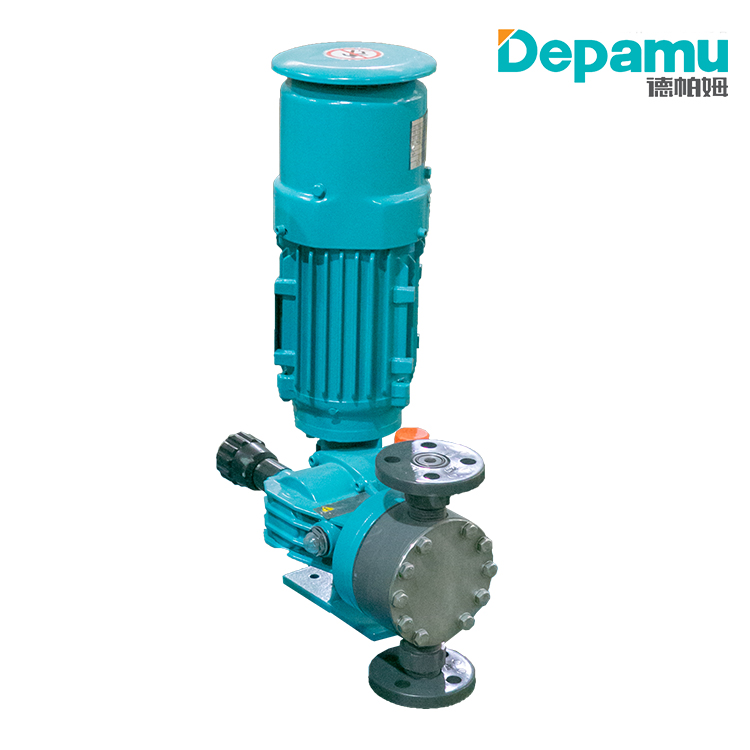
This article examines the technical characteristics of magnetic powder slurry, explores why conventional pumps often fall short in such applications, and analyzes how Depamu’s Hydraulic Diaphragm Metering Pumps, high-pressure hose pumps, and related technologies provide effective solutions for accurate and reliable conveyance of magnetic powder slurries.
Understanding Magnetic Powder Slurry
Magnetic powder slurry typically consists of fine magnetic particles—such as ferrite powder, neodymium-iron-boron particles, or iron oxide—suspended in a liquid carrier. These slurries exhibit several characteristics that complicate pumping operations. The solid particles are inherently abrasive, causing progressive wear on pump components that come into contact with the medium. The high density of magnetic materials accelerates settling, leading to sedimentation in pipelines and pump chambers during periods of low flow or shutdown. Additionally, the viscosity of these slurries can vary significantly with changes in solid concentration and temperature.
In coal preparation plants, for instance, slurry water containing magnetic powder is routinely used in heavy medium separation processes. The magnetite suspension must be recirculated with consistent density and flow rate to maintain separation efficiency. Similarly, in the production of ferrite magnets, fine magnetic powder is dispersed in a carrier liquid to form a slurry that must be delivered to forming presses or drying systems at controlled rates.
The conveying of magnetic material slurry has historically faced challenges including environmental pollution from leakage, low production efficiency due to manual handling, and inadequate automation. These factors have driven the development of specialized pumping solutions that can handle the unique demands of magnetic powder suspensions.
Challenges in Pumping Magnetic Slurry
The difficulties associated with pumping magnetic powder slurry stem from the interaction between the solid particles and the pump’s internal components. Abrasive wear is perhaps the most significant concern. Magnetic powders such as ferrites and rare-earth alloys are hard materials that can rapidly erode impellers, valve seats, diaphragms, and sealing surfaces. Conventional centrifugal pumps, for example, rely on close tolerances between the impeller and casing to generate flow; abrasive particles in the slurry can enlarge these clearances, leading to a rapid decline in pump performance.
Clogging and sedimentation present another set of problems. When flow velocity drops—during pump shutdown or at low dosing rates—magnetic particles tend to settle out of suspension. In a standard magnetic drive pump, solids can jam between the impeller and containment shell, causing damage or complete failure. Internal bearings and shaft support structures in such pumps are not designed for abrasion and degrade quickly when exposed to particulate-laden fluids.
Sealing is a third critical challenge. Magnetic slurries are often used in processes where leakage is unacceptable, whether for environmental, safety, or product quality reasons. Traditional mechanical seals are prone to failure in slurry service because abrasive particles become embedded in the seal faces, causing rapid wear and leakage. This is particularly problematic in applications involving hazardous or expensive magnetic materials.
Finally, many magnetic slurry processes demand accurate metering. In the production of magnetic materials, the ratio of powder to carrier liquid and the rate of addition to downstream processes directly affect product consistency. A pump that cannot maintain stable flow rates under varying conditions will compromise product quality.
Depamu’s Pump Technologies for Magnetic Slurry Applications
Depamu’s product portfolio encompasses several pump types that are well-suited to magnetic powder slurry applications. Among these, the hydraulic diaphragm metering pump and the high-pressure process hose pump stand out as particularly relevant solutions.
Hydraulic Diaphragm Metering Pumps
Depamu’s hydraulic diaphragm metering pumps, including the DP(M)WA and DP(M)XAA series, employ a design in which the hydraulic system is completely separated from the pumped medium. The plunger operates within a hydraulic oil chamber, and the diaphragm transmits pressure to the process fluid without any mechanical contact between the plunger and the slurry. This configuration is particularly advantageous for magnetic slurry because it eliminates the wear that would occur if the plunger directly contacted abrasive particles.
The diaphragm itself serves as a barrier between the hydraulic end and the process fluid. Depamu offers diaphragm options in PTFE and other materials, selected based on the chemical compatibility and temperature requirements of the specific application. A double-diaphragm assembly with pressure conduction or on-off alarm capability allows for real-time monitoring of diaphragm integrity, providing early warning of rupture and preventing process fluid from contaminating the hydraulic system.
The metering accuracy of these pumps is rated at ±0.5% within a flow adjustment range of 10% to 100%, ensuring precise dosing of magnetic slurry into downstream processes. The stroke can be adjusted steplessly from 0% to 100% through a patented integrated sleeve adjustable eccentric transmission mechanism, with adjustment options including manual, electrical, pneumatic, and frequency conversion modes.
For magnetic slurry applications, the high-precision inlet and outlet check valves are a critical feature. These valves are designed to ensure metering accuracy and fluidity, effectively preventing backflow that could cause particle accumulation and valve seat wear. The pump head can be fabricated from materials including 304, 316, 316L stainless steel, Hastelloy C, and high polymer materials, allowing selection based on the corrosivity and abrasiveness of the specific slurry.
High-Pressure Process Hose Pumps
For applications requiring the conveyance of magnetic slurry with high solid content and large particle sizes, Depamu’s high-pressure process hose pumps offer distinctive advantages. These pumps, designed in accordance with API 674 standards, are engineered specifically for the delivery of highly viscous fluids containing particles.
The operating principle of the hose pump involves a hose diaphragm that is cyclically squeezed by hydraulic oil. The driver transmits power through a reduction mechanism, converting rotary motion into reciprocating motion of a piston, which pushes hydraulic oil to act on the hose diaphragm. This causes the internal fluid chamber to compress and relax, producing volumetric changes that draw in and discharge the slurry through inlet and outlet check valves.
The key advantage of this design for magnetic slurry is that the process fluid is completely contained within the hose diaphragm, eliminating contact with the pump head and other metallic components. This separation prevents abrasive wear and ensures no leakage, even when handling hazardous or valuable magnetic materials. Depamu’s high-pressure hose pumps are suitable for media with a solid content of up to 80%, making them ideal for concentrated magnetic slurries.
The roller bearing connection in the connecting rod and main shaft of these pumps provides a small friction coefficient and low heat emission, allowing reliable operation at low speeds (rated speed below 60 r/min). This is particularly important for magnetic slurry, as low-speed operation reduces particle settling and minimizes shear that could damage the magnetic properties of certain materials.
Mechanical Diaphragm Metering Pumps
Depamu’s mechanical diaphragm metering pumps, such as the DP-Series 2DPMFXAA, offer another option for magnetic slurry applications where high flow rates are required. These pumps are capable of delivering up to 3,200 liters per hour per head, with a turndown ratio of 10:1 and steady-state accuracy of ±2%.
The two-cylinder design ensures a continuous and smooth flow with minimal pulsation, which is important for preventing sedimentation in pipelines downstream of the pump. The PTFE diaphragm is driven mechanically without a protection plate on the feeding side, allowing smooth material transfer and safe operation. Check valves feature a self-cleaning structure, which helps prevent particle accumulation and extends maintenance intervals.
Screw Pumps for Magnetic Slurry Transfer
Depamu also manufactures single screw pumps that are suitable for transporting media with high solid content. These pumps can handle particles up to 30 mm in size and are capable of conveying media with viscosities ranging from 1 mPa·s to 1,000,000 mPa·s. The screw pump design provides a gentle, non-shearing transfer that preserves the integrity of the magnetic particles and prevents agglomeration. The transportable media include those with high solid content, corrosive media across the pH range of 0 to 14, and mixed media containing gas, solid, or fiber.
Key Technical Advantages for Magnetic Slurry
Several design features across Depamu’s pump range contribute to their suitability for magnetic powder slurry conveyance.
The separation of the process fluid from the hydraulic end in diaphragm-type pumps is fundamental. By interposing a diaphragm between the hydraulic oil and the slurry, Depamu eliminates the wear that would otherwise occur when abrasive magnetic particles contact the plunger or piston. The diaphragm itself is subject to cyclic deformation, but its service life can be extended through proper material selection and the use of double-diaphragm configurations with rupture detection.
The hydraulic system in Depamu’s metering pumps incorporates an internal safety valve and a compensation valve that together enable automatic air discharge and oil replenishment. This feature ensures that the hydraulic chamber remains properly filled, maintaining consistent diaphragm movement and accurate metering even under conditions of varying back pressure. For magnetic slurry applications where process conditions may fluctuate, this self-regulating capability contributes to reliable operation.
The forced lubrication system in the power end of Depamu’s high-pressure hose pumps ensures long-term stable operation at very low speeds. A roller bearing connection in the connecting rod and main shaft accommodates low-speed operation without the adverse effects that would be experienced with bushing connections under sliding friction, where an oil film cannot form at low speeds.
Pulsation control is another important consideration for magnetic slurry systems. Excessive pulsation can cause pressure fluctuations that promote particle settling and may lead to pipe vibration and wear at connection points. Depamu addresses this through the use of double-cylinder configurations in mechanical Diaphragm Pumps and through the inherent smoothing effect of the hose pump design. Additionally, Depamu offers pulsation dampeners and bladder accumulators that can be integrated into the piping system to further reduce flow fluctuations.
The availability of multiple flow rate adjustment modes—manual, electrical, pneumatic, and frequency conversion—provides operational flexibility across different magnetic slurry processes. In batch operations, for example, electrical or pneumatic adjustment allows the pump to be integrated into automated control systems that adjust dosing rates based on signals from flow meters or level sensors. In continuous processes, frequency conversion enables the pump to track changes in demand with minimal operator intervention.
Application Scenarios
In the manufacturing of magnetic materials, magnetic powder is often mixed with a carrier liquid to form a slurry that is then shaped, pressed, or coated. Depamu metering pumps can be employed to transfer this slurry from mixing tanks to forming equipment at precisely controlled rates. The gentle, low-shear pumping action of screw pumps and the positive displacement of diaphragm pumps are both compatible with maintaining the homogeneity of the slurry.
The coal preparation industry provides another significant application. Magnetic powder, typically magnetite, is used to create a dense medium suspension for coal separation. The slurry must be circulated through the separation vessel and recovered for reuse. Depamu’s high-pressure hose pumps are particularly well-suited to this duty because they can handle high solid content (up to 80%) and are resistant to the abrasive wear caused by the magnetite particles. The low-speed operation also minimizes the degradation of the magnetite particles, preserving the density and magnetic properties of the medium.
In lithium battery production, magnetic materials may be present as contaminants or as components of certain electrode formulations. Diaphragm metering pumps can be used to dose slurries containing magnetic powders into mixing or coating processes. The leak-free design of Depamu’s diaphragm pumps ensures that valuable materials are not lost and that the working environment remains clean.
Environmental applications include the treatment of wastewater containing magnetic particles from industrial processes. Depamu’s automatic dissolving and Injection Packages are applicable to flocculation treatment for municipal or industrial wastewater, and can be adapted for the controlled addition of magnetic flocculants or adsorbents.
Selection Considerations
When specifying a Depamu pump for a magnetic powder slurry application, several factors should be evaluated. The particle size distribution of the magnetic powder determines the required internal clearances and the type of check valve that can be used without clogging. The solids concentration affects the viscosity and density of the slurry, which in turn influence the required pump power and the risk of sedimentation. The abrasiveness of the magnetic material dictates the selection of wetted materials and the expected maintenance interval.
Depamu offers customization options for pump heads, allowing the wetted parts to be specified in materials such as 316L stainless steel, Hastelloy C, or PTFE-lined configurations. For particularly challenging magnetic slurries, a consultation with Depamu’s engineering team can help determine the optimal pump configuration, including diaphragm material, valve type, and flow control mode.
Conclusion
The conveyance of magnetic powder slurry requires pumping solutions that can overcome the inherent challenges of abrasion, sedimentation, and the need for accurate metering. Depamu’s range of hydraulic diaphragm metering pumps, high-pressure hose pumps, mechanical diaphragm pumps, and screw pumps provides a variety of options that address these requirements through thoughtful engineering design. By separating the process fluid from vulnerable mechanical components, incorporating self-regulating hydraulic systems, and offering flexible flow control, Depamu pumps enable reliable and precise handling of magnetic slurries across industries including magnetic material production, coal preparation, and battery manufacturing. As industrial processes continue to demand higher precision and greater reliability in challenging fluid handling applications, Depamu’s pump technologies offer a dependable foundation for meeting these demands.