

The Cost of a Reciprocating Plunger Pump: Beyond the Purchase Order
The purchase order for a reciprocating plunger pump represents the smallest financial commitment an operator will make on the equipment. The number on that document—whether $5,000 for a small high-pressure unit or $55,000 for an ultra-high-pressure model—is a starting point, not a conclusion. What determines the true cost of a plunger pump is the cumulative, often unforgiving arithmetic of energy consumption, wear-part replacement, downtime, and the engineering choices made long before the pump enters service. A realistic accounting of these factors routinely reveals that the lifecycle cost of a pump outweighs its initial purchase investment by a factor of four to one. For a 100-horsepower unit operating continuously, energy costs alone over a 20-year cycle can exceed twenty times the initial purchase and installation cost. The cost of a reciprocating plunger pump, in other words, is a story told over years, not at the moment of sale.
The Acquisition Premium and What It Buys
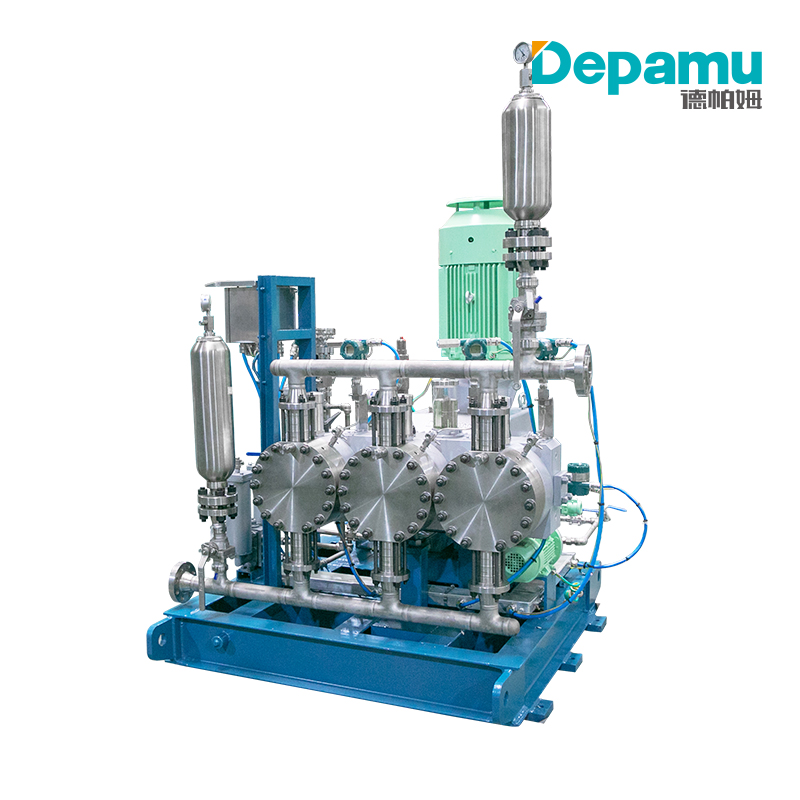
Reciprocating plunger pumps occupy a peculiar position in the industrial pump market. Their capital cost is generally medium-to-high relative to centrifugal and diaphragm alternatives. Entry-level high-pressure models from Chinese manufacturers list between $320 and $7,800, while API 674-compliant units engineered for oil and gas service begin around $15,000 and climb steeply with pressure rating, material specification, and certification requirements. Ultra-high-pressure Dosing Pumps capable of 1,000 bar or more command prices well into five figures. This premium is not arbitrary. It purchases a positive-displacement architecture that delivers volumetric efficiency of 90 to 100 percent, maintains flow against back-pressure that would stall a centrifugal pump, and generates pressures from 70 to 2,070 bar (1,000 to 30,000 psi) with metering accuracy as tight as ±0.5 percent. The acquisition cost, in this sense, is the price of admission to a performance envelope that no other pump class can match. The mistake is to treat that price as the whole bill.
Energy: The Dominant, Silent Cost
Across the operating life of a plunger pump, energy typically dominates the total cost of ownership. This dominance is both a burden and a competitive advantage. Because reciprocating plunger pumps convert shaft power to hydraulic power at efficiencies of 85 to 94 percent, they consume roughly 40 percent less energy than centrifugal pumps achieving equivalent flow rates. Over time, that efficiency gap translates into a decisive economic advantage: centrifugal alternatives in the same duty class can carry energy costs 1.4 to 1.9 times higher, and the savings from a plunger pump can exceed its initial equipment cost within the first few years of continuous operation.
The magnitude becomes clear only when energy is projected across a realistic service life. A relatively modest plunger dosing pump drawing around 1.3 kW incurs roughly $1,400 in annual electricity costs; a larger 6.3 kW unit consumes over $6,600 per year. For a high-volume process pump, the figures scale accordingly. In continuous-duty chemical and petroleum applications, the energy line item is not a secondary operating expense—it is the long-term financial identity of the pump. A purchaser who negotiates a favorable capital price but installs an inefficient or oversized unit has optimized the wrong variable.
Maintenance: The Cost of Being Sealed by Sliding Contact
The reciprocating plunger pump’s defining liability is mechanical: a precision-machined plunger must slide through packing that seals full discharge pressure on a moving surface. That sliding seal is inherently consumable. Standard packing requires service and replacement every two to three months under typical conditions; inlet and outlet check valves, subject to full differential pressure on every stroke, need attention every four to six months. In abrasive or corrosive service, the intervals shorten further.
These intervals carry direct costs in materials and labor, and they compound into a substantial annual maintenance figure. Documented annual maintenance costs for plunger pumps in industrial dosing service range from roughly $19,000 to over $28,000 per unit. A three-year comparison of a conventional packed plunger pump against a seal-less alternative placed total maintenance at $46,620 for the plunger pump, driven largely by packing replacement, plunger replacement, and valve-set changes. When packing is overtightened to control leakage, frictional drag increases the horsepower required to perform the same work, adding an energy penalty on top of the maintenance bill. Leakage that is tolerated for lubrication purposes represents both lost product and, in chemical service, an environmental and compliance exposure.
Material selection can alter this trajectory, but at a price. Ceramic plungers—alumina or zirconia—resist scoring and corrosion far better than hardened steel, maintain their surface finish longer, and can double or triple seal life; zirconia plungers are reported to last up to ten times longer than metal equivalents in wear-intensive service. The trade-off is a higher unit cost and brittleness that demands careful handling. Yet the total cost of ownership calculation often favors ceramic precisely because the maintenance interval extension and seal-life improvement overwhelm the initial material premium. The cheaper plunger is rarely the cheaper pump.
Downtime: The Cost That Does Not Appear on the Pump’s Invoice
For all the visibility of energy and maintenance expenses, the most consequential cost of a reciprocating plunger pump is the one that appears on someone else’s ledger: the cost of the process that stops when the pump does. In oil and gas operations, unplanned downtime averages around $220,000 per hour; in continuous chemical processes, figures range from $50,000 to $500,000 per hour, with extreme cases reaching $100,000 per hour solely from facility shutdown. A plunger pump is rarely a redundant asset. In high-pressure injection, metering, and process-feed duty, it is the critical link between upstream supply and downstream value creation. When packing fails catastrophically or a valve hangs, the pump does not merely require repair—it halts production.
This dimension reframes the entire cost discussion. A pump with a $25,000 annual maintenance bill but predictable, scheduled interventions may be far less expensive than a lower-maintenance unit whose failures are unannounced. The German Machinery Manufacturers Association’s survey of pump operators identified early failure detection as the single most critical development need, precisely because the financial damage of a plunger pump outage is dominated by lost production rather than repair cost. Condition monitoring, structured maintenance intervals, and the selection of designs with accessible fluid ends are not overhead costs; they are downtime insurance priced against losses that dwarf the pump itself.
Design Choices and the Shape of the Cost Curve
The cost profile of a plunger pump is not fixed at purchase. It is shaped by decisions about configuration, materials, and sealing strategy. A packed plunger pump and a seal-less, packing-free design may serve the same hydraulic duty, but their cost trajectories diverge sharply. The packed design carries lower initial complexity but higher recurring maintenance; the seal-less alternative eliminates packing and plunger exposure to the process fluid, dramatically reducing scheduled servicing and the risk of leaks, though it may carry a different capital and rebuild cost structure. Neither is universally superior. The appropriate choice depends on the fluid, the duty cycle, the acceptable maintenance burden, and the cost of a production interruption in that specific process.
What is universal is the logic of total cost of ownership. The purchase price of a reciprocating plunger pump is a real and necessary cost, but it is a minority shareholder in the financial life of the equipment. Energy consumption, consumable wear parts, maintenance labor, and the opportunity cost of downtime together constitute the overwhelming majority of what the pump will actually cost its owner. The operators who manage this cost most effectively are not those who negotiate the lowest capital price. They are those who specify for efficiency, select materials for the real operating environment, plan maintenance around production schedules rather than failures, and treat the pump as a lifecycle asset rather than a procurement line item. The cost of a reciprocating plunger pump, properly understood, is the cost of the decisions made before and after it is bolted to the floor—and those decisions, not the purchase order, determine whether the investment delivers reliable pressure or chronic financial drag.