


Depamu High Pressure Hydraulic Metering Chemical Metering Pump for Foaming Machine
Introduction
In the modern industrial landscape, precision fluid handling stands as a cornerstone of manufacturing excellence. Among the critical equipment enabling this precision is the metering pump—a positive displacement device designed to deliver accurate, repeatable flow rates of fluids against varying system pressures. Depamu (Hangzhou) Pumps Technology Co., Ltd., a Chinese high-tech enterprise established in 2003, has emerged as a leading manufacturer in this field. With over two decades of innovation, the company has developed a comprehensive range of metering pumps, including the high-pressure hydraulic metering chemical pumps that have found particular significance in foaming machine applications.
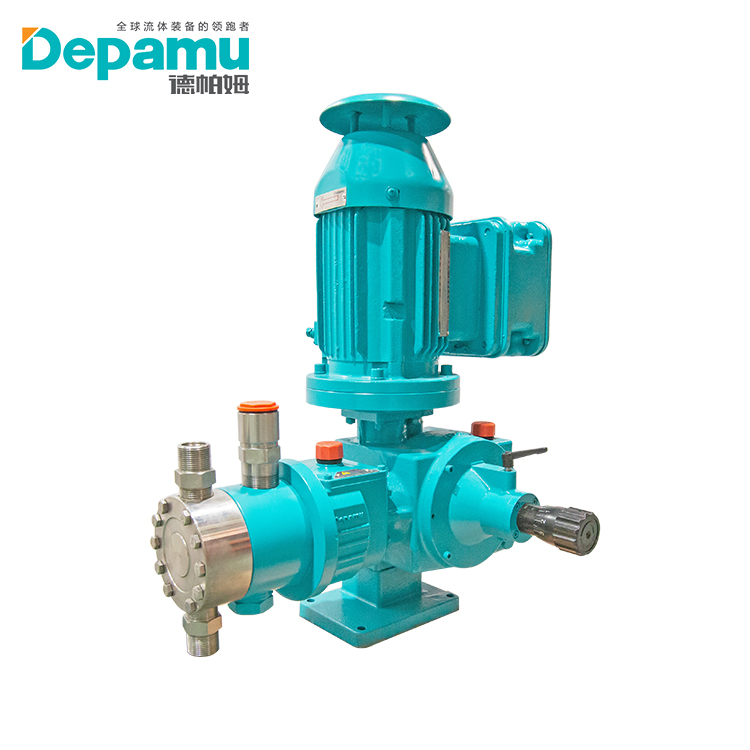
This article provides a comprehensive examination of Depamu's high-pressure hydraulic metering chemical metering pumps, with special emphasis on their application in foaming machines. It explores the technical specifications, working principles, design features, material selections, and operational advantages that make these pumps indispensable in foam production processes across industries ranging from plastics to construction and beyond.
Understanding the Depamu High Pressure Hydraulic Metering Pump
Product Overview
Depamu manufactures several series of high-pressure hydraulic metering pumps suitable for foaming applications, with the 2DP(M)WA and DP(M)ZA Plunger Metering Pump models being among the most prominent. These pumps are designed to handle the demanding requirements of modern industrial fluid transfer, particularly in applications involving high-viscosity, high-pressure, and high-temperature liquid media.
The product range extends to include the DP(M)XAA plunger metering hydraulic mortar pump and the 2DPMWA plunger metering pump, all sharing the core engineering philosophy of precision, durability, and operational reliability. The company's commitment to quality is evidenced by its certifications, including API, CE, ISO 9001, ISO 14001, and ISO 45001, as well as its status as a drafter of pump industry standards.
Technical Specifications
The technical parameters of Depamu's high-pressure hydraulic metering pumps demonstrate their capability for demanding foaming applications:
Flow Rate and Pressure Range: The single pump head flow rate ranges up to 12,100 L/H, while the pressure range extends to an impressive 228 MPa (approximately 33,000 psi). Some models, such as the 2DPWA series, are rated for pressures up to 95 MPa. This broad operating envelope allows these pumps to handle everything from low-viscosity chemical additives to highly viscous polyol and isocyanate components used in polyurethane foam production.
Metering Accuracy: The pumps achieve a metering accuracy of ±0.5% within a 10% to 100% flow rate adjustment range. This level of precision is critical in foaming operations, where the ratio between polyol and isocyanate components must be maintained within tight tolerances to ensure consistent foam quality, density, and cell structure.
Stroke Adjustment: The stroke can be adjusted steplessly from 0% to 100% through an integrated sleeve adjustable eccentric transmission mechanism. This feature enables precise flow rate control without the need for complex external valving or bypass systems.
Adjustment Modes: Flow rate adjustment is available in multiple configurations, including manual, electrical, pneumatic, and frequency conversion. Electric actuators can be integrated for remote automatic control, making these pumps suitable for modern automated foam production lines.
The Role of Metering Pumps in Foaming Machines
The Foaming Process
Foaming is a critical manufacturing process used across numerous industries, including construction (insulation panels), automotive (seats and interior components), furniture (cushions and mattresses), and packaging. The process typically involves mixing two or more reactive chemical components—most commonly polyol and isocyanate in polyurethane foam production—along with blowing agents, catalysts, and other additives.
The chemical reaction between these components generates heat and releases gas, causing the mixture to expand and form a cellular structure. The quality of the final foam product—its density, cell structure, mechanical properties, and thermal insulation performance—depends critically on the precise metering and mixing of these components.
Why Hydraulic Metering Pumps Are Essential
High-pressure hydraulic metering pumps are the preferred choice for foaming machines for several compelling reasons:
Precision Dosing: Foam quality depends on maintaining exact stoichiometric ratios between reactive components. Even minor deviations can result in defective foam with improper density, poor cell structure, or inadequate mechanical properties. Depamu's pumps, with their ±0.5% metering accuracy, provide the precision necessary for consistent foam production.
High-Pressure Capability: Modern high-pressure foaming machines operate at pressures that can exceed 20 MPa. The Depamu pumps' capability to handle pressures up to 228 MPa ensures compatibility with even the most demanding foaming systems.
Handling High-Viscosity Fluids: Polyol and isocyanate components, particularly those containing fillers or reinforcements, can exhibit high viscosity. Depamu's plunger-type pumps are specifically designed to handle such challenging fluids.
Pulse Reduction: The pumps can be configured with multiple heads in parallel—up to 12 heads—to reduce pulsation in the flow, ensuring smooth, continuous delivery to the mixing head.
Corrosion Resistance: The chemical components used in foam production can be corrosive. Depamu offers pump heads in various corrosion-resistant materials, including 304, 316, 316L stainless steels, Hastelloy C, and high polymer materials.
Design Features and Engineering Excellence
Working Principle
Depamu's hydraulic metering pumps operate on the reciprocating plunger principle. The plunger contacts the fluid directly, and the volume of the working chamber changes cyclically with the reciprocating motion of the plunger. This cyclic volume change causes the inlet and outlet check valves to open and close alternately, drawing fluid in during the suction stroke and discharging it during the compression stroke.
The hydraulic system provides the driving force for the plunger, offering smoother operation and better control compared to purely mechanical drive systems. This hydraulic actuation is particularly advantageous in high-pressure applications, where it reduces mechanical stress on components and extends service life.
Key Design Features
High-Performance Plunger and Sealing Components: Depamu employs high-performance plungers with specially designed stuffing and sealing components. These provide long service life and excellent sealing performance, which is essential when handling reactive chemicals that must be kept isolated from the environment and from each other.
High-Precision Check Valves: The inlet and outlet check valves are manufactured to high precision standards, ensuring metering accuracy and maintaining the fluidity of the pumped media. In foaming applications, this prevents backflow and ensures that the correct volume of each component reaches the mixing head.
Integrated Worm Gear Drive: The "Oude" worm gear pair for variable speed drive mechanism provides low-noise, high-efficiency power transmission. This is particularly important in production environments where noise reduction contributes to better working conditions.
Oil-Immersed Lubrication: The oil-immersed lubrication system ensures that transmission components can be used reliably for extended periods. This reduces maintenance requirements and downtime, which is critical for continuous foam production operations.
Integrated Sleeve Adjustable Eccentric Transmission: This patented mechanism is simple and reliable, allowing stroke adjustment from 0% to 100%. The stepless adjustment capability enables fine-tuning of flow rates to match specific production requirements.
Multiple Head Configurations: The pumps can be configured with two or multiple heads (up to 12) in parallel connection. This allows either transporting the same fluid to reduce pulsation or transporting multiple different media as a proportional pump. In foaming applications, this feature enables the simultaneous metering of polyol, isocyanate, and various additives from a single pump unit.
Safety Considerations
Depamu notes that since these pumps have no built-in safety relief device, it is recommended to install a relief valve on the outlet pipeline. This is particularly important in foaming applications where over-pressurization could lead to equipment damage or safety hazards.
Material Selection for Foaming Applications
The chemical environment in foam production can be aggressive, requiring careful selection of wetted materials. Depamu offers extensive material options for pump heads:
Stainless Steels (304, 316, 316L): These provide general corrosion resistance for most polyurethane foam applications and are suitable for handling polyol and isocyanate components under normal operating conditions.
Hastelloy C: This nickel-based alloy offers superior corrosion resistance for more aggressive chemical environments, including applications involving acidic catalysts or corrosive blowing agents.
High Polymer Materials: For applications requiring non-metallic wetted parts, Depamu offers high polymer material options that provide excellent chemical resistance and are suitable for specific foam formulations.
Special Alloys: Additional options include 904L, titanium alloys, and other specialized materials for demanding applications.
This material flexibility ensures that Depamu pumps can be tailored to handle virtually any foam chemistry, from standard flexible polyurethane foams to specialized rigid foams and integral skin foams.
Applications in the Foaming Industry
Polyurethane Foam Production
The primary application of Depamu's high-pressure hydraulic metering pumps in the foaming industry is in polyurethane foam production. Polyurethane foams are manufactured by reacting polyol and isocyanate in the presence of catalysts, blowing agents, and other additives. The precise metering of these components is essential for achieving the desired foam properties.
Depamu's pumps are particularly well-suited for:
Flexible Polyurethane Foam: Used in furniture, bedding, and automotive seating, flexible foam requires careful control of cell structure and density. The precise metering capability of Depamu pumps ensures consistent foam quality across production runs.
Rigid Polyurethane Foam: Used in insulation panels, refrigeration, and construction, rigid foam demands exact component ratios to achieve optimal thermal performance and dimensional stability.
Integral Skin Foam: Used in automotive interior components and sporting goods, integral skin foam requires precise control of the skin formation process, which depends on accurate component metering.
High-Pressure Foaming Machines: Depamu pumps are designed to integrate with high-pressure foaming systems, where the components are mixed at high pressure in a mixing head before being dispensed into molds.
Plastic Foaming
Beyond polyurethane, Depamu pumps find application in plastic foaming processes, including:
Polystyrene Foam: Used in packaging and insulation, polystyrene foam production requires accurate metering of blowing agents and additives.
PVC Foam: Used in construction and marine applications, PVC foam production involves the metering of plasticizers, stabilizers, and blowing agents.
Anti-Foam Injection
Depamu also offers specialized anti-foam Injection Packages featuring the DP-Series DPMFWA diaphragm metering pump. These systems are designed to control foam levels in various industrial processes, promoting smoother, more efficient operations.
Operational Advantages
Precision and Consistency
The ±0.5% metering accuracy of Depamu's pumps ensures that foam producers can maintain consistent product quality. This consistency translates to reduced waste, fewer rejects, and higher customer satisfaction.
Durability and Reliability
With high-performance components, robust construction, and oil-immersed lubrication, Depamu pumps are engineered for long service life. This reliability minimizes downtime and maintenance costs, which is critical in continuous production environments.
Flexibility
The multiple adjustment modes (manual, electric, pneumatic, frequency conversion) and multiple head configurations provide the flexibility to adapt to changing production requirements. Whether scaling production up or down, or switching between different foam formulations, Depamu pumps can accommodate these changes.
Corrosion Resistance
The wide range of available materials ensures that the pumps can handle virtually any foam chemistry without degradation. This extends pump life and prevents contamination of the foam components.
Remote Control Capability
With electric actuators, Depamu pumps can be integrated into automated production systems for remote control and monitoring. This enables real-time adjustment of flow rates based on production parameters, further enhancing consistency and efficiency.
Company Background and Industry Recognition
Depamu (Hangzhou) Pumps Technology Co., Ltd. has established itself as a significant player in the global fluid equipment industry. The company's journey began in the early 1990s with the introduction of Hydraulic Diaphragm Metering Pumps, and it has since expanded to offer over 4,000 varieties and specifications of metering pumps and chemical pumps.
The company has introduced advanced technology and scientific management from Germany, focusing on research and development of fluid transfer equipment. This international collaboration has resulted in the acquisition of more than 20 patents, including 5 invention patents.
Depamu's achievements include winning the world's largest Indian oilfield polymer high-pressure reciprocating pump project in 2018, breaking the monopoly of European and American high-end equipment suppliers. The company has established long-term strategic partnerships with major enterprises including CNPC, SINOPEC, and CNOOC.
Products are exported to more than 50 countries and regions, including the United States, the United Kingdom, and France. The company's vision is to become the most competitive fluid equipment developer, manufacturer, and service supplier in the world, building Depamu into a century-old global brand.
Conclusion
Depamu's high-pressure hydraulic metering chemical metering pumps represent a sophisticated solution for the demanding requirements of foaming machine applications. With flow rates up to 12,100 L/H, pressures up to 228 MPa, and metering accuracy of ±0.5%, these pumps provide the precision, reliability, and flexibility that modern foam producers require.
The pumps' robust design features—including high-performance plungers and seals, precision check valves, integrated worm gear drives, and oil-immersed lubrication—ensure long service life and consistent performance even under the most demanding conditions. The availability of multiple material options for wetted parts allows customization for specific foam chemistries, from standard polyurethane formulations to specialized applications involving aggressive chemicals.
As the foaming industry continues to evolve, with increasing demands for product quality, production efficiency, and environmental sustainability, the role of precision metering equipment becomes ever more critical. Depamu's commitment to innovation, quality, and customer service positions its high-pressure hydraulic metering pumps as a reliable choice for foam producers worldwide.
Whether in polyurethane foam production, plastic foaming, or anti-foam injection applications, Depamu's pumps deliver the performance and reliability that modern industrial processes demand<