

The Technological Symbiosis of Tradition and Innovation: Depamu Metal Rotor Pump in Donkey-Hide Gelatin Production
Introduction
Donkey-hide gelatin, known as Ejiao in Chinese, represents one of the most prestigious and nutritionally dense ingredients in Traditional Chinese Medicine (TCM). For over 2,000 years, this remarkable substance has been prized for its profound health benefits, including its ability to nourish the blood, prevent miscarriage, and enhance overall vitality . However, the very properties that make donkey-hide gelatin so valuable—its extreme viscosity, thermal sensitivity, and tendency to solidify upon cooling—render it one of the most challenging materials to process in modern industrial manufacturing.
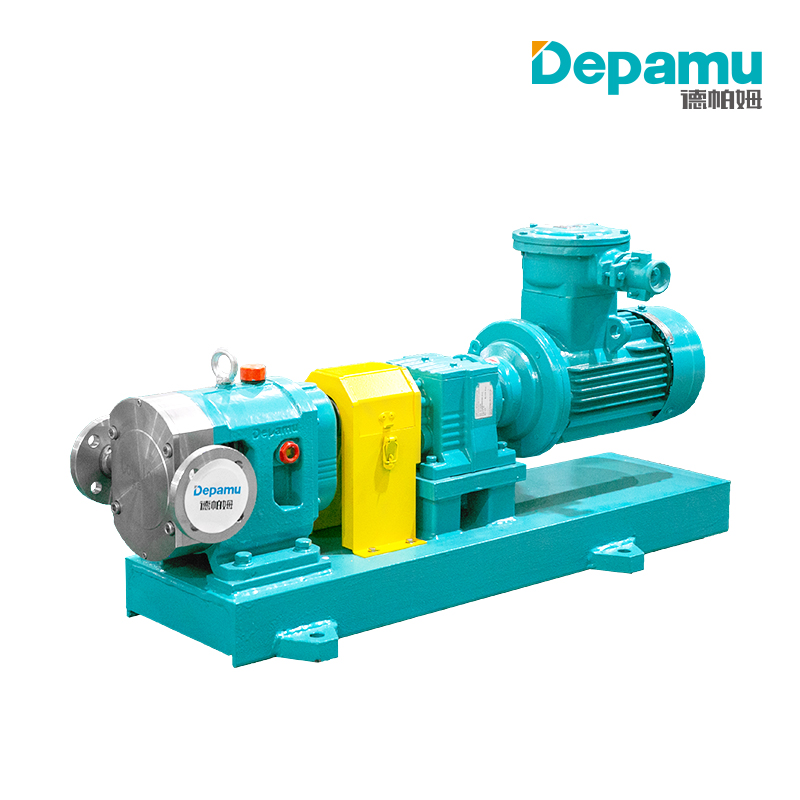
The production of high-quality donkey-hide gelatin demands equipment capable of navigating a perfect storm of engineering challenges: ultra-high viscosity, thermal degradation risks, particulate sensitivity, and stringent sanitary requirements. Enter the Depamu metal rotor pump, a technological marvel specifically engineered to address these exact challenges. This article explores the intricate relationship between this advanced pumping technology and the ancient art of Ejiao production, demonstrating how modern fluid handling solutions are preserving and enhancing a two-millennia-old tradition.
The Unique Properties of Donkey-Hide Gelatin
Understanding why standard pumps fail requires a deep dive into the material science of donkey-hide gelatin. The production process begins with donkey hides, which undergo extensive cleaning, soaking, and degreasing before being subjected to prolonged boiling. This extraction process yields a solution rich in collagen, amino acids, and trace elements.
During concentration, the viscosity of this solution can soar to staggering levels—often exceeding 1,000,000 centipoise (cP) . To contextualize, water measures approximately 1 cP, motor oil ranges from 100 to 500 cP, and peanut butter sits around 250,000 cP. Donkey-hide gelatin in its concentrated form surpasses all of these, behaving less like a liquid and more like a semi-solid mass .
This extreme viscosity creates several immediate challenges. Traditional centrifugal pumps, which rely on high-speed impellers to generate flow, experience cavitation and catastrophic performance loss when attempting to move such thick materials. The impellers spin without engaging the fluid, generating heat rather than flow. Additionally, donkey-hide gelatin exhibits non-Newtonian behavior, meaning its viscosity changes dramatically in response to shear stress, temperature, and flow rate. This unpredictability makes precise process control exceptionally difficult.
Limitations of Conventional Pumping Technologies
Before examining the Depamu solution, it is essential to understand why conventional pumping technologies fail when applied to Ejiao production.
Centrifugal pumps , the workhorses of the fluid processing industry, are fundamentally unsuitable for high-viscosity applications. Their performance curve degrades exponentially as viscosity increases, and they cannot generate sufficient suction lift to draw gelatin into the pump casing. Furthermore, the high shear forces generated by centrifugal impellers can degrade the delicate protein structures that give Ejiao its therapeutic properties.
Gear pumps , while better suited for viscous fluids than centrifugal designs, present their own challenges. The tight tolerances between meshing gears create significant shear forces that can break down the long molecular chains of collagen . Additionally, gear pumps struggle with the particulate matter sometimes present in unfiltered gelatin solutions, leading to accelerated wear and premature failure.
Progressive cavity pumps offer gentler handling but introduce contamination risks. These pumps rely on elastomeric stators that rotate against metallic rotors. The continuous friction generates heat and can shed microscopic elastomeric particles into the product stream—an unacceptable outcome for pharmaceutical-grade Ejiao intended for human consumption .
The Depamu Metal Rotor Pump: Engineered for Excellence
The Depamu metal rotor pump represents a paradigm shift in high-viscosity fluid handling. Designed specifically for applications that other pumps cannot handle, this positive displacement pump incorporates several key innovations that make it uniquely suited for donkey-hide gelatin production .
Working Principle
At its core, the Depamu metal rotor pump operates on a elegantly simple principle. Two or three lobed rotors—fabricated from high-grade stainless steel (304, 316, or 316L)—rotate synchronously within a precision-machined pump casing. Unlike gear pumps where rotors contact each other, Depamu rotors maintain a microscopic gap of just 0.05 to 0.3 millimeters between themselves and the pump housing . This gap, precisely calibrated based on the specific viscosity and characteristics of the gelatin being pumped, allows the liquid's natural surface tension to seal the chamber, preventing backflow without requiring metal-to-metal contact.
This non-contacting design represents a critical advantage. Without physical contact between moving parts, the pump generates minimal shear, produces no metallic wear particles, and can run dry without catastrophic failure. When the pump experiences a temporary interruption in feed—a common occurrence when switching between batch processing tanks—the mechanical seals, constructed from dry-run-resistant materials, continue to function normally for extended periods .
Low-Speed, High-Efficiency Operation
Perhaps the most significant advantage of the Depamu Rotor Pump is its ability to operate at low rotational speeds while maintaining high volumetric efficiency. While centrifugal pumps typically operate at 1,450 or 2,900 RPM, Depamu rotor pumps function effectively between 10 and 600 RPM . This low-speed operation yields multiple benefits for donkey-hide gelatin processing:
-
Minimal Shear Degradation: The gentle, positive displacement action preserves the long-chain collagen molecules that constitute Ejiao's active components.
-
Reduced Thermal Input: Lower rotational speeds generate significantly less frictional heat, preventing localized overheating that could denature heat-sensitive proteins.
-
Energy Efficiency: Operating at lower speeds consumes substantially less energy, reducing operational costs while improving sustainability.
The pump delivers impressive performance metrics across the board. Vertical self-priming capability reaches 8 meters or more, allowing the pump to draw gelatin from tanks without requiring the pump to be mounted below the fluid level . Flow rates are linearly proportional to rotational speed, providing precise, predictable control essential for recipe-based manufacturing. Maximum discharge pressure reaches 1.2 to 2.0 MPa depending on configuration, sufficient to move even the most concentrated gelatin through filters, heat exchangers, and filling systems .
Critical Advantages for Ejiao Production
Hygienic Design and Sanitary Compliance
Donkey-hide gelatin intended for pharmaceutical or premium food applications must meet rigorous sanitary standards. The Depamu pump's design reflects this requirement at every level. All product-contact surfaces are fabricated from corrosion-resistant stainless steel, typically 316L, which resists the slightly acidic nature of gelatin solutions and cleans easily .
Surface finishes can be specified to 0.2 to 0.6 micrometers Ra, with electro-polished options achieving 0.5 micrometers Ra or better . This mirror-like finish prevents bacterial adhesion and allows complete cleaning without死角 where contaminants could accumulate.
The pump fully supports Clean-in-Place (CIP) and Sterilize-in-Place (SIP) protocols. Between batches, operators can circulate cleaning solutions through the pump without disassembling it. For applications requiring sterility, the pump withstands the high temperatures and aggressive chemicals used in SIP cycles .
Perhaps most importantly for maintenance-focused operations, the pump incorporates a front-pull-out design. All wear components—rotors, seals, and liners—can be accessed and replaced by removing the front cover, without disconnecting piping or disturbing the drive motor. This design reduces maintenance downtime from hours to minutes, a critical advantage during high-volume production seasons .
Temperature Management
Donkey-hide gelatin presents a unique thermal challenge. It must remain hot during processing—typically between 60°C and 95°C—to maintain fluidity. Yet prolonged exposure to elevated temperatures can degrade product quality. If the temperature drops below approximately 40°C, the gelatin begins to set, potentially solidifying inside pipes and pumps and causing catastrophic blockages.
The Depamu pump addresses this challenge through several design features. Its compact, low-friction design minimizes heat generation during operation, preventing the localized overheating that can occur in high-shear pumps. Additionally, options for jacketed pump heads allow hot water or steam circulation to maintain optimal processing temperatures. For temperature-critical applications, heating elements can be integrated directly into the pump housing, ensuring consistent thermal conditions throughout the transfer process .
Three-Phase Handling Capability
Real-world Ejiao production rarely deals with idealized, homogeneous fluids. The process generates three-phase mixtures containing:
-
Solid phase: Undissolved collagen fragments, connective tissue residues, or added ingredients such as goji berries or walnuts
-
Liquid phase: The gelatin solution itself
-
Gas phase: Entrained air bubbles introduced during mixing or boiling
Most pumps fail catastrophically when handling multiphase mixtures. Centrifugal pumps lose prime if gas exceeds a few percent. Gear pumps jam when solids enter the gear mesh. The Depamu rotor pump, however, excels at three-phase handling . Its positive displacement action moves gas, liquid, and solids simultaneously, with the flexible clearances allowing small solids to pass without damage. This capability eliminates the need for upstream deaeration or excessive filtration, simplifying the process while preserving desirable particulates.
Wide Viscosity Range
The Depamu pump handles viscosities spanning six orders of magnitude, from thin, water-like liquids (1 cP) to semi-solid pastes exceeding 2 million cP . This remarkable range means a single pump can serve multiple process stages, from transferring low-viscosity extraction liquor to moving fully concentrated gelatin ready for molding and drying.
Economic and Operational Benefits
Reduced Downtime and Maintenance Costs
Traditional pumps in Ejiao service typically require frequent maintenance. The combination of high viscosity, temperature cycling, and occasional dry running accelerates wear on seals, bearings, and rotating elements. Maintenance events can take hours or even days, requiring system draining, pump removal, and extensive reassembly.
The Depamu pump's robust construction and thoughtful design dramatically reduce maintenance frequency. The non-contacting rotor design eliminates wear between moving parts, while the selection of high-quality materials—duplex stainless steel shafts, silicon carbide mechanical seals, and FDA-compliant elastomers as needed—ensures long service life .
When maintenance eventually becomes necessary, the front-pull-out design allows a single technician to complete the job in under an hour. For a production facility operating 24/7 during peak seasons, this reduction in downtime translates directly to increased output and profitability.
Energy Efficiency
Despite its ability to handle extremely viscous fluids, the Depamu pump operates with volumetric efficiencies of 70 to 85 percent . This high efficiency stems from the pump's positive displacement principle, which delivers a fixed volume of fluid per revolution regardless of system pressure. In contrast, centrifugal pumps operating on viscous fluids suffer efficiency collapse, often falling below 20 percent.
Over a year of continuous operation, this efficiency difference represents substantial energy savings. For a facility running multiple pumps, the cumulative reduction in electricity consumption can significantly impact operating costs and environmental footprint.
Product Quality Preservation
Perhaps the most important benefit—and the most difficult to quantify—is the preservation of product quality. Donkey-hide gelatin's therapeutic properties derive from its complex molecular structure, particularly the specific distribution of collagen peptides and amino acids. Aggressive pumping that generates high shear forces or localized heating can alter this distribution, reducing the final product's efficacy.
The Depamu pump's gentle, low-shear action preserves the integrity of the gelatin throughout processing. Customers consistently report that Ejiao processed with rotor pumps exhibits better color, cleaner taste, and superior gelling properties compared to material processed with alternative pump technologies.
Case Study: Integration into Modern Ejiao Production
A typical donkey-hide gelatin production line incorporating Depamu rotor pumps might include several strategic installations :
-
Extraction Transfer: Following the initial boiling stages, a large rotor pump transfers the hot extraction liquor from cooking vessels to settling tanks. The pump handles the high solids content without clogging.
-
Filtration Feed: A second pump, operating at higher pressure, feeds the gelatin solution through fine filters to remove impurities. The pump's steady, non-pulsating flow ensures consistent filter performance.
-
Concentration Circulation: During evaporation and concentration, a rotor pump continuously circulates the gelatin through the evaporator, preventing stagnation and ensuring uniform heating.
-
Final Product Transfer: The most challenging duty involves pumping fully concentrated, high-viscosity gelatin to molding or drying equipment. Here, a larger rotor pump operating at low speed moves the semi-solid material smoothly and consistently.
-
Recipe Ingredient Incorporation: For value-added products containing nuts, fruits, or herbal ingredients, rotor pumps handle the delicate task of transferring these mixtures without crushing or damaging the added components.
Manufacturers implementing this configuration report significant improvements in production efficiency, product consistency, and equipment reliability compared to earlier systems relying on centrifugal or gear pumps.
Conclusion
The production of donkey-hide gelatin represents a unique intersection of ancient wisdom and modern technology. For two millennia, artisans have refined the extraction and processing of this remarkable substance, understanding intuitively that gentle handling preserves its珍贵 properties. Today, that understanding finds technical expression in the Depamu metal rotor pump.
By providing a pumping solution that handles extreme viscosity, tolerates multiphase mixtures, operates at low shear, and meets stringent sanitary requirements, Depamu has enabled a new generation of Ejiao production. Modern facilities can now produce donkey-hide gelatin in commercial quantities without compromising the quality attributes that have made this substance valuable for two thousand years.
The Depamu metal rotor pump is more than a piece of industrial equipment. It is a bridge between tradition and innovation, enabling the ancient art of Ejiao production to thrive in the modern era. For manufacturers committed to producing the highest quality donkey-hide gelatin, it is not merely an option but an essential component of their success. As global demand for traditional medicines and functional foods continues to grow, technologies that preserve quality while enabling scale will become increasingly valuable—and the Depamu rotor pump stands ready to meet that challenge.