

The Depamu Metal Rotor Pump: Engineering Excellence for Transferring Donkey-hide Gelatin
Abstract
The transfer of donkey-hide gelatin (Ejiao)—a high-value, shear-sensitive, viscous biomaterial central to traditional Chinese medicine—presents unique challenges in pharmaceutical manufacturing. Conventional centrifugal pumps induce excessive shear stress and temperature rise, degrading the gelatin's delicate molecular structure and compromising its therapeutic properties. This article presents a comprehensive analysis of the Depamu metal rotor pump (also known as a lobe pump) as an optimal solution for donkey-hide gelatin transfer. Drawing on technical specifications from Depamu (Hangzhou) Pumps Technology Co., Ltd., industry standards including API 676, and the rheological properties of gelatin-based fluids, this paper argues that the positive displacement, low-shear, high-viscosity-capable design of Depamu's rotor pump offers unprecedented advantages in preserving product integrity, ensuring sanitary compliance, and optimizing manufacturing efficiency.
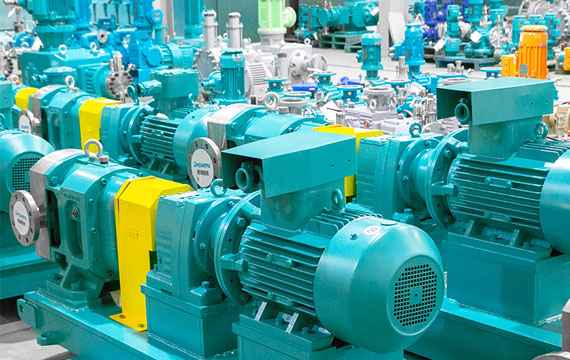
Keywords: Depamu metal rotor pump, donkey-hide gelatin, Ejiao, positive displacement pump, lobe pump, shear-sensitive fluids, pharmaceutical manufacturing, traditional Chinese medicine
1. Introduction
1.1 The Unique Challenge of Donkey-hide Gelatin
Donkey-hide gelatin, known as Ejiao in traditional Chinese medicine (TCM), is a prized biomaterial produced by prolonged simmering of donkey hides. The resulting gelatin is rich in collagen peptides, amino acids, and trace elements, with documented hematinic and immunomodulatory properties. In modern pharmaceutical production, Ejiao is processed into various dosage forms—oral solutions, granules, capsules, and functional foods—requiring precise transfer through manufacturing pipelines.
However, donkey-hide gelatin presents formidable rheological challenges. In its concentrated liquid form (typically 20-40% solids), the gelatin exhibits:
-
High viscosity: Ranging from 10,000 to over 100,000 centipoise (cP), depending on temperature and concentration
-
Shear sensitivity: Mechanical stress can denature collagen peptides, reducing molecular weight and biological activity
-
Thermal sensitivity: Elevated temperatures accelerate hydrolysis and darken the product
-
Particulate content: Undissolved collagen fragments and processing residues require passage without clogging
These characteristics render conventional pumping technologies inadequate. Centrifugal pumps, widely used in water-like fluids, cavitate when handling high-viscosity liquids. Progressive cavity pumps, while capable of high viscosities, subject the fluid to oscillatory shear that can disrupt gelatin structure. Peristaltic pumps offer low shear but suffer from limited flow rates and frequent tube replacement.
1.2 The Depamu Metal Rotor Pump Solution
Depamu (Hangzhou) Pumps Technology Co., Ltd., a manufacturer with over a decade of specialization in positive displacement pumps, has developed the Conilowa series metal rotor pump specifically designed for challenging fluids. Operating on positive displacement principles with precise rotor-stator clearances of 0.05-0.3mm, these pumps have demonstrated efficacy in transferring donkey-hide gelatin across multiple TCM manufacturing facilities in China's Shandong and Henan provinces—the historical heartlands of Ejiao production.
This article systematically examines why the Depamu metal rotor pump has emerged as the industry standard for gelatin transfer, analyzing its working principles, design features, performance metrics, and economic advantages.
2. Working Principle of the Depamu Metal Rotor Pump
2.1 Positive Displacement Fundamentals
The Depamu metal rotor pump belongs to the positive displacement pump family, specifically the external circumferential piston type commonly termed a "lobe pump". Unlike centrifugal pumps that impart kinetic energy to fluids (converting velocity to pressure), positive displacement pumps trap fixed volumes of fluid and mechanically force them through the discharge port. This distinction is crucial for high-viscosity fluids like donkey-hide gelatin.
The operational sequence follows four stages:
-
Suction phase: As rotors rotate away from each other, an expanding cavity forms at the inlet port, creating a partial vacuum that draws gelatin into the pump chamber.
-
Trapping phase: Rotor lobes pass the inlet port, sealing a discrete volume of gelatin between the rotors and the pump casing.
-
Transport phase: Rotor rotation carries the trapped gelatin circumferentially from inlet to discharge.
-
Compression and discharge: Rotor lobes intermesh at the discharge port, reducing cavity volume and forcing gelatin out under pressure.
2.2 Rotor Configurations and Gelatin Compatibility
Depamu offers multiple rotor geometries, each optimized for specific fluid characteristics:
| Rotor Type | Description | Suitability for Donkey-hide Gelatin |
|---|---|---|
| Three-blade rotor | Three symmetrical lobes per rotor; highest displacement per rotation | Recommended for standard gelatin transfer—optimal balance of flow stability and particulate passage |
| Butterfly rotor | Two wide, curved lobes | Suitable for gelatin with moderate particle content (e.g., incompletely dissolved collagen) |
| One-blade rotor | Single large lobe; highest particle clearance | Reserved for raw gelatin slurries with large fragments; higher pulsation |
For standard Ejiao production where gelatin has been filtered (typical particle size ≤80mm), the three-blade rotor configuration delivers optimal performance. The three-lobe design minimizes discharge pulsation—a critical factor in preventing shear-induced denaturation.
2.3 The Critical Role of Rotor-Casing Clearance
A distinctive feature of Depamu's design philosophy is the intentional gap between rotors and between rotors and the pump casing. Unlike gear pumps that rely on metal-to-metal contact (generating heat and wear), Depamu Rotor Pumps maintain clearances of 0.05-0.3mm (5-30丝 in Chinese engineering units), precisely calibrated to the fluid's viscosity.
The physics here is counterintuitive but elegant: For high-viscosity fluids like donkey-hide gelatin, the liquid's surface tension bridges these small gaps, creating an effective seal without mechanical contact. This "liquid seal" mechanism provides three advantages:
-
Wear reduction: No rotor-rotor or rotor-casing contact eliminates metallic contamination
-
Temperature control: Frictional heating is minimized, preserving gelatin's thermally sensitive peptides
-
Self-compensation: Clearance automatically accommodates thermal expansion without binding
3. Design Features Optimized for Gelatin Transfer
3.1 Sanitary and Corrosion-Resistant Construction
Donkey-hide gelatin is consumed orally and intravenously in some formulations, demanding the highest hygienic standards. Depamu rotor pumps intended for pharmaceutical service feature:
-
316L stainless steel rotors and wetted parts: Excellent corrosion resistance and cleanability
-
Electropolished internal surfaces: Ra ≤ 0.4μm finish prevents bacterial adhesion and facilitates cleaning-in-place (CIP)
-
FDA-compliant elastomers: Mechanical seals use materials such as FKM or PTFE, certified for food/pharmaceutical contact
-
Drainable design: Pump casing incorporates low-point drains to prevent stagnant zones where gelatin could degrade
3.2 High Viscosity Capability
Donkey-hide gelatin in production typically ranges from 10,000 cP (dilute solutions at 70°C) to over 200,000 cP (concentrated extracts at 40°C). Depamu's technical specifications indicate capability up to 2,000,000 cP, with flow rates from 0.2 to 3,000 m³/h at discharge pressures reaching 3.0 MPa.
For Ejiao applications, the relevant operating window is:
-
Flow rate: 5-50 m³/h (batch-dependent)
-
Discharge pressure: 0.2-0.8 MPa (sufficient for pipeline transfer)
-
Temperature range: 40-80°C (gelatin remains fluid without degradation)
3.3 Shear Sensitivity Mitigation
Collagen peptides in donkey-hide gelatin are susceptible to mechanical denaturation. Studies on gelatin rheology indicate that shear rates exceeding 1,000 s⁻¹ can reduce gel strength by 30-50%. Depamu addresses this through:
-
Low rotational speeds: Operating at 10-600 RPM (typically 100-300 RPM for gelatin), an order of magnitude slower than centrifugal pumps
-
Large fluid passages: Rotor design creates generous flow channels, maintaining low local velocities even at reasonable flow rates
-
Gentle volumetric displacement: Unlike progressive cavity pumps that compress fluid between a metal rotor and elastomeric stator (creating oscillatory shear), Depamu's rotors displace fluid with predominantly laminar flow
-
Pulsation dampening: Three-blade rotors reduce pressure fluctuations to ±5% of mean pressure, minimizing cyclic shear stress on gelatin macromolecules
3.4 Solids Handling and Non-Clogging Design
Raw donkey-hide gelatin frequently contains:
-
Undissolved collagen fibers (1-5mm length)
-
Cartilage fragments
-
Processing residues (e.g., soybean curd used in purification)
Depamu rotor pumps handle solids up to 80mm diameter without clogging, as the rotor lobes physically push particulates through the pump chamber rather than relying on centrifugal forces that would separate solids. The "non-clogging" claim is validated by the absence of filtration requirements upstream of the pump in many Ejiao facilities.
4. Operational Advantages for Ejiao Manufacturing
4.1 Superior Self-Priming and Suction Lift
Donkey-hide gelatin is typically cooked in open kettles or jacketed reactors, with transfer pumps located above or beside these vessels. Depamu rotor pumps offer vertical self-priming capability ≥8 meters (26 feet) and dry self-priming from suction lifts up to 9 meters. This eliminates the need for:
-
Foot valves (which can trap stagnant gelatin)
-
Priming chambers (additional cleaning surfaces)
-
Gravity feed arrangements (limiting layout flexibility)
4.2 Reversible Flow for Vessel Emptying
A practical feature for batch processing is the Depamu pump's fully symmetrical design: changing motor rotation direction instantly reverses flow direction. In Ejiao production, this enables:
-
Emptying residual gelatin from discharge lines back into the cooking kettle
-
Recirculating gelatin through heating/cooling loops without repiping
-
Flushing lines with cleaning solution in either direction
4.3 Dry Running Capability
Accidental dry running—operating the pump when the supply vessel is empty—can destroy many pump types within minutes. Depamu rotor pumps incorporate mechanical seals made from materials resistant to dry wear, allowing up to 15 minutes of dry operation without damage. This safety margin protects against:
-
Operator errors in batch transfer
-
Instrumentation failures in level sensing
-
Unexpected viscosity increases that reduce flow (confused for empty tank)
4.4 Multi-Phase Tolerance
Donkey-hide gelatin production involves:
-
Solid phase: Undissolved hide particles
-
Liquid phase: Gelatin solution
-
Gas phase: Steam bubbles from heating, entrained air during mixing
Depamu pumps handle solid-liquid-gas mixtures without losing prime or suffering cavitation. The positive displacement mechanism simply compresses gas pockets (unlike centrifugal pumps where gas causes performance collapse).
4.5 Online Maintainability
Pharmaceutical manufacturing demands minimal downtime. Depamu's "online repair" design allows access to all wear parts—rotors, mechanical seals, bearings, and lining plates—by removing the pump's front cover, without disconnecting piping or motor mounts. For a typical Ejiao production line, a complete seal replacement takes 45-60 minutes versus 4-6 hours for conventional pump designs.
5.1 Applicable Depamu Models for Donkey-hide Gelatin
Based on typical Ejiao batch sizes (1-10 tons), the following Depamu models are most relevant:
Conclusion
The Depamu metal rotor pump represents a significant advancement in positive displacement pumping technology, with particular applicability to the challenging task of transferring donkey-hide gelatin in pharmaceutical manufacturing. By combining the gentle handling characteristics