

Depamu Single Screw Pump for Crude Oil and Thick Oil: A Technical Overview
Introduction
The extraction and transportation of crude oil, particularly heavy crude and thick oil, present significant engineering challenges. These fluids are characterized by high viscosity, high solids content (including sand and abrasive particles), multiphase compositions (oil-water-gas mixtures), and challenging downhole conditions. The progressive cavity pump (PCP)—also known as the single screw pump—has emerged as a highly effective solution for these demanding applications .
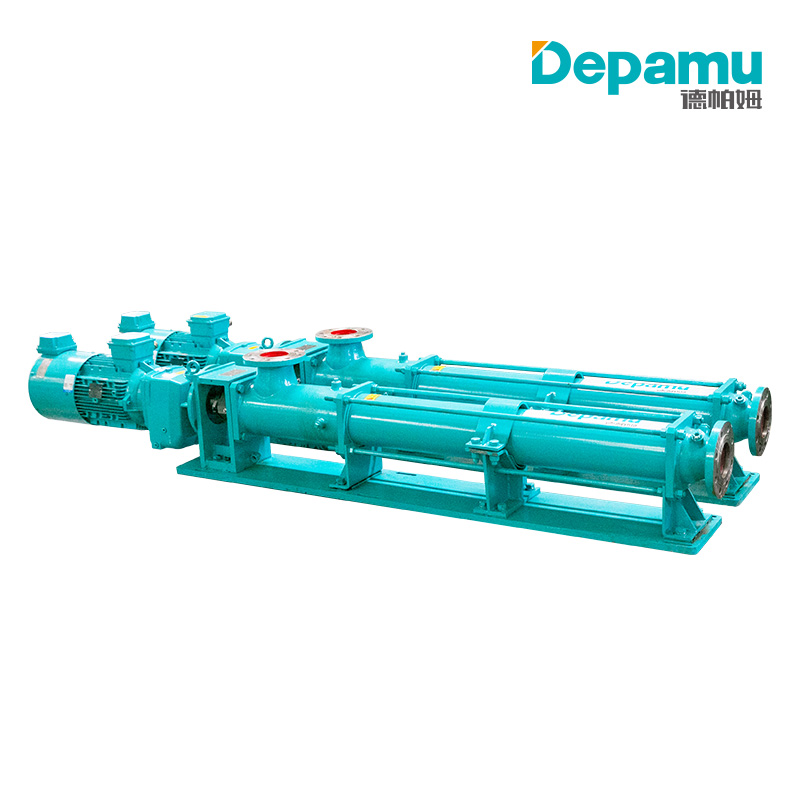
Depamu (Hangzhou) Pumps Technology Co., Ltd., founded in 2003 and headquartered in Hangzhou's Qiantang District, has established itself as a leading manufacturer in this specialized field . With over 100 technical patents and ISO, CE, and EAC certifications, the company leverages advanced German engineering to produce single screw pumps specifically designed for the oil and gas industry . This article examines the technical characteristics, advantages, and applications of Depamu single screw pumps in crude oil and thick oil operations.
Operating Principle of the Single Screw Pump
The single screw pump, also known as a progressive cavity pump, operates on a simple yet effective principle. A single helical rotor rotates eccentrically within a double-helical stator. The stator is typically made of an elastomeric material, while the rotor is constructed from metal . As the rotor turns, it creates a series of sealed cavities that progress from the suction end to the discharge end, moving the fluid in a smooth, continuous, and pulsation-free flow.
This design provides inherent advantages for oilfield applications:
-
Constant, non-pulsating flow regardless of pressure variations
-
Low shear action that prevents emulsification of oil-water mixtures
-
Ability to handle fluids with viscosities ranging from 1 mPas to 1,000,000 mPas
-
Capability to convey media containing solids up to 30 mm in size
-
Bidirectional rotation capability for operational flexibility
Design Features for Crude Oil Applications
Depamu single screw pumps incorporate several features specifically engineered for the harsh conditions of oil and gas production:
Material Selection and Construction
The pumps are designed to handle corrosive media across the full pH range (0-14) and operate at temperatures from -12°C to +150°C . The elastomeric stator materials are selected from a wide array of compounds to match the thermal, chemical, and abrasion properties of the specific crude oil being pumped . For exceptionally high-temperature applications, all-metal stator options are available .
Solids Handling Capability
One of the critical challenges in heavy oil production is the presence of abrasive solids such as sand. The elastic stator chamber design effectively reduces wear when conveying high-solid-content media. Depamu pumps can handle fluids with solids content up to 60% . The rotor's abrasion-resistant coating, combined with the stator's soft elastomer surface, enhances durability when processing sand-laden heavy crude .
Multiphase Capability
Crude oil wells often produce a mixture of oil, water, gas, and solids. Depamu single screw pumps are designed to handle multiphase fluids without requiring separate phase separation equipment . This capability is particularly valuable in both surface transfer applications and downhole artificial lift systems .
Applications in Crude Oil and Thick Oil
Artificial Lift Systems
In downhole applications, progressive cavity pumps serve as artificial lift systems for wells that cannot produce naturally. The pump is positioned at the well's lower end, with the rotor connected to a surface drive unit via sucker rods . The NEMO® style PCP systems, similar in design to Depamu offerings, have proven highly effective in:
-
Heavy crude oil production with API gravity approximately 10-31°
-
Wells with high sand and water content
-
Coal bed methane (CBM) dewatering operations
-
Production from horizontal, slant, directional, and vertical wells
The volumetric efficiency of downhole PCP systems typically ranges from 75% to 95%, which is significantly higher than conventional pump systems .
Surface Transfer Applications
In petroleum refining and transportation, Depamu single screw pumps are utilized for:
-
Crude oil and thick oil transfer
-
Catalyst and polymer injection (polymer flooding operations)
-
Oil sludge and oily wastewater handling
-
Pipeline and tank stripping operations
The pumps comply with API 676 standards, ensuring they meet the rigorous requirements of the petroleum industry .
Performance Advantages
Energy Efficiency
The high volumetric efficiency of single screw pumps translates to lower energy consumption compared to alternative pumping technologies. The flow rate is directly proportional to rotational speed, enabling precise flow adjustment through speed control . Field applications demonstrate that all-metal progressive cavity pumps can reduce average daily power consumption by up to 66.6% compared to conventional pumping units .
Low Shear and Emulsion Control
A critical concern in crude oil handling is the formation of emulsions, which complicate downstream separation processes. The single screw pump's low-turbulence, low-shear operation preserves the fluid's molecular structure and prevents the creation of emulsions in oil-water mixtures . This characteristic simplifies surface separation and reduces chemical treatment costs.
Self-Priming Capability
Depamu single screw pumps offer self-priming capability with a suction lift of up to 8 meters water column . This feature is valuable for tank stripping and pipeline drainage applications where pumps must operate under variable suction conditions.
Challenges and Solutions
Elastomer Selection
The choice of elastomer for the stator is critical for pump longevity. Crude oil chemistry, including aromatics content, hydrogen sulfide (H₂S), and carbon dioxide (CO₂) levels, affects material compatibility . Depamu offers various elastomer compounds to address these chemical challenges, ensuring optimal performance across diverse crude oil types.
Abrasion Resistance
High sand content in heavy oil production accelerates stator wear. The industry has responded with innovations such as the all-metal conical progressive cavity pump, which uses a clearance fit between stator and rotor rather than an interference fit. This design allows for bidirectional clearance adjustment and has demonstrated superior performance in thermal recovery heavy oil wells .
Seal Reliability
Mechanical seal integrity is crucial for pump reliability. Advanced seal technologies, such as DiamondFace-treated silicon carbide seal faces, have demonstrated remarkable durability in extra-heavy crude oil applications, withstanding high solids content (up to 20%), gas content (30-90%), and water content (up to 80%) .
Conclusion
Depamu single screw pumps represent a mature and effective solution for the challenges of crude oil and thick oil handling. Their ability to handle high-viscosity fluids, abrasive solids, and multiphase mixtures, combined with low-shear operation and high energy efficiency, makes them indispensable for both surface transfer and downhole artificial lift applications.
As the global oil and gas industry increasingly turns to heavy oil and challenging reservoirs, the demand for robust, efficient pumping solutions will continue to grow. Depamu's commitment to advanced technology, modular design, and material innovation positions the company to meet these evolving needs. With applications already established in major Chinese oil and gas enterprises and exports to over 50 countries, Depamu single screw pumps are proven performers in the world's most demanding oilfield environments .
The pump's versatility, reliability, and operational efficiency ensure it will remain a cornerstone of oil and gas production technology for years to come