

Engineering the Flow: The Depamu High-Pressure Methanol Chemical Injection Pump
In the hostile, high-stakes environment of crude oil extraction and transportation, the margin between operational success and catastrophic failure is often measured in microns and milliseconds. As reservoirs age and extraction moves into deeper, more corrosive fields, the challenges of flow assurance become paramount. Among the most critical weapons in this battle is the chemical injection pump—specifically designed to introduce hydrate inhibitors like methanol into high-pressure pipelines . At the forefront of this niche engineering field stands the Depamu High-Pressure Methanol Chemical Injection Pump, a piece of equipment engineered not just for moving fluid, but for ensuring the economic viability of billion-dollar assets.
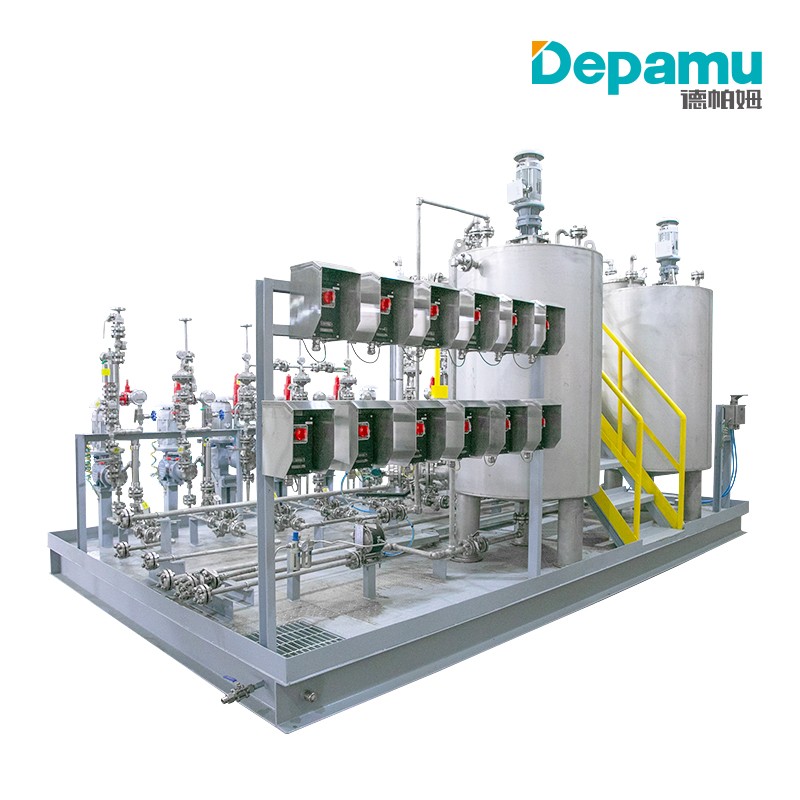
While many pumps can move water or low-viscosity fluids, the Depamu series is purpose-built for the rigorous demands of the oil and gas upstream and midstream sectors. This article delves into the engineering principles, technical specifications, operational advantages, and safety features that make the Depamu pump a paragon of efficient, reliable chemical delivery for critical oil transportation and production.
The Critical Role of Methanol Injection
To understand the pump, one must first understand the problem: hydrate formation.
In subsea and cold-climate pipelines, natural gas and water combine under high pressure to form ice-like crystalline solids called hydrates. These hydrates can completely block pipelines within minutes, leading to catastrophic pressure build-ups, burst lines, and millions of dollars in remediation costs. For over a decade, the industry standard for combating this has been the continuous injection of thermodynamic inhibitors, primarily Methanol (MeOH) .
Methanol lowers the freezing point of the water in the hydrocarbon stream, effectively "melting" the hydrates before they form. However, methanol is a volatile, toxic, and flammable substance. Transporting it through a production facility requires a pump that offers zero leakage, absolute reliability, and the ability to withstand the immense backpressure of deep-sea pipelines, often exceeding 3,000 psi.
The Depamu High-Pressure pump addresses this specific need, acting as the heart of the chemical injection skid—a component so vital that its failure effectively shuts down production.
Engineering Architecture: The Reciprocating Advantage
The Depamu unit predominantly utilizes the Plunger/Plunger Reciprocating Pump architecture, specifically the HD series (such as the HD3E(M) model) and THP series . Unlike centrifugal pumps, which lose efficiency under high backpressure, reciprocating positive displacement pumps excel here.
How It Works
The pump operates on a simple but robust principle: a crankshaft converts the rotary motion of an electric motor into the reciprocating linear motion of a plunger. As the plunger retracts (suction stroke), methanol is drawn into the cylinder through a spring-loaded inlet valve. When the plunger advances (discharge stroke), the inlet valve slams shut, and the pressure rises as the fluid is forced out through the discharge valve .
The Depamu design distinguishes itself through three specific engineering feats:
1. High-Strength Power End
The "muscle" of the pump is the power end. Depamu utilizes a high-strength crankshaft and a high-precision double helical gear减速机构 (reduction mechanism) . Double helical gears (herringbone gears) are superior to standard spur gears because they mesh without creating axial thrust loads. This results in:
-
Silent Operation: A critical feature for offshore platforms where noise pollution is regulated and crew safety is paramount.
-
High Load Capacity: These gears distribute the load evenly across the teeth, allowing the pump to handle the extreme torque required to push liquid against pipeline pressures of up to 50.9 MPa (approx. 7,380 psi) .
2. The Fluid End: Material Science
The "heart" of the pump is the fluid end—the manifold that contacts the methanol. Since methanol can be corrosive and is often mixed with produced water (which contains chlorides and H2S), material selection is critical.
Depamu offers configurations utilizing specialized metallurgy. For highly corrosive services, the pump can be engineered with duplex stainless steel or other anti-corrosion materials to prevent stress cracking corrosion . Furthermore, the plungers are typically coated with ceramic or chromium oxide to provide a wear surface that guarantees a long seal life, even when injecting methanol that might contain abrasive particulates from storage tanks.
3. Valve Technology
The suction and discharge valves are the most failure-prone components in any high-pressure pump. Depamu employs 锥阀阀组 (cone valve groups) with a bidirectional positioning design . These valves use wear-resistant and corrosion-resistant materials treated with vacuum quenching technology (thermochemical treatment). This ensures that the valves seat perfectly every cycle, operating at high frequencies (typically 300-400 strokes per minute) without leaking. This precision is vital for the "metering" aspect of chemical injection—ensuring the right amount of methanol is used without waste .
Performance Specifications: Powering Production
To appreciate the scale of this engineering, one must look at the raw data. The Depamu High-Pressure pumps are not laboratory syringes; they are industrial powerhouses designed for 24/7 operation.
-
Flow Range: Versatility is key. The pumps can handle flows from as low as 0.76 m³/h in small wellhead applications up to 10.74 m³/h or higher in large-scale manifold systems .
-
Pressure Capabilities: This is where the technology shines. The standard units operate efficiently in the 3.1 to 50.9 MPa range . For specialized applications (like injecting into ultra-deep wells or high-pressure subsea templates), variants of the THP series can be configured for pressures exceeding 350 bar (5,076 psi) and up to 350 MPa for specific water jetting or ultra-high-pressure applications .
-
Power Range: The driving force behind this pressure comes from electric motors ranging from 1.5 kW to a staggering 600 kW .
-
Temperature Tolerance: The system is designed to handle fluids at wide temperature ranges, accommodating the heating of methanol to reduce viscosity in arctic climates or the ambient heat of engine rooms on FPSOs (Floating Production Storage and Offloading units).
| Feature | Specification Range | Benefit to Operation |
|---|---|---|
| Flow Rate | 0.76 – 10.74+ m³/h | Scalable from single well to manifold injection |
| Discharge Pressure | 3.1 – 50.9+ MPa | Deep injection capability against high backpressure |
| Drive Power | 1.5 – 600 kW | High efficiency across variable load cycles |
| Fluid End Material | Alloy / Duplex / Specialized | Resistance to Methanol corrosion & sour gas |
| Drive Mechanism | Double Helical Gear | Low noise, high torque, zero axial thrust |
The "Zero Leakage" Imperative
In the context of methanol, the phrase "zero leakage" is not a marketing slogan; it is a regulatory and safety requirement. Methanol burns with an invisible flame, making fires difficult to detect and exceptionally dangerous . Furthermore, environmental regulations in regions like the North Sea or the Gulf of Mexico impose severe penalties for any discharge of methanol overboard.
The Depamu pump addresses this through its advanced sealing technology. For extremely toxic services, Depamu offers a diaphragm-type fluid end . In this configuration, the plunger does not touch the methanol at all. Instead, it pushes hydraulic oil against a flexible diaphragm (often a sandwich diaphragm with monitoring capabilities). The diaphragm, in turn, pushes the methanol. If the diaphragm were to rupture—an extremely rare event—the oil would leak out instead of the methanol, or a dual diaphragm alarm would shut the unit down instantly.
Where plunger pumps are used, Depamu employs high-quality packed glands (graphite-impregnated Teflon or similar) designed to be "leak-tight" under dynamic loads, ensuring that not a single drop of methanol escapes into the atmosphere.
Reliability in Remote and Offshore Environments
Oil production does not always happen near a service center. Often, these pumps are located on unmanned platforms, in the jungles, or at desert wellheads. Reliability here translates directly to uptime and revenue.
The Depamu design philosophy embraces modularity and skid-mounted integration. The pump is often delivered as part of a complete "Methanol Injection Skid," including the tank, controls, and piping. This "plug-and-play" approach reduces installation costs and engineering errors .
Key reliability features include:
-
API 674 Compliance: The THP series is designed following the American Petroleum Institute (API) Standard 674 for reciprocating positive displacement pumps . This standard mandates specific safety factors for pressure boundaries, vibration limits, and material traceability, ensuring the pump is built to withstand decades of service.
-
Lubrication System: Instead of relying on messy grease buckets, the power end utilizes a forced-feed or splash lubrication system (oil bath), protecting the heavy-duty gears and bearings. This reduces maintenance intervals and prevents overheating .
-
VFD Compatibility: Modern operations require variable flow rates depending on the water cut of the oil. The Depamu pump is designed for Variable Frequency Drive (VFD) operation, allowing the methanol injection rate to be precisely controlled by the plant's Distributed Control System (DCS) .
Innovation Beyond Mechanics: Intelligent Chemical Management
While the mechanical construction of the Depamu pump is impressive, the industry is moving toward "smart" injection. Methanol is an expensive commodity; over-injecting wastes chemical costs, while under-injecting risks hydrate plugs.
Modern systems integrating Depamu pumps leverage sophisticated logic control. While Depamu provides the hydraulic muscle, the ecosystem often includes controllers that interface with flow meters. If the oil production flow slows down, the controller signals the pump to reduce strokes, throttling the methanol usage automatically. This precision metering ability—delivering flow rates from 0.04 mL/min in metering variants up to industrial scales—is what makes this pump economically viable .
Applications in the Field
The versatility of the Depamu high-pressure pump allows it to serve in multiple critical points along the oil and gas value chain:
1. Wellhead Injection (Production)
At the wellhead, as the crude oil and gas mixture rises from the reservoir, the temperature drops. Methanol is injected continuously at the wellhead (often via a "methanol skid") to prevent ice and hydrates from blocking the "Christmas tree" valves before the fluid even enters the main pipeline .
2. Transportation (Pigging)
When pipelines need to be cleaned by "pigs" (pipeline inspection gauges), methanol is often used as a carrier fluid or a drying agent. The Depamu high-pressure pump provides the high pressure needed to push the pig down the line for hundreds of kilometers.
3. Offshore FPSOs
Space is at a premium on FPSOs. The compact design of the Depamu pump—available in horizontal or vertical installation—allows it to be tucked into tight spaces. Its controlled hydraulic stability is essential even when the FPSO is rolling in heavy seas.
Conclusion
The Depamu High-Pressure Methanol Chemical Injection Pump represents more than just a mechanical assembly of steel and valves; it is a critical safeguard for multi-billion dollar energy infrastructure. By combining German-engineered precision (referenced in the technology acquisition) with robust manufacturing, Depamu has created a solution that addresses the nuclear option of the oil industry: flow assurance.
For engineers and project managers operating in high-pressure, high-risk environments, the decision to specify a Depamu pump is based on three pillars: Efficiency in chemical usage, Reliability in remote operation, and Safety regarding zero leakage.
As the oil and gas industry pushes into deeper waters and more challenging terrains (Arctic drilling, deepwater salt caverns), the demand for pumps that can reliably deliver inhibitor chemicals at 10,000+ psi will only grow. The Depamu pump is already engineered to meet that challenge—delivering the right chemical, at the right pressure, at the right time, to keep the world's oil flowing.