

Precision and Reliability: The Critical Role of Depamu Metering Pumps in the Adhesive Industry
Introduction
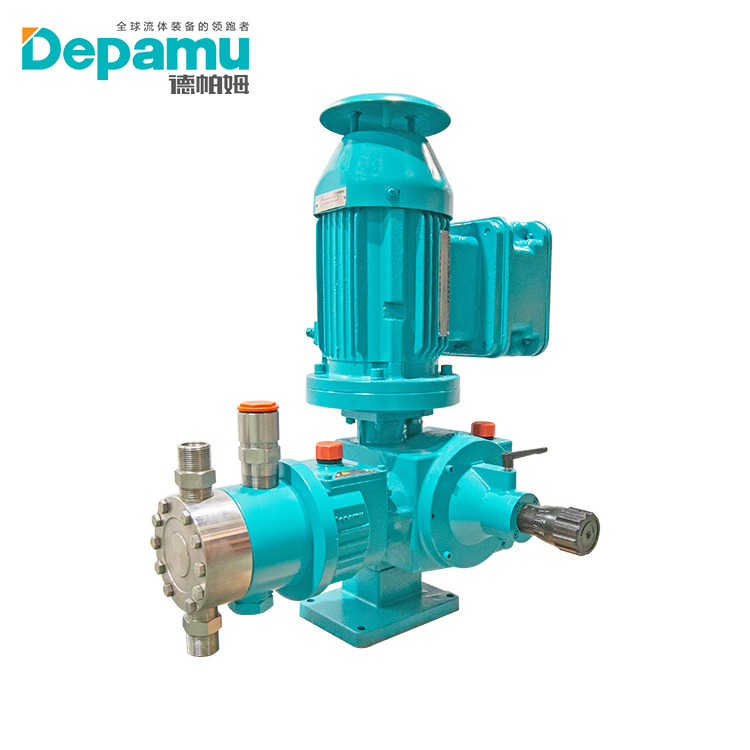
The adhesive industry stands as a silent cornerstone of modern manufacturing. From the microchips in smartphones to the carbon fiber fuselages of aircraft, from the lamination of flexible packaging to the assembly of automotive interiors, adhesives, sealants, and resins have replaced mechanical fasteners and welding in countless applications. However, the performance of the final product is not solely dependent on the chemical formulation of the adhesive; it is equally dependent on the precision with which that adhesive is applied. In this high-stakes environment, the metering pump is not merely a component of the production line—it is the heart of the system. Among the leaders in this niche, Depamu has established a formidable reputation for delivering engineering excellence. This article explores the complexities of adhesive processing and examines why Depamu metering pumps are the preferred choice for manufacturers demanding accuracy, durability, and consistency.
1. The Challenge of Adhesive Metering
To understand the value of a Depamu pump, one must first understand the hostile environment of adhesive manufacturing and application. Adhesives are not homogeneous fluids; they are complex mixtures of polymers, resins, solvents, and fillers. These materials exhibit non-Newtonian behavior, meaning their viscosity changes drastically under different shear rates and temperatures.
Consider the following specific challenges:
-
High Viscosity: Structural adhesives like epoxies or polyurethanes often possess viscosities exceeding 500,000 centipoise (cPs). At these levels, the fluid acts more like cold honey or peanut butter than a liquid.
-
Abrasive Fillers: Many industrial adhesives contain abrasive fillers such as silica, glass beads, or metal powders to enhance strength or thermal conductivity. These particles act like sandpaper on internal pump components.
-
Chemical Aggressiveness: Adhesives often contain solvents or reactive monomers that can corrode standard metals and degrade elastomeric seals.
-
Shear Sensitivity: High molecular weight polymers are prone to "shear thinning" or even permanent degradation if subjected to excessive mechanical energy during pumping. If the polymer chains are physically broken, the adhesive loses its cohesive strength and fails to bond.
-
Flow Rate Accuracy: In the application phase, whether it is a bead of glue for a bookbinding spine or a micro-dot for a medical device, the volume must be precisely controlled. A 2% variance in flow rate can result in a rejected product or a catastrophic failure in the field.
Depamu engineering addresses these challenges through meticulous design, materials science, and a deep understanding of fluid dynamics.
2. Core Technologies and Design Philosophy
Depamu differentiates itself through a commitment to "Pump as a Process." Rather than simply moving fluid from point A to point B, Depamu designs its pumps to condition and manage the fluid. The primary workhorses in the adhesive industry are the Internal Gear Pump and the Eccentric Screw Pump (Progressive Cavity Pump).
2.1. The Depamu Internal Gear Pump Advantage
For high-pressure, high-viscosity applications, the internal gear pump is often the superior choice. The Depamu design features a unique "pulseless" flow characteristic. Unlike piston pumps, which create a high-frequency pulsation that can cause line hammer or inconsistent bead deposition, the gear pump provides continuous, smooth flow.
Key Engineering Features:
-
Hydrodynamic Bearing Design: Traditional pumps struggle with abrasive fillers. Depamu utilizes hydrodynamic bearings that allow a thin film of the pumped fluid to lubricate the bearing surfaces. This design eliminates metal-to-metal contact, dramatically extending the pump's service life even when pumping highly abrasive resins.
-
Spur Gear Geometry: The involute tooth design in Depamu pumps ensures minimal slip and high volumetric efficiency. This is critical for high-pressure applications where the pump must overcome the resistance of long transfer lines or narrow dispensing nozzles.
-
Temperature Control: Depamu pumps are often equipped with integral heating jackets. Many adhesives (such as hot-melt adhesives) must be held at precise high temperatures to maintain flowability. The uniform heat distribution in the pump head prevents localized "hot spots" which could cause premature curing or polymer degradation.
2.2. The Depamu Eccentric Screw Pump
For applications involving highly viscous media with large particulates or those requiring gentle handling, Depamu offers advanced Progressive Cavity Pumps. These pumps consist of a helical rotor turning inside a double-helix stator.
The "Soft Touch": The low shear characteristic of the Depamu eccentric screw pump is invaluable. It ensures that the adhesive’s viscosity is maintained, and the shear-sensitive properties are preserved. Furthermore, the continuous cavity transfer provides excellent suction capability, making it ideal for pulling adhesive from drums or totes.
Stator Materials: Recognizing the aggressive nature of adhesives, Depamu offers stators made from advanced elastomers such as FKM (Fluorocarbon), NBR (Nitrile), and EPDM, specifically matched to the chemical composition of the adhesive being processed.
3. Applications Across the Adhesive Industry
Depamu pumps are not a one-size-fits-all solution; they are modular platforms capable of being tailored to the specific requirements of the diverse adhesive sub-sectors.
3.1. Pressure Sensitive Adhesives (PSAs) and Packaging
In the production of tape, labels, and protective films, PSA is coated onto a substrate at high speeds. The process involves dissolving or emulsifying polymers in solvents or water, followed by coating. Depamu gear pumps are extensively used in the "coating head" feeding stage.
-
The Requirement: The pump must deliver a precise volume per revolution to ensure uniform coat weight (measured in grams per square meter) across the entire width of the web.
-
Depamu Solution: The high accuracy of the Depamu metering pump, combined with variable frequency drives (VFDs), allows coating lines to adjust thickness on-the-fly. This minimizes waste during roll changes and ensures product consistency, which is paramount for adhesion strength in packaging (e.g., shipping box seals).
3.2. Hot Melt Adhesives (HMAs)
HMA applications span from bookbinding to non-woven hygiene products (diapers) and woodworking. These adhesives are 100% solid; they are solid at room temperature and melt into a liquid for application.
-
The Requirement: Operation typically occurs at temperatures between 140°C and 200°C. The pump must maintain a precise pressure to push the melt through heated hoses and die assemblies.
-
Depamu Solution: Depamu’s "Hot Melt Series" pumps feature sealed construction to prevent leakage of the expensive, viscous fluid. Their ability to maintain a precise output despite drastic changes in viscosity due to temperature fluctuations is crucial. If the viscosity drops, a standard pump might slip; a Depamu pump compensates with tight internal clearances, ensuring consistent application weight.
3.3. Structural Adhesives and Sealants (Epoxies and Polyurethanes)
Used in aerospace, automotive, and wind energy, structural adhesives are heavily filled (often with fibers or metallic particles) and are chemically reactive. These two-part systems require "meter-mix" systems where the resin and hardener are combined in a specific ratio.
-
The Requirement: The A (Resin) and B (Hardener) sides must be dispensed at a volumetric ratio of, for example, 1:1 or 2:1, with strict accuracy. A slight deviance can result in a failure to cure or a brittle bond.
-
Depamu Solution: Depamu manufactures integrated "Twin Pump" packages where two identical or differently sized pumps are driven by a single synchronous motor. This ensures perfect proportionality.
-
Material Science: For these applications, Depamu offers tool steel alloys with hardened surfaces (e.g., Nitriding or DLC coating) to withstand the abrasive nature of the fillers. The seal design utilizes "Teflon" or "PEEK" packing, which acts as a barrier to prevent the resin from entering the drive mechanism and causing catastrophic failure.
4. Economic Impact and ROI (Return on Investment)
While a Depamu pump carries a premium upfront cost compared to low-grade competitors, the Total Cost of Ownership (TCO) narrative is overwhelmingly positive.
4.1. Waste Reduction
In the adhesive industry, raw materials are often the single largest cost component—often exceeding the cost of the machinery itself. If a production line produces 10% off-spec product due to pump pulsation or "drool" (dripping), the waste is significant. Depamu’s precise shut-off capability and pulseless flow drastically reduce "start-up" and "shut-down" waste. In high-speed laminating lines, a Depamu pump can save hundreds of thousands of dollars annually in adhesive material alone.
4.2. Energy Efficiency
Depamu hydraulic designs optimize volumetric efficiency. This means that less motor torque is required to produce the same pressure and flow compared to a worn competitor pump. Over the lifespan of the pump, the energy savings typically cover the purchase price of the pump.
4.3. Reduced Downtime
In a standard plant, a pump failure can mean hours of downtime while the line is cleaned and the pump is rebuilt. Depamu pumps are engineered for "Interchangeability." Critical components are manufactured with tight tolerances, allowing for spare parts to be swapped quickly in situ. Furthermore, the long bearing life (often 3–5 years under harsh conditions) means that maintenance schedules can be predicted, allowing for planned shut-downs rather than catastrophic failures that halt production.
5. The Future: Industry 4.0 and Integrated Intelligence
As the adhesive industry moves toward digitalization, Depamu is at the forefront of integrating sensor technology into the pumping platform.
-
In-Line Viscosity Monitoring: Depamu is developing proprietary "Condition Monitoring" systems that use motor torque data to calculate real-time viscosity. This allows for predictive adjustments to heating or speed to ensure product quality without the need for external laboratory testing.
-
Smart Diagnostics: The "Depamu Connect" platform allows pumps to communicate with the Plant PLC (Programmable Logic Controller). Maintenance alerts are sent via SMS or email when wear parts reach the end of their life expectancy. This proactive approach ensures "Zero Unplanned Downtime."
6. Case Study: Wind Turbine Blade Manufacturing
To contextualize the performance, consider a wind turbine manufacturer. They use a two-part epoxy to bond the two halves of a 60-meter blade. The resin contains 35% glass spheres by volume.
-
Problem: Competing pumps failed after 30 days due to abrasive wear of the gears and seals. This caused unplanned stops and risked scrapping a blade worth $100,000.
-
Depamu Solution: Depamu supplied a hardened internal gear pump with a tungsten carbide bearing system.
-
Result: The pump ran for 9 months without intervention. The consistency of the bond line thickness improved by 15%, leading to a lighter, stronger blade. The reduction in waste and downtime resulted in an ROI of 8 months.
7. Operational Best Practices with Depamu
To maximize the lifespan of a Depamu pump in the adhesive industry, operators should adhere to several key practices:
-
Flushing: After production runs of reactive adhesives (which cure), the pump must be flushed with a solvent or a "Flush Resin" to prevent the fluid from hardening inside the pump. Depamu provides precise guidelines on solvent compatibility.
-
Temperature Ramping: For hot melts, the pump should be heated to temperature before starting. Starting a cold pump with solid adhesive can shear the drive shaft.
-
Strainers/Filters: While Depamu pumps can handle some particulate matter, a 100-micron or 200-micron strainer upstream of the pump prevents the ingestion of large debris that could score the gear teeth or stators.
Conclusion
The adhesive industry is a demanding sector that requires machinery to operate at the intersection of high pressure, high viscosity, and high temperature. Depamu has distinguished itself by turning these challenges into design opportunities.
Through a combination of hydrodynamic engineering, advanced metallurgy, and modular design, Depamu metering pumps deliver the "Five P's": Pressure (to move the fluid), Precision (to dose accurately), Pulselessness (to ensure smooth coating), Protection (to resist corrosion/wear), and Profitability (through reduced waste).
As adhesives become more advanced—navigating nanotechnology, bio-based polymers, and faster curing systems—the pump must evolve in tandem. Depamu’s commitment to research and development ensures that their pumps remain not just a component, but a strategic asset in the manufacturing ecosystem. For the manufacturer looking to guarantee product quality and maximize production efficiency, investing in Depamu is not an expense; it is an assurance of performance that spans the entire lifecycle of the equipment. The integrity of the bond is the integrity of the product, and Depamu ensures that starts from the very first drop.