

Precision in Fluid Transfer: Depamu Food Grade Lobe Pumps for Chocolate and Syrup
In the highly specialized world of food and confectionery processing, the movement of viscous, delicate, and often temperature-sensitive fluids from one stage of production to the next is a challenge that engineers face daily. Unlike water or thin chemicals, products like chocolate, fudge, caramel, and high-fructose corn syrup possess non-Newtonian properties—meaning their viscosity changes under stress. Pushing these fluids through a standard centrifugal pump can lead to shear damage, separation of ingredients, or catastrophic product loss.
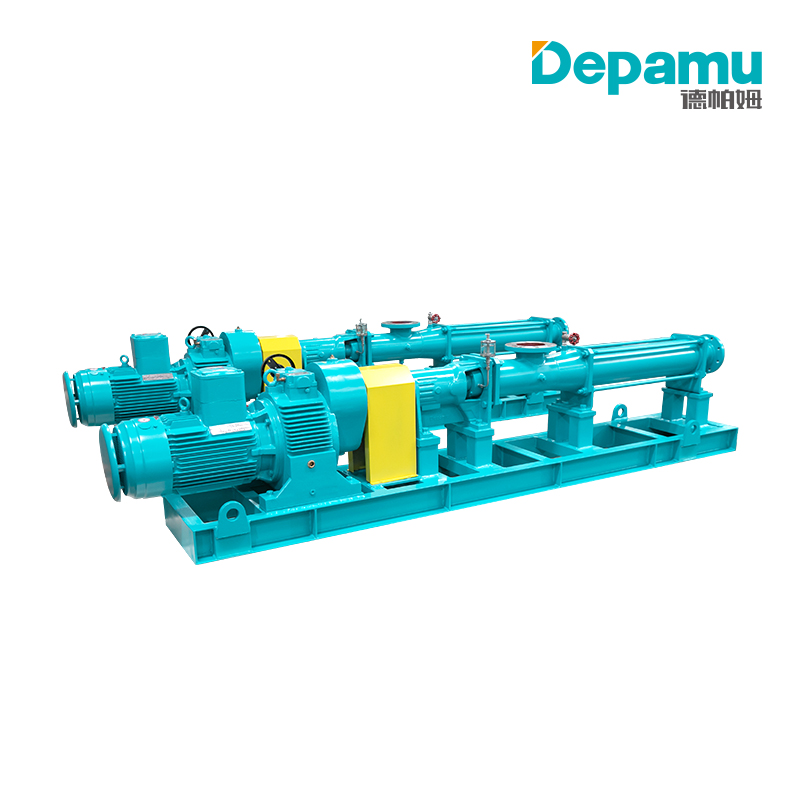
Enter the Depamu Food Grade Lobe Pump. As an extension of Depamu (Hangzhou) Pumps Technology Co., a National Key "Little Giant" enterprise with roots in German engineering, these pumps represent the gold standard for sanitary, efficient, and gentle fluid transfer . This article explores the technical mechanics, food safety compliance, and operational advantages of using Depamu's lobe pump technology specifically for the demanding applications of chocolate and syrup production.
The Engineering of Gentleness
To understand why Depamu lobe pumps are superior for food applications, one must first understand the physics of the fluids involved.
Chocolate is a suspension of sugar and cocoa solids in cocoa butter. It is abrasive, viscous, and highly sensitive to temperature. If you subject chocolate to high-speed impellers (as found in centrifugal pumps), you risk "smearing" the cocoa butter or, worse, causing sugar crystallization that destroys the mouthfeel. Syrups, while less abrasive, are high in sugar content and prone to burning or thinning out if handled roughly.
Depamu’s Conilowa series lobe pumps operate on a simple yet brilliant principle: positive displacement . Unlike centrifugal pumps that spin fluid outward at high speeds, the lobe pump uses two synchronously rotating rotors. As the rotors turn, they create a vacuum on the intake side, pulling the fluid into the cavity. The rotors then seal against the pump casing, trapping a fixed volume of fluid and moving it around the housing to the discharge side without rotating the fluid mass itself.
This mechanism provides two critical benefits for chocolate and syrup:
-
Low Shear: The fluid is displaced, not chopped. This keeps the viscosity stable and prevents the emulsion (in chocolate) from breaking.
-
Constant Flow: Regardless of back-pressure, the flow rate remains consistent, which is vital for depositing, molding, or filling operations.
Why Food Grade Matters
"Food Grade" is not just a marketing term; it is a regulatory and safety requirement. Depamu pumps are designed specifically for Clean-in-Place (CIP) and Sterilize-in-Place (SIP) protocols, which are essential in confectionery plants.
The design philosophy focuses on eliminating "dead zones"—small crevices where bacteria like Salmonella or Listeria could hide. Depamu achieves this through several key design features:
-
316L Stainless Steel Construction: The pump heads are typically constructed from high-grade stainless steel, which is corrosion-resistant and non-reactive with acidic syrups (like citrus or berry toppings) or alkaline cleaning agents.
-
FDA-Compliant Elastomers: The seals and rotors (where rubber is used) are made from materials compliant with food safety regulations.
-
Rotor Design Flexibility: Depending on the viscosity, operators can choose between two-wing, three-wing, or helical rotors. For high-viscosity chocolate, helical rotors offer pulsation-free flow; for thin syrups, two-wing rotors are highly efficient.
Depamu’s adherence to international certifications, including the API Q1 and the CE Marking, signals that these pumps are built to global safety and performance standards .
Case Study: Handling Chocolate
Handling chocolate requires a pump that can manage high viscosity at relatively low temperatures (typically 40°C to 50°C / 104°F to 122°F).
The Challenge: A confectionery plant running a chocolate enrobing line needs a consistent curtain of chocolate to cover biscuits. Any pressure fluctuation causes uneven coating. Additionally, the pump must handle "melted" blocks of chocolate containing large chunks of nuts or crisped rice without crushing them.
The Depamu Solution:
The Depamu lobe pump operates with a low rotational speed (typically 100 to 300 RPM) thanks to its efficient design. The large pumping chambers allow the passage of soft solids (like fruit pieces in yogurt chocolate or nuts in fudge) without macerating them .
Furthermore, the temperature range of the Conilowa series is exceptional, handling fluids from -40°C up to 280°C . This allows for the pumping of hot, tempered chocolate while maintaining the precise crystal structure required for a glossy finish. The "replaceable rotor tips" patented by Depamu are a specific advantage here . Since chocolate is abrasive (sugar acts like sand over time), the rotor tips will wear faster than the rest of the rotor. Instead of replacing the entire expensive rotor, the plant simply swaps out the tips, reducing maintenance downtime by hours.
Case Study: Handling Syrup
Syrup (corn syrup, maple, flavored toppings) presents a different challenge: viscosity that changes drastically with temperature.
The Challenge: A plant pumping cold syrup in the morning and hot, runny syrup in the afternoon often struggles with pumps that cavitate (create air bubbles) when the fluid gets too thin.
The Depamu Solution:
Depamu lobe pumps are positive displacement pumps; they capture a fixed "slug" of fluid. Whether the syrup is thick like honey or thin like water, the pump moves the same volume per revolution. This volumetric consistency is critical for batching systems where computers rely on pump speed to determine ingredient quantity.
Moreover, the ability to run dry (idling) for short periods is a safety net for syrup lines. If a holding tank runs empty, a centrifugal pump would overheat and destroy its seal immediately. Depamu lobe pumps, depending on the mechanical seal configuration, offer resistance to dry running, giving operators a few crucial minutes to catch a processing error .
Technical Specifications and Operational Ease
Depamu has engineered the Conilowa series to be the most user-friendly option on the market.
1. Bi-Directional Flow
The internal design of the pump is completely symmetrical . By simply changing the rotation of the motor, the pump reverses direction. In a syrup or chocolate kitchen, this means a single pump can empty a tank (forward flow) and then back-flush the pipeline to recover product (reverse flow), minimizing waste.
2. Compact Footprint
Space in food processing plants is often at a premium. The Depamu lobe pump is noted for its compact structure and small mounting space requirement . It can be integrated into mobile carts used for transferring chocolate mass from kettles to tempering machines without requiring a permanent, massive installation.
3. Modular Design
The modularity of the 5 series and 7 models means that the shafts, gears, and bearings are standardized across different pump sizes . If a plant upgrades its capacity, they can swap the motor and rotor housing while keeping the base drive unit.
Maintenance: The "Little Giant" Advantage
Depamu is recognized as a "Little Giant" company, a prestigious designation for specialized SMEs in China, and holds over 100 patents . This R&D focus is evident in the pump's maintenance design.
In traditional lobe pumps, disassembling the timing gears to change the rotors can take hours and requires specialized tools.
The Depamu advantage is the front-loading removal capability. The pump casing (the body) can be removed without disturbing the gearbox or piping. For a syrup plant, this is critical. If a seal fails on a Friday afternoon, maintenance crews can replace it within an hour and have the line running again.
The use of oil-less or sealed bearings in the food-grade variants also eliminates the risk of food contamination from gearbox lubricants leaking through failed seals—a critical HACCP (Hazard Analysis Critical Control Point) consideration.
Energy Efficiency and Cost Savings
Energy consumption is a hidden cost in fluid transfer. Centrifugal pumps often need to run at full speed and rely on back-pressure valves (which waste energy) to adjust flow.
Because the Depamu lobe pump moves fluid via displacement, it uses significantly less energy at lower speeds. If a line slows down from 10,000 liters per hour to 2,000 liters per hour, the pump simply turns slower, and the motor draws proportionally less current (Amps). This variable volume capability without throttling losses translates to direct savings on electricity bills, which is especially beneficial for 24/7 operations like chocolate refining or syrup bottling.
Versatility in the Modern Kitchen
Modern confectionery kitchens are shifting toward "flex manufacturing"—one line producing salted caramel syrup in the morning and chocolate ganache in the afternoon. The Depamu lobe pump shines here due to its viscosity tolerance.
-
For chocolate (20,000 - 100,000 cP): Use slow-turning, large-case rotors to gently ease the mass forward.
-
For fruit syrup (500 - 2,000 cP): Increase the speed to create higher flow rates, using the mechanical seal to handle the "watery" lubrication level.
Furthermore, the pump can handle temperatures up to 280°C (536°F) . While you don't pump chocolate that hot, this heat tolerance allows for immediate transfer of cooked syrups or jams directly from the cooker without needing a cooling buffer tank, streamlining production.
Conclusion
The Depamu Food Grade Lobe Pump is not merely a commodity piece of hardware; it is a precision instrument designed to respect the ingredient. For the chocolate maker, it preserves the temper, the gloss, and the snap. For the syrup producer, it delivers volumetric accuracy and handles the viscosity swings of sugar chemistry.
Backed by Depamu's heritage in German engineering and a manufacturing facility boasting over 100 technical patents, these pumps offer the reliability required by Fortune 500 clients like Sinopec, CNPC, and global food giants . The combination of FDA-compliant materials, CIP cleanability, low shear action, and tool-less maintenance makes the Conilowa series the optimal choice for any food processor looking to reduce waste and increase consistency.
As the food industry continues to move toward automation and high-sanitation standards, the Depamu lobe pump stands out as the robust, hygienic, and efficient solution for moving the sweetest, thickest, and most delicate fluids on the planet.