

Depamu Industrial Double Screw Pump: The Versatile Solution for Oily Water, Molasses, Food, and Other Viscous Liquids
Introduction
In the complex landscape of industrial fluid handling, the ability to transfer diverse media—from thin, watery solutions to thick, semi-solid pastes—with a single, reliable piece of equipment represents the hallmark of engineering efficiency. Among the various pump technologies available today, the twin screw pump occupies a unique position, offering the capability to handle both low-viscosity fluids like water and high-viscosity substances like molasses with equal precision. Depamu (Hangzhou) Pumps Technology Co., Ltd., a high-tech enterprise based in Hangzhou's Qiantang District, has emerged as a leader in this field, leveraging advanced German engineering principles to develop a comprehensive line of twin screw pumps that address the most demanding fluid transfer challenges across multiple industries.
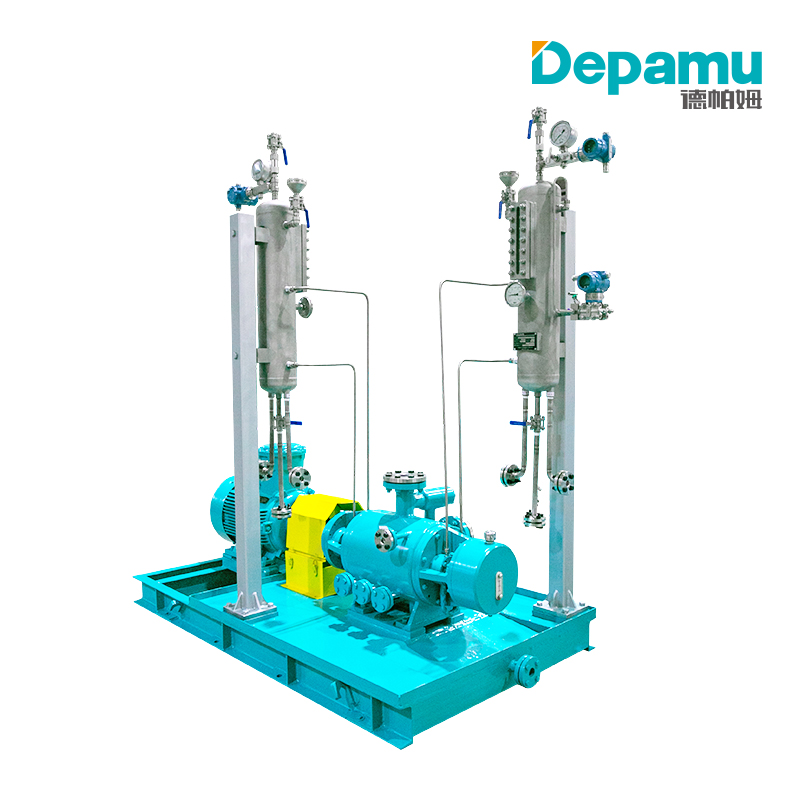
Founded in 2003, Depamu has grown from a regional pump manufacturer into a globally recognized supplier, accumulating over 100 technical patents and establishing strategic partnerships with major enterprises such as CNPC, SINOPEC, CNOOC, and CNNC. The company's products are now exported to more than 50 countries and regions worldwide. This article provides a comprehensive analysis of Depamu's industrial double screw pump technology, exploring its engineering principles, technical specifications, and specific applications in oily water treatment, molasses handling, food processing, and other viscous liquid transfer operations.
Understanding the Twin Screw Pump Principle
Progressive Cavity Technology
The Depamu twin screw pump operates on the principle of positive displacement, fundamentally different from centrifugal pumps that rely on high-speed impellers to fling fluid outward. At its core are two synchronized, intermeshing screw rotors—typically one right-handed and one left-handed—housed within a precision-engineered liner. As the rotors turn in opposite directions, cavities form at the suction end of the pump. These cavities progressively increase in volume, drawing fluid into the housing. The fluid becomes trapped between the rotor threads and the casing, and as the screws continue to rotate, these cavities move axially along the pump, carrying the fluid smoothly toward the discharge port without turbulence or agitation.
This operating principle gives the twin screw pump several fundamental advantages over other pump technologies. Unlike centrifugal pumps, whose flow rates fluctuate significantly with changes in discharge pressure and fluid viscosity, twin screw pumps maintain a constant flow rate regardless of pressure variations within their operating range. This characteristic is particularly valuable in fuel oil systems, chemical dosing applications, and food processing operations where precise metering and consistent delivery are essential.
Key Differentiators from Other Pump Types
It is crucial to distinguish the twin screw design from single screw (progressive cavity) pumps. A single screw pump uses a single metal rotor turning inside an elastic rubber stator, making it ideal for highly abrasive slurries and high-viscosity pastes with viscosities up to 1,000,000 cP. However, the Depamu twin screw pump features two metal rotors that do not necessarily contact each other (timing gear-driven) or contact the liner with minimal clearance. This distinction gives the twin screw pump critical advantages: high pressure capability, the ability to handle non-Newtonian fluids, and superior performance with low-lubricity fluids like water.
Depamu's twin screw pumps employ synchronized timing gears that ensure the rotating screws do not directly contact each other. This design eliminates metal-to-metal contact within the pump chamber, significantly reducing wear and extending service life. The timing gears and roller bearings are located externally, isolated from the process liquid, allowing the pump to handle both lubricating and non-lubricating media without compromising bearing performance. This external bearing arrangement also facilitates maintenance and inspection, as critical components can be accessed without dismantling the entire pump assembly.
Technical Specifications and Performance Capabilities
Performance Range
Depamu's twin screw pumps are designed to meet the stringent requirements of diverse industrial applications. These pumps comply with API 676 standards, the internationally recognized specification for positive displacement rotary pumps in the petroleum, petrochemical, and natural gas industries.
The performance range of Depamu twin screw pumps encompasses a wide spectrum of operating conditions. Flow rates range from 0.1 to 3,000 cubic meters per hour, with discharge pressures reaching up to 4.8 MPa or higher depending on configuration. Fluid temperature capabilities span from -12°C to +150°C, accommodating both ambient-temperature light oils and heavy fuel oils that require elevated temperatures to achieve pumpable viscosity. Importantly, these pumps can handle fluids with viscosities up to 100,000 cP and solid content up to 60%, making them capable of handling the most challenging heavy oil and residue fuel streams.
Self-Priming Capability
The self-priming capability of Depamu twin screw pumps represents another key performance indicator. The pumps achieve suction lifts of up to 8 meters of water column, enabling them to draw fuel from underground storage tanks, ship bunkers, or tanker compartments without the need for priming systems or foot valves. Their excellent suction performance, with Net Positive Suction Head (NPSH) requirements as low as 1.5 meters, further enhances their ability to operate reliably under demanding suction conditions where centrifugal pumps are prone to cavitation and performance degradation.
Application in Oily Water Treatment
The Challenge of Oily Water
Oily water treatment represents one of the most demanding applications for industrial pumps. Whether in marine bilge water management, port oily wastewater treatment, or industrial effluent processing, the pumped medium typically contains a complex mixture of oil, water, and trace solids that can be abrasive and corrosive. The variable composition and viscosity of oily water streams create significant challenges for conventional pump technologies.
Depamu's Solution for Oily Water
Depamu twin screw pumps are exceptionally well-suited for oily water applications due to several design characteristics. The pumps can handle contaminated or slightly abrasive liquids across a wide viscosity range, whether the fluid has lubricating or non-lubricating properties. For port oily wastewater applications, twin screw pumps with optimized spiral profiles can adapt to viscosity ranges from 1 to 1,000 cP while handling trace solids with particle sizes up to 0.2mm. Wear-resistant coatings with hardness up to HRC60 provide additional protection against abrasive particles commonly found in bilge and ballast water.
The pump's ability to handle gas-liquid mixtures is particularly valuable in oily water treatment, where entrained air or gas is common. Unlike centrifugal pumps that can vapor lock when encountering gas pockets, twin screw pumps maintain consistent performance even when pumping multiphase fluid streams. This capability ensures reliable operation in marine bilge systems, oil-water separators, and slops stripping operations where fluctuating fluid composition is the norm rather than the exception.
Application in Molasses Handling
Understanding Molasses Rheology
The sugar industry faces one of the most challenging fluid handling problems in food processing: the pumping of molasses. As the final by-product of sugar crystallization, molasses possesses extremely high viscosity, abrasive characteristics, non-Newtonian behavior, and temperature-dependent properties that make traditional pumping technologies struggle to perform effectively.
The global sugar industry processes approximately 180 million tons of sugar annually, generating roughly one-third of a ton of molasses as a by-product for every ton of sugar produced. This thick, dark syrup is both a valuable commodity—used in animal feed, ethanol production, yeast manufacturing, and industrial fermentation—and a significant handling challenge for processing plants worldwide.
Viscosity Challenges
Molasses viscosity is highly temperature-dependent and does not behave as a Newtonian fluid. At standard ambient temperature (20°C), blackstrap molasses exhibits viscosity ranging from 5,000 to 20,000 cP. At lower temperatures—such as during winter or in unheated storage areas—viscosity can exceed 100,000 cP, at which point the material behaves more like a semi-solid than a pumpable liquid. The viscosity-temperature relationship is dramatic: at 10°C, viscosity ranges from 50,000 to 100,000 cP; at 30°C, it drops to 3,000-5,000 cP; and at 50°C, viscosity decreases further to 800-1,200 cP.
Depamu's Molasses Pumping Solution
Depamu has developed a series of twin screw pumps specifically designed for high-viscosity, low-shear applications, particularly suited for molasses handling in sugar refineries and processing plants. The company's screw pump technology, drawing on advanced German engineering principles, addresses the unique rheological challenges presented by molasses throughout the production cycle, from raw juice to final blackstrap molasses.
The twin screw pump's positive displacement principle provides significant advantages over gear pumps, lobe pumps, and single screw pumps that have traditionally been used in molasses service. These conventional technologies often struggle to maintain consistent flow rates as viscosity fluctuates with temperature, leading to seal failures, cavitation, and the excessive shear forces that can alter product characteristics. Depamu's twin screw design eliminates these problems through its gentle, low-shear pumping action and ability to maintain constant flow regardless of viscosity changes.
Application in Food Processing
Hygienic Design Requirements
In the food and beverage, dairy, pharmaceutical, and cosmetics industries, the selection of pumping equipment is a critical decision that directly impacts product quality, operational efficiency, and regulatory compliance. Depamu's hygienic twin screw pumps are engineered to meet the rigorous demands of these sectors.
The twin screw principle provides inherent advantages for hygienic applications. Unlike centrifugal pumps, which can impart high shear forces that damage delicate products, the twin screw mechanism provides gentle, pulsation-free flow. This characteristic is particularly valuable when handling shear-sensitive products such as yogurt containing fruit pieces, salad dressings with particulates, or pharmaceutical emulsions where maintaining formulation integrity is paramount. Furthermore, the pump's ability to handle fluids across an extraordinary viscosity range—from 1 cP, comparable to water, up to 1,000,000 cP—enables facilities to standardize on a single pump type for diverse product lines, reducing spare parts inventory and maintenance complexity.
Material Excellence and Certifications
The foundation of hygienic pump design is material selection. Depamu's hygienic twin screw pumps feature wetted parts constructed from AISI 316L stainless steel, a material widely recognized for its excellent corrosion resistance, durability, and compatibility with cleaning protocols. This metallurgical choice ensures that the pump can withstand the harsh conditions of Clean-in-Place (CIP) procedures, including exposure to caustic solutions, acidic cleaners, and elevated temperatures, without degradation that could compromise product purity.
Surface finish quality is paramount in hygienic applications, as rough surfaces can harbor microorganisms and resist effective cleaning. The Depamu pump achieves surface finishes better than Ra 0.8 micron on all product-contact surfaces, meeting the stringent requirements of industry standards. This smooth finish minimizes bacterial adhesion, facilitates complete cleaning, and reduces the risk of cross-contamination between product batches.
Depamu's hygienic twin screw pumps are designed for compliance with the most rigorous global hygiene standards, including 3-A Sanitary Standards (the premier standard for dairy and food processing equipment hygiene in the United States), EHEDG (European Hygienic Engineering and Design Group) certification, FDA regulations ensuring materials meet food contact requirements, and EC 1935/2004 (the European framework regulation for materials and articles in contact with food).
Dual Functionality: Product Transfer and CIP
One of the most compelling features of the Depamu twin screw pump for hygienic applications is its ability to serve dual roles: product pump and CIP supply pump. This capability offers significant operational advantages. The pump's wide speed range—extending to 3,600 rpm in cleaning mode compared to lower speeds for product transfer—enables it to function effectively as a CIP pump without requiring a separate centrifugal unit. During product transfer, the pump operates at lower speeds appropriate for gentle handling. During cleaning cycles, the speed is increased to generate the flow rates and turbulence necessary for effective cleaning.
Food and Beverage Applications
The DEPAMU twin screw pump's gentle handling and broad viscosity capability make it suitable for numerous food processing applications. In dairy operations, the pump handles yogurt, cream, processed cheese, and other products containing delicate particles without damage. In beverage production, it transfers fruit juices, concentrates, syrups, and purees that are sensitive to shear and aeration. The pump's ability to handle products with suspended solids without compromising their integrity extends its utility to applications such as fruit preserves, sauces, and salad dressings containing particulates.
Other Viscous Liquid Applications
Chemical and Petrochemical Processing
Beyond the three primary application areas discussed above, Depamu twin screw pumps excel in a wide range of other viscous liquid handling applications. In the chemical and petrochemical industries, these pumps handle polymers, resins, adhesives, and other high-viscosity chemical products. The pumps' ability to operate at temperatures up to 150°C makes them suitable for hot-melt adhesive transfer and other elevated-temperature processes. Their resistance to corrosive media, achieved through appropriate material selection and surface treatments, extends their applicability to acidic and alkaline solutions.
Pulp and Paper Industry
In the pulp and paper industry, Depamu twin screw pumps handle black liquor, soap, tall oil, and other viscous by-products of the pulping process. These fluids often contain solid particles and exhibit non-Newtonian behavior that challenges conventional pump designs. The twin screw pump's positive displacement principle and gentle handling characteristics preserve the quality of these process streams while providing reliable, consistent transfer.
Marine and Offshore Applications
The marine and offshore industries represent another significant application area for Depamu twin screw pumps. These pumps serve as cargo pumps, stripping pumps, booster pumps, and engine lubricating pumps for various fuel oils, lubricating oils, waste oils, bilge sludge, and seawater. The pumps' self-priming capability, compact footprint, and ability to handle contaminated liquids make them ideal for the confined spaces and demanding operating conditions encountered on ships and offshore platforms.
Conclusion
Depamu's industrial double screw pump technology represents a significant advancement in fluid handling capabilities for viscous liquids across multiple industries. From oily water treatment in marine and industrial applications to molasses handling in sugar processing, and from hygienic food processing to chemical manufacturing, these pumps deliver reliable, efficient, and versatile performance that addresses the most challenging fluid transfer requirements.
The key advantages of Depamu twin screw pumps—constant flow regardless of pressure or viscosity changes, gentle low-shear handling of sensitive products, self-priming capability, and the ability to handle fluids across an extraordinary viscosity range—make them a compelling choice for engineers and plant operators seeking to optimize their fluid handling operations. The company's commitment to quality, evidenced by its API 676 compliance, ISO certifications, and adherence to international hygiene standards, provides additional assurance that Depamu pumps will deliver dependable service in even the most demanding environments.
As industries continue to seek more efficient, reliable, and versatile fluid handling solutions, Depamu's twin screw pump technology is poised to play an increasingly important role in powering the world's industrial processes. The company's track record of successful installations across more than 50 countries, combined with its ongoing investment in research and development, positions Depamu as a trusted partner for organizations seeking to enhance their fluid handling capabilities. Whether the application involves oily water, molasses, food products, or other viscous liquids, Depamu's industrial double screw pumps offer a proven solution that combines engineering excellence with practical performance.